Coming Home to Chordeleg
The day after learning where we would be serving, Jenny and I—and the other 17 trainees we had spent the previous two months with—were sworn in as official Peace Corps Volunteers at Quito’s Botanical Garden.
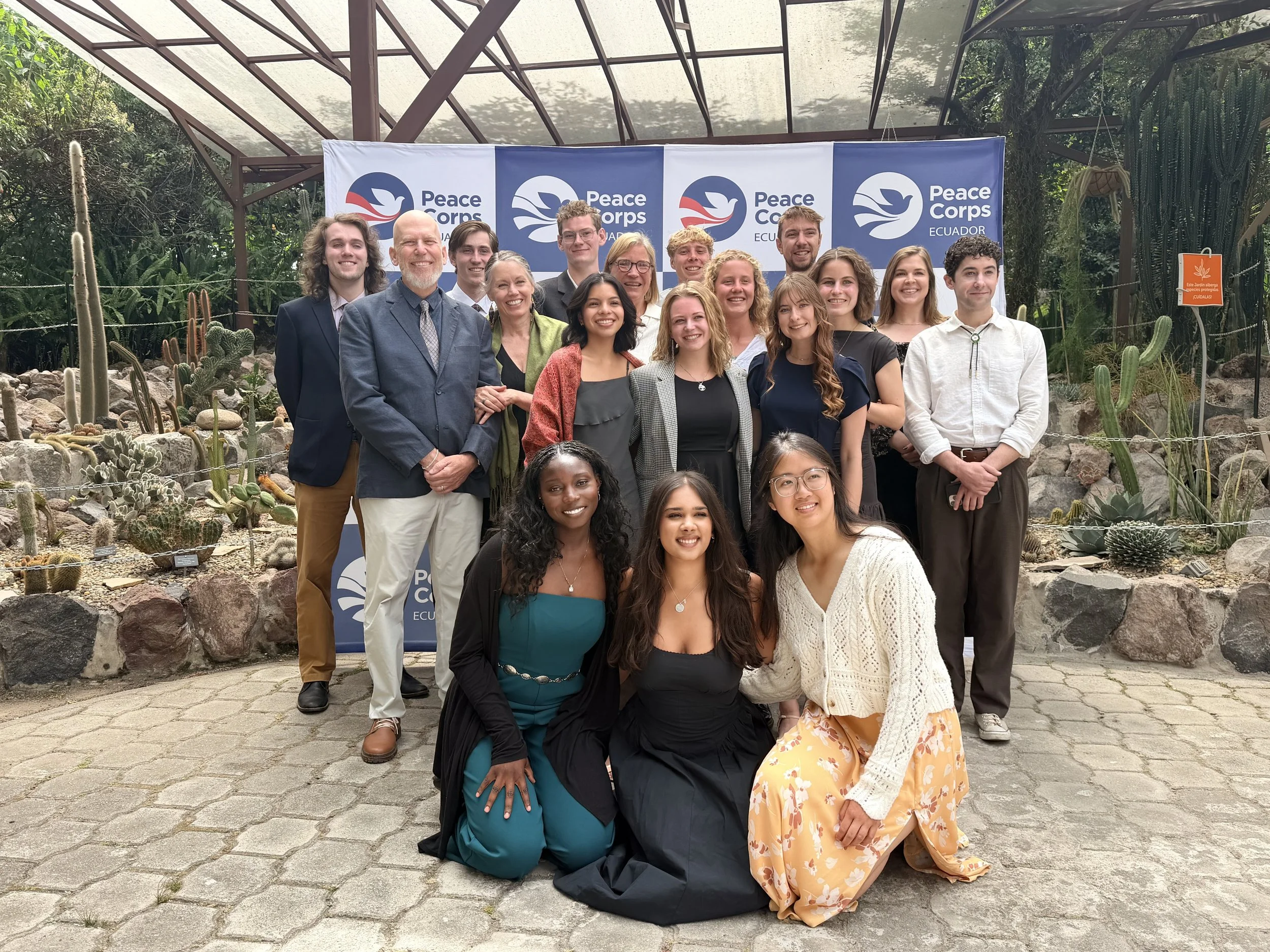
It was a fairly formal affair, with speeches from Peace Corps staff and representatives of the U.S. Embassy. Even with all the speeches and ceremony, it was a pretty meaningful moment for us. After two months of training, we were no longer just a group of people learning Spanish, sitting through workshops, and wondering where we would end up. We were officially Peace Corps Volunteers. Again.
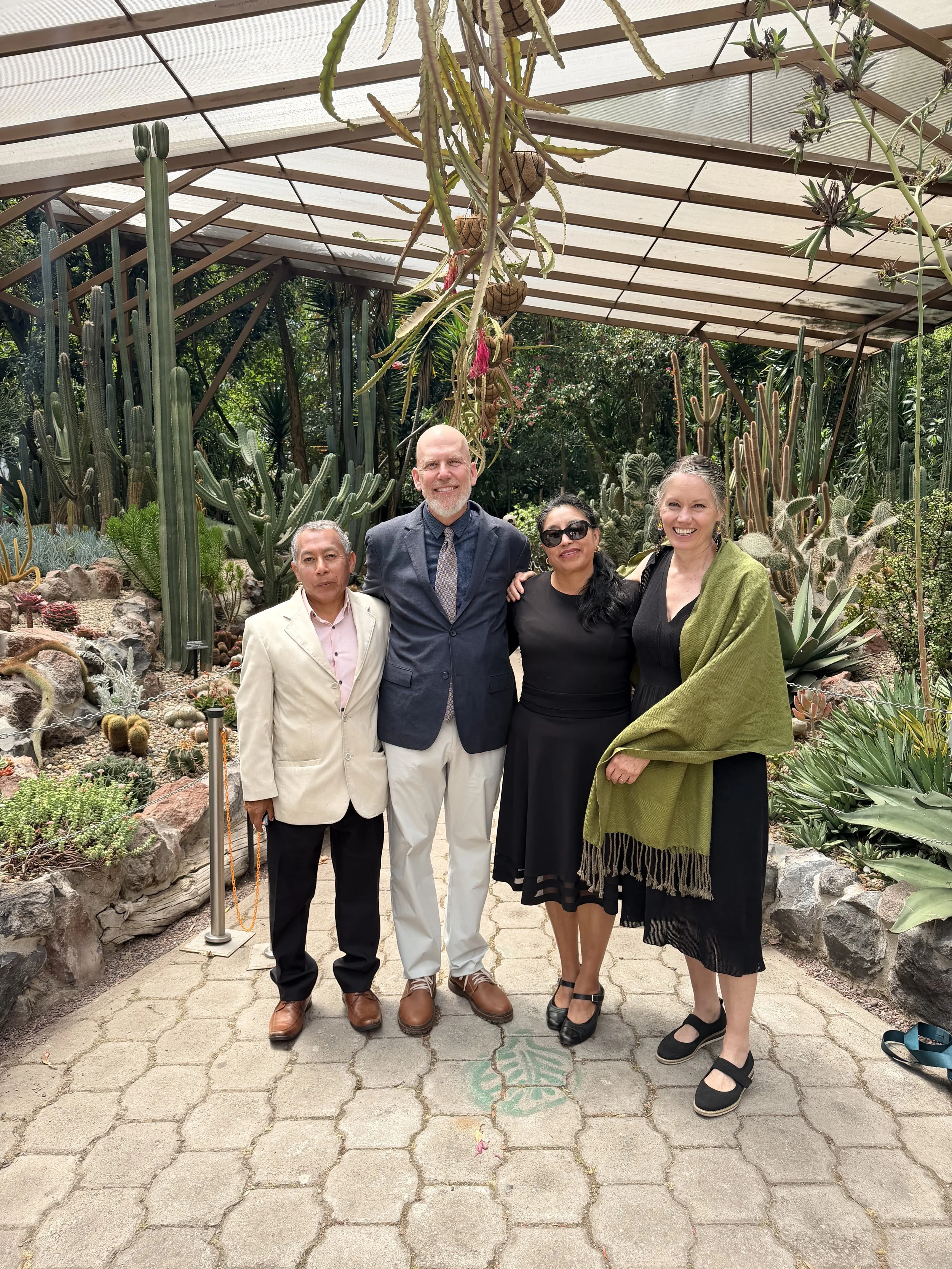
We had to say goodbye to our dear friends in Quito who hosted us in their home for 2 months.
The next day, a counterpart from each of our work assignments traveled to Quito for a full day of training. Since our sites are spread across the country, some of them had come quite a long way. The sessions focused on their responsibilities as host agencies and the ways they can help us succeed—particularly by helping us with our Spanish and introducing us to the people and organizations in our new communities.
Then it was time to leave Quito.
The following morning, Jenny and I climbed into a 14-seat Sprinter van and set off for our new home in Chordeleg. The drive was only about 300 miles, but this is Ecuador, the roads run through the Andes, and we made a lot of stops. Door to door, the trip took nearly 12 hours.
My dad was a real perfectionist when it came to driving, and I’m confident that, somewhere along the way, he would have dragged our driver out of his seat and tossed him over the nearest cliff.
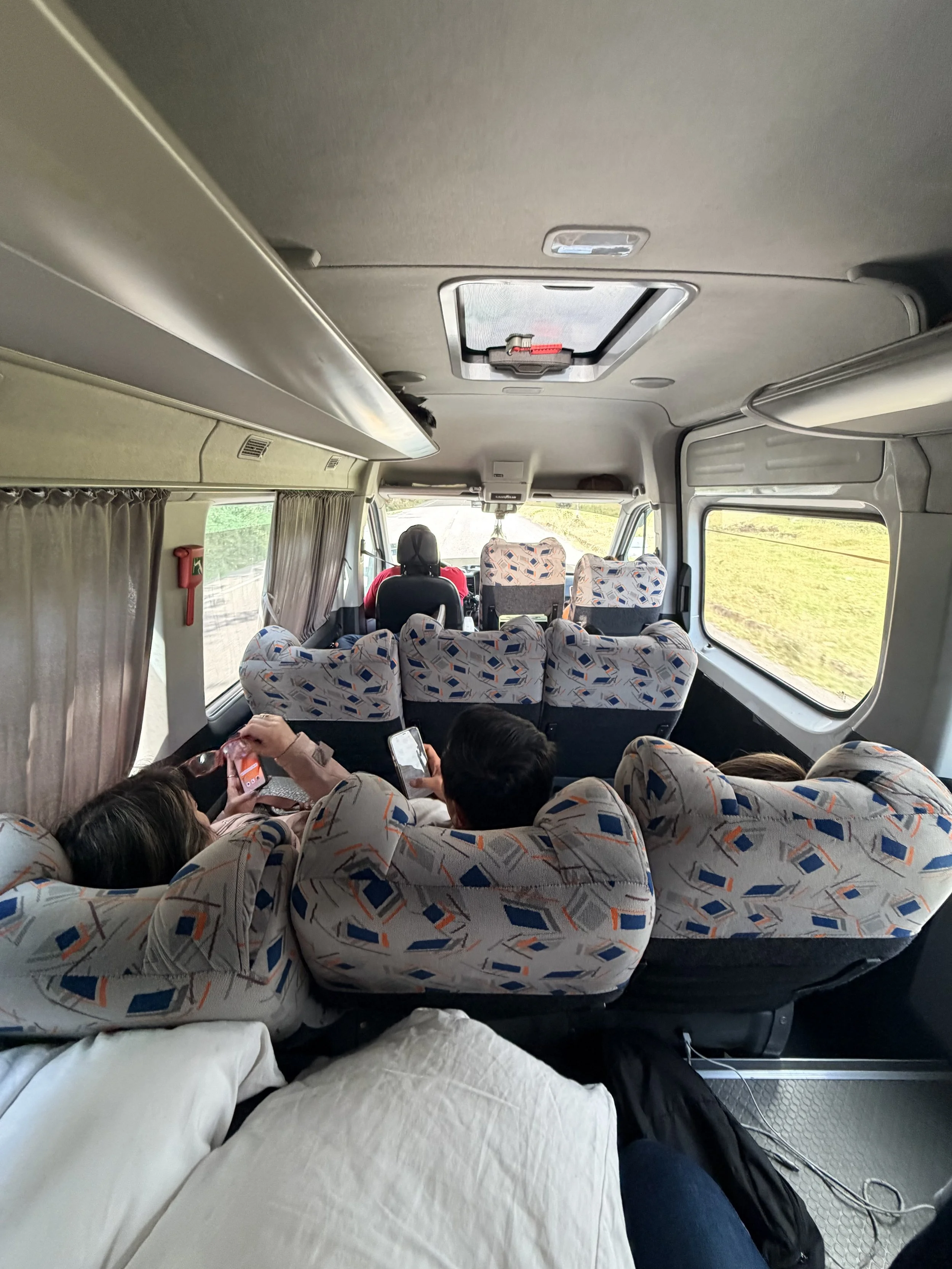
I lost count of the number of times we passed lines of cars on double-yellow blind curves. To be fair, Ecuadorians seem to have a much higher tolerance for this sort of thing, and they do give one another more room to pull it off. Still, I’m not sure that makes passing on a blind curve a good idea.
But the worst part was the constant pumping of the brakes. Maybe it’s a technique for keeping them from overheating on long mountain descents. I don’t know. Whatever the reason, after 12 hours it was getting a bit trying.
And then we arrived in Chordeleg.
There was a rooftop dinner party in full swing at our new home. As luck would have it, it was our hosts’ turn to hold a monthly gathering of family and friends, and we arrived just in time to eat, drink, and meet everyone.
After 12 hours in the van, it felt like magic.
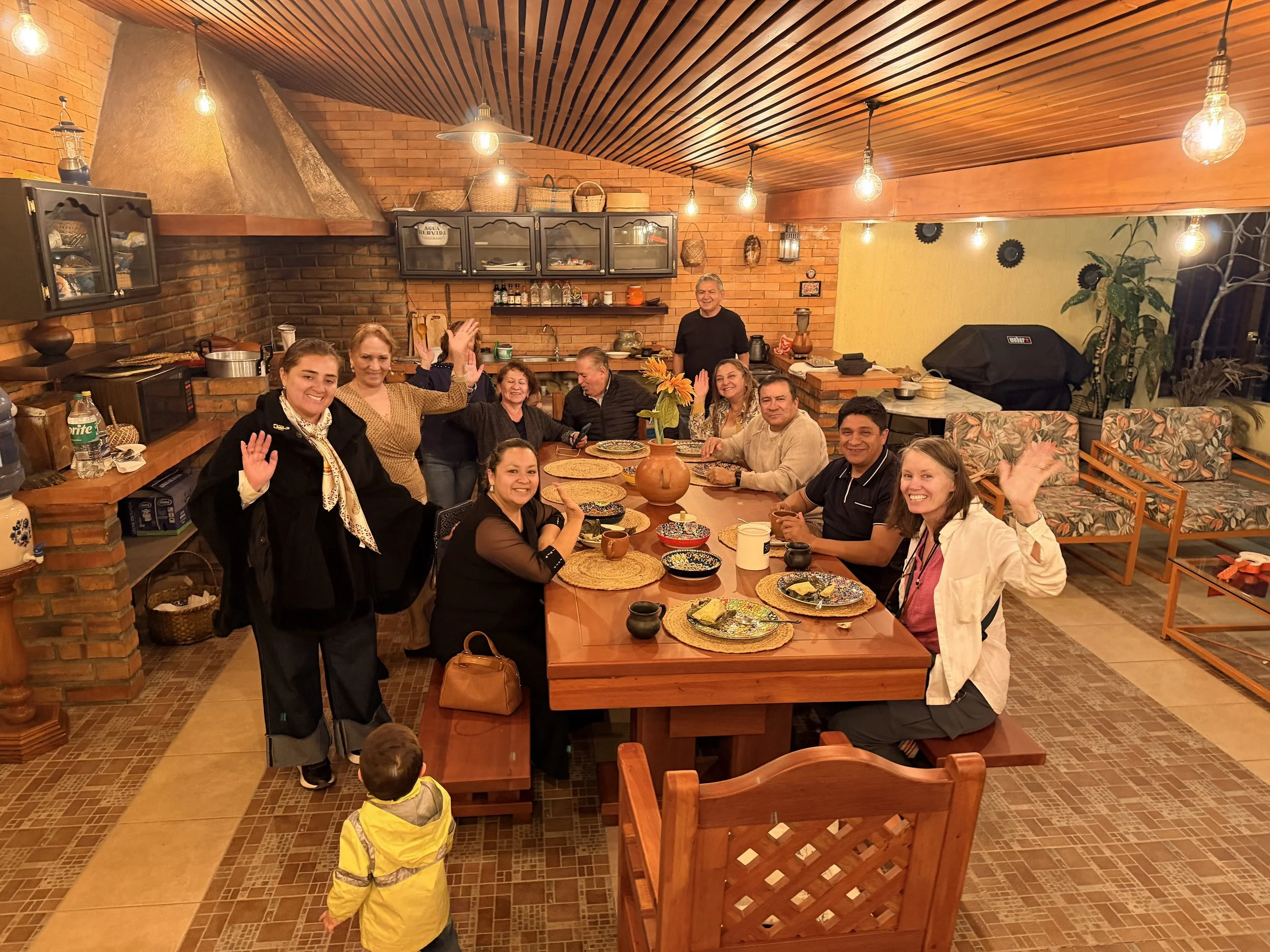
This is the rooftop kitchen where Jenny and I will be making our meals and spending our time. Not exactly a mud hut.
Our new hosts are Jorge and Mariana, and their family’s story is closely tied to the history of Chordeleg.
Chordeleg is a town of roughly 7,000 people, and it has something like 300 jewelry stores. Yes, 300.
The town is famous for filigree, a jewelry-making technique in which silver or gold is drawn into extremely fine threads and then shaped into intricate earrings, pendants, and other pieces.
It turns out that Jorge’s father was the first person in town to learn the craft and open a workshop. He was generous about teaching what he knew, so before long his relatives, neighbors, and seemingly half the town were making filigree and opening shops of their own.
I’ll admit that 300 jewelry stores are more than I need in my new town. Personally, I wouldn’t object to a little more variety in the shopping options. But there is no denying that Jorge’s father brought a great deal of prosperity to Chordeleg and the surrounding area.
Jorge worked in the family business before moving with Mariana and their four children to Queens, New York where they spent the next 30 years. Three years ago, they moved back to Chordeleg to enjoy their retirement in their hometown.
Yesterday, we went to another party, this time at the home of Jorge’s mother. She is 98 years old and looks amazing. We met even more members of the family and were treated to another very warm welcome. The Ecuadorians are certainly welcoming us with open arms.
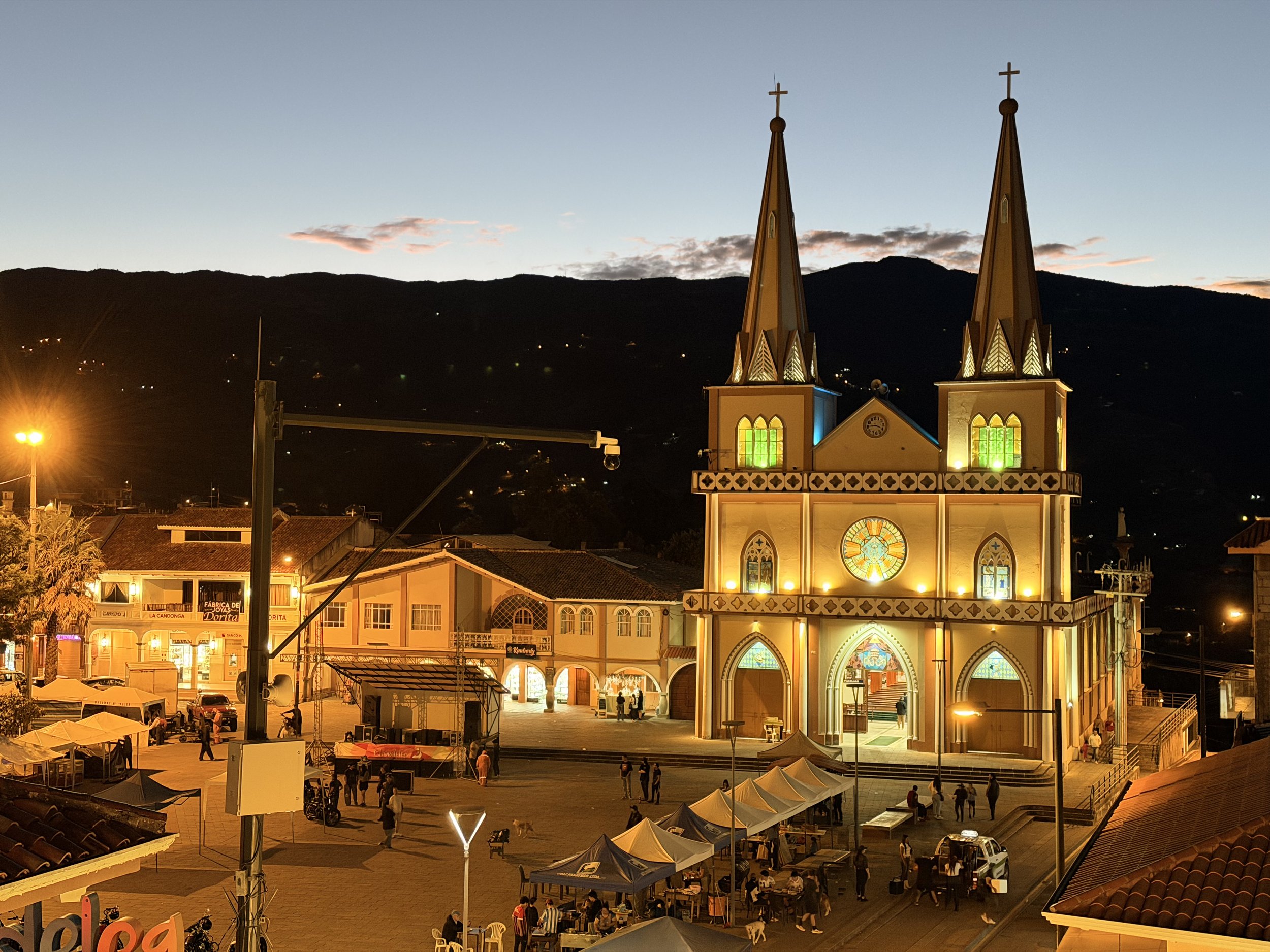
The view from our rooftop.
But there is one more part of this story that makes our being here feel especially meaningful.
In 1963, just two years after President Kennedy launched the Peace Corps, a Volunteer named Elana Thompson served in this area. She worked in small-business development and played an important role in helping Jorge’s father establish his workshop and store.
That workshop eventually became much more than a family business. It helped turn filigree into a signature industry for Chordeleg and created an economic legacy that has brought tens of millions of dollars into this region.
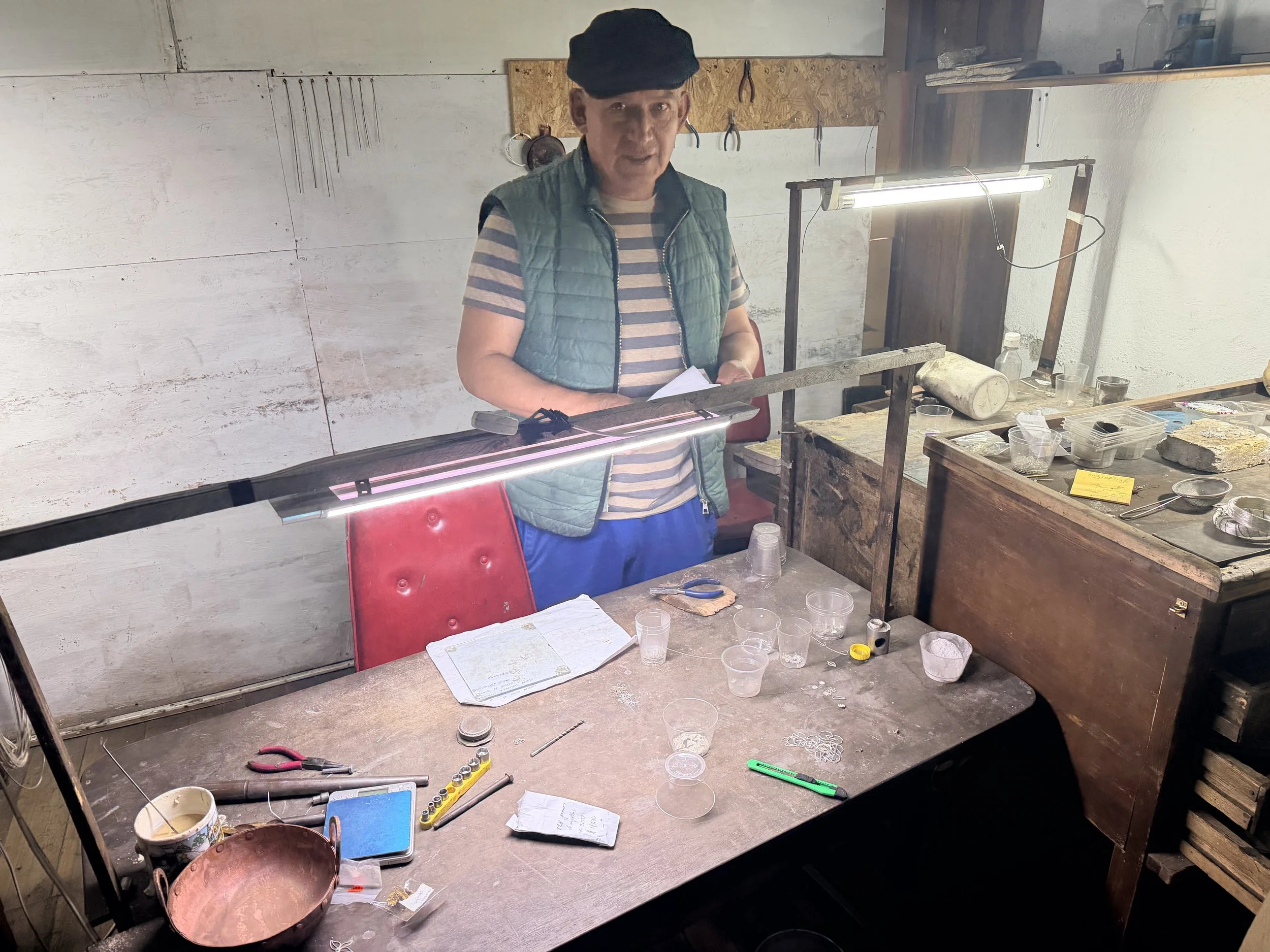
This is Edgar, Jorge’s brother, in his jewelry workshop.
More than 60 years later, Jorge and Mariana are hosting two new Peace Corps Volunteers in their home.
Tomorrow, Jenny will walk across the town square to the municipal offices and begin her work as a Health and Well-Being Volunteer. I’ll commute four miles to Gualaceo—a city of about 44,000 people—to start my work in Youth and Family Development.
Those are our official assignments, but the Peace Corps has made it clear that we have a fair amount of freedom to work on other projects that interest us, fit local needs, and support the broader goals of our assignments in health and youth development.
The Peace Corps’ three goals are:
To help interested countries meet their need for trained people.
To help the people we serve better understand Americans.
To help Americans better understand the people and cultures of other countries.
That third goal is one reason I’m writing this blog. If Jenny and I can do something useful here, share a little about ourselves with the people we meet, and help our friends and family back home better understand Ecuador, we’ll be doing exactly what we came here to do.
Here we go!