Plants in my house.
As Peace Corps Volunteers, we have moved a lot closer to the governmental bureaucracy we all know and love. I suppose every organization has its own red tape, reporting requirements, funding structures, and hierarchies. Navigating all of this is something new for Jenny and me.
One of our duties as PCVs is to report our activities to the government, which seems like a fair thing to require. They want to ensure that taxpayers are getting some value for their investment, however small that investment may be. The annual U.S. Peace Corps budget is in the neighborhood of $400 million—less than one-hundredth of one percent of total federal spending in fiscal year 2025. I joke that the federal government wouldn’t bend over to pick that amount up if it found it on the sidewalk.
Eventually, we’ll have to track specific measures of our service: how many people we work with, what we do, and what impact those efforts have. But the Peace Corps has gone easy on us for our first quarterly report, asking simply for a story. For mine, I wrote about the seniors I spend my mornings with.
After only about six weeks, I’m beginning to feel less like an outsider who is serving lunch and more like a member of their community.
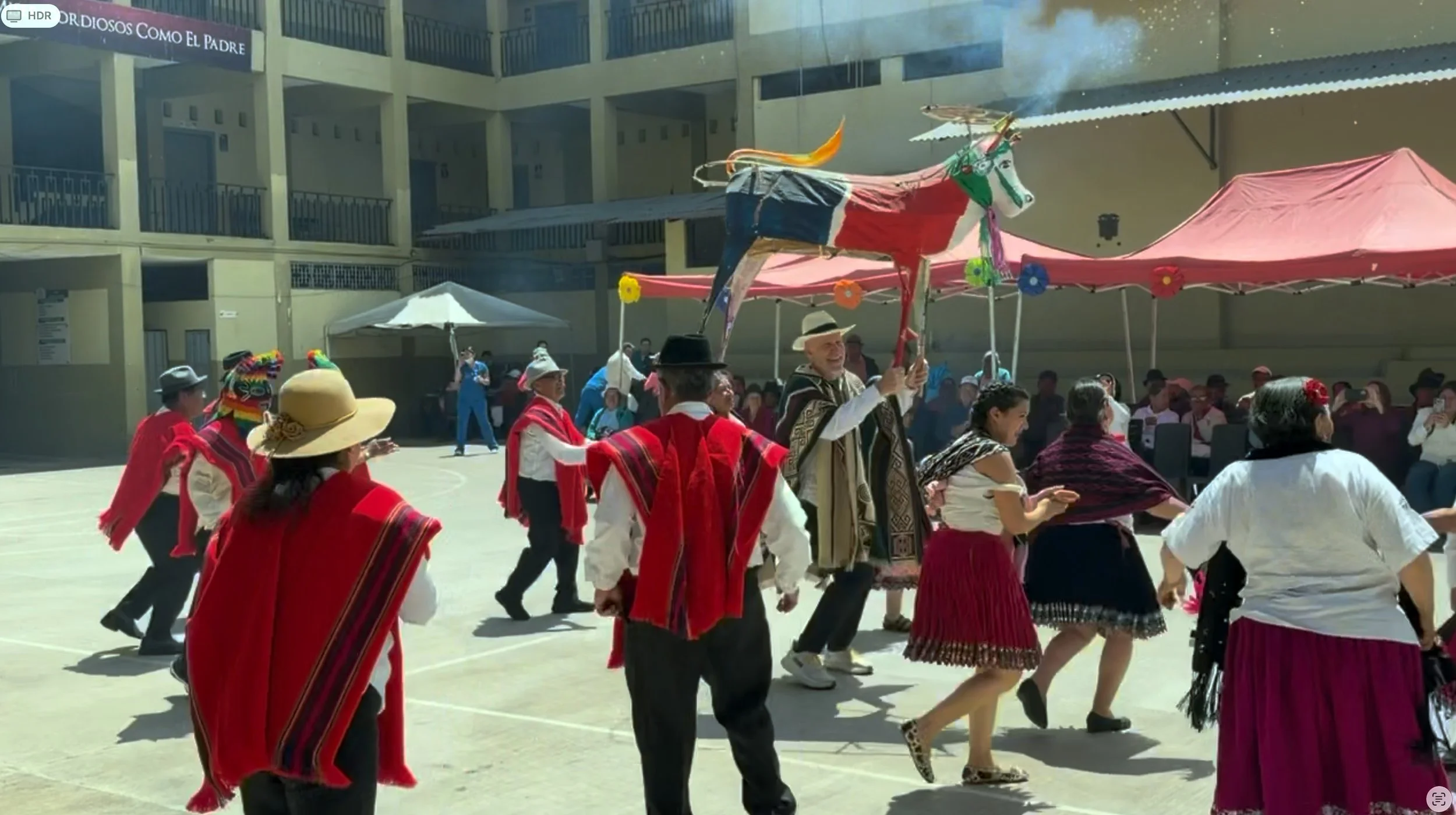
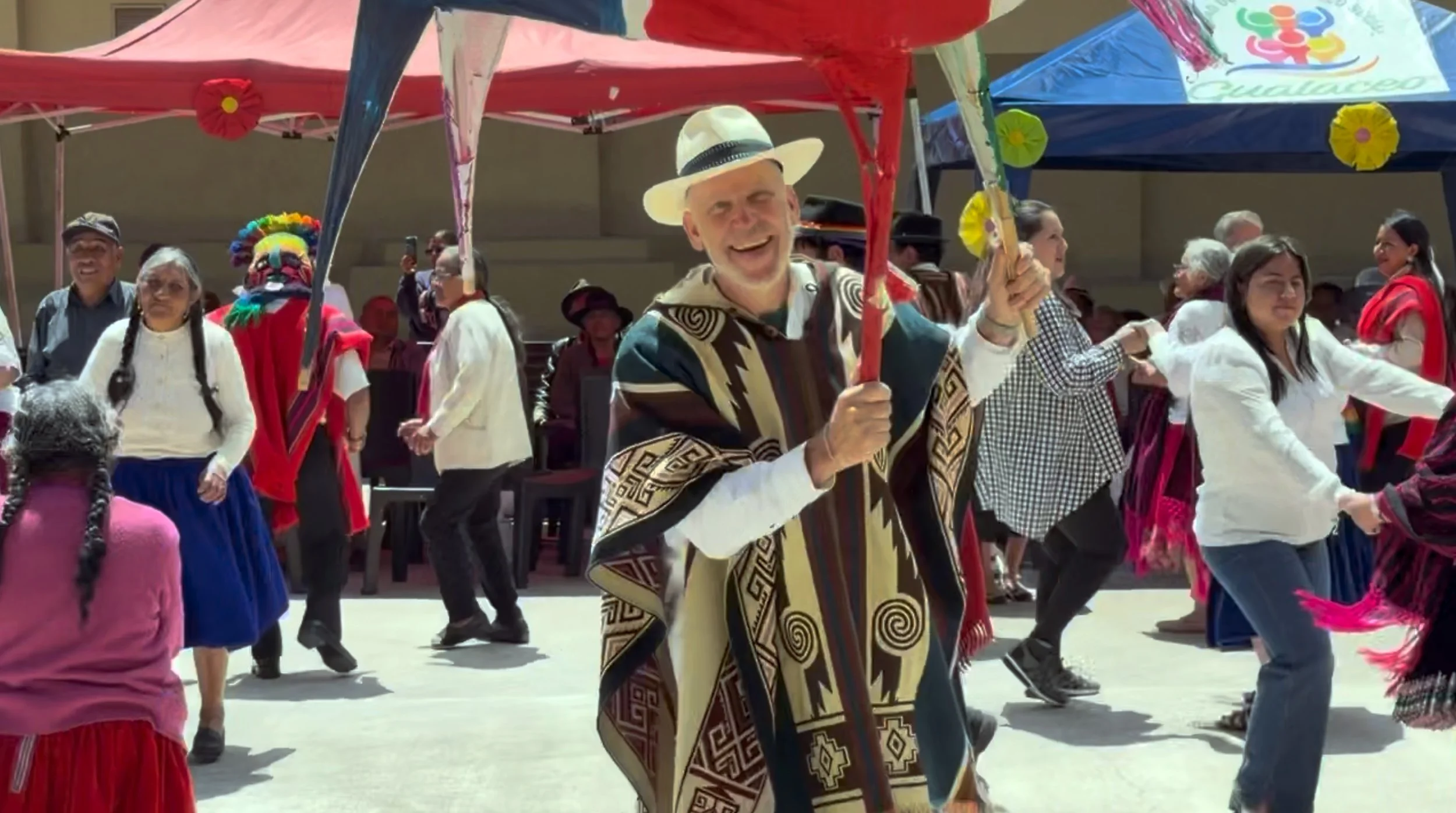
That feeling reached a new level when I was invited to participate in a traditional Ecuadorian dance the group performed at a senior fair. My role was “La Vaca Loca.” I carried a papier-mâché bull over my head—with fireworks attached—and joined the dancing and celebration. Somehow, this American with questionable Spanish had gone from standing on the sidelines to being right in the middle of it all.
It reminded me that integration doesn’t necessarily happen because of a big project or some grand accomplishment. Sometimes it happens simply by showing up. Serving lunch. Playing cards. Listening. Laughing. Dancing. And being willing to look a little ridiculous.
I still have a long way to go with my Spanish, and there is much more I hope to contribute during my time here. But relationships come first. And slowly, through those relationships, Ecuador is beginning to feel a little more like home.
My partner in the dance refers to me as “My Gringo,” but to many of my older friends in Gualaceo, I may forever be known as “La Vaca Loca.”
Jenny’s work continues to be up and down. Over the past two weeks, she’s been giving 30-minute sexuality education workshops to adolescents, focused on making good choices. Some sessions went well. Other times, she would arrive only to find that the event had been canceled, the location had changed, or someone else was giving the presentation. Sometimes the kids simply weren’t engaged. Most of the logistical problems come down to a lack of communication, which we hope will improve with time.
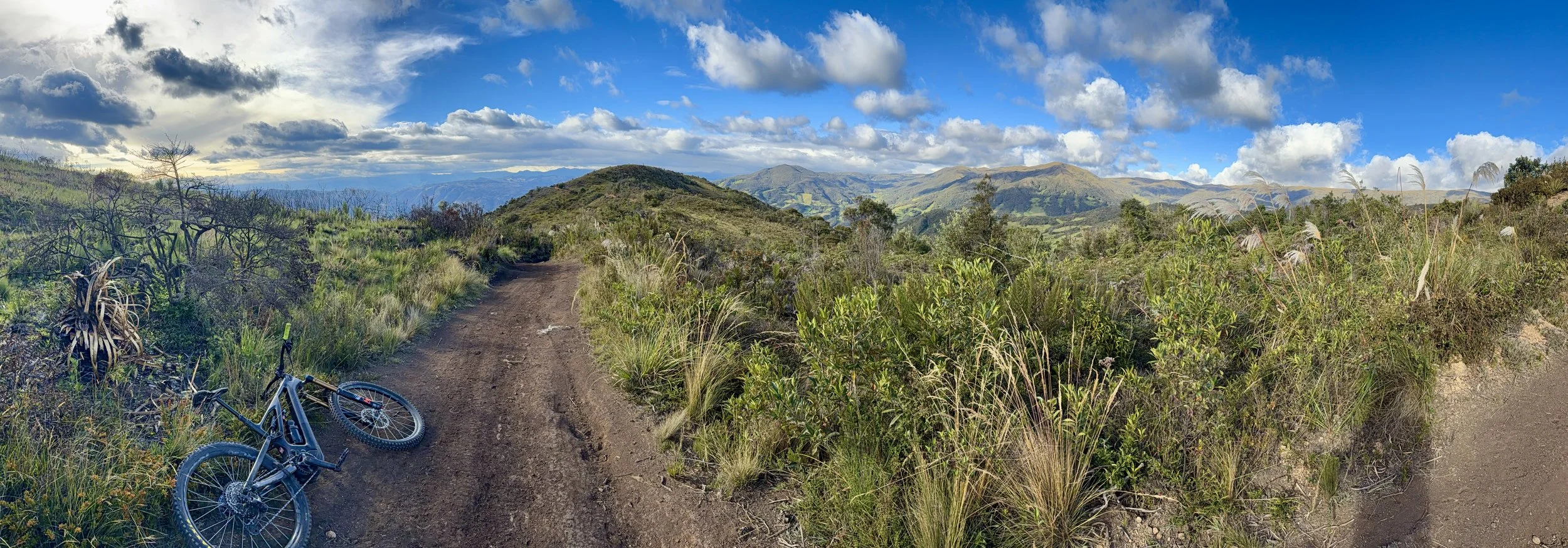
This is a shot from one of my better rides. My bicycle is electric, and while I still have to pedal it, I can ascend into the mountains in short order. Once I get above the dogs that want to bite me, I’m rewarded with amazing views of the high sierra.
The people I meet in the mountains are curious about me and often want to stop and talk, wondering what the heck I’m doing so far from town and so high in the hills.
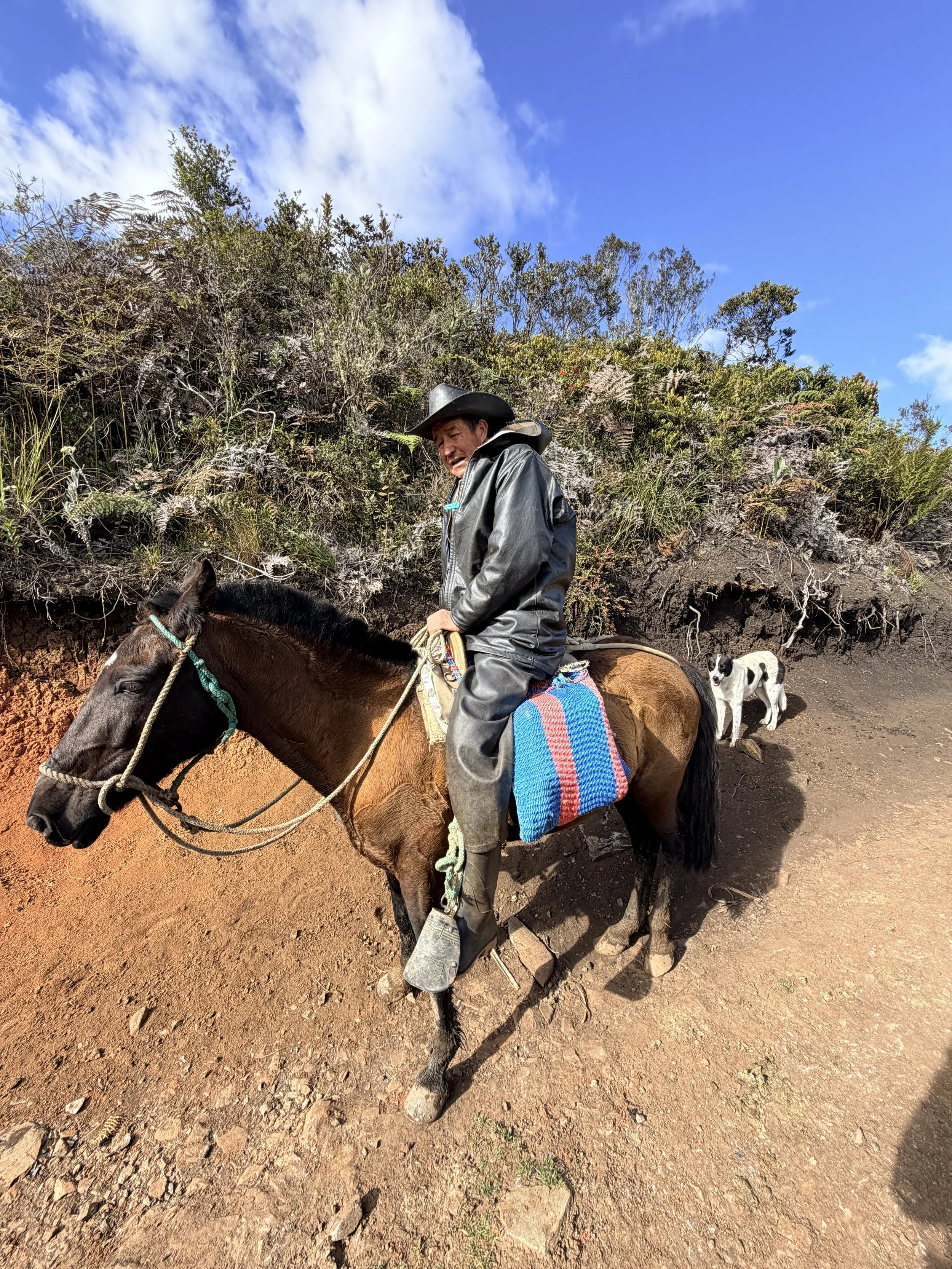
This is Luis, a farmer I met on the trail who was returning from tending his cows. The blue-and-red bags on either side of his saddle held several gallons of fresh milk. He told me he had traveled extensively in the U.S. and had been to Chicago. Make assumptions at your own peril.
It seems like everyone we meet has either been to the U.S. or has family there. Jenny and I met a man in a shared taxi tonight who has five kids in the States and had lived in Manhattan for 12 years.
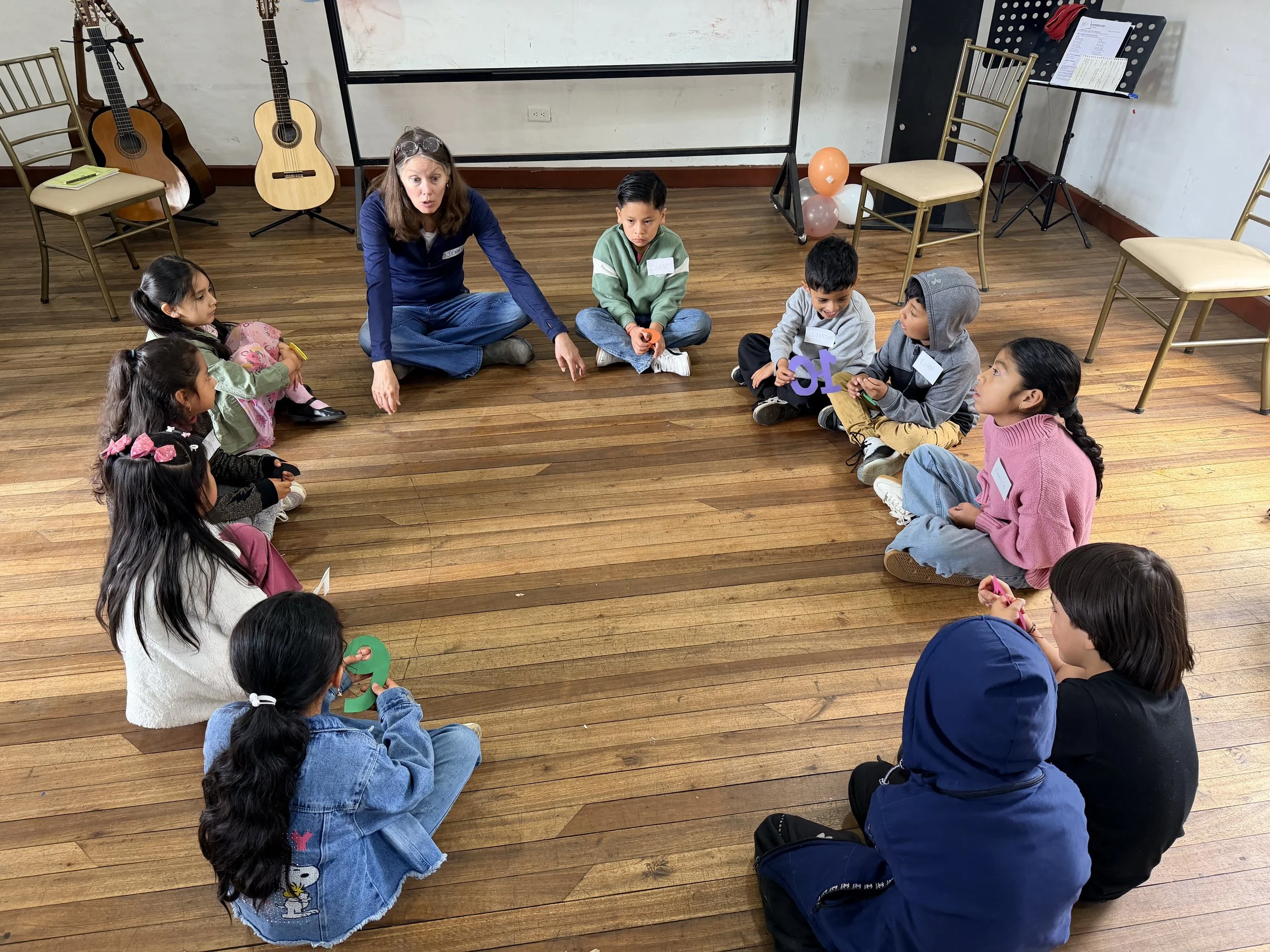
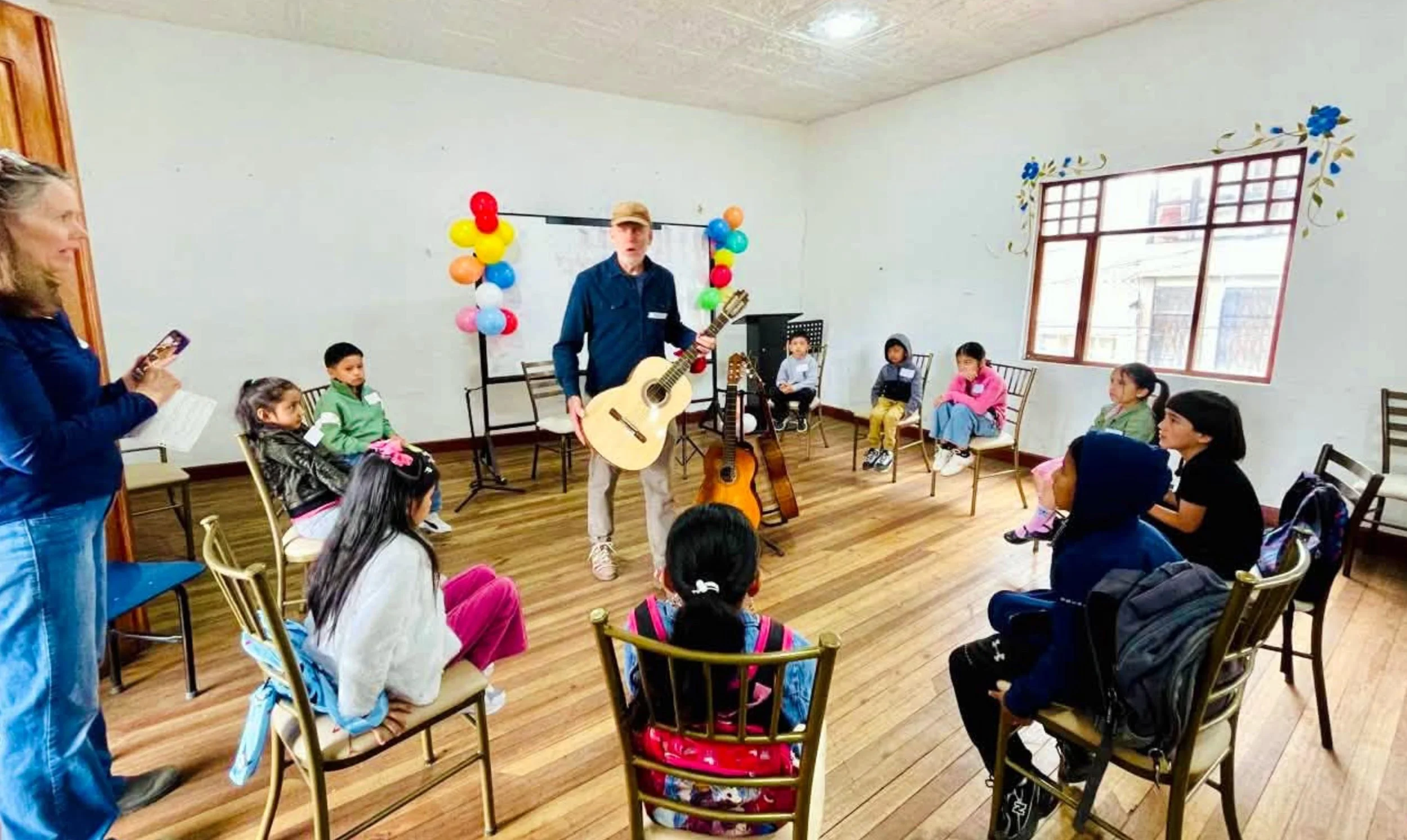
Meanwhile, Jenny and I have begun our guitar and English classes. Day one was a success, even though 15 of the 20 kids thought they had signed up for English only and didn’t know a thing about guitar! We’ll see how many show up next week.
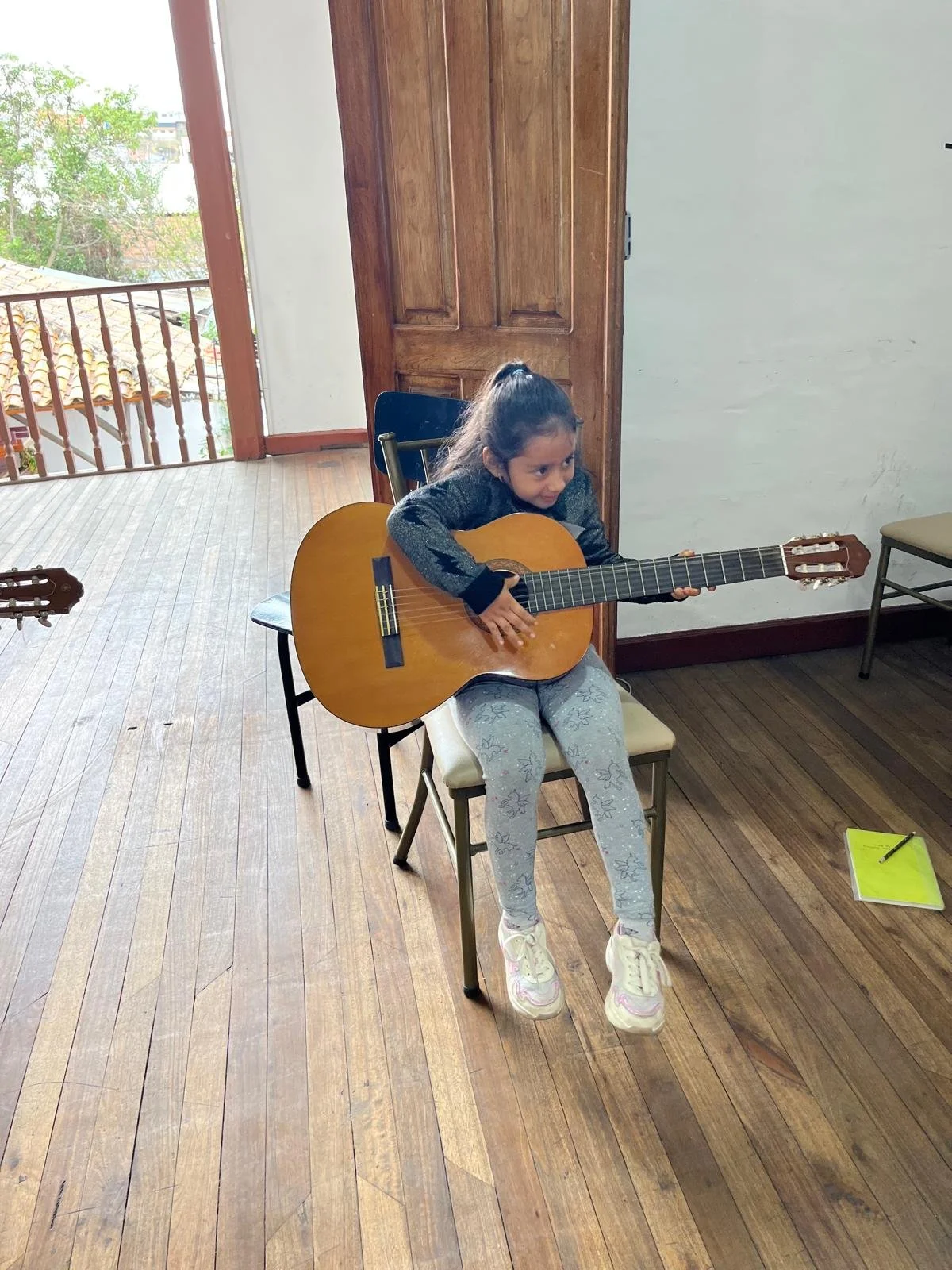
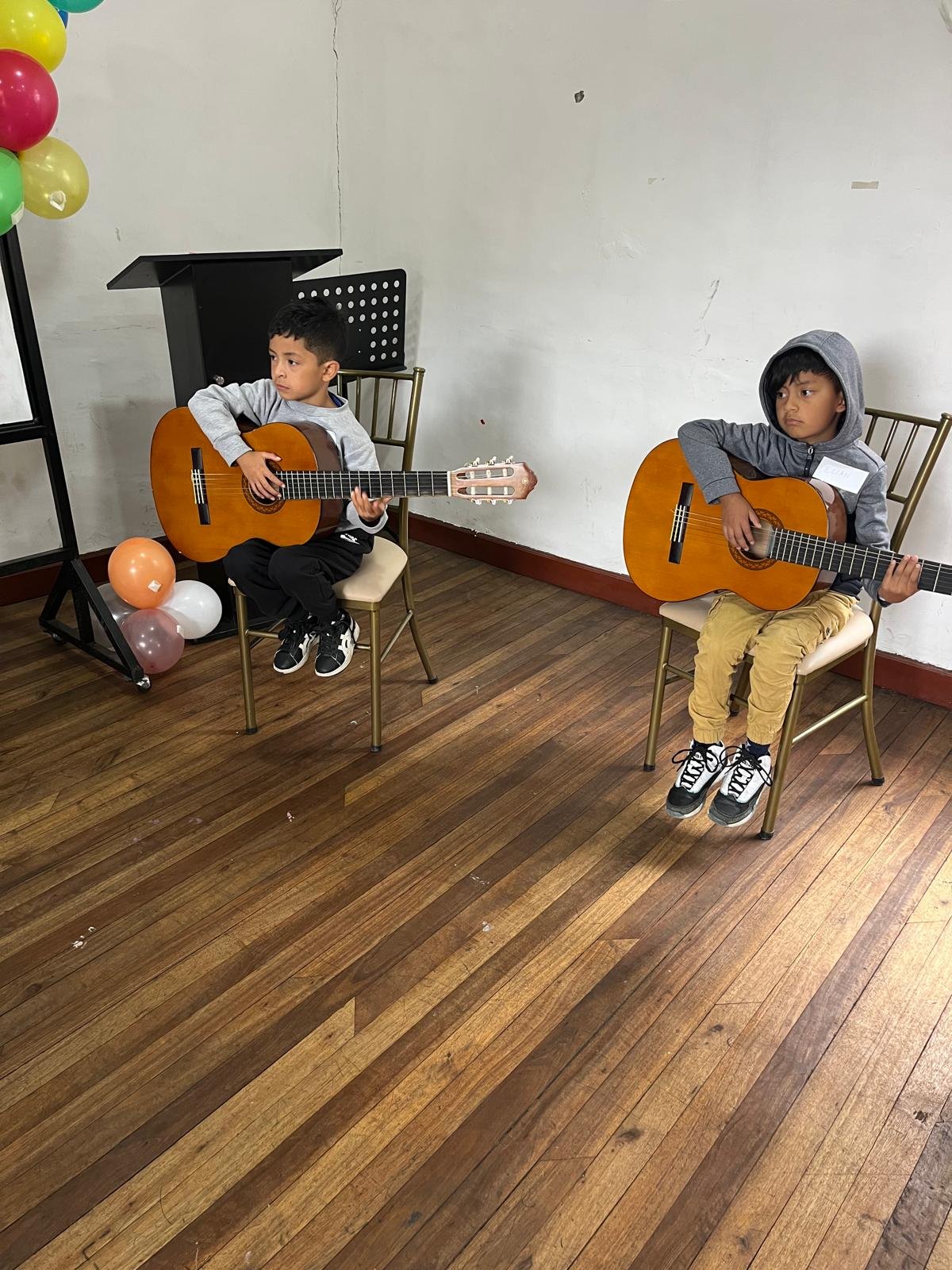
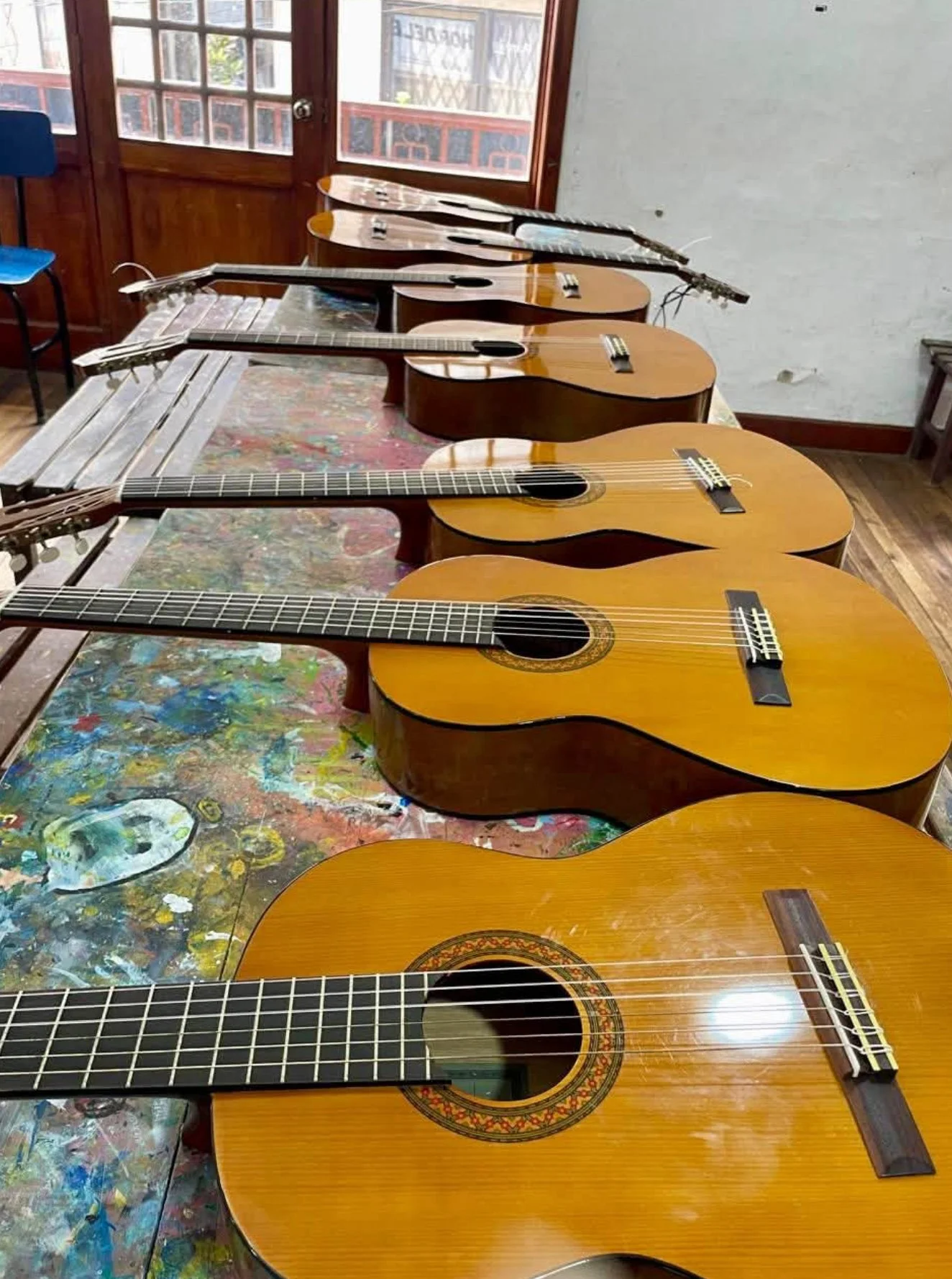
Speaking of guitars, I was able to get a new one for myself! It’s been a long four months without playing. My new guitar was made by Ricardo Jr., who learned the craft from Ricardo Sr.
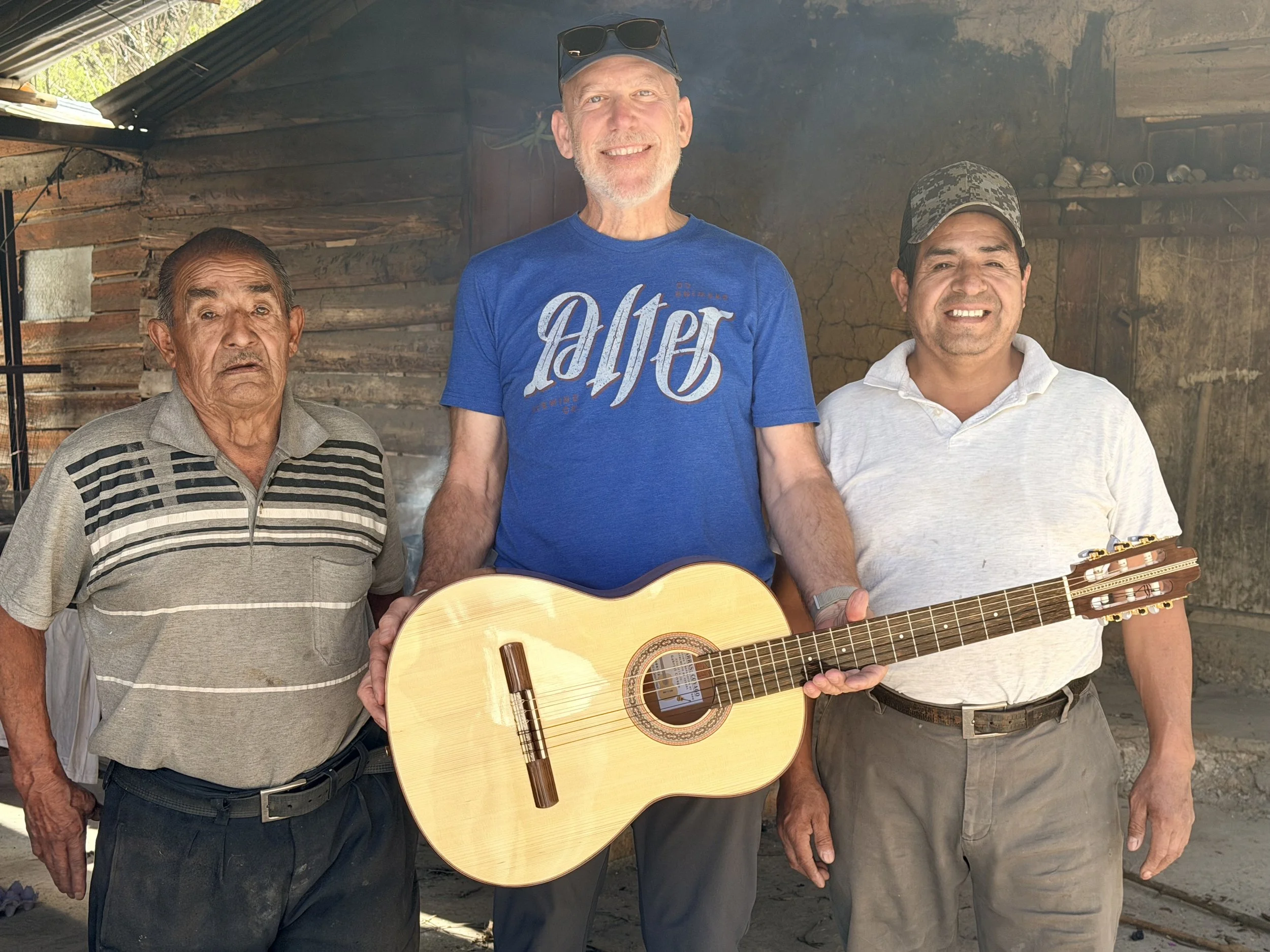
Senior was kind enough to gift us a song. It takes a while for a new guitar with new strings to stay in tune, but that didn’t seem to matter to Ricardo. He played with charm and spirit, which counts for a lot.
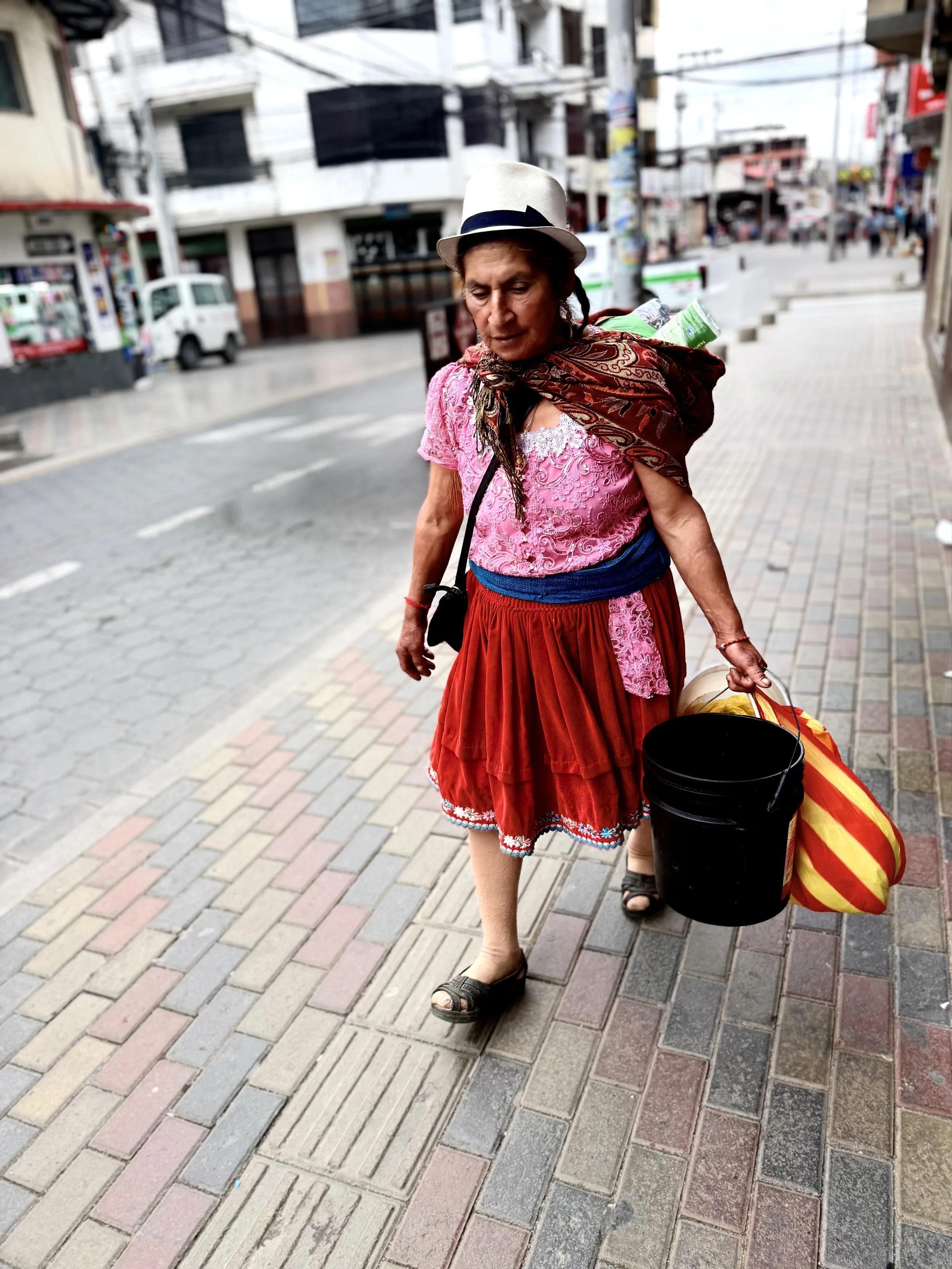
I’ve been leaning into my hobbies, hard. Riding my bike, writing a blog, playing my guitar, drawing, and photography. Gualaceo is a vibrant little town, and there is so much to see on the streets, but I want to be sensitive about sticking my phone into people’s faces. That said, I’m particularly proud of this shot of a woman going about her business. Notice the purchases in her back wrap, the lighting, and the way the sidewalks bisect her figure at an angle. My daily walk through this town is a delightful experience.
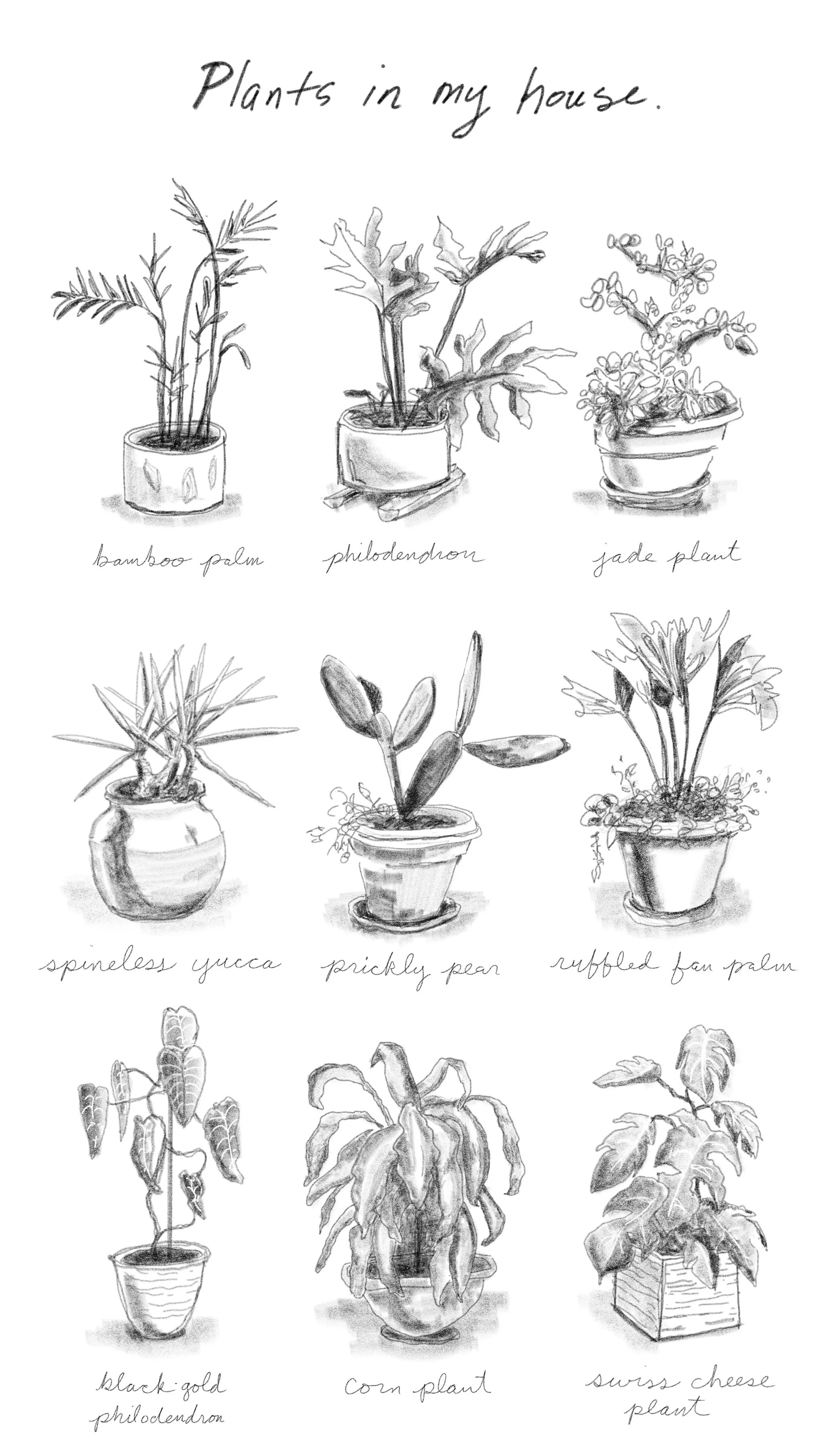
And finally, here is a small sampling of the many, many plants Maya and Jorge have in our home.
Thanks for reading!
Love, Jenny and Andy.
Hola. Estamos aqui.
We are three and a half months into our service and we are slowly, finally, settling into our jobs.
Jenny is getting her feet wet working with older adults. She’s been doing in-home wellness checks with her counterparts, which have been incredibly interesting and informative. She has revived a weekly lunch meeting of seniors that had been dormant for the last two years, and she worked on a program to collect school supplies for students. In October, she’s hoping to add some workshops for expectant mothers and women who are breastfeeding.
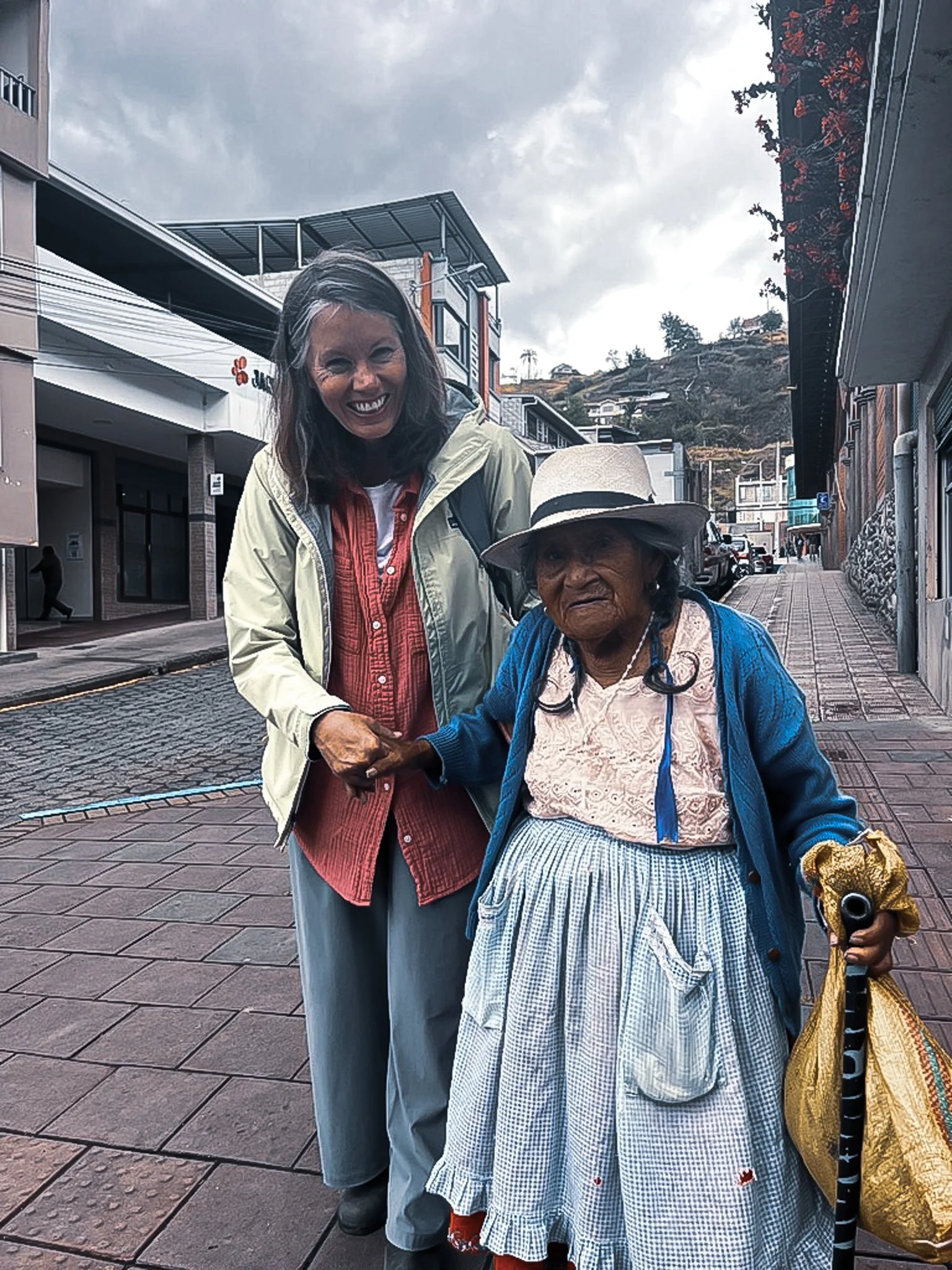
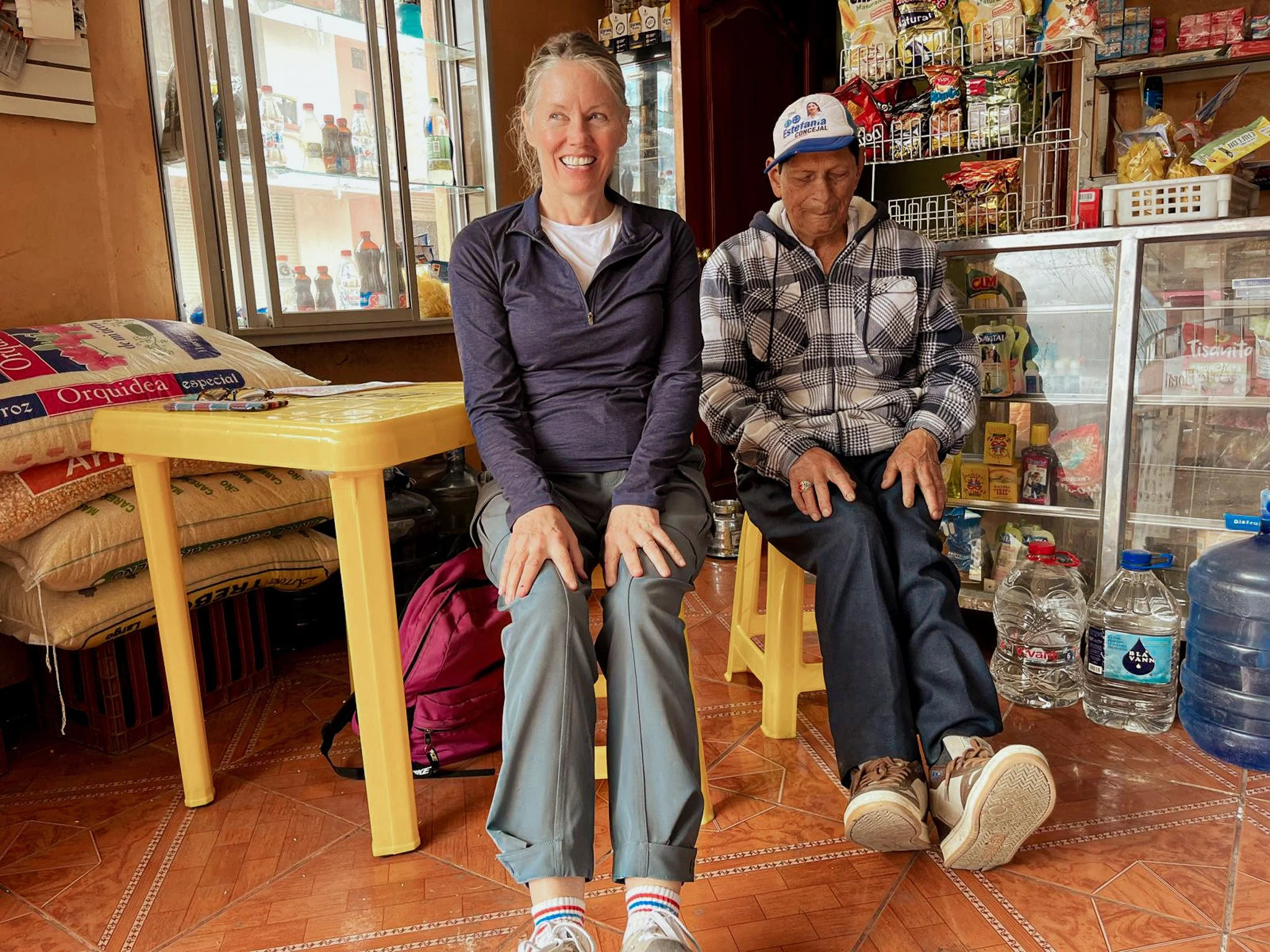
Jenny doing leg exercises with an older gentleman. It’s super common for people to have a store at the front of their home and living space behind.
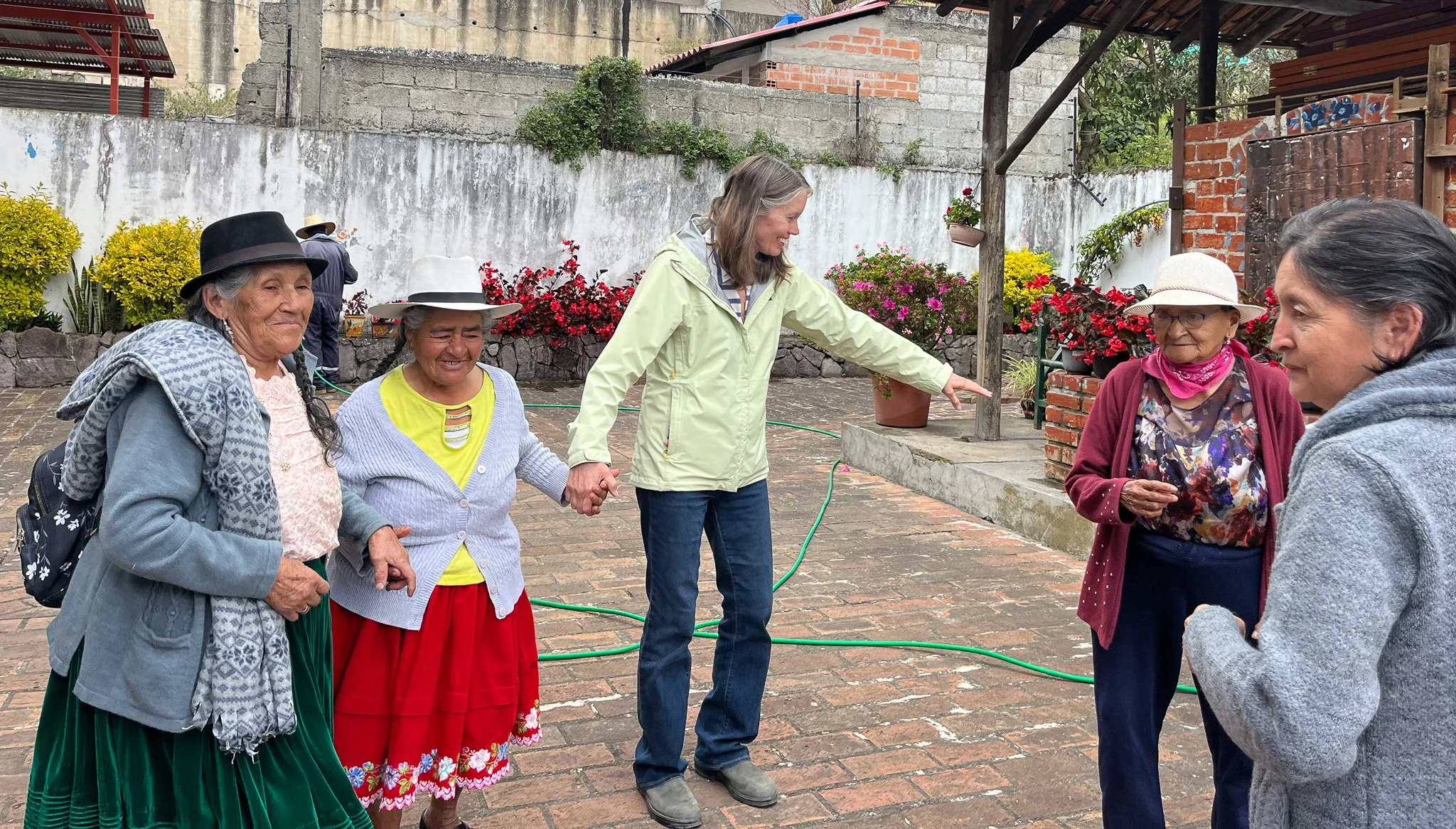
It was a dance party!
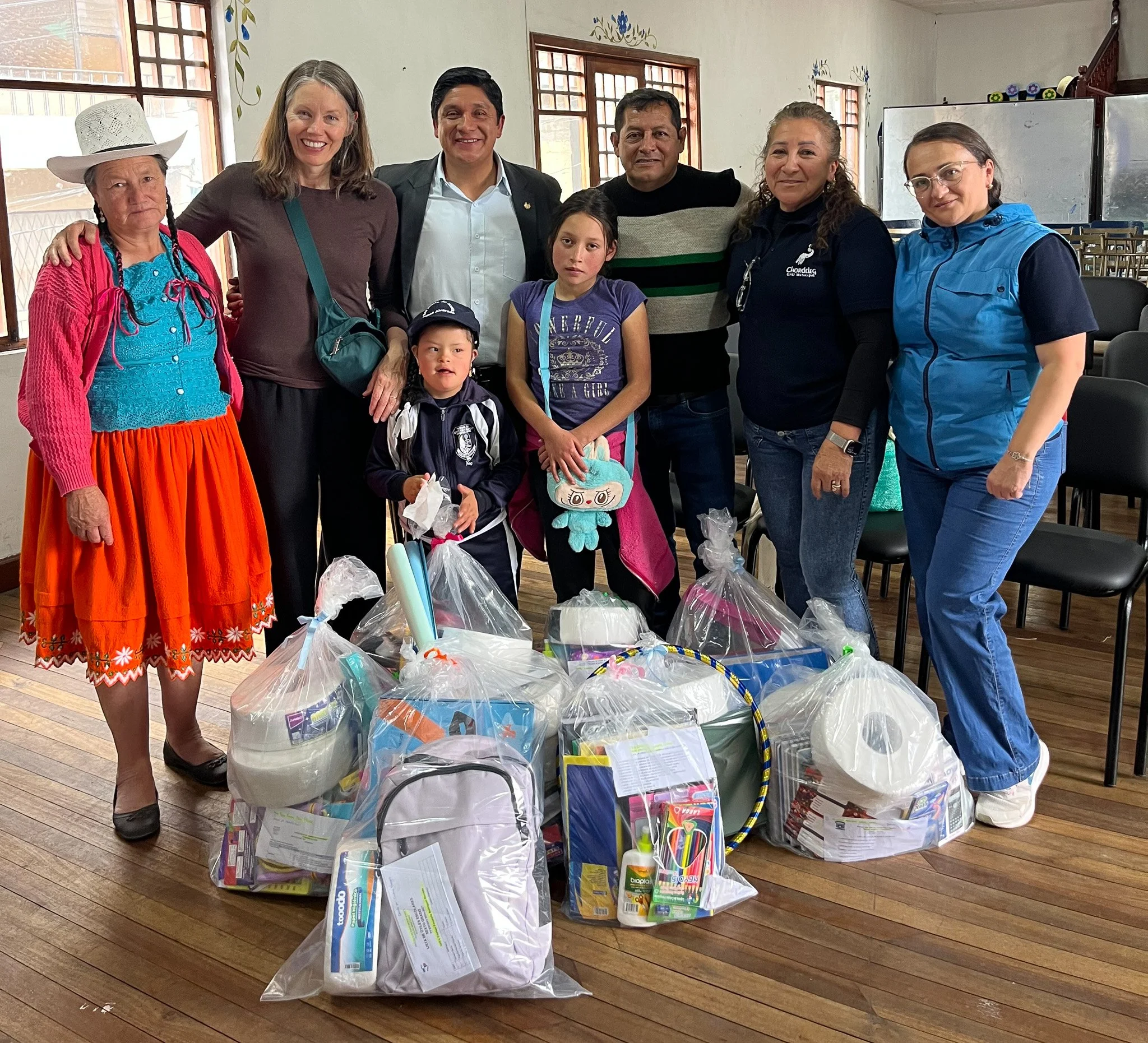
Notice the big rolls of paper in each bag. That’s toilet paper. Each student is required to bring their own.
I’ve settled into a rhythm of working at a senior lunch program in the mornings and an afterschool program in the afternoons. I’ve come to realize that I could not have chosen worse communities of people to help me with my Spanish.
The senior citizens have thick accents that are hard for me to understand, and they are hard of hearing, which makes it hard for them to understand me and my bad accent. The kids are no better. Seven-year-olds don’t know how to modify their speech to make it easier for me to understand them. And they don’t have a good enough understanding of my budding Spanish to figure out what I’m trying to say when my words don’t make sense.
That said, it hardly matters.
Both of these communities have welcomed me with open arms, quite literally. I get hello and goodbye handshakes and air kisses from every single one of the seniors (up to 30 people on a good day!). And when I arrived at the school on Friday, nine little kids ran across the yard to give me a welcome hug. I felt like Maria von Trapp!
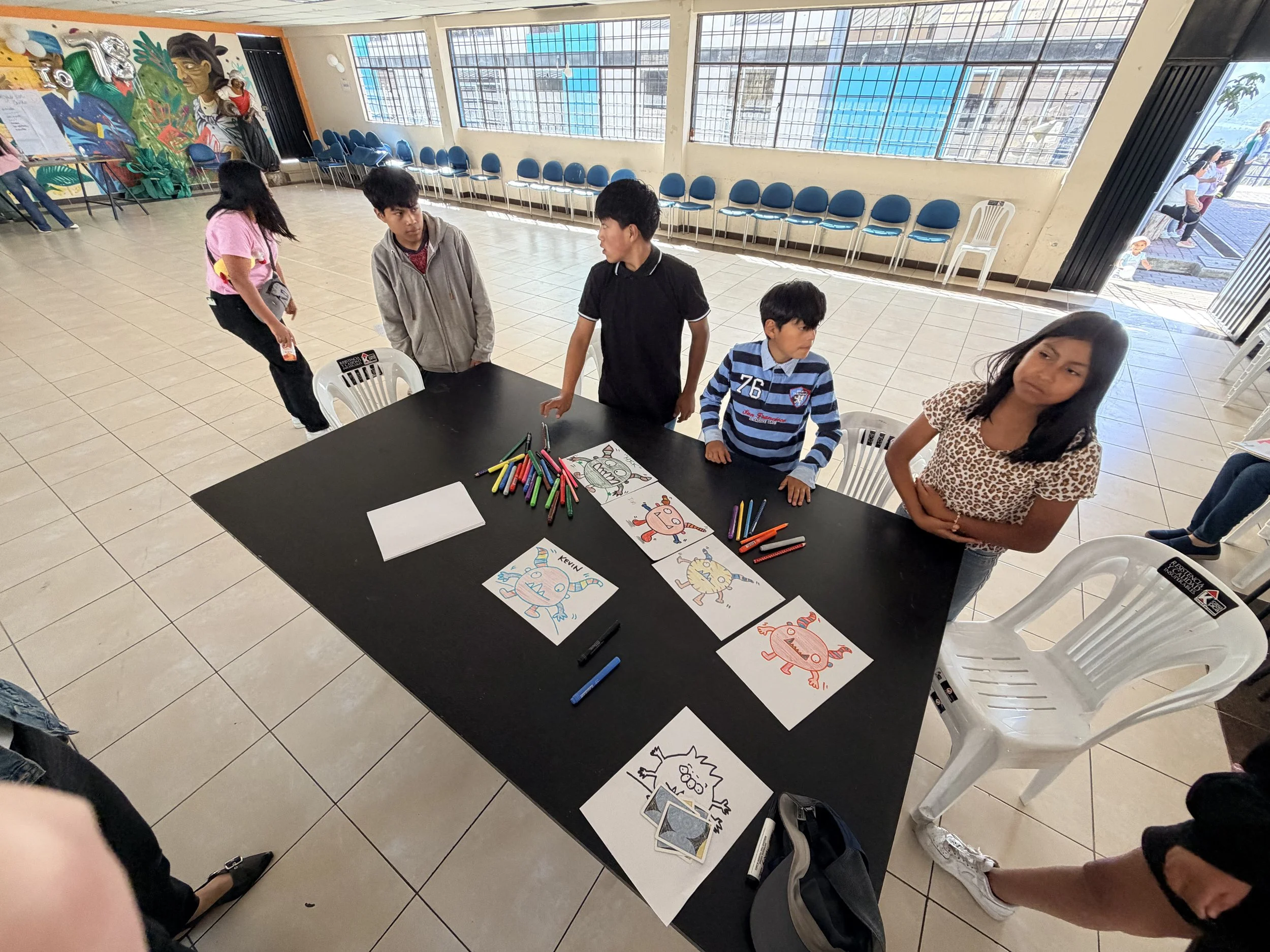
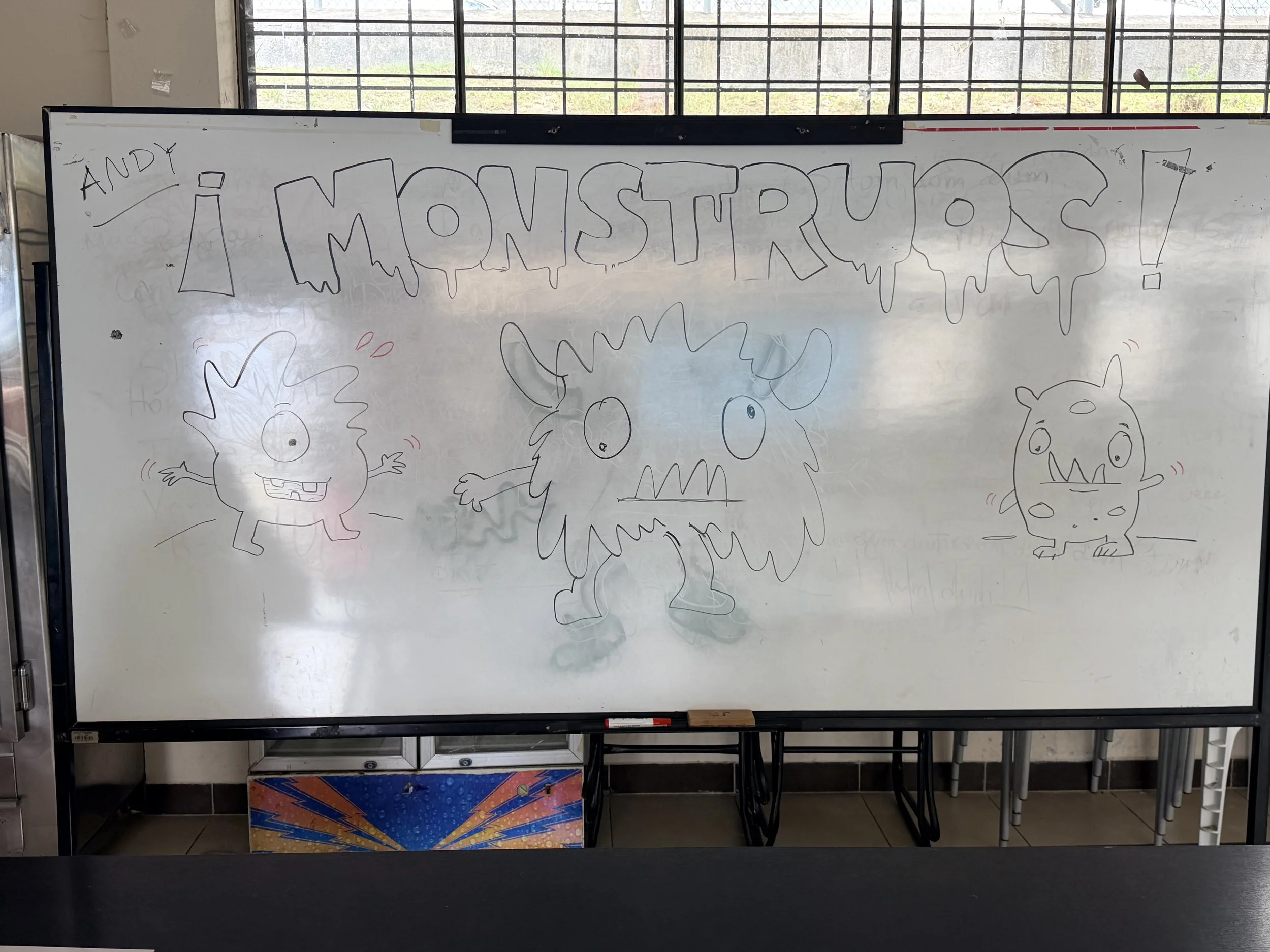
Sometimes I do wonder why we are here. Did I really upend my life and travel 3,000 miles to serve lunch to old people and teach little kids how to draw a monster?
I certainly did.
And I know that, for now, this is what I’m doing. Not changing the world, not doing much of anything really. But slowly and surely my Spanish will improve, my relationships will deepen, and I’ll be able to offer help in a more profound way.
Trust the process they say.
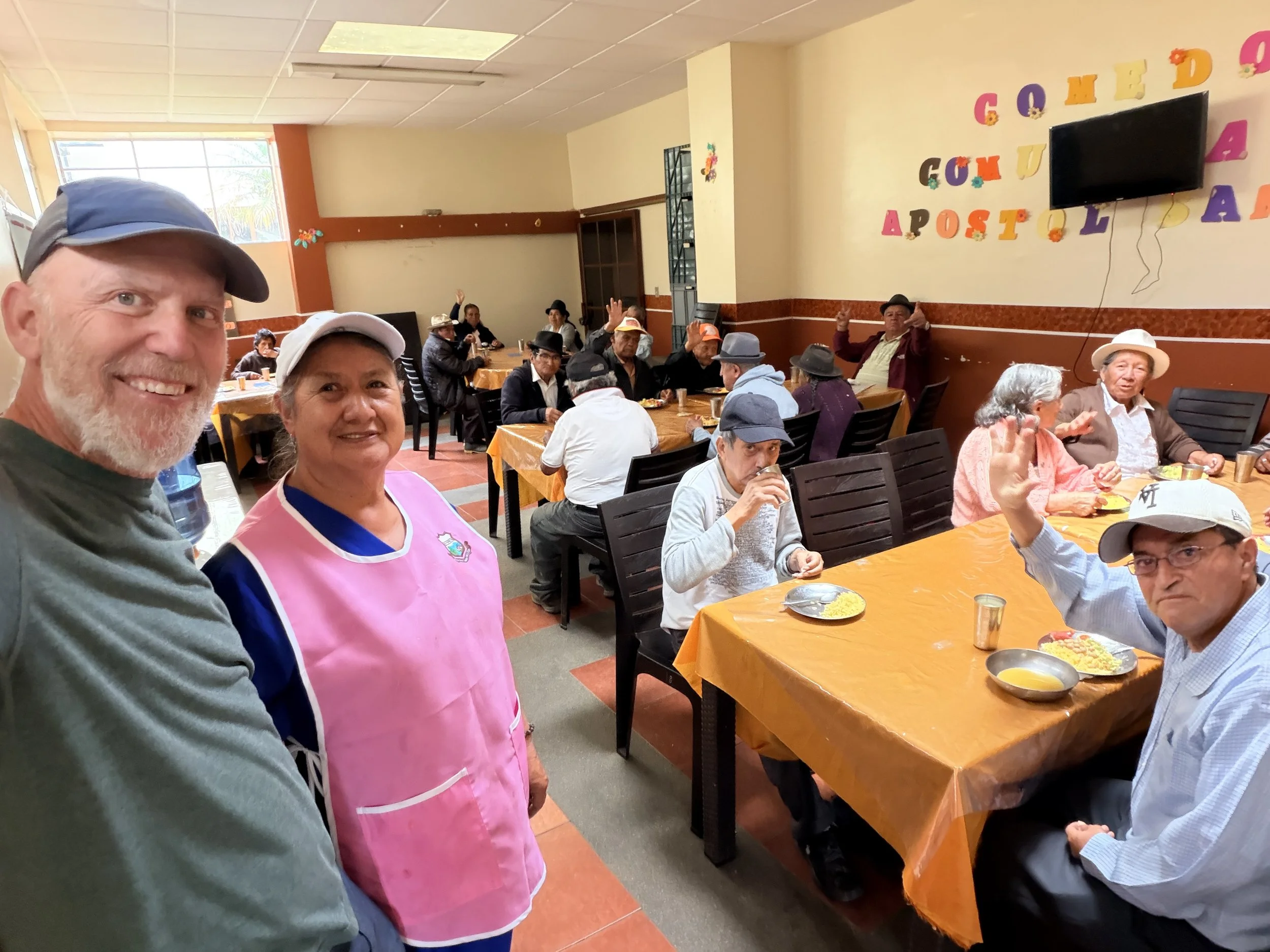
This is Elva and our friends at the senior center. Elva (pronounced “Elba”) has been cooking lunch here every weekday for 20 years.
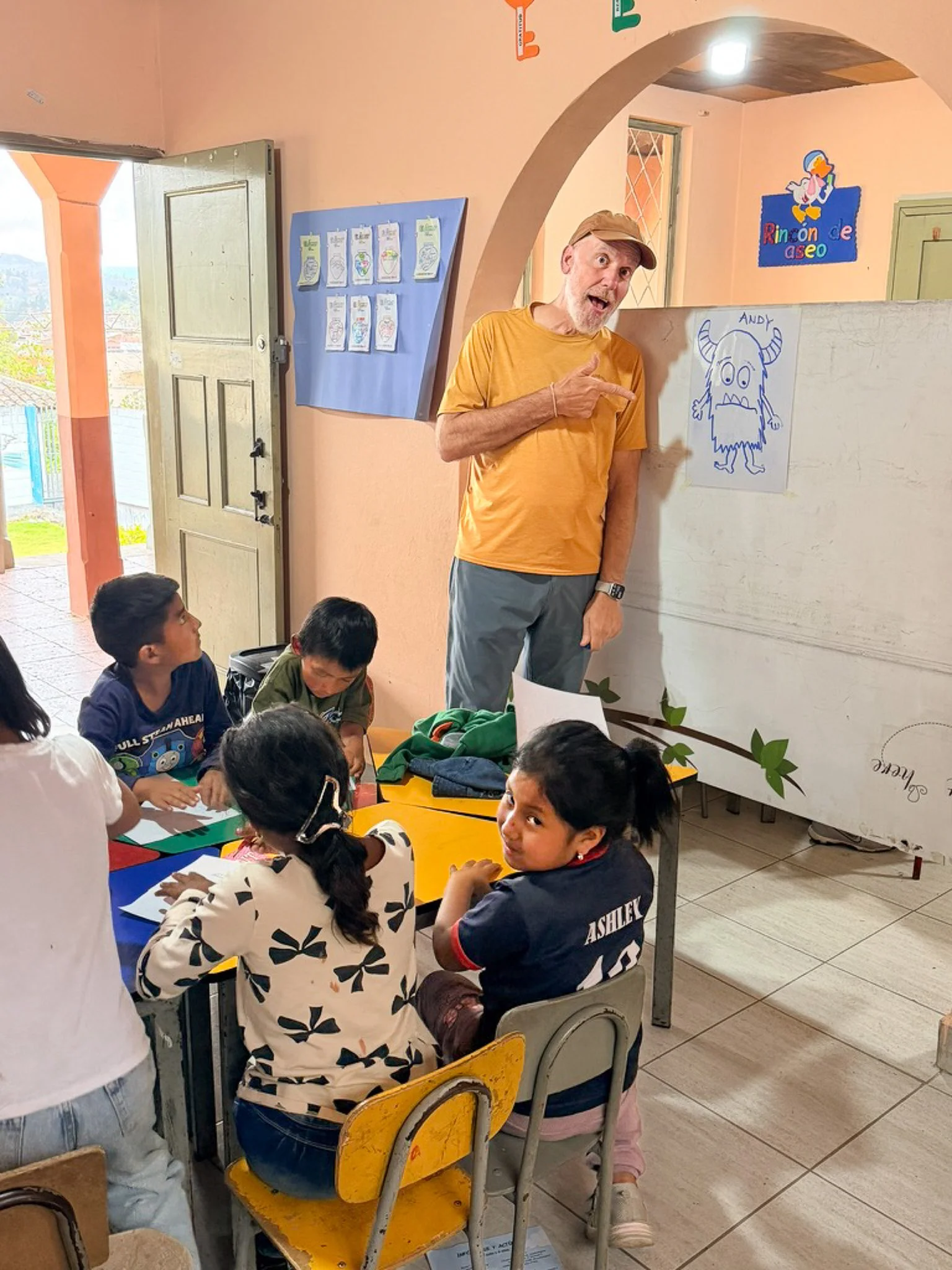
I told everyone to give their monster a name and half of them named their monster Andy.
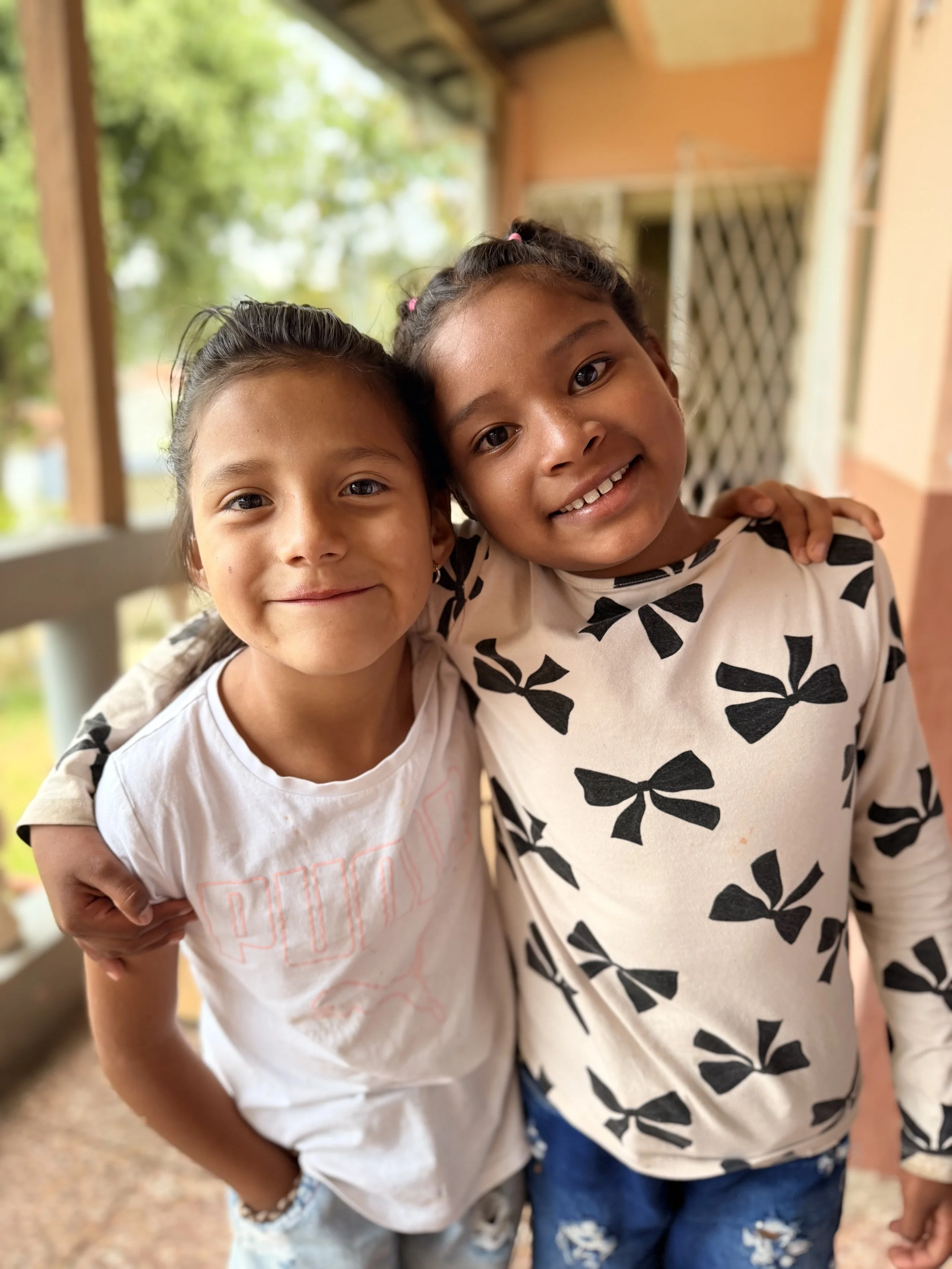
In other news, Jenny and I went on our first big mountain hike. It was awful.
Not because of the altitude or the verticality or the company, but because of the weather. It was raining, windy and muddy. Our destination was a place called Tres Lagunas. We saw Uno Laguna and decided that was quite enough.
But of course, six hours after we started, we arrived back at the base to a beautiful clear blue sky.
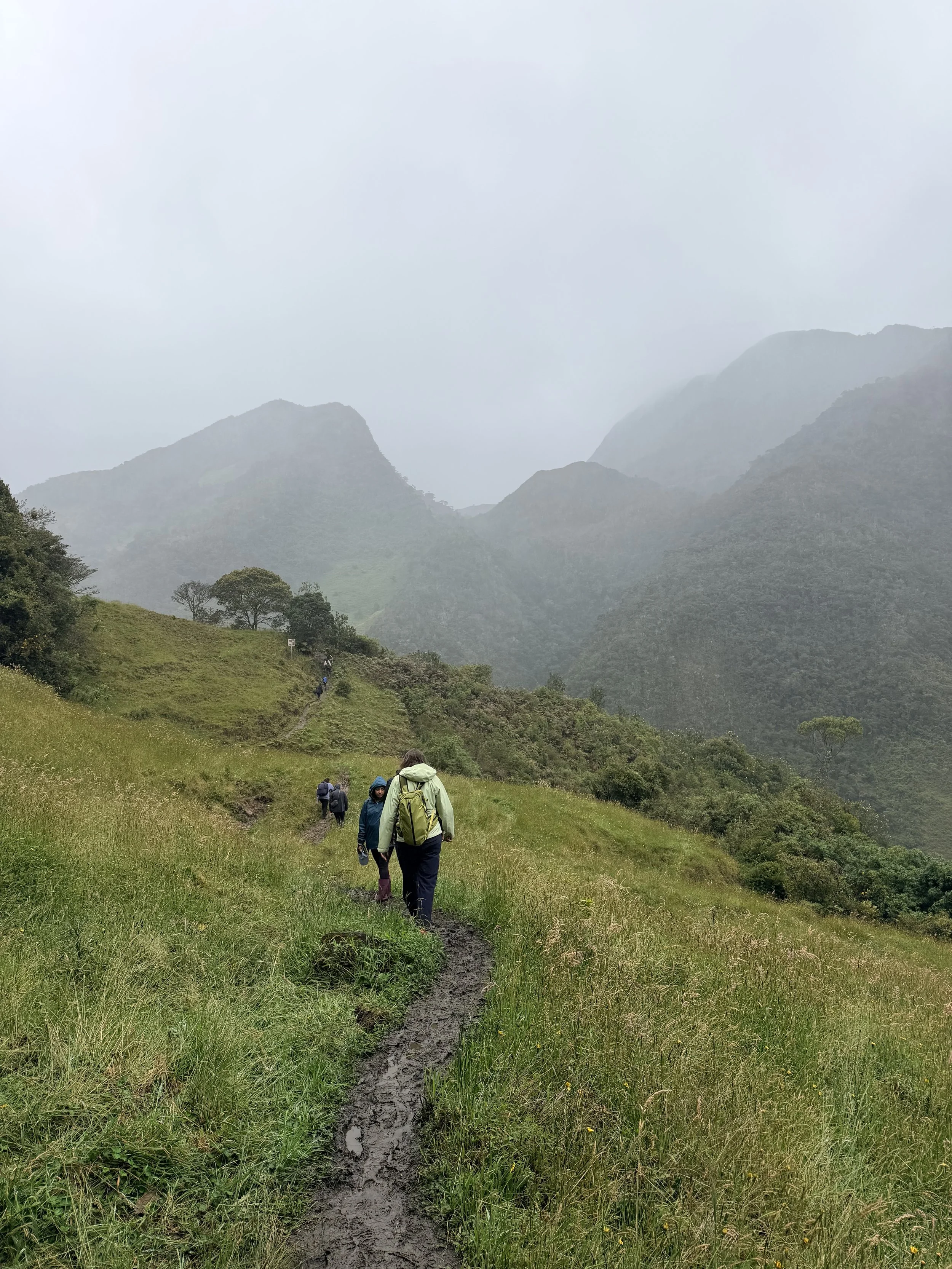
Really beautiful, but too uncomfortable to enjoy fully. Definitely “Type-2 fun.” (The kind of fun that is only remembered fondly from a warm place with a warm drink.)
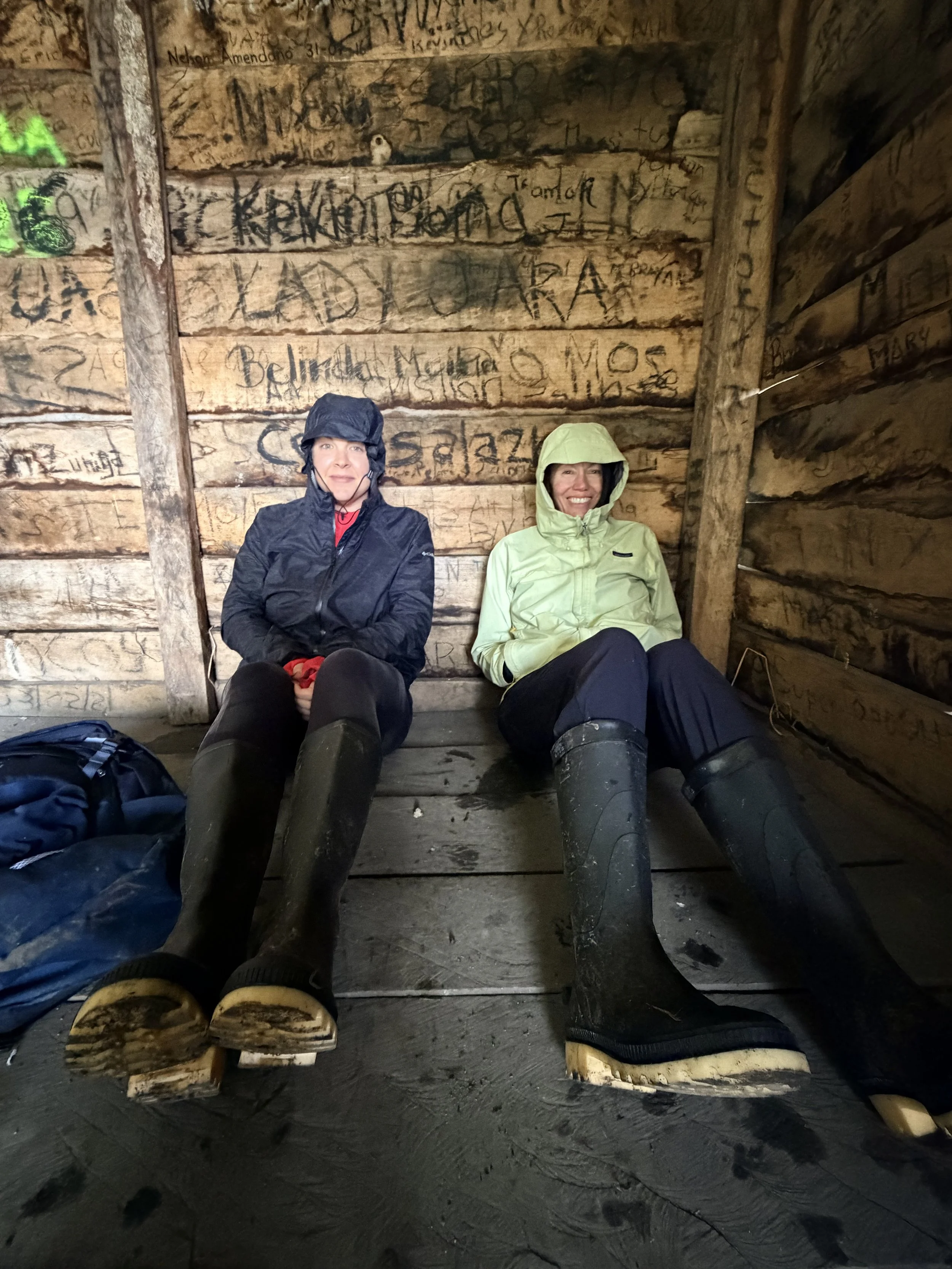
This is our friend Marlee. She’s a volunteer from our training group who was placed only 45 minutes from us, so we’ve been lucky enough to see her several times already. Notice the giant rubber boots. Lifesavers on that muddy hike.
And finally, I got a bike! I found it used on Facebook Marketplace and I’ve already been putting it to good use. It’s electric, which has been a huge win in the battle against these mountains. I can do 3,000 feet of climbing over the course of a two-hour ride.
Unfortunately, that motor hasn’t done much to persuade the dogs not to chase me. Man, it’s insane how aggressive they can be.
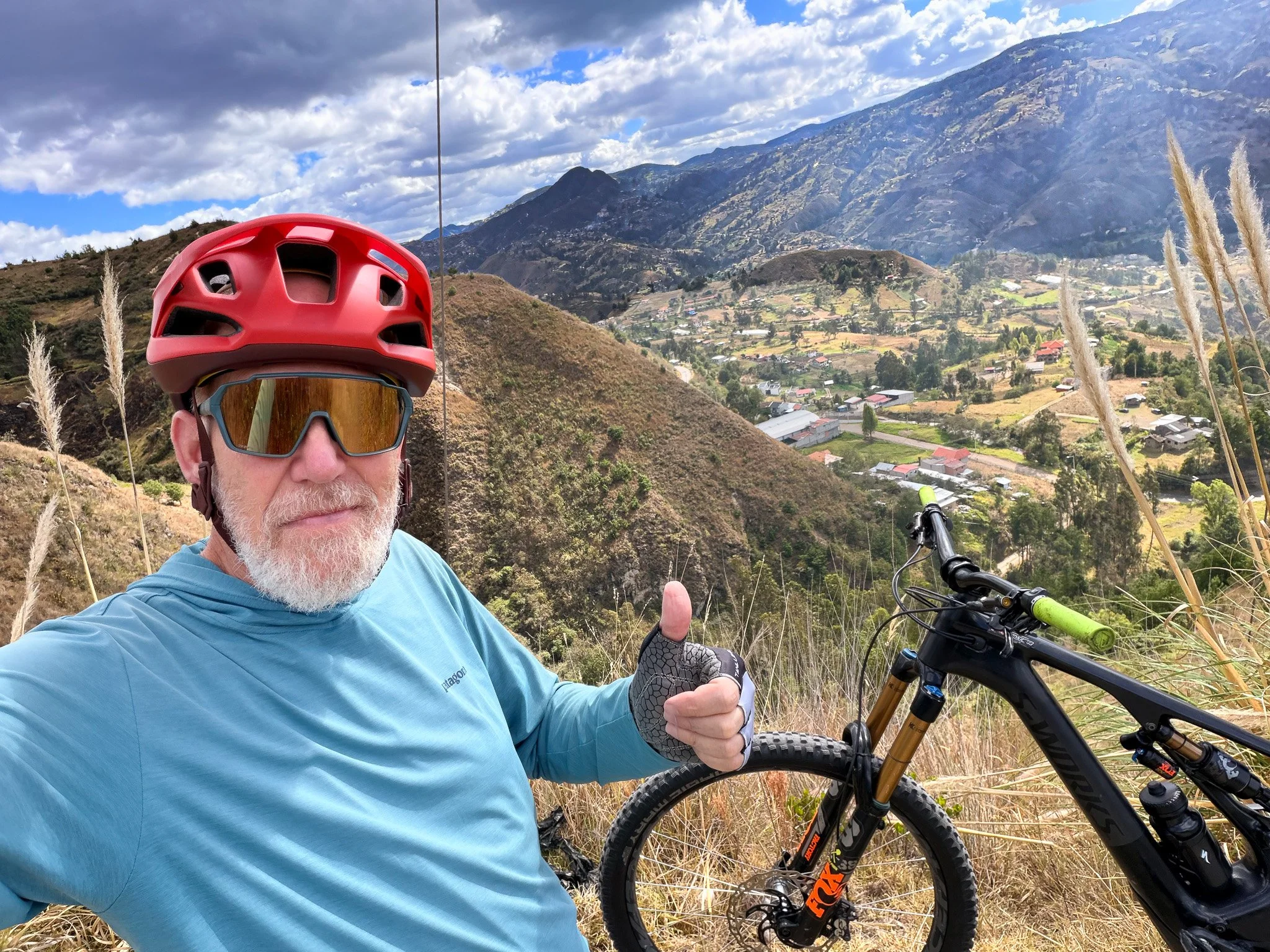
I’m not in Illinois anymore!
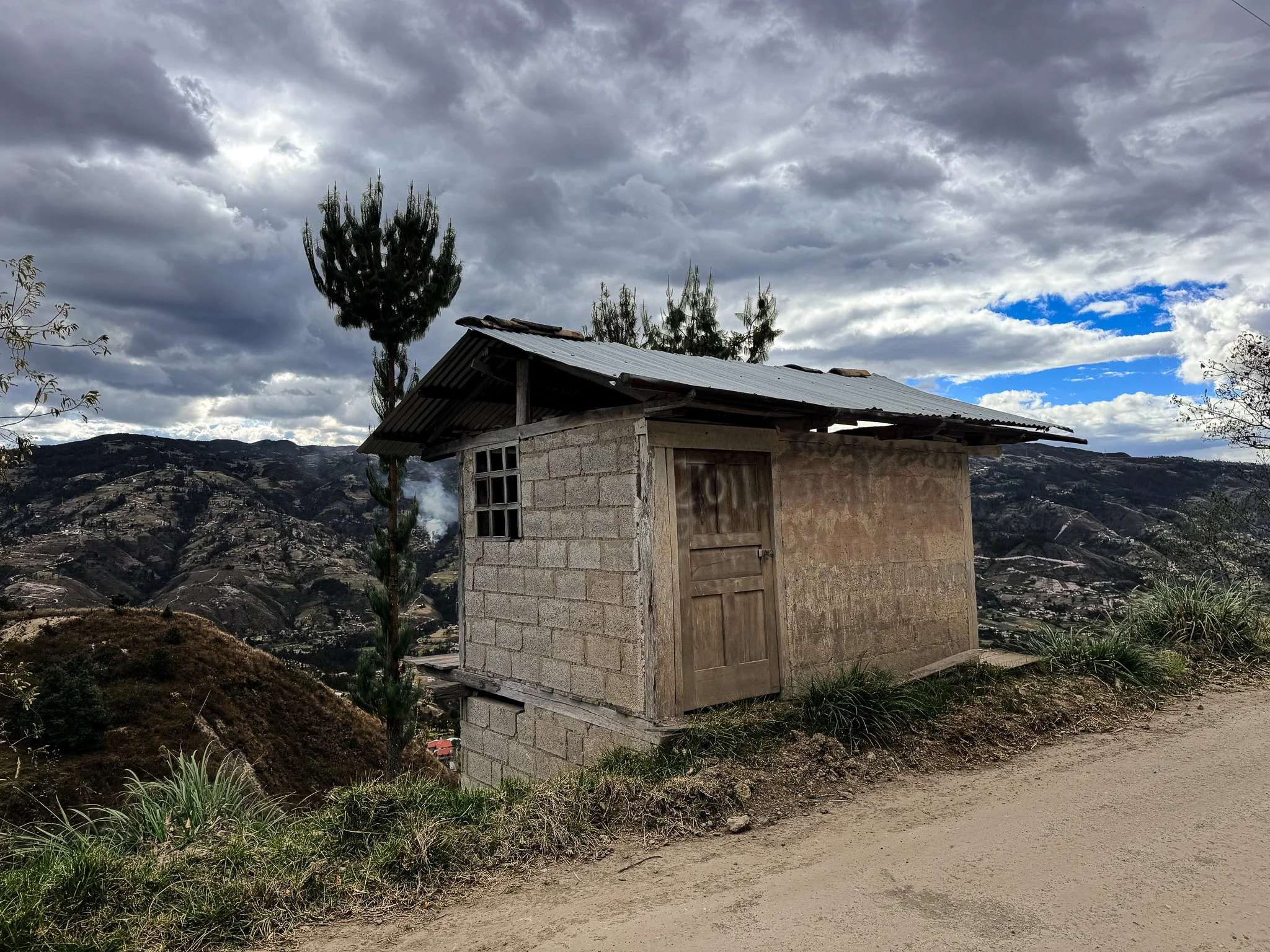
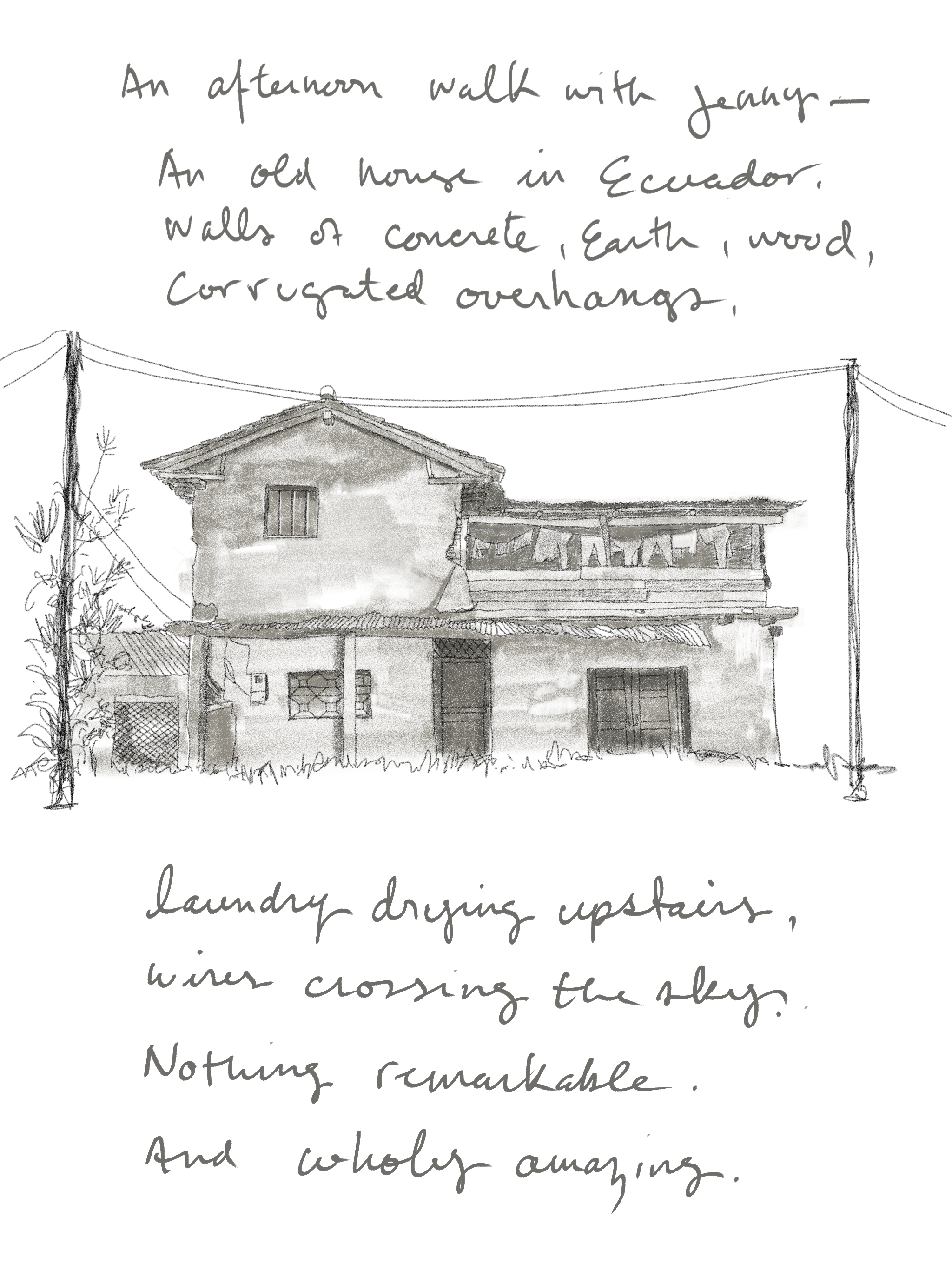
I’m obsessed with these old houses.
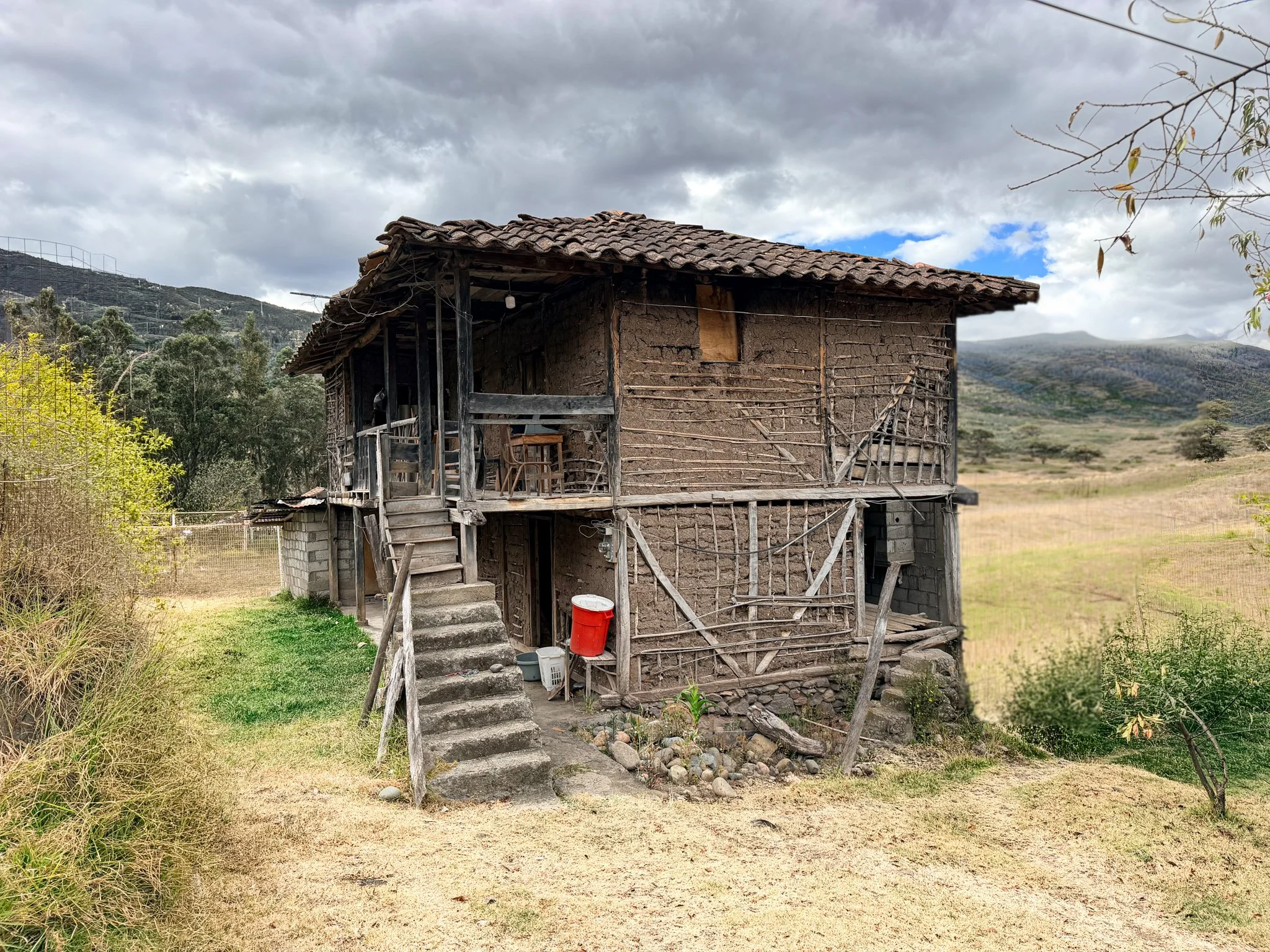
I want to draw this one, but I don’t think I could properly convey the mud and earth walls.
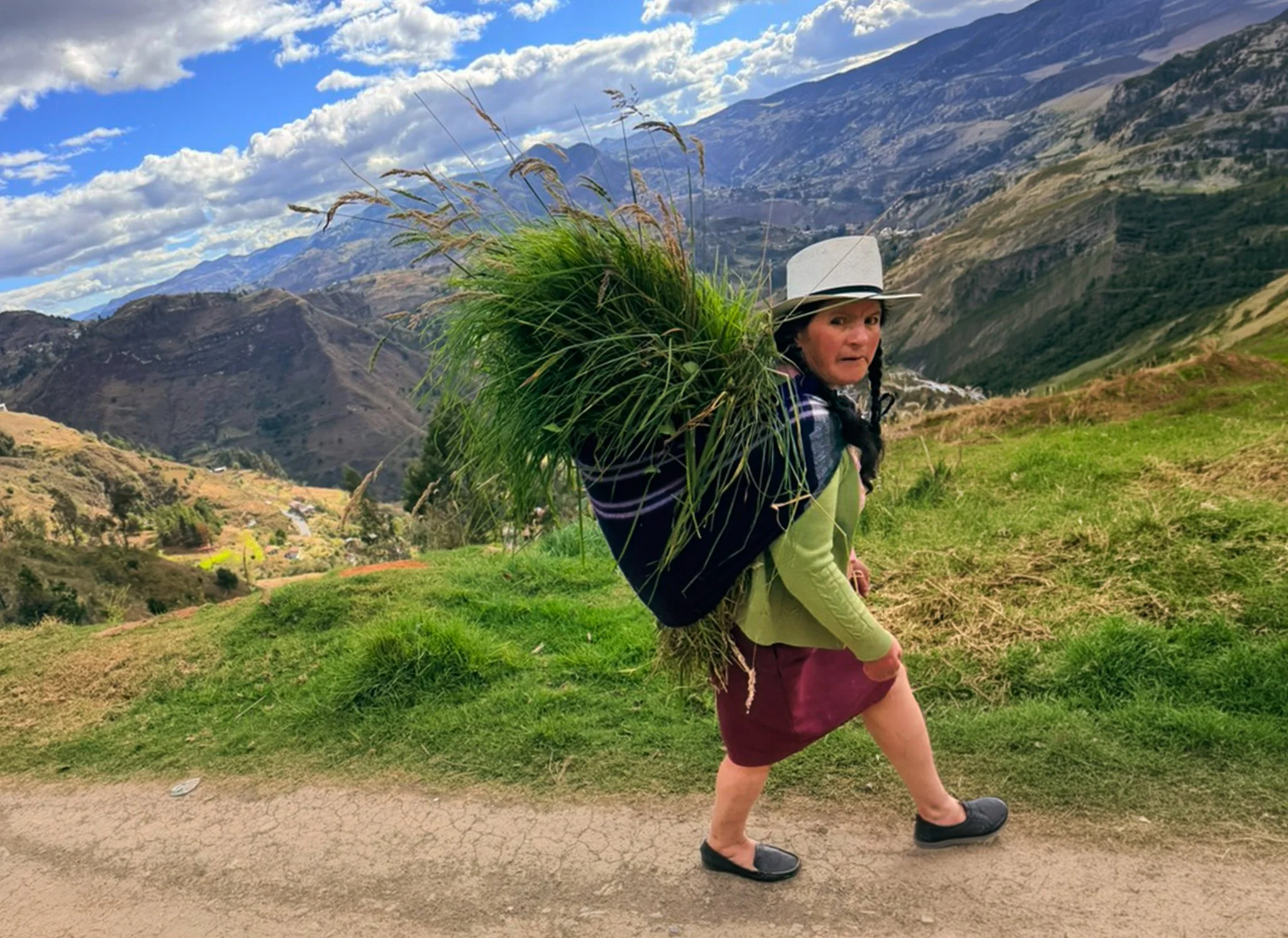
This woman is walking along the road after cutting grass for her guinea pigs to eat. No matter what their day’s labor, the women still wear their little slippers, skirt, cardigan and hat. I love that so much.
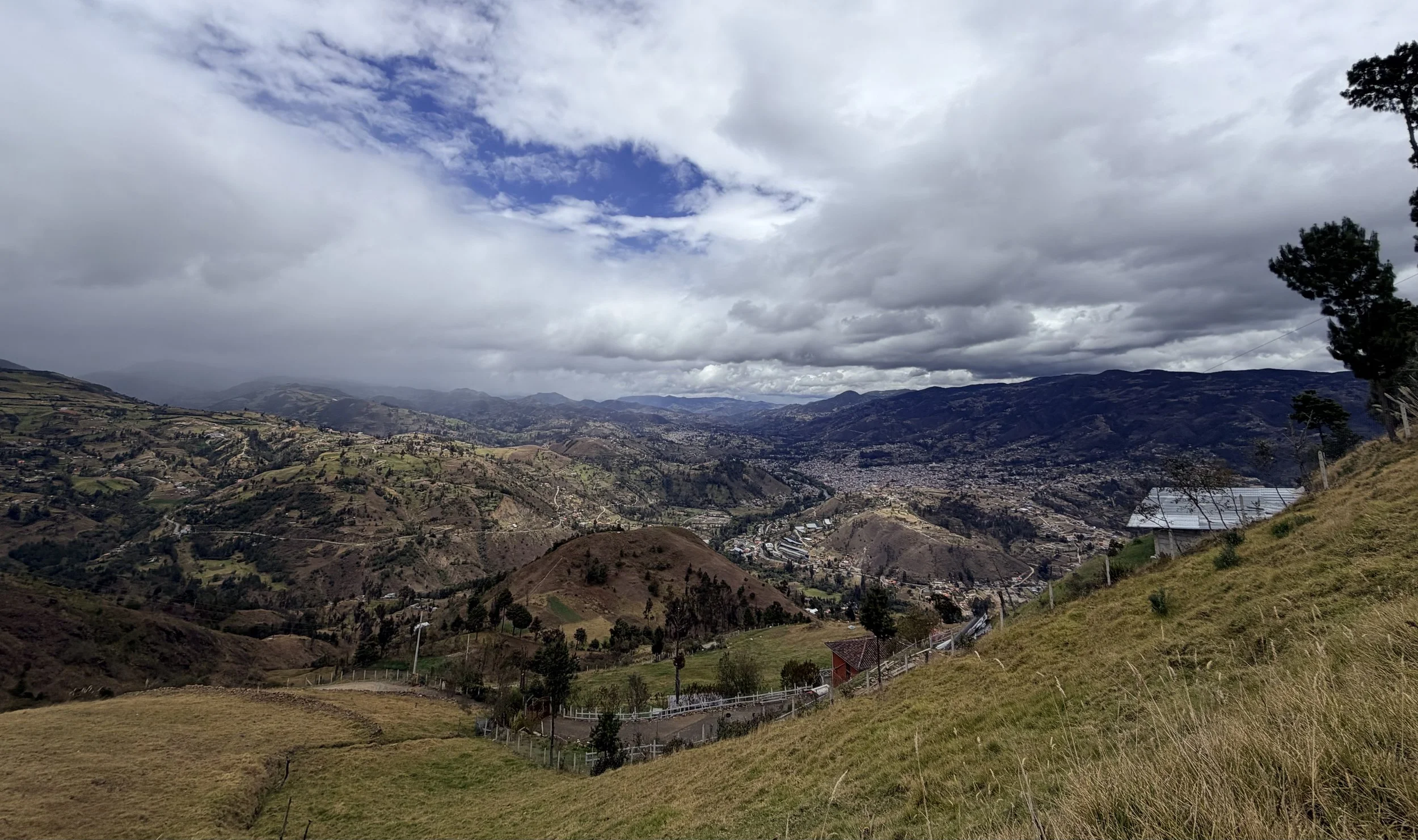
A view of my city from high in the Andes. It’s very cloudy here. Not rainy, just cloudy. I don’t know if it’s going to change.
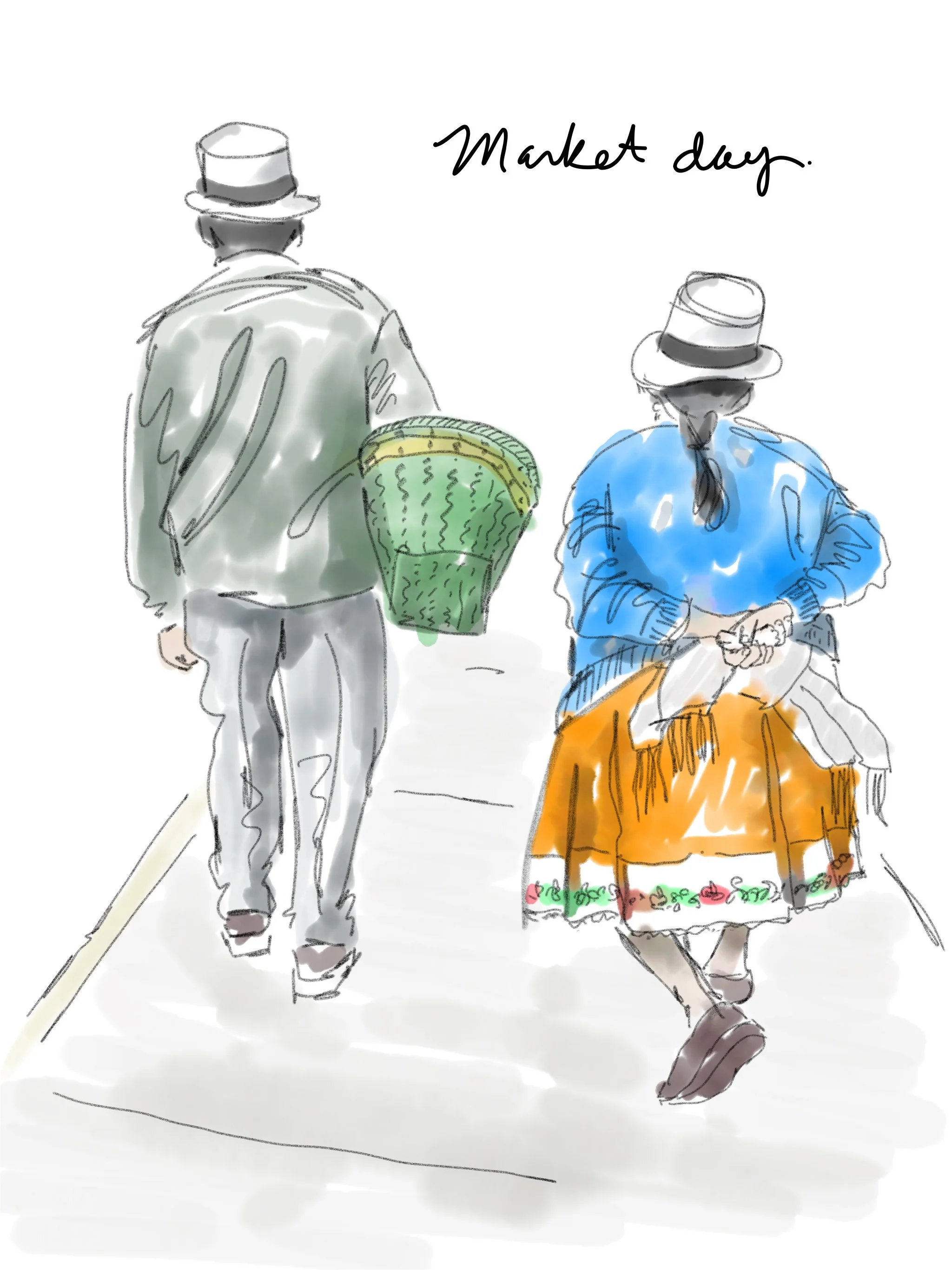
I took this snapshot as I walked to work then sketched it later that night.
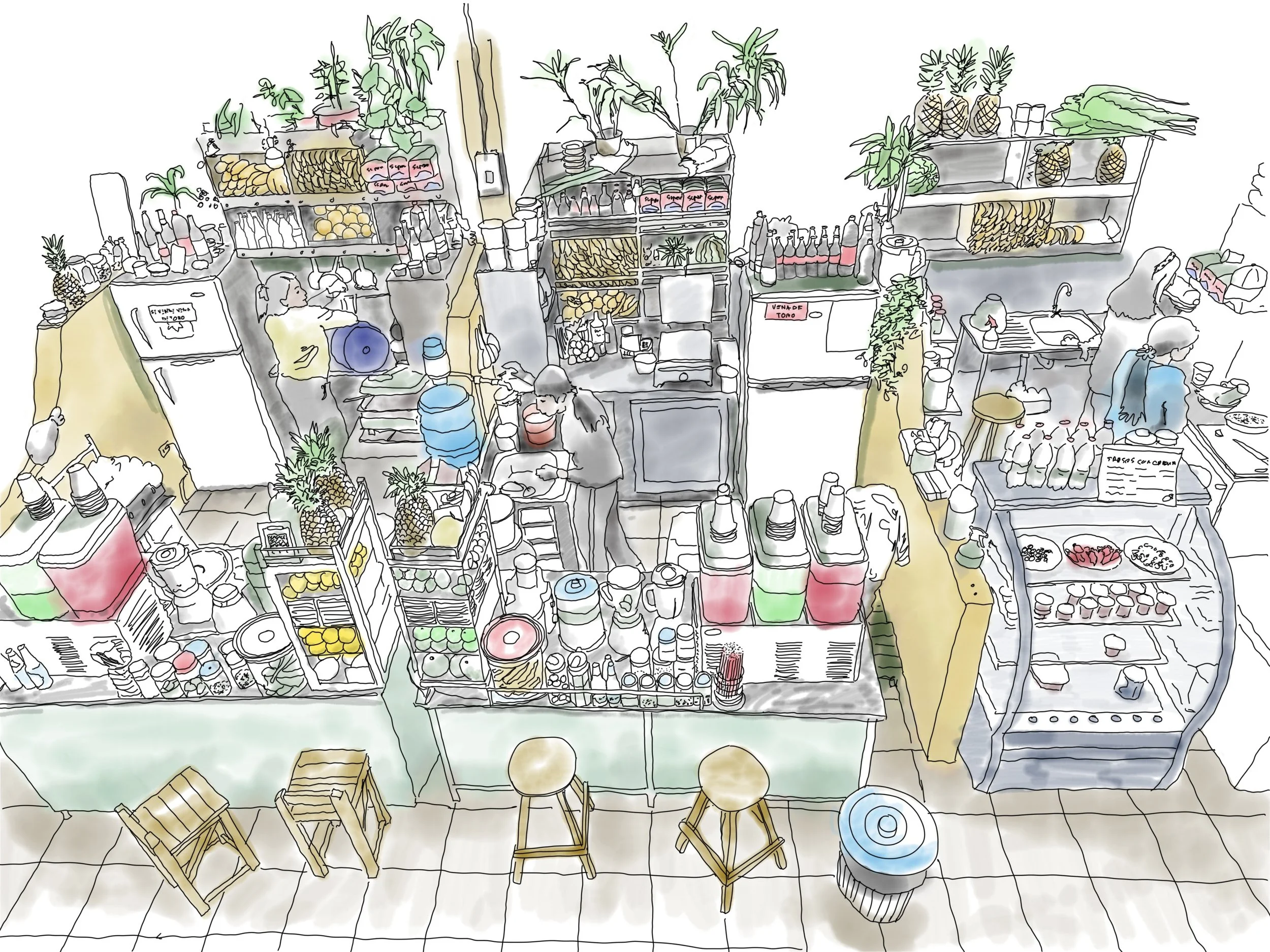
And finally this. I traced this image on my iPad, I don’t think I could have gotten the perspectives right otherwise. But I still liked the way it turned out. It was like an adult coloring book. This is the juice stand at the market. I showed this rendering to a few of the ladies who work there and they seemed pleased.
That’s all for now. Much love to all our friends back home. Thanks for reading!
Gualaceo.
Notes from the town I’m working in.
The Panama hat, one of which I am now the proud owner of, is not actually native of Panama, but was born in a town called Sigsig, just south of here. The hat got its name because it came into popularity around the time of the construction of the Panama Canal, and the workers on that project adopted the hat to protect against the tropical sun. Now people assume they come from Panama, but in fact they are handmade right here in Ecuador. Of course you can buy replicas made in China, even here, but they are not authentic.
Other crafts in this geographic area include pottery, shoes, guitars, and of course, jewelry.
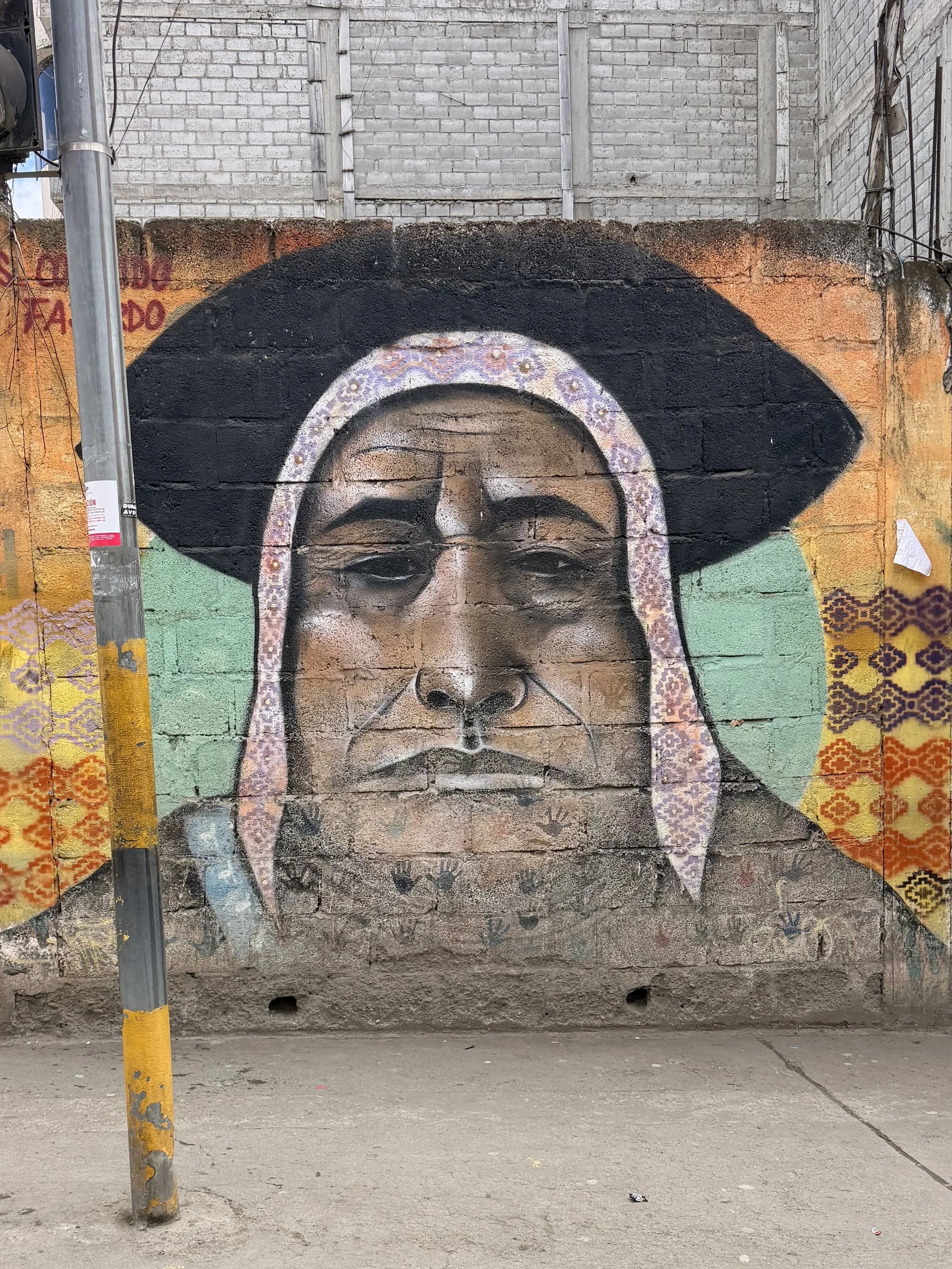
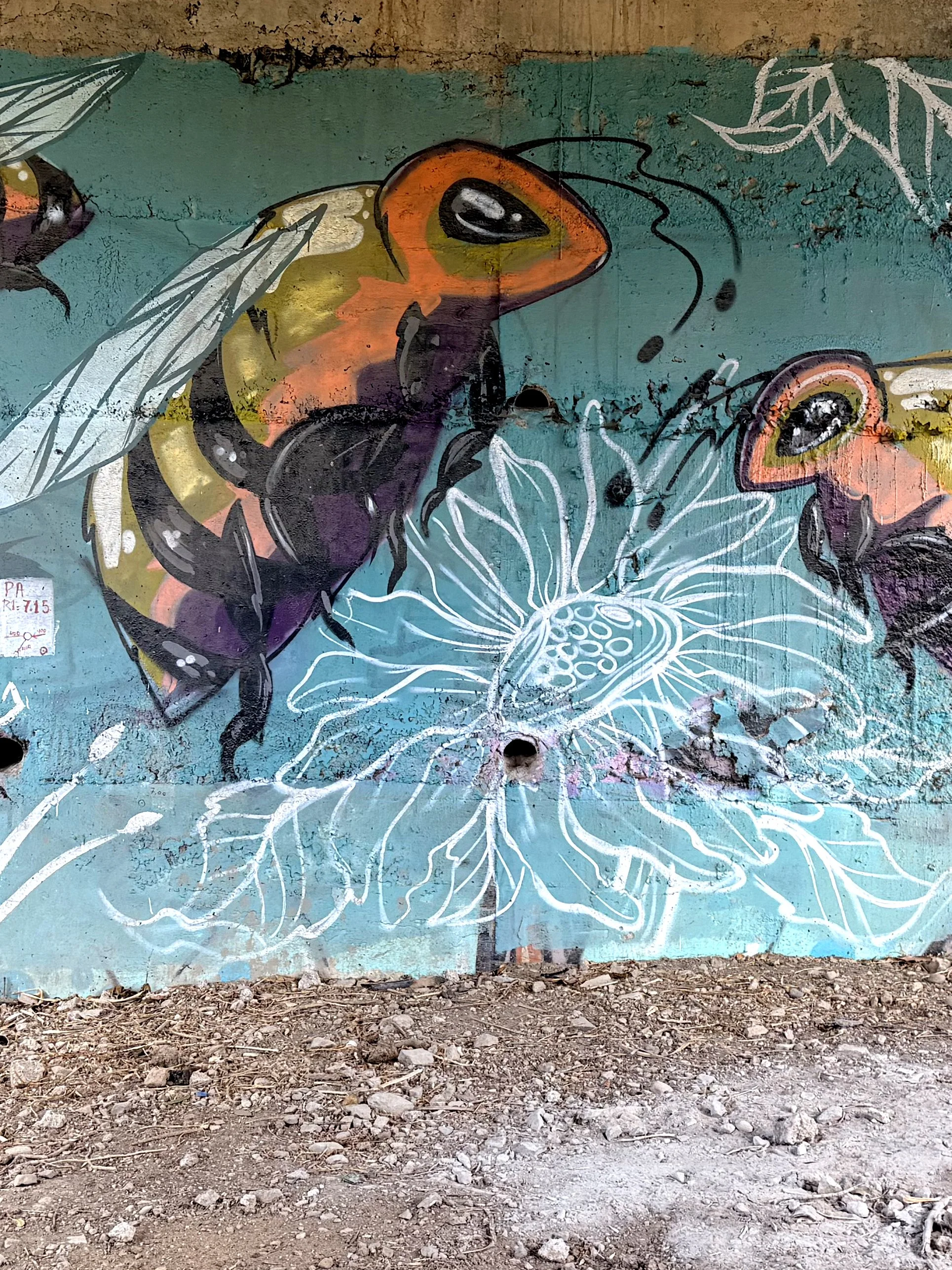
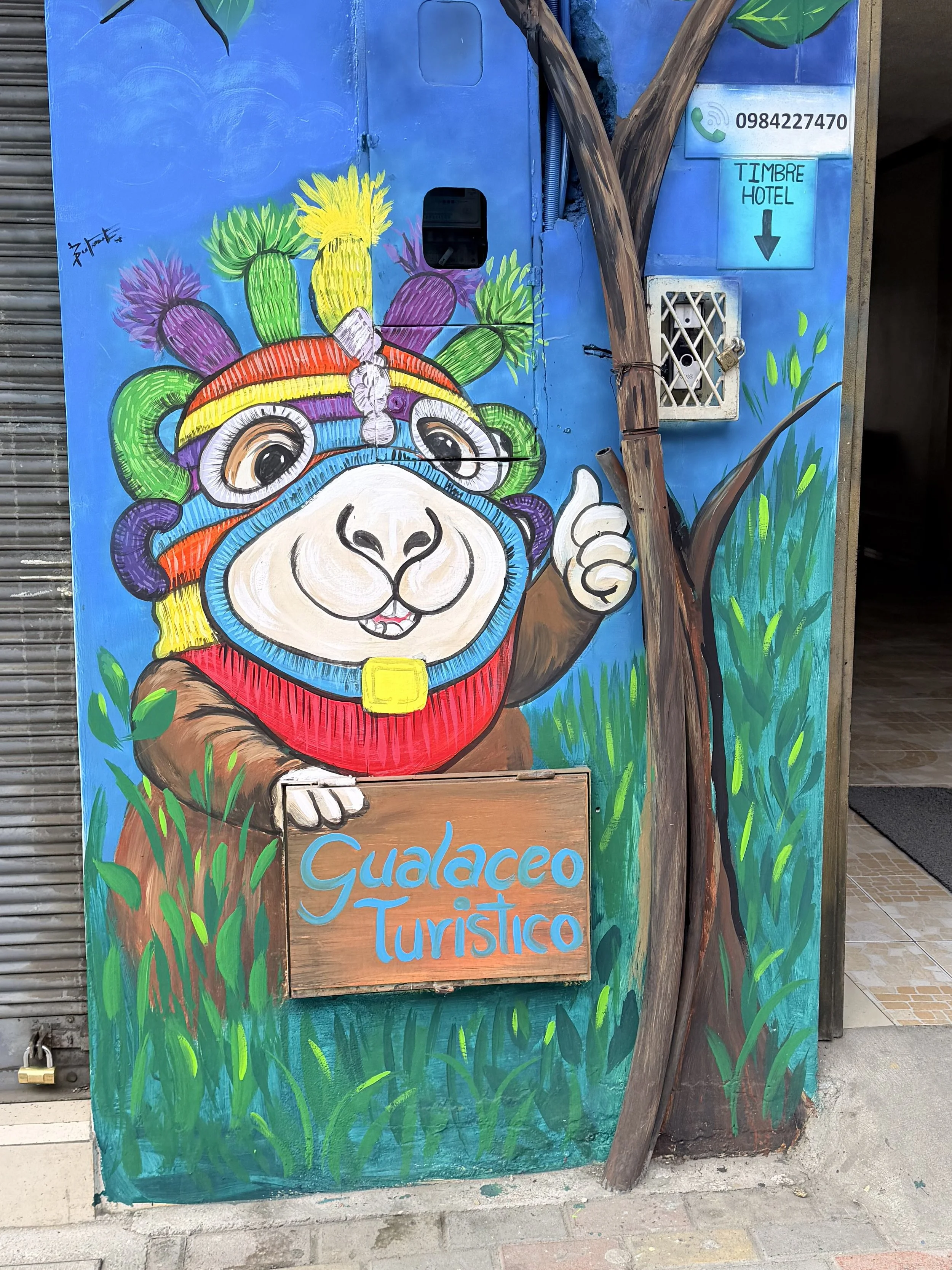
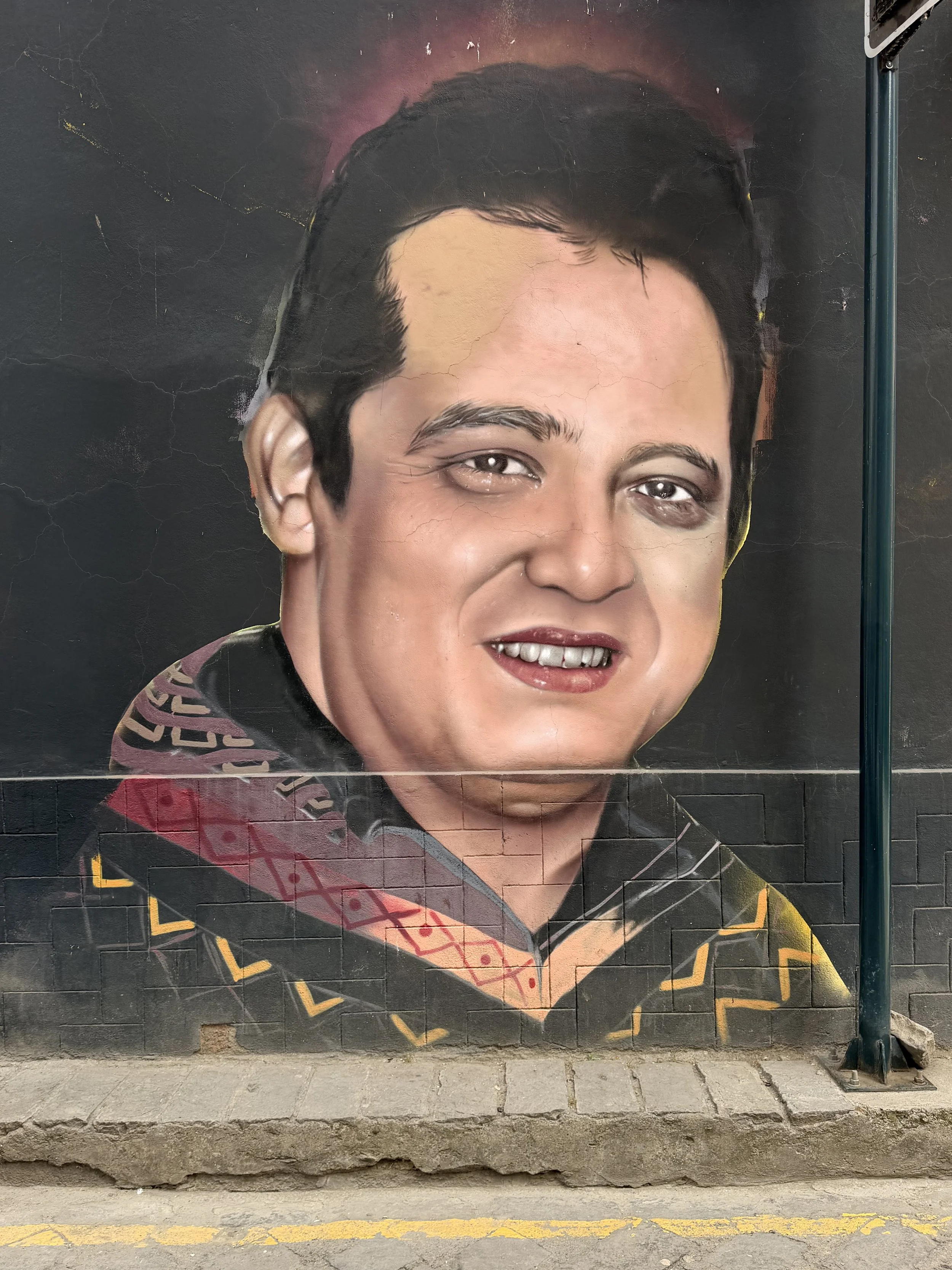
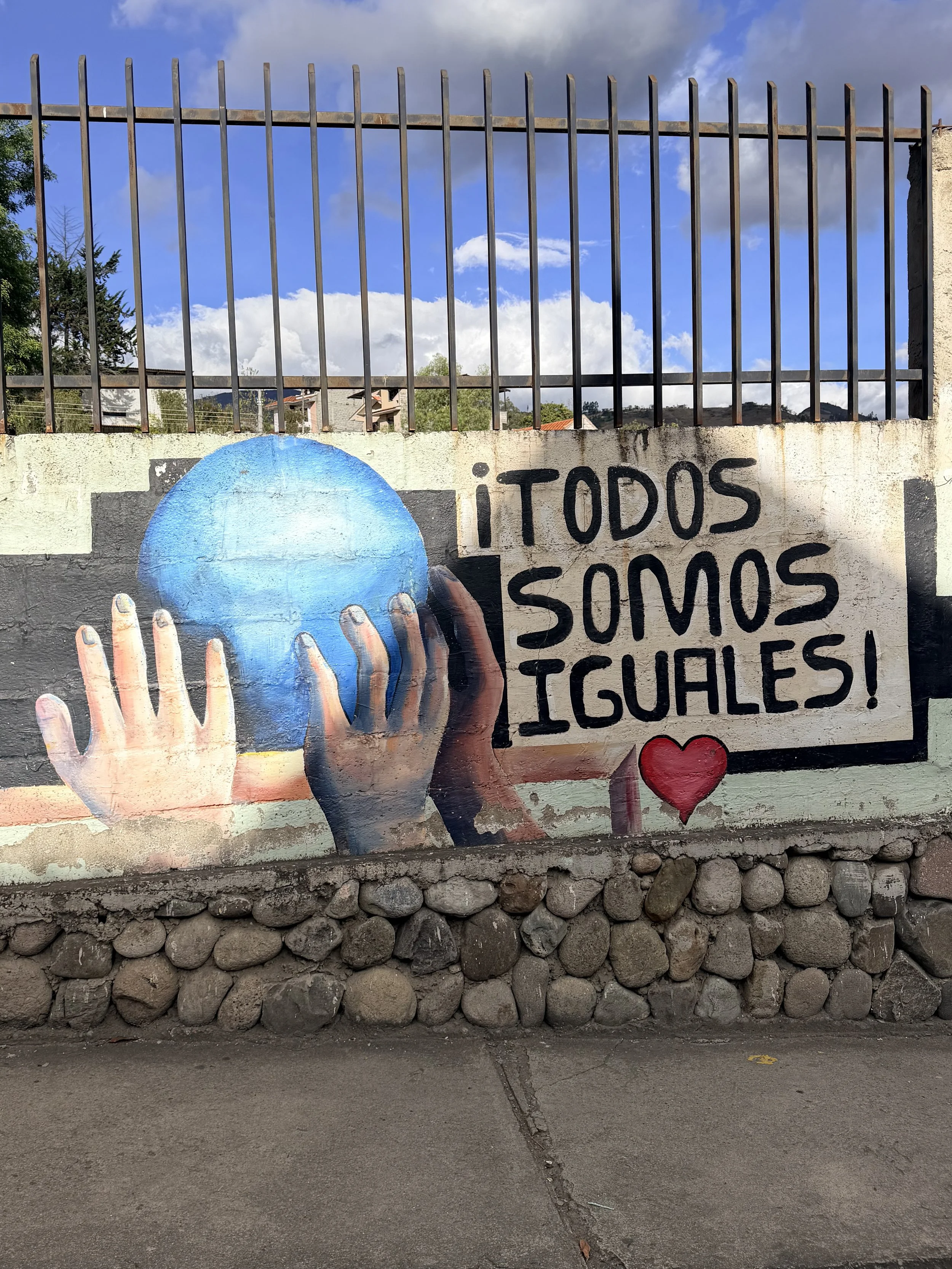
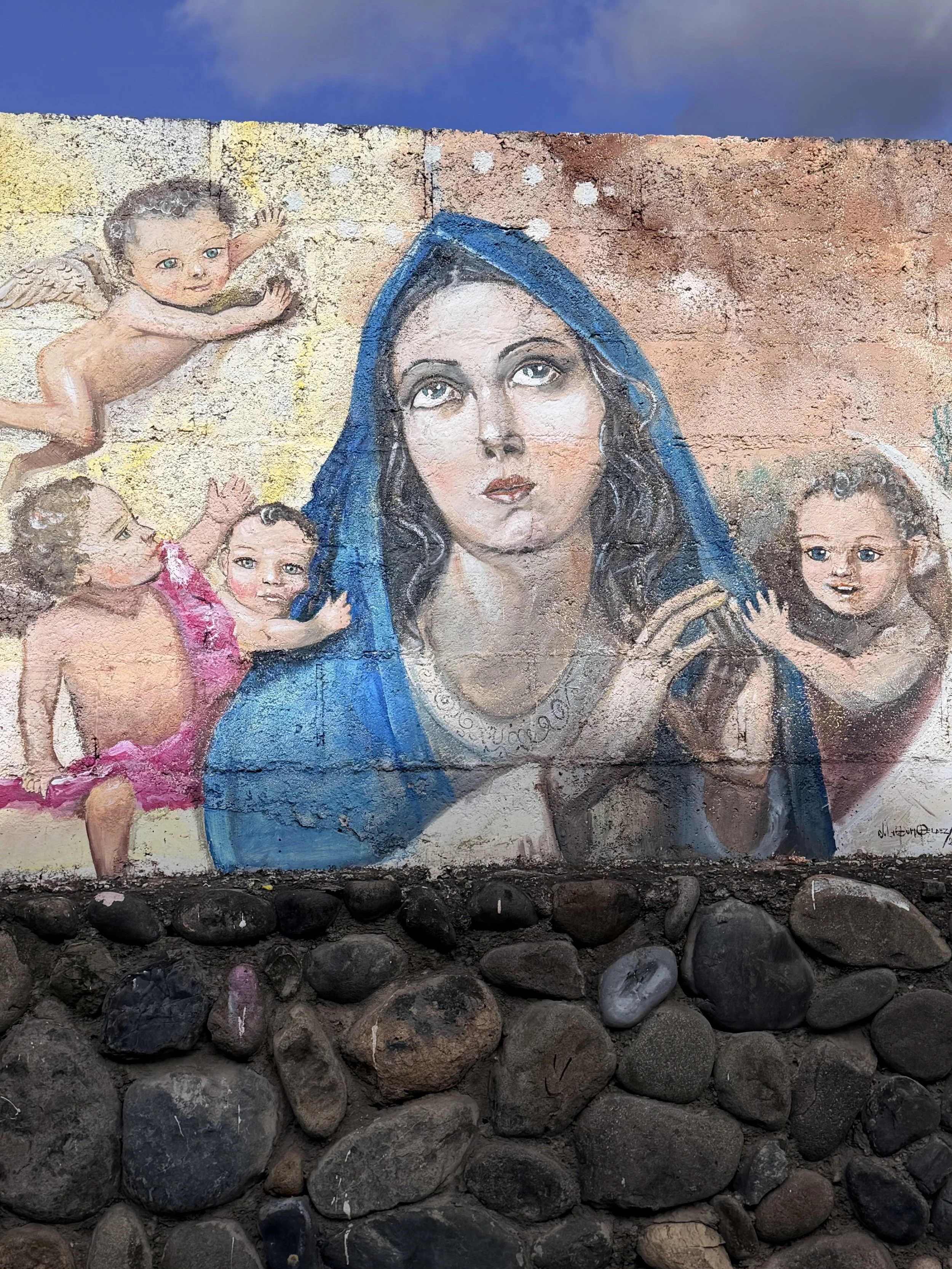
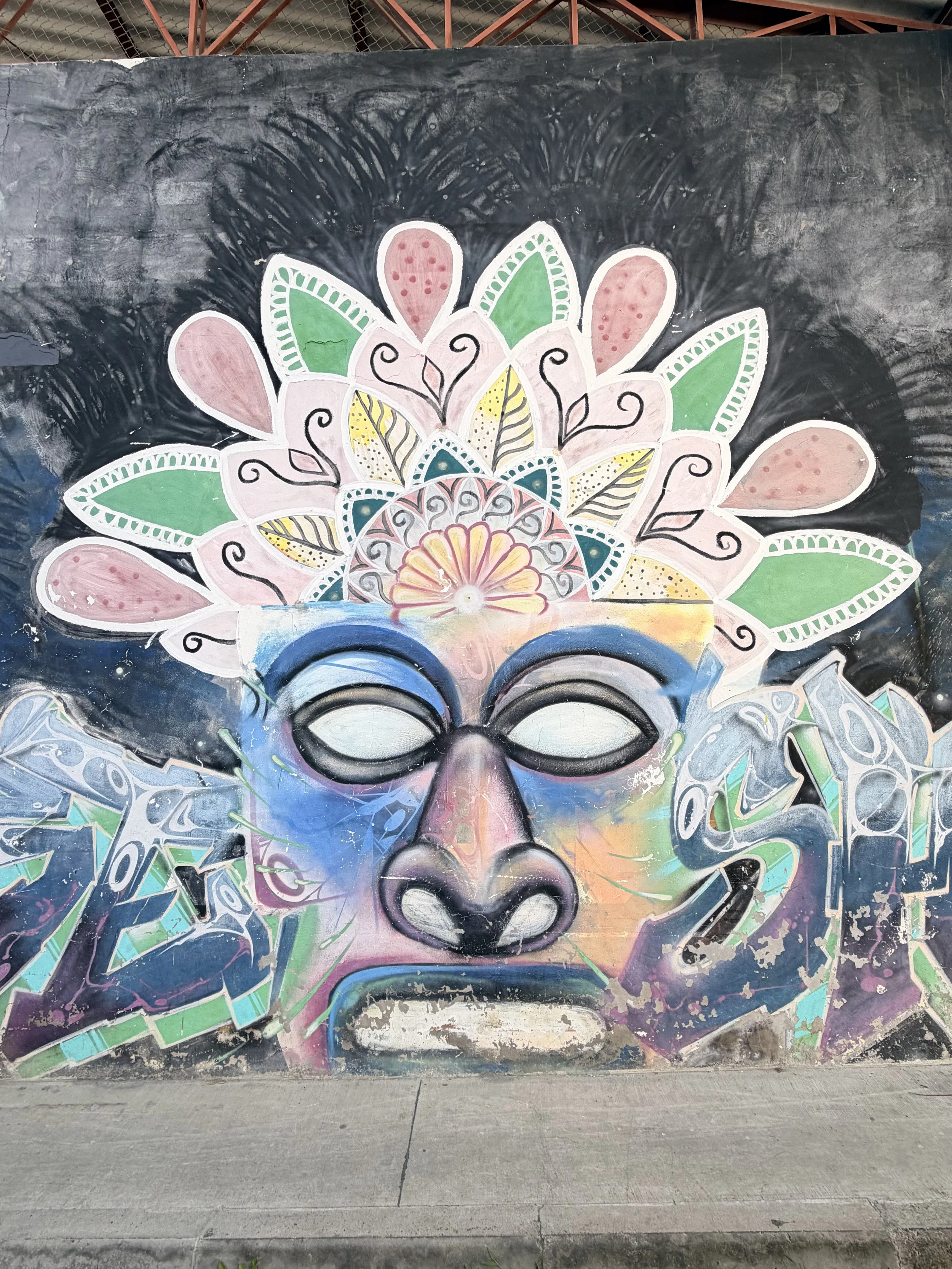
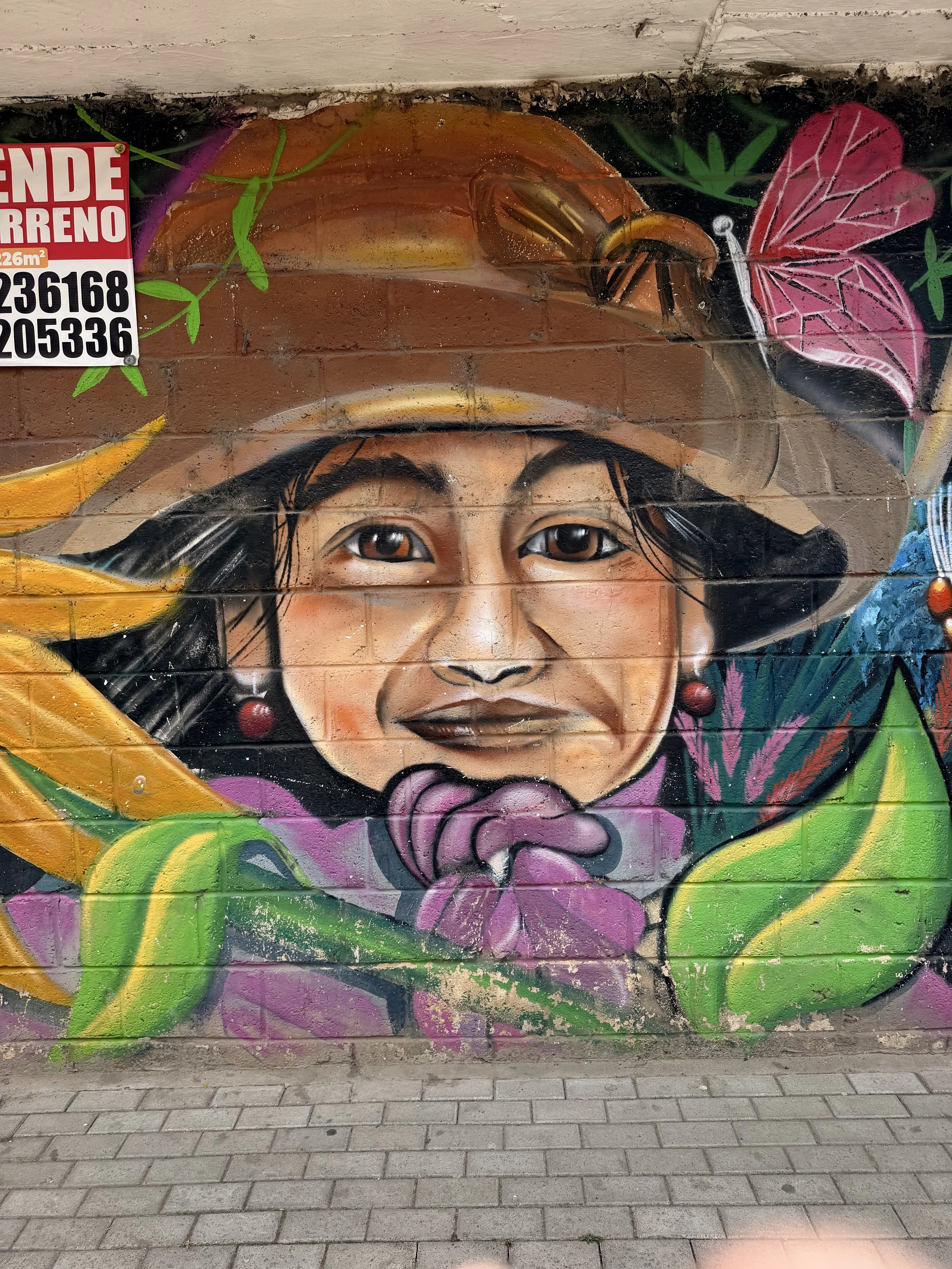
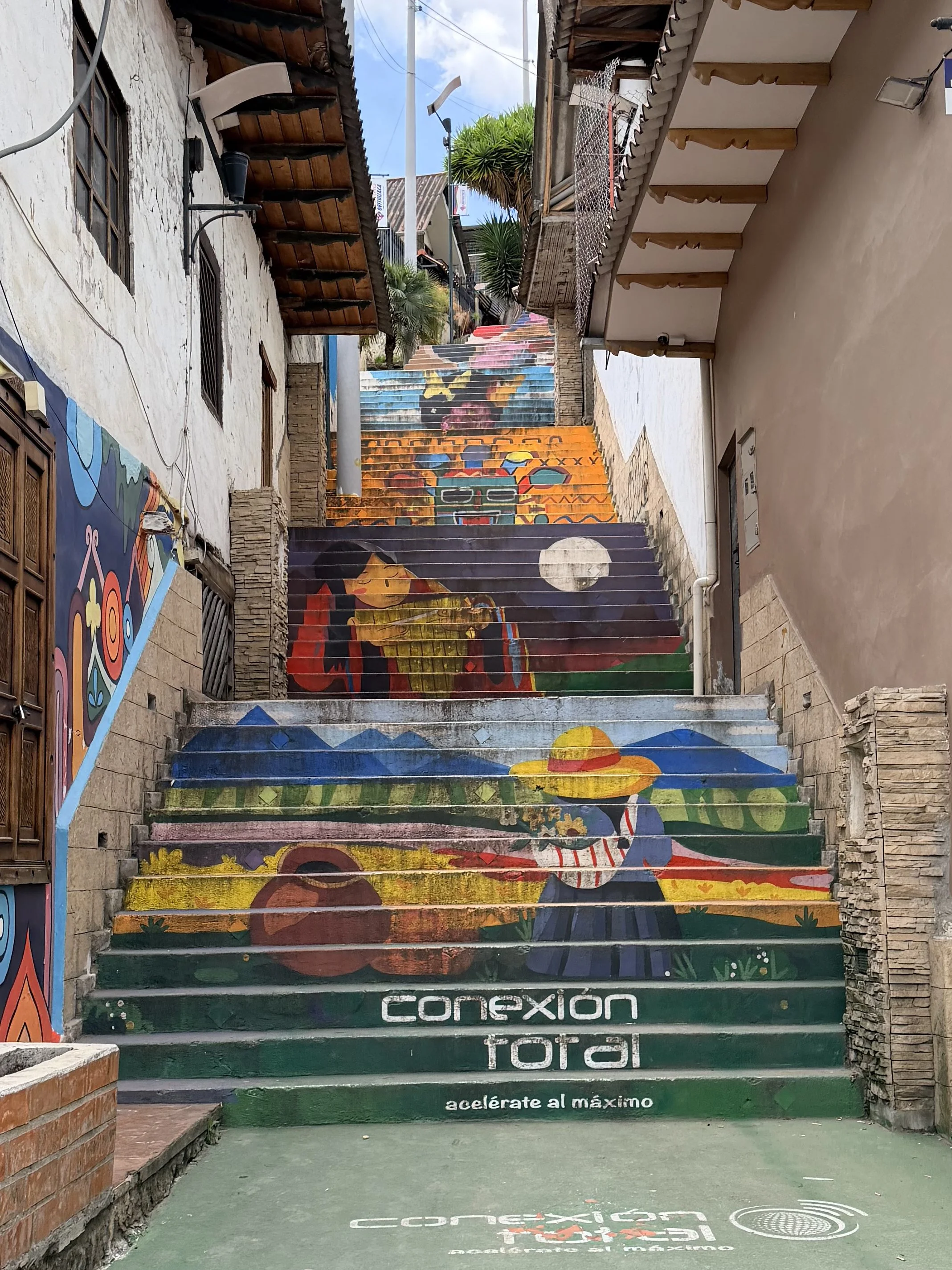
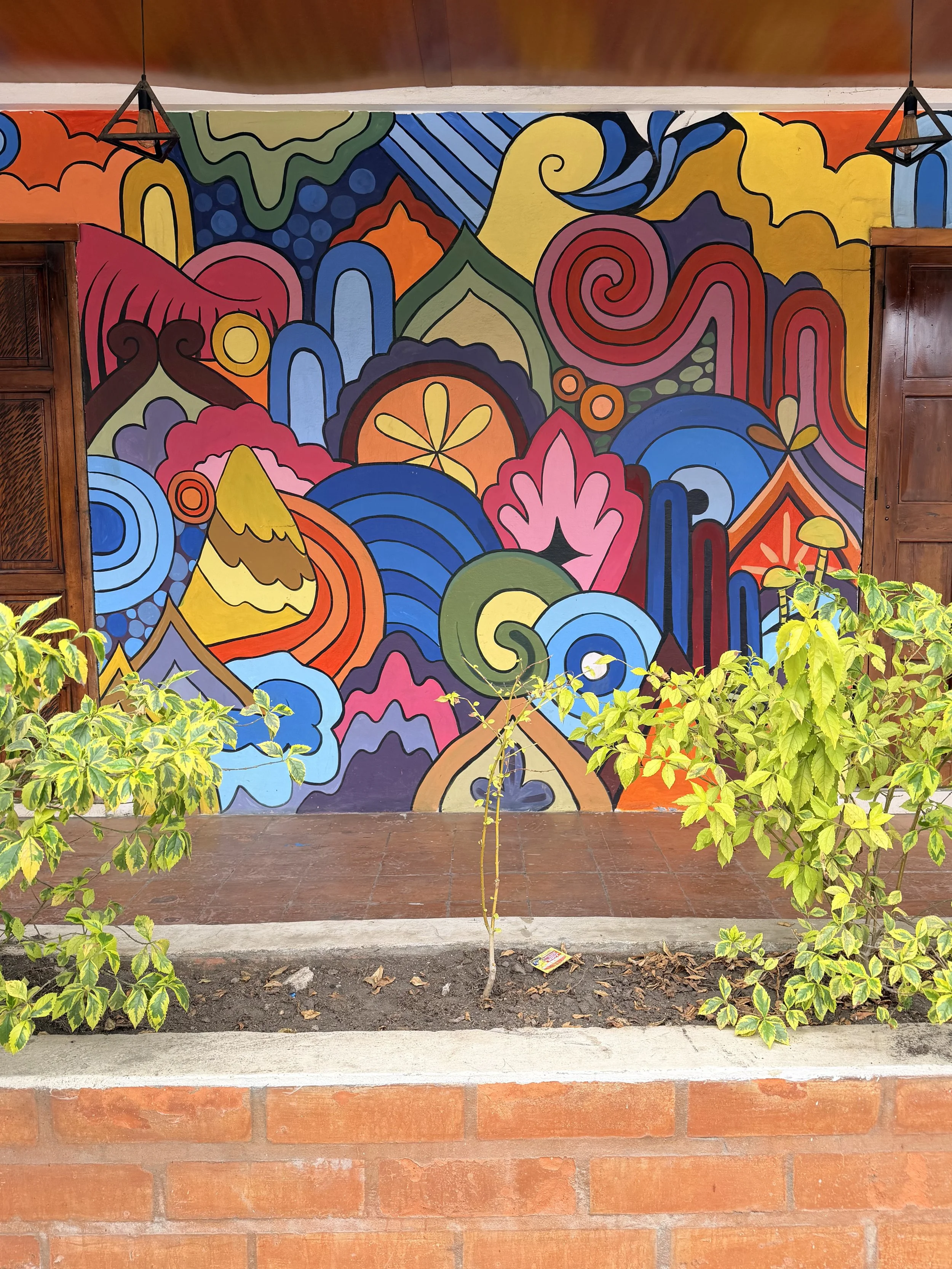
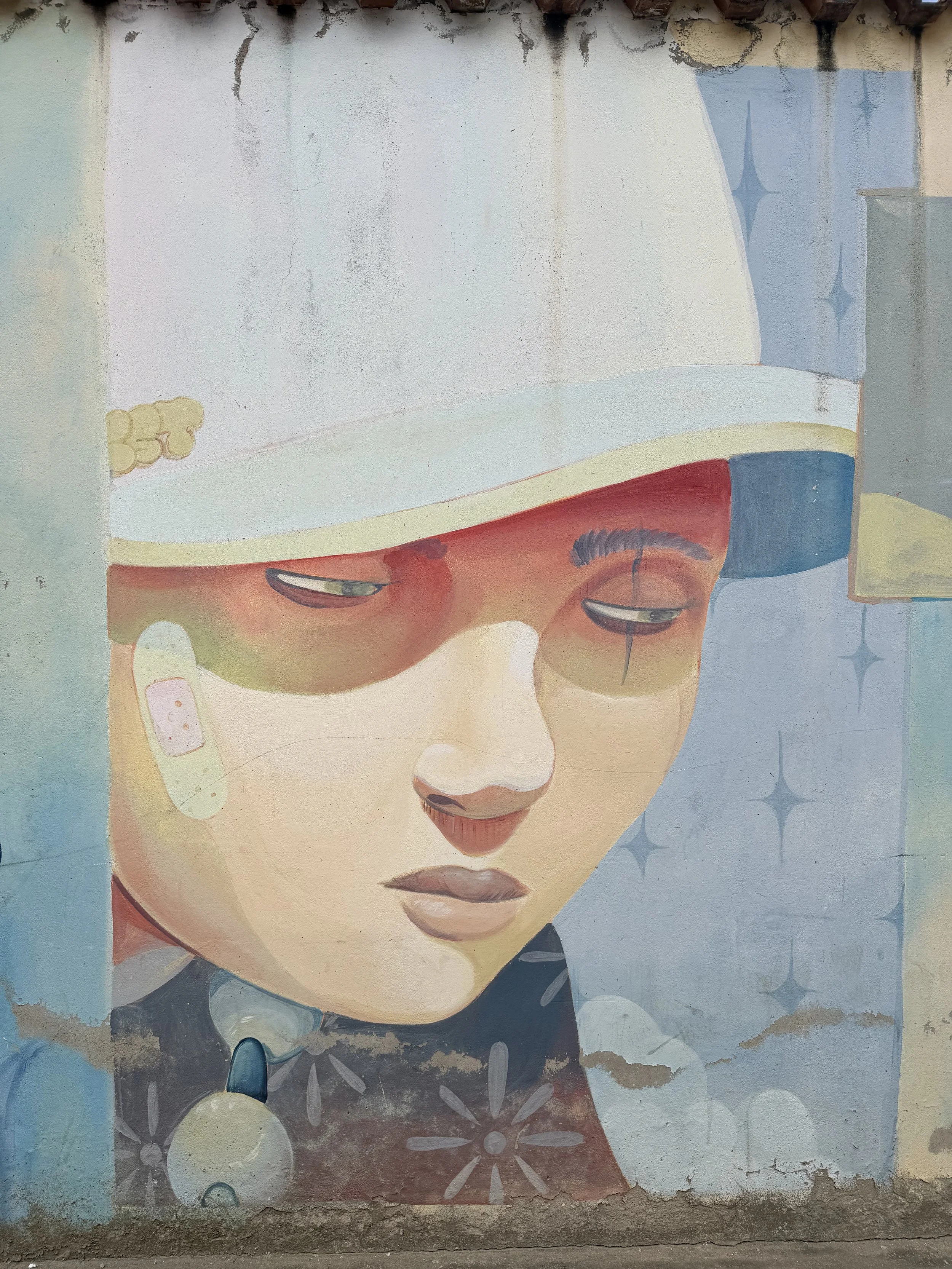
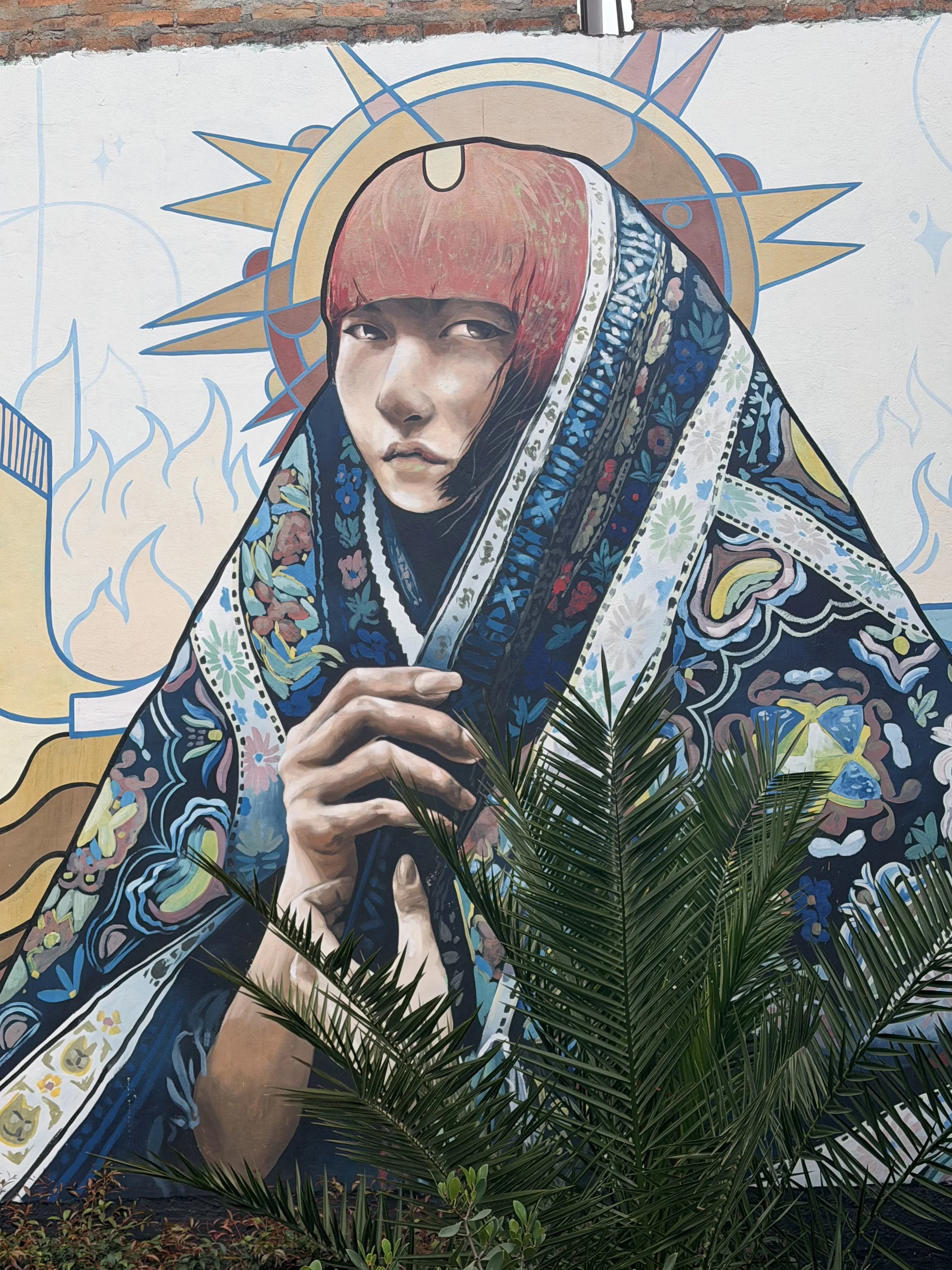
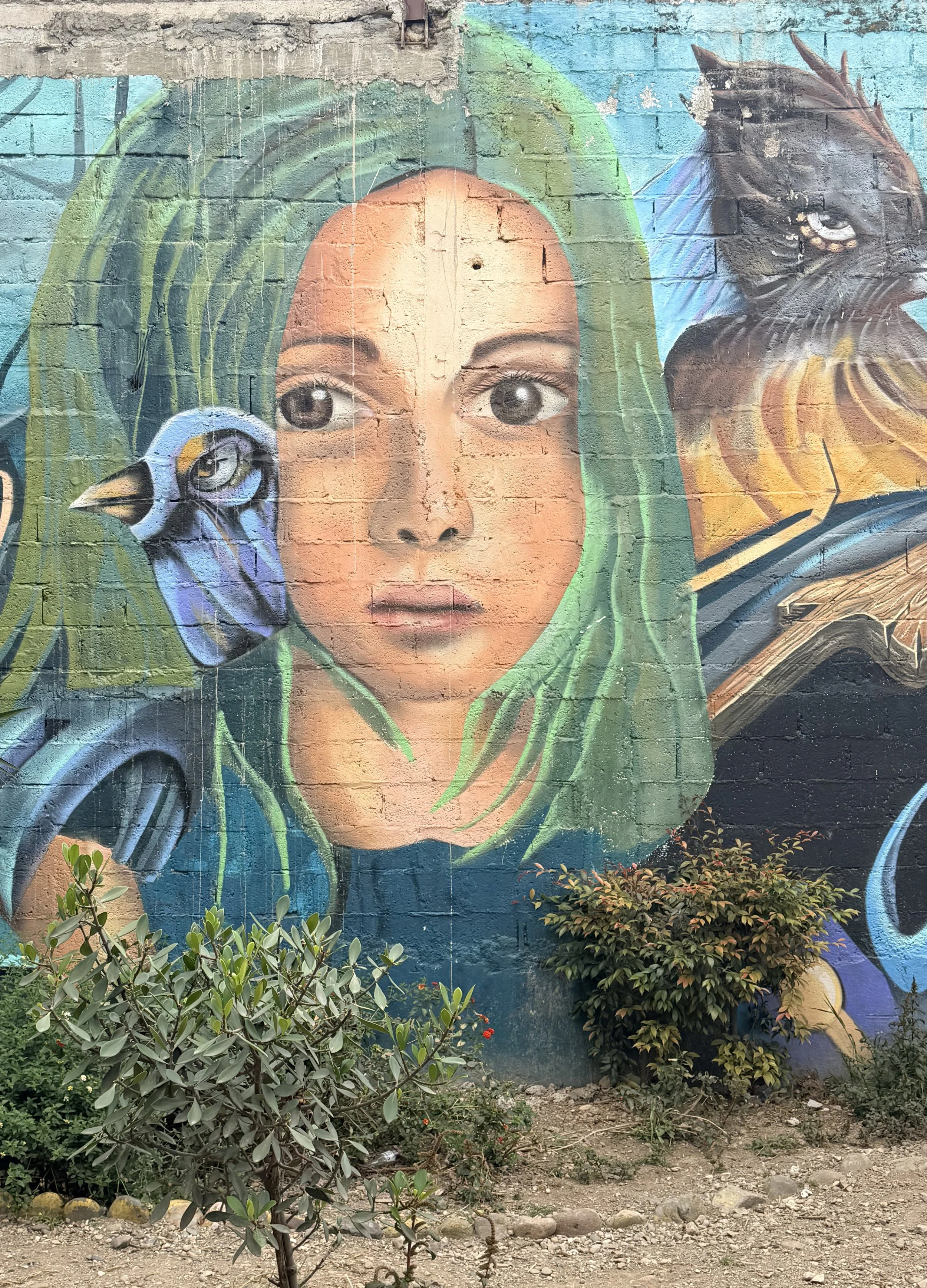
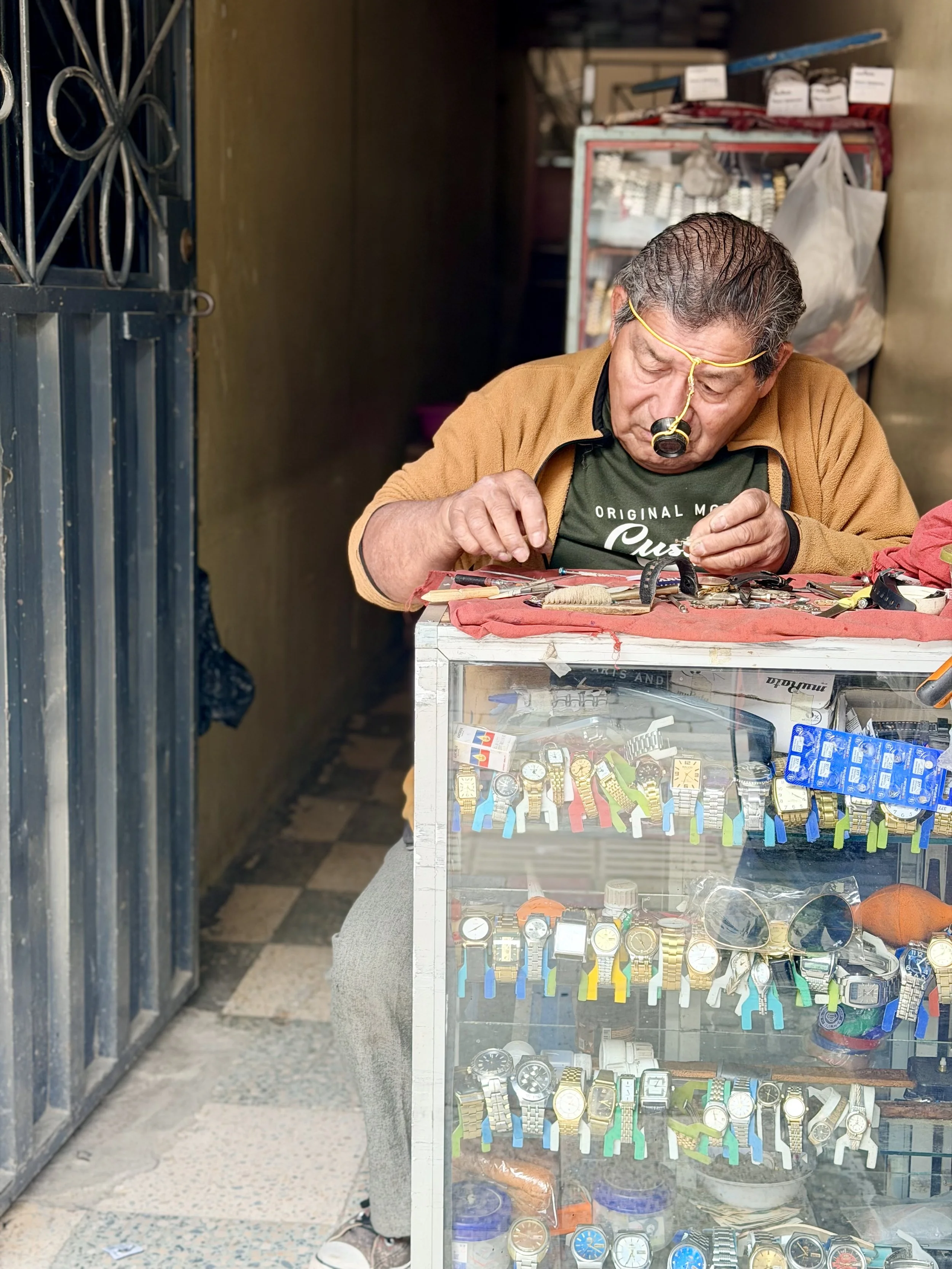
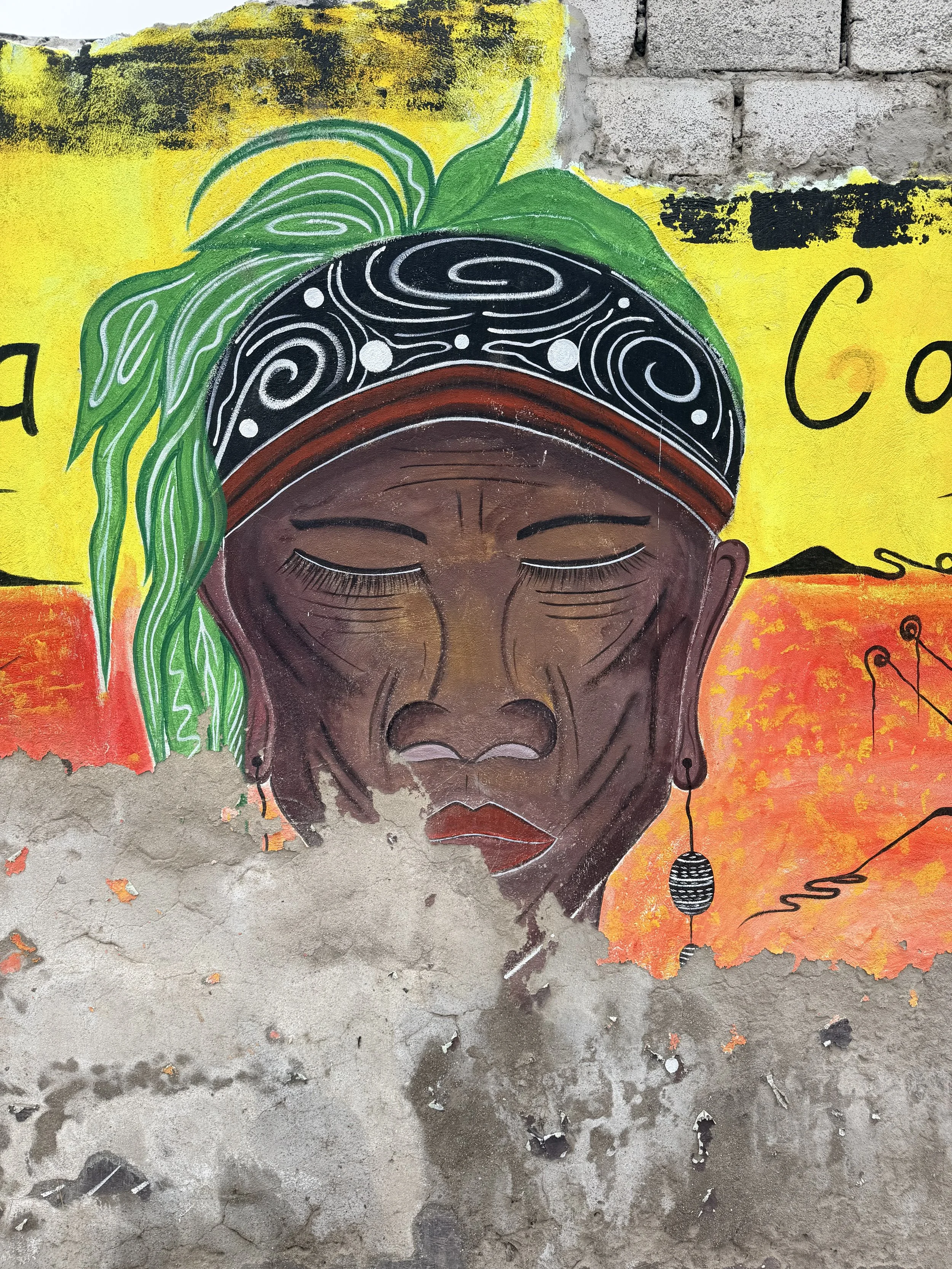
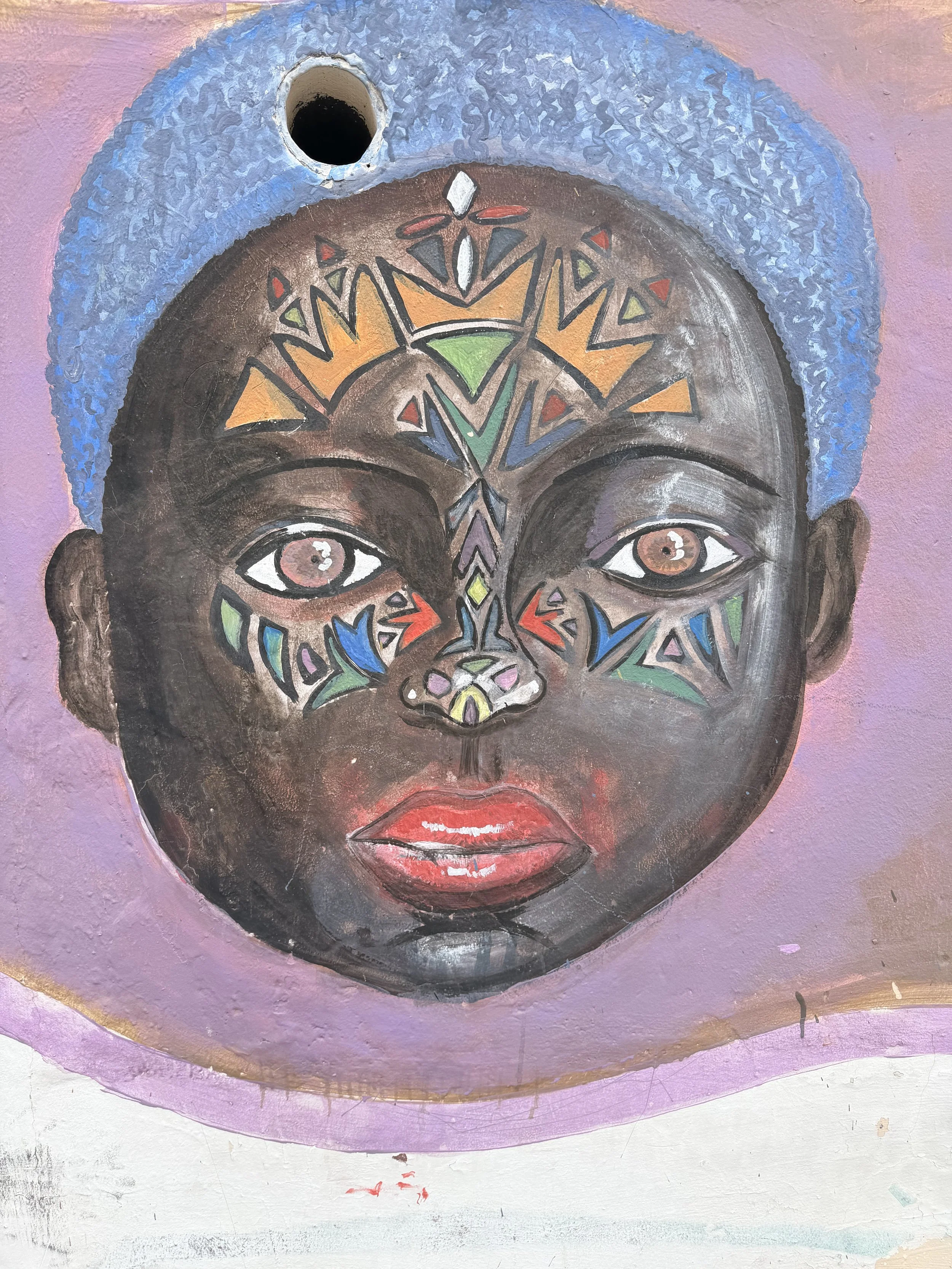
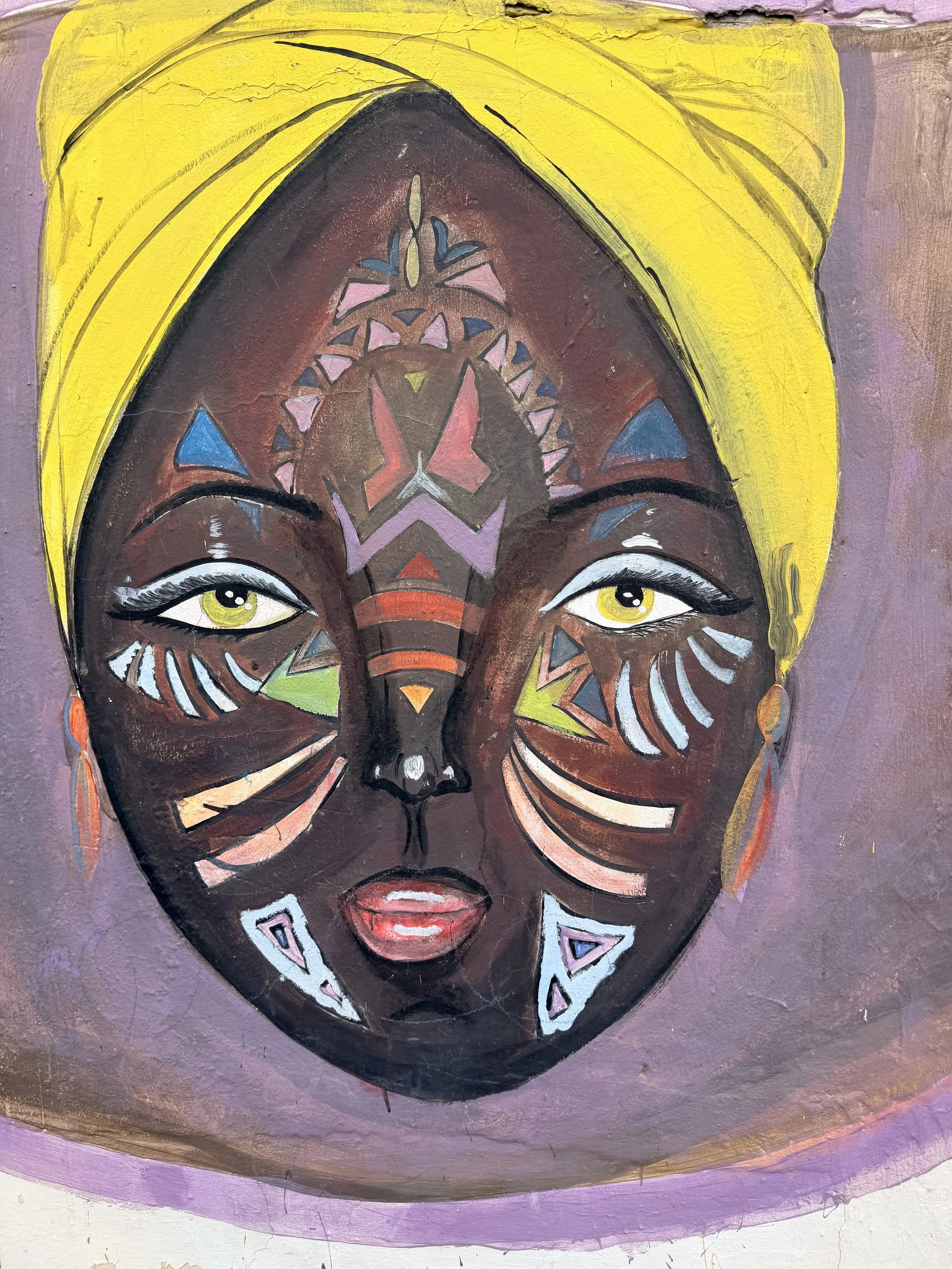
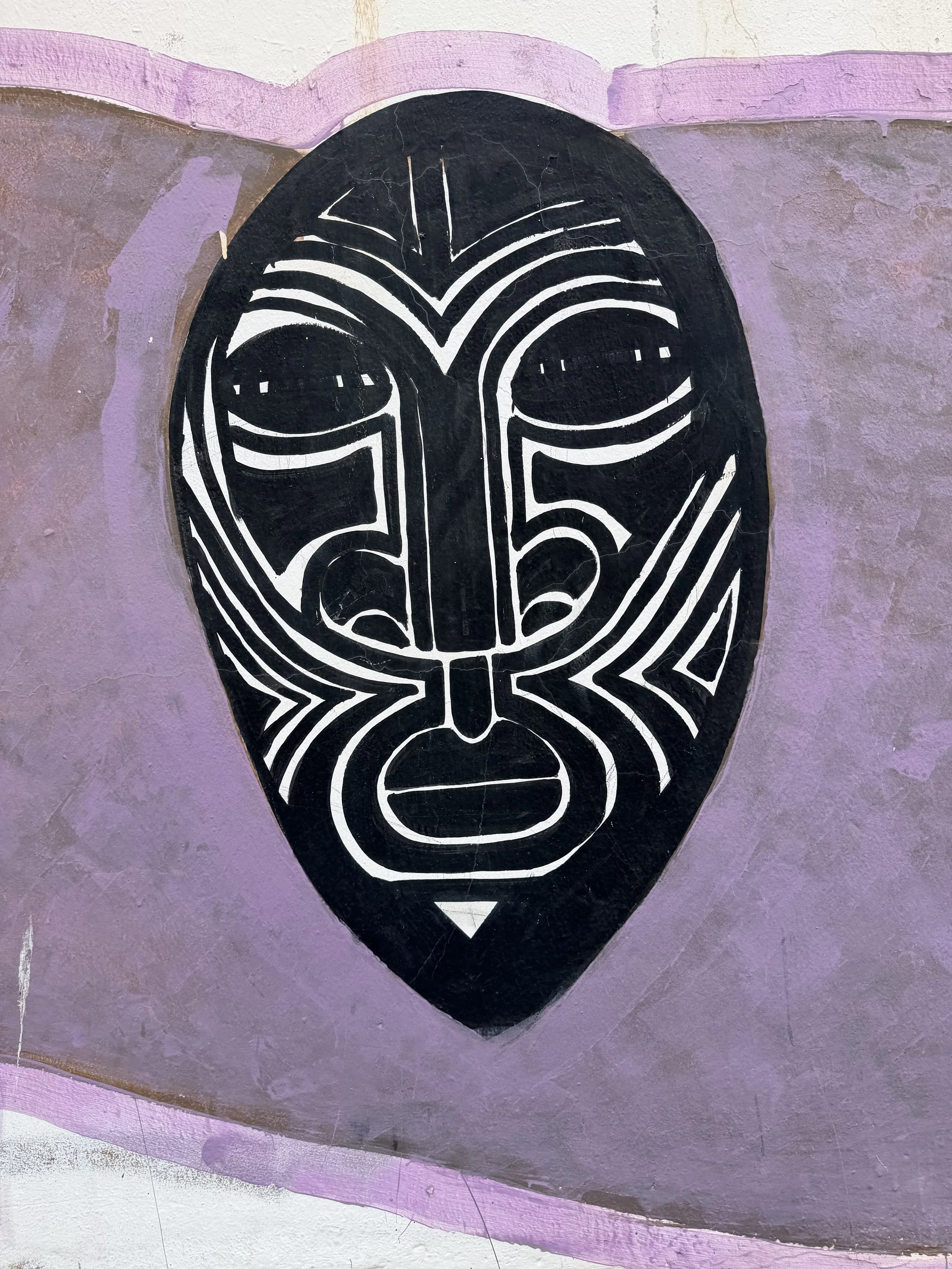
We live in Chordeleg, the city of jewelry, but my work is in the neighboring town of Gualaceo, and while it’s more of a commercial town now, it remembers its artistic origins with an abundance of street art. Here’s a small sampling of what's available on the walls of this amazing little town.
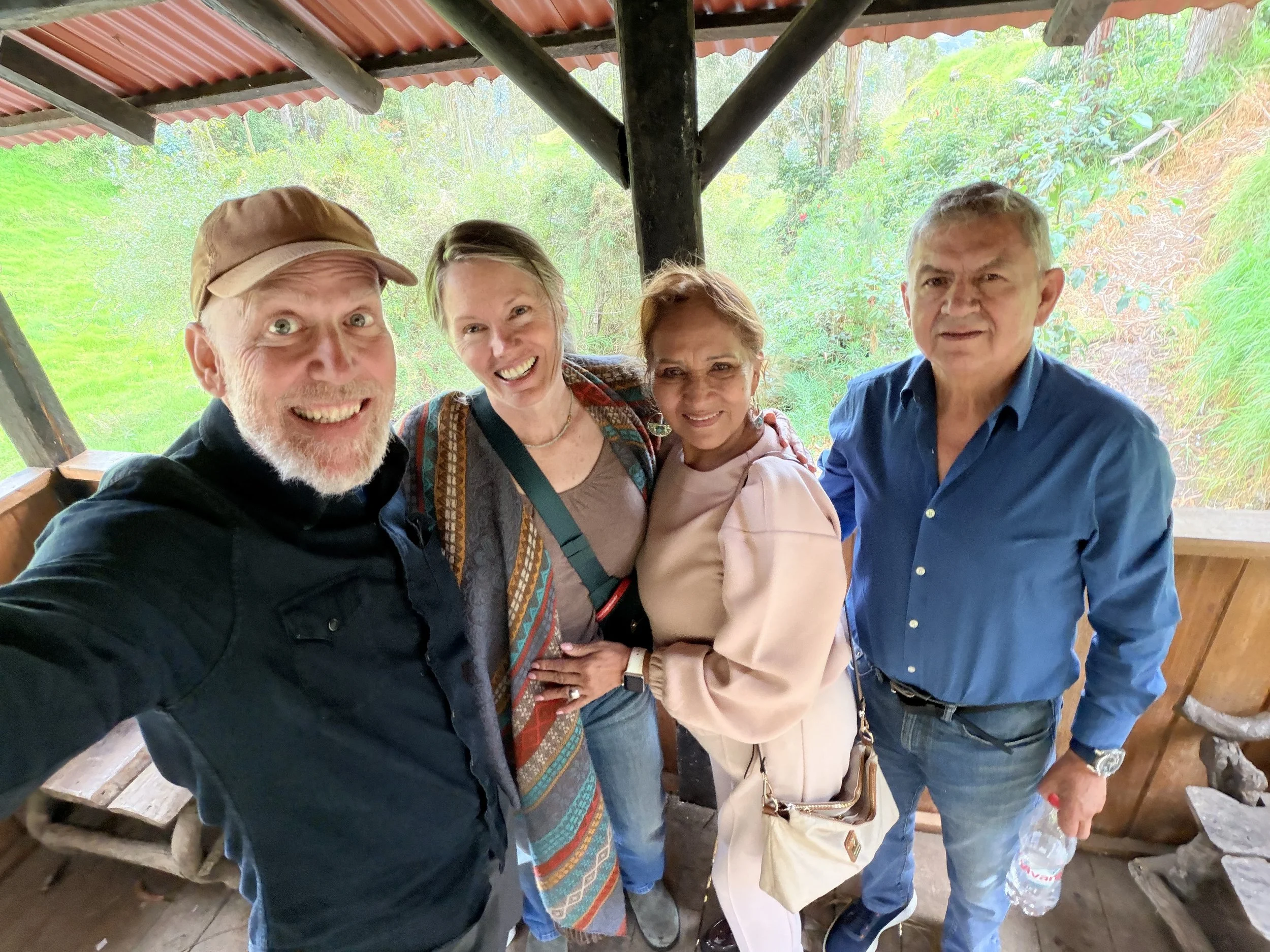
These are our hosts, Jorge and Maya. We live on their roof, mostly. We sleep inside, but do all our cooking and living in their rooftop kitchen area. We are only a few hundred miles south of the equator, but at 8,500 feet it can be pretty chilly in the morning and evening.
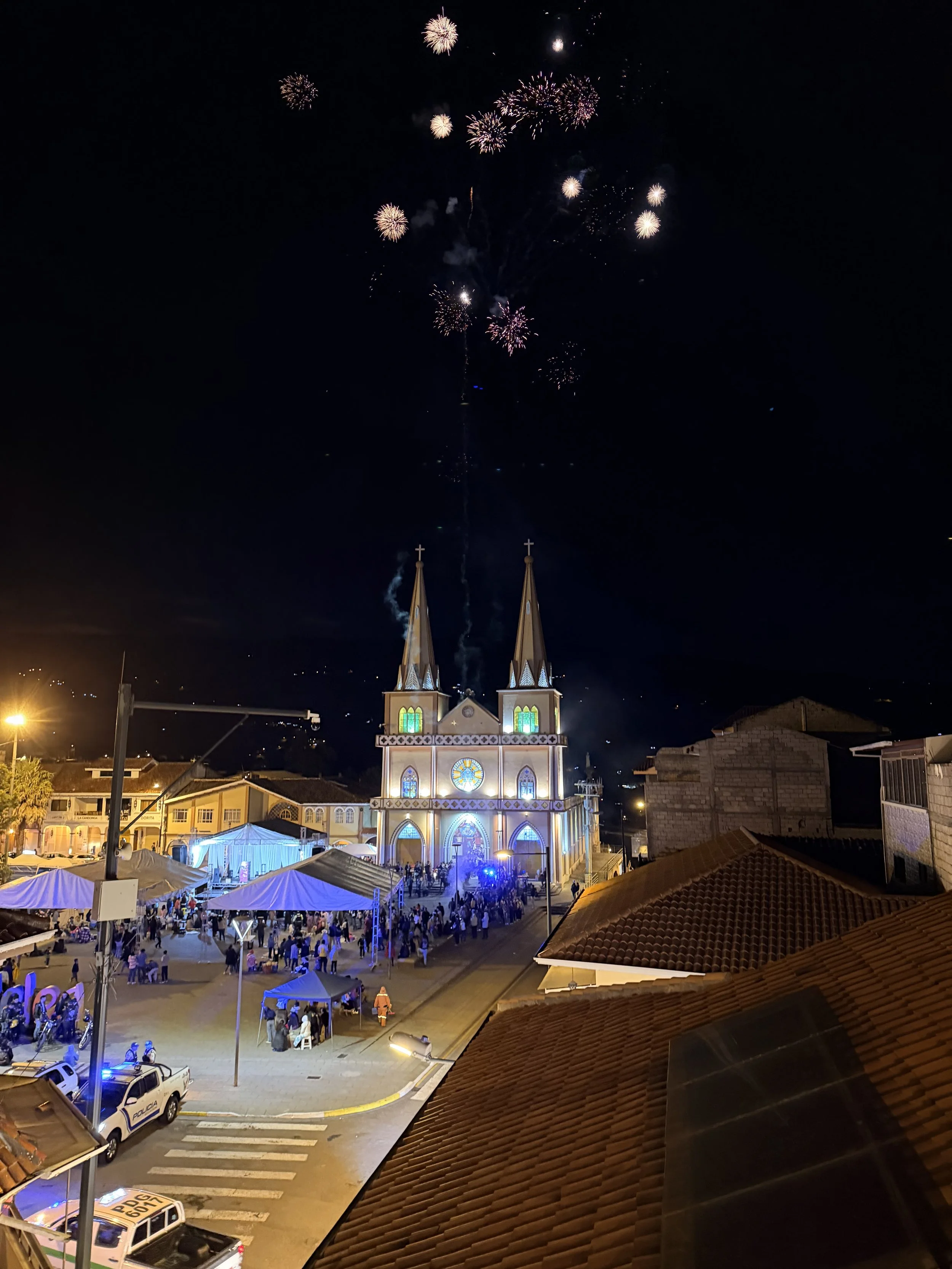
The photo below looks like it’s the Magic Kingdom (all rights reserved by the Disney company…) but it’s not. This is the view from our rooftop kitchen last Saturday night. There was a religious festival in the square that featured a marathon game of bingo that lasted from 3pm to 2am. As we were trying to sleep it seemed that the numbers being called were coming from our bedroom. It was so loud! But the lucky winner of the bingo grand prize got a live cow!
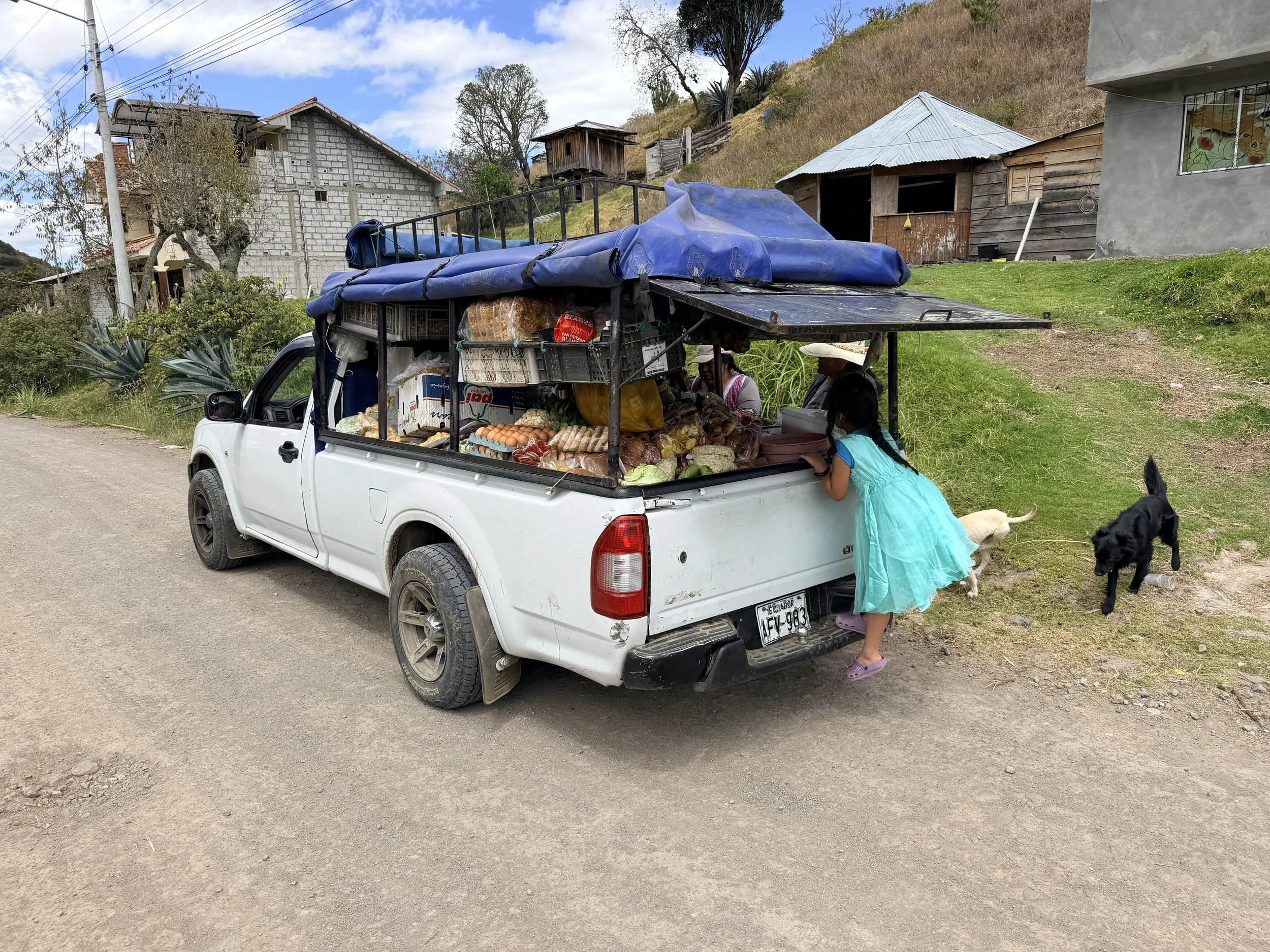
Jenny and I took a walk through the nearby countryside and kept leapfrogging this grocery store on wheels. They drove slowly along their route, broadcasting a recording of their offerings at impressive volume. Eggs, meat, dairy, bread, produce, they were very well stocked. Out here, where homes are scattered across the hillsides and not everyone has transportation, the grocery store simply comes to you.
Much love, Andy and Jenny.
So far, so good.
We’ve been here for 12 weeks and are still surprised by Ecuador on the daily. The sounds, smells, annoyances, wonders, beauty, friendships—every day is still full of new experiences.
Our jobs are developing. I’m visiting the various projects my organization is undertaking to see where I would like to contribute. It’s been fun and low-stress. I know my biggest priority right now is improving my Spanish so that, wherever I land, I can be effective.
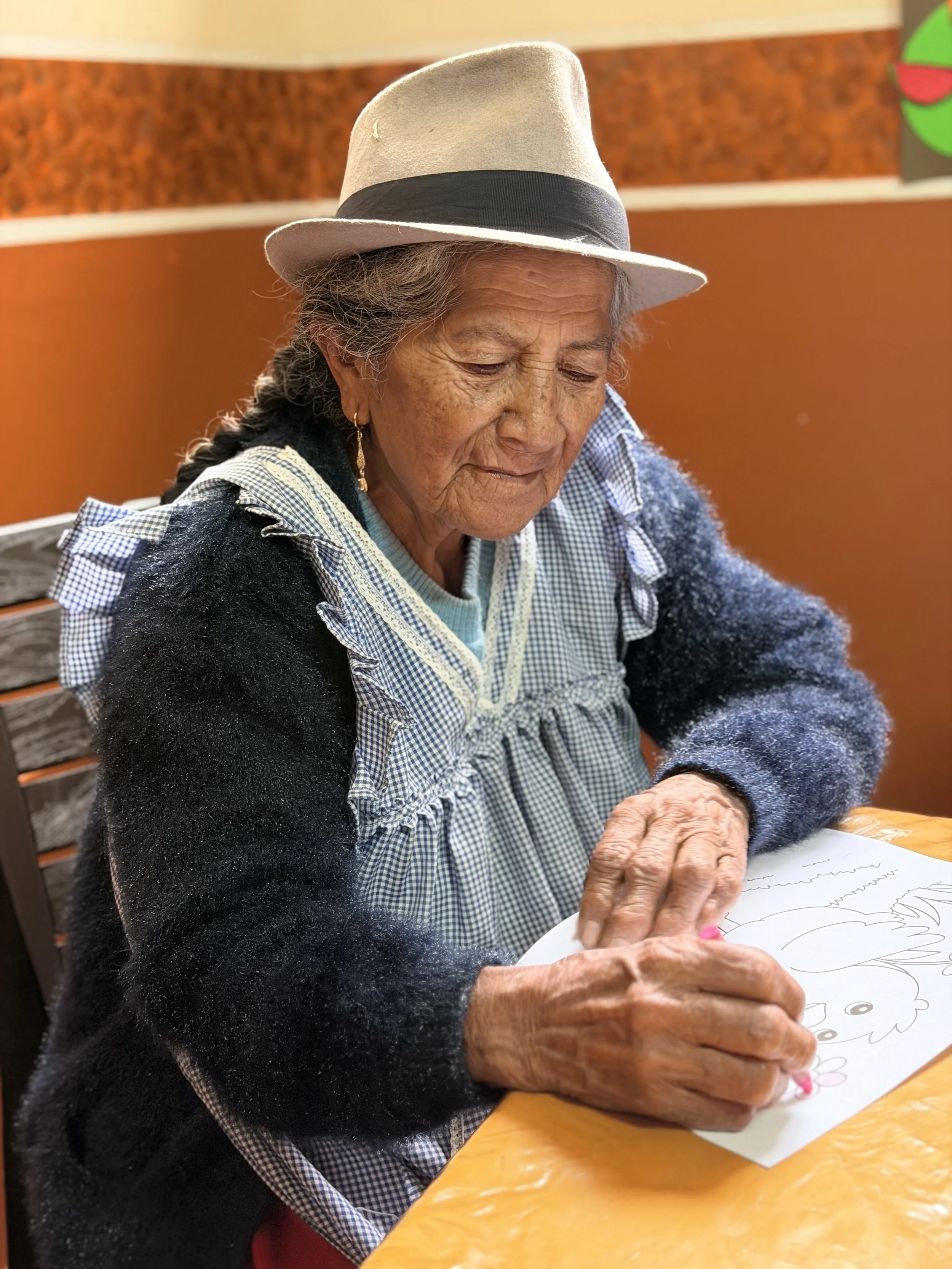
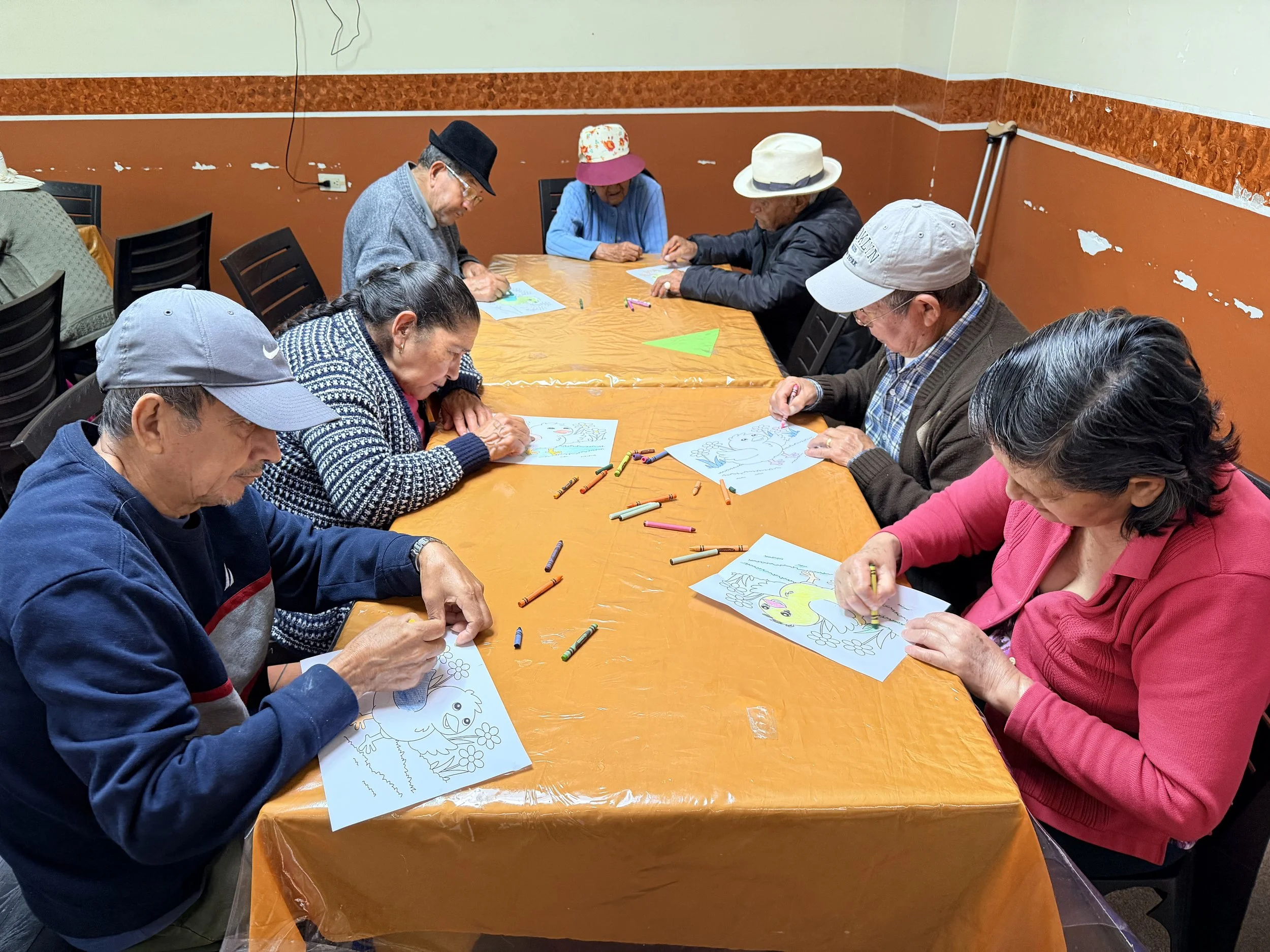
Week one was the summer camps I posted about. In week two, I visited an after-school program for kids ages 4–12 who need extra help or are dealing with challenges at home. I also spent a couple of days at a senior center where folks come for lunch Monday through Friday. Some of the participants are a bit quiet, but others are really pleased to have me there and seem amused by my very presence. I got pulled into an Ecuadorian card game called Cuarenta—or, in English, “Forty”—and we had a crowd around us giving me advice and encouragement.
Jenny’s experience has been very different. Her organization is the Chordeleg health department, and it seems to be in a bit of a crisis, having serious problems with the availability of basic PPE supplies and medications, and with a water crisis to boot. They seem to know what the problem with the water is, but they can’t decide which agency is responsible for the repairs.
She has attended lots of meetings where they ask for her thoughts on these matters. First off, while her Spanish is much better than mine, she still has to work very hard just to understand the content of a meeting—much less take in the full scope of the situation and come up with possible solutions or even intelligent feedback. She’s been placed on the Board of Directors of her agency, and she’s feeling a bit overwhelmed. She thinks it’s too much, too soon. At the same time, she can see that there will be many, many ways for her to contribute during our time here.
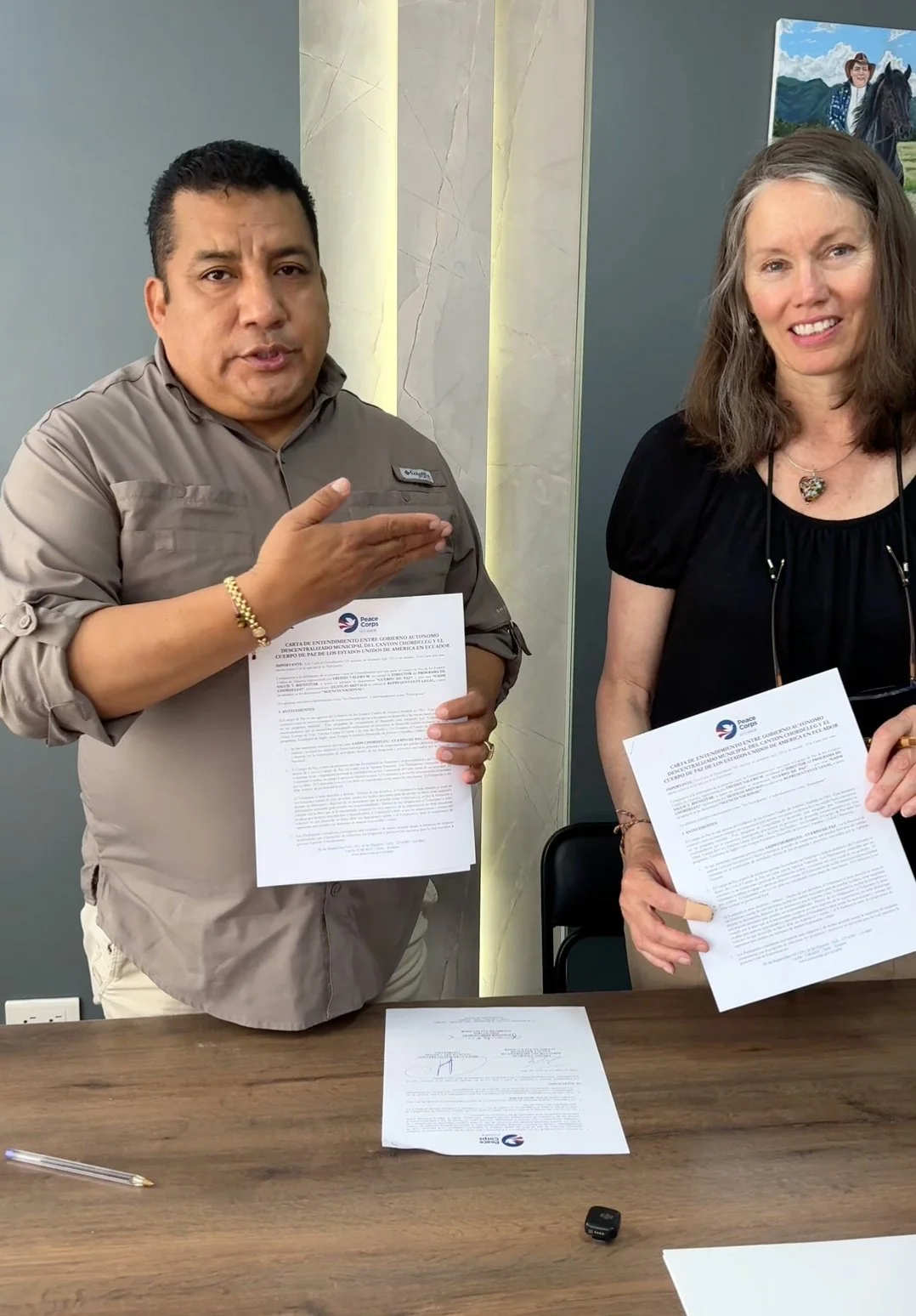
This is a screenshot from a Facebook video the Mayor posted introducing Jenny to the community.
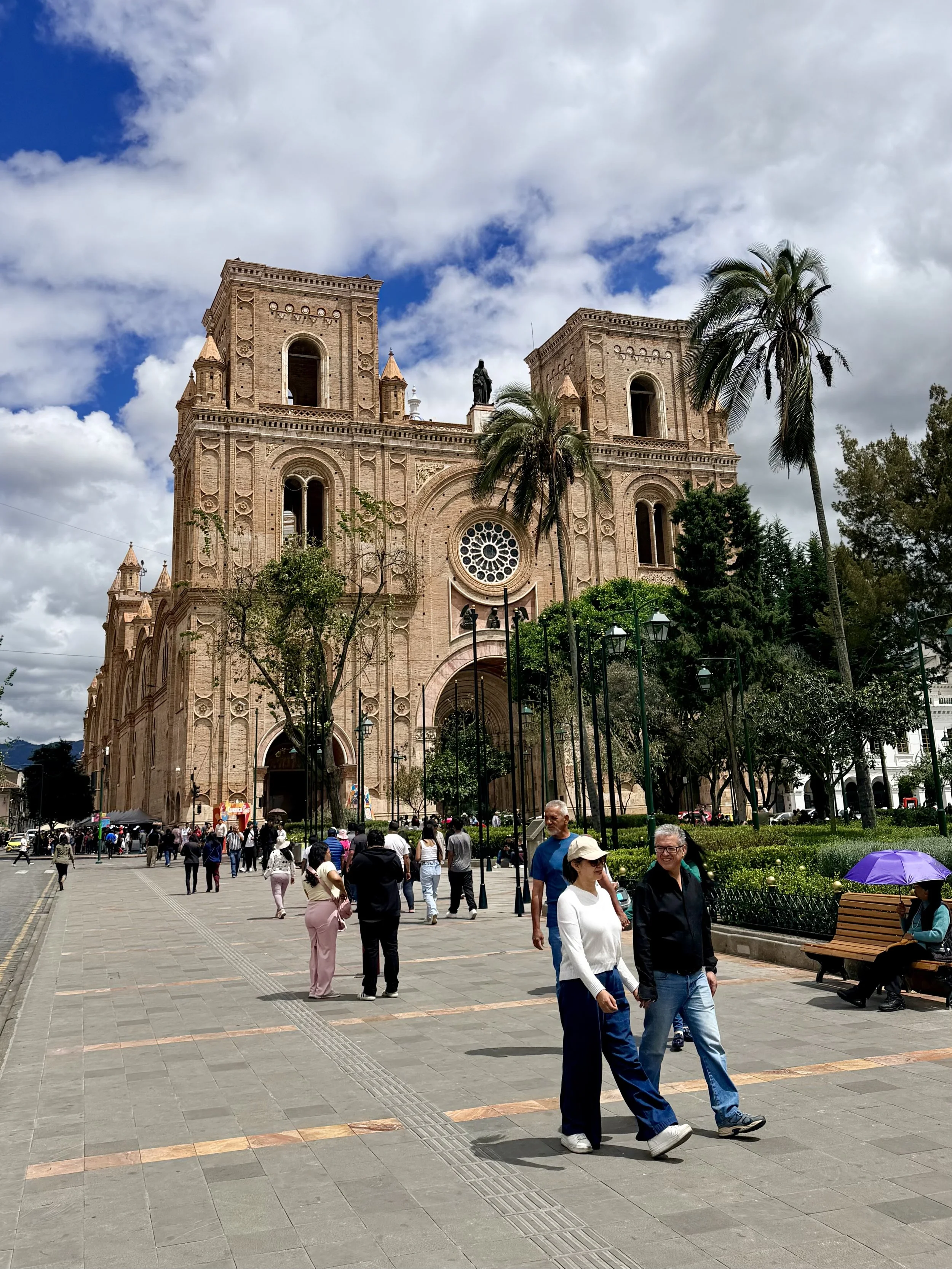
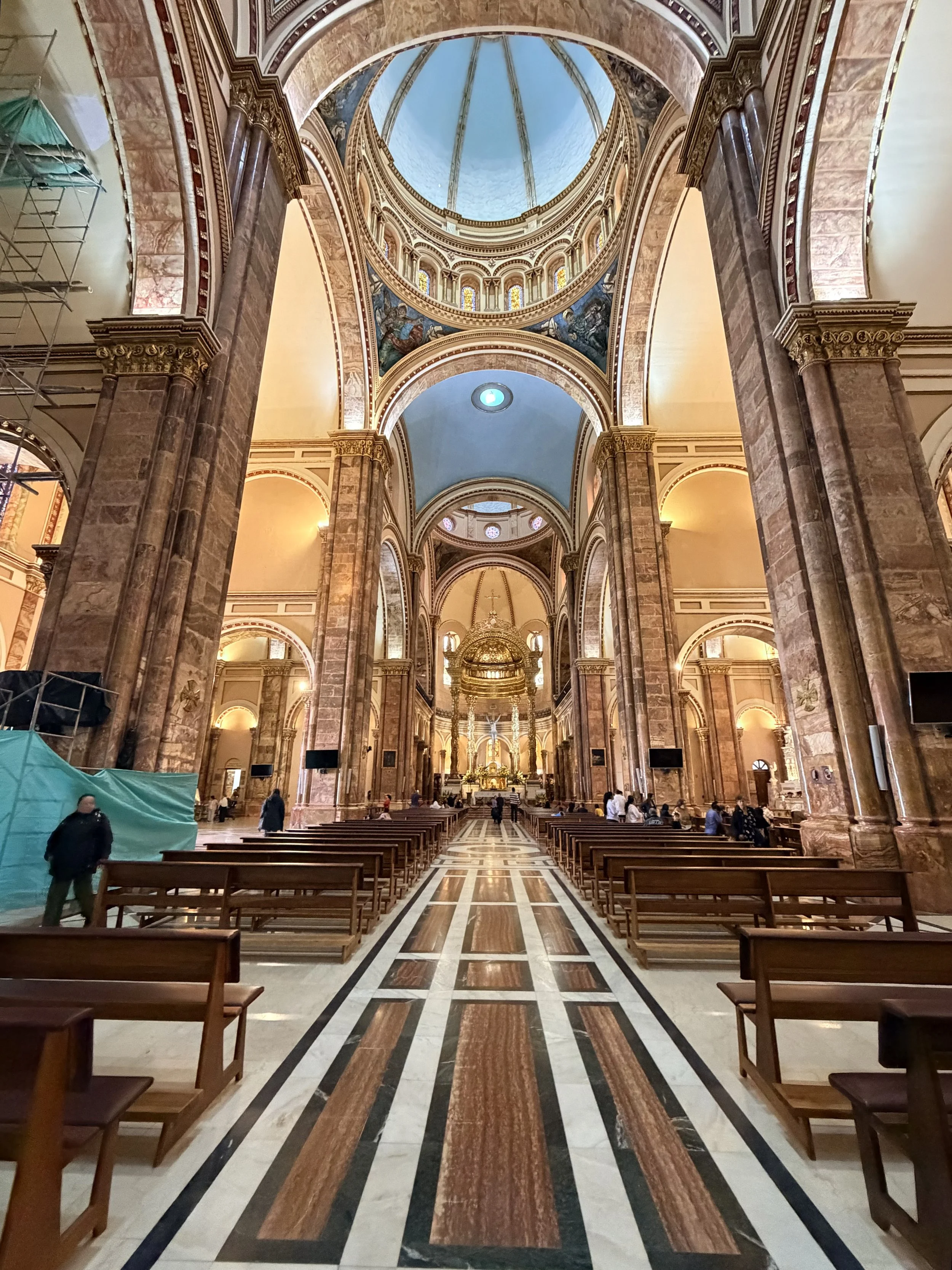
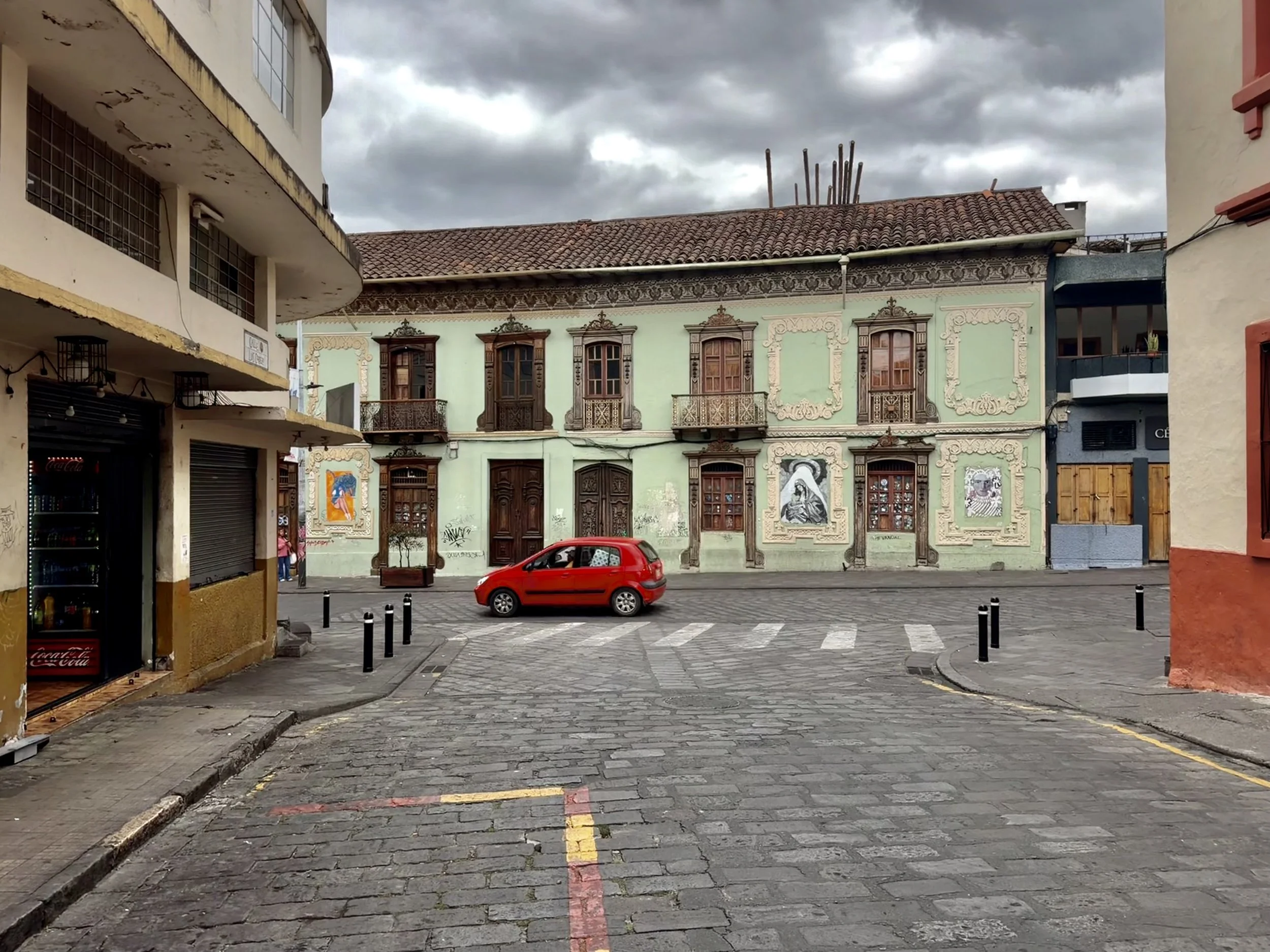
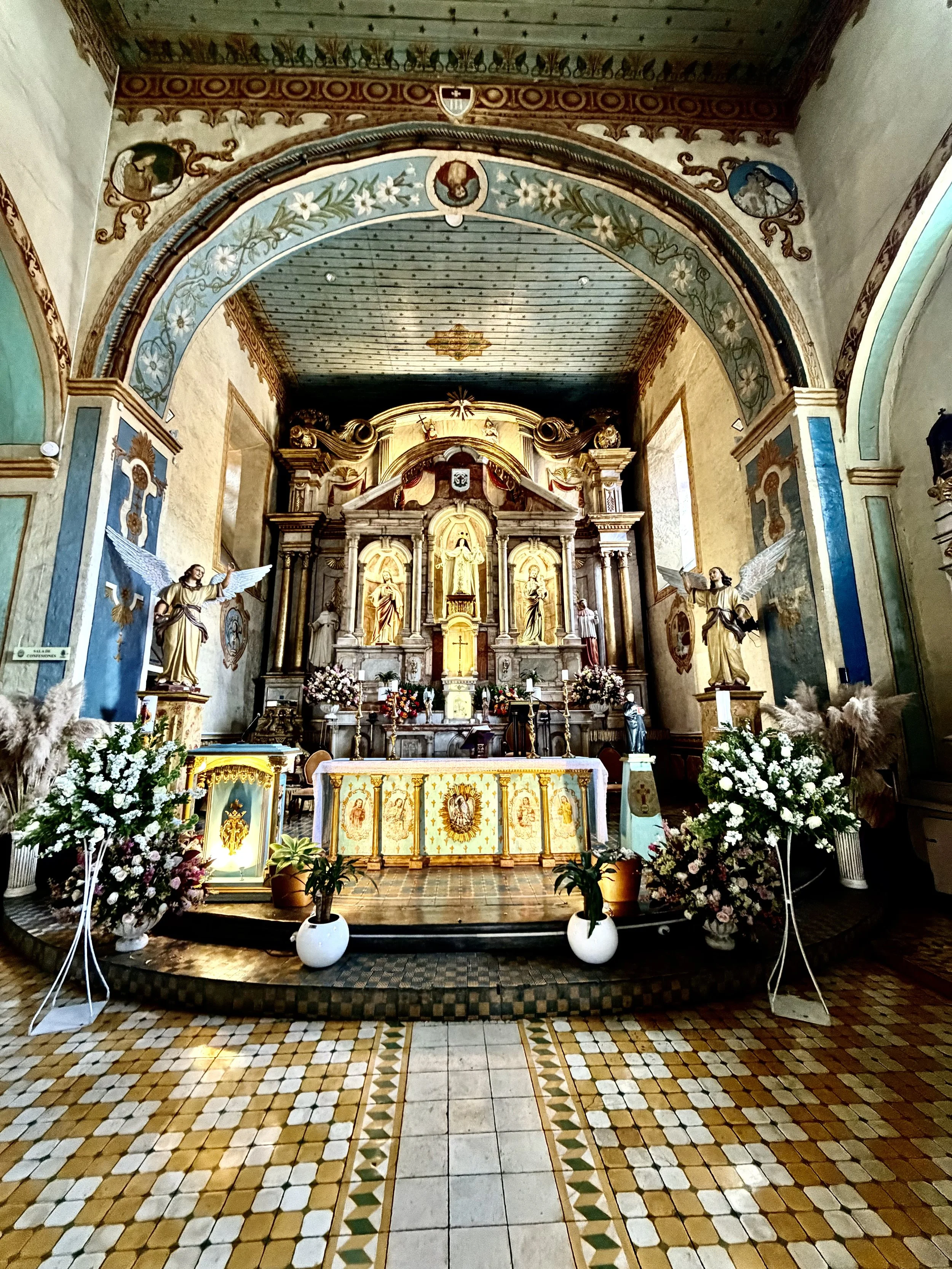
We took a little holiday last weekend and hopped on a bus for the hour long ride to Cuenca, the capital of Azuay Province and Ecuador’s third-largest city. We had heard how wonderful Cuenca is, and we were not disappointed. The historic district is lovely, studded with coffee shops, restaurants, churches, plazas, and beautifully preserved colonial-era buildings. The city was founded by the Spanish in 1557 on a site with much older Cañari and Inca roots going back to 1400 and evidence of earlier peoples going back 10,000 years. In 1999, its historic center was named a UNESCO World Heritage Site for its preserved urban plan, architecture, and blend of cultures.
If you visit us in Ecuador, you too will get to fall in love with this amazing city.
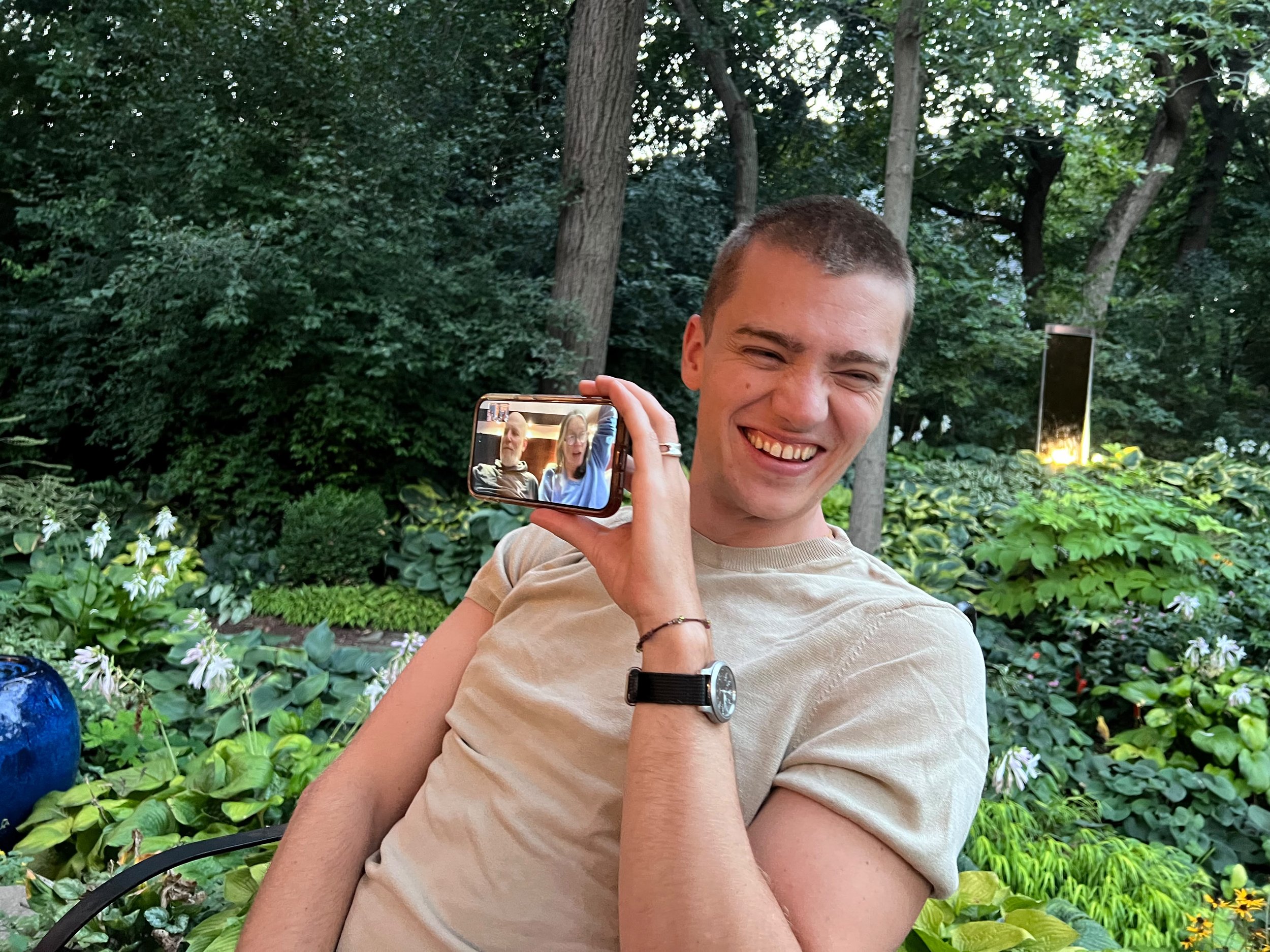
We were FaceTiming with Dave and Molly, Jake and Lindsey, and David and Anna and someone took a photo of David being a tripod with Jenny and I on the screen.
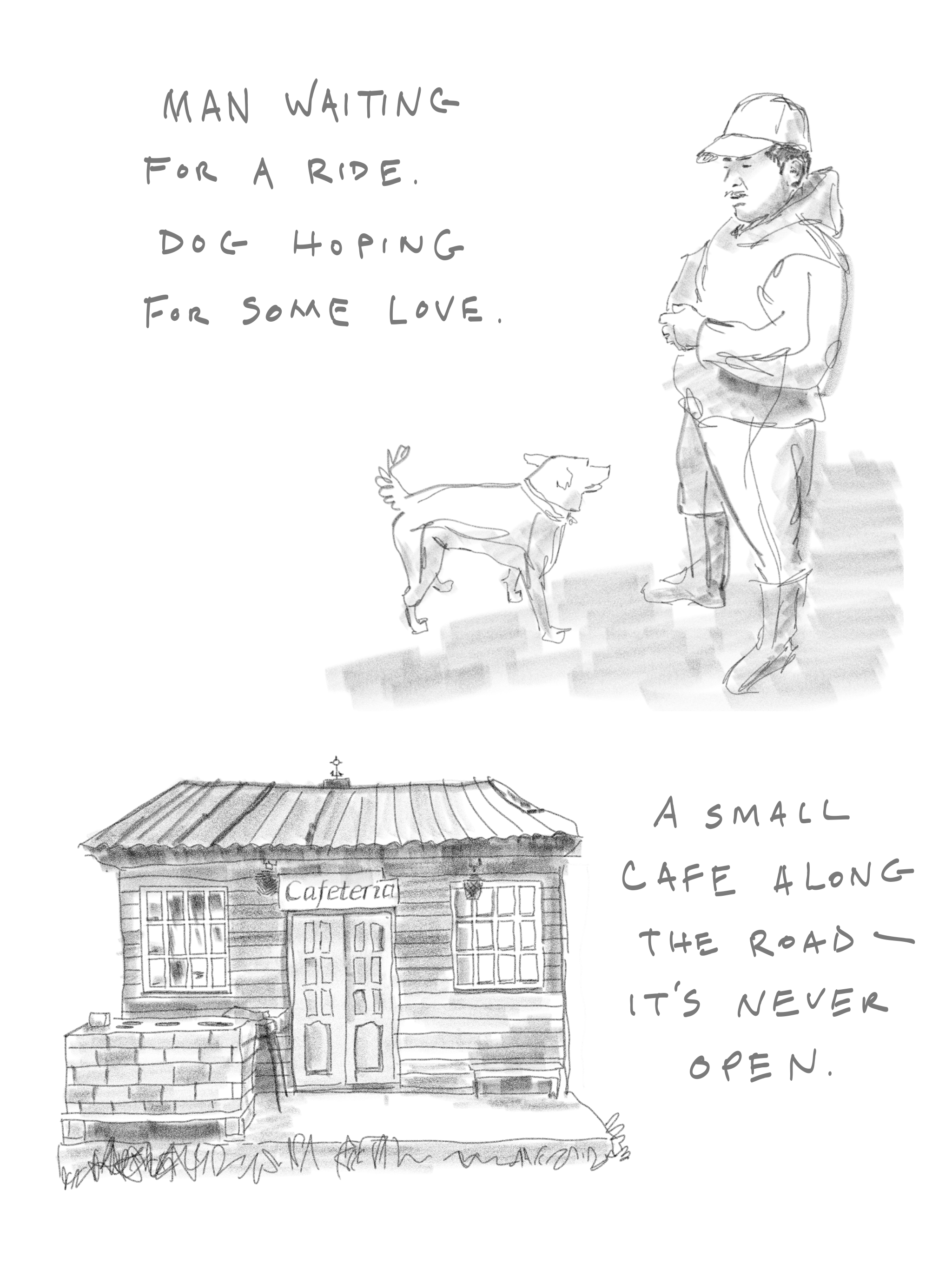
And finally…before becoming a professional graphic designer, I spent a lot of time making art. One of my hopes for the next two years is to return to drawing—not for profit or for anyone else, but simply for myself. Life has slowed down a bit since we finished training, and I was finally able to set aside some time to begin again. ↓

Let’s get ready to rumble!
These kids have a different tolerance for pain.
My first week working in Youth Development began at a summer camp for kids ages 14 to 24. Yes, that’s quite an age range, but somehow it seemed to work.
There were about 60 campers, divided into four teams—something like color wars. They played field games to earn points and, seemingly, to inflict as much pain on one another as possible. I didn’t recognize most of the games, but even the familiar ones, like a simple game of tag, came with a twist that invited injury. Nearly every event seemed to leave someone on the ground.
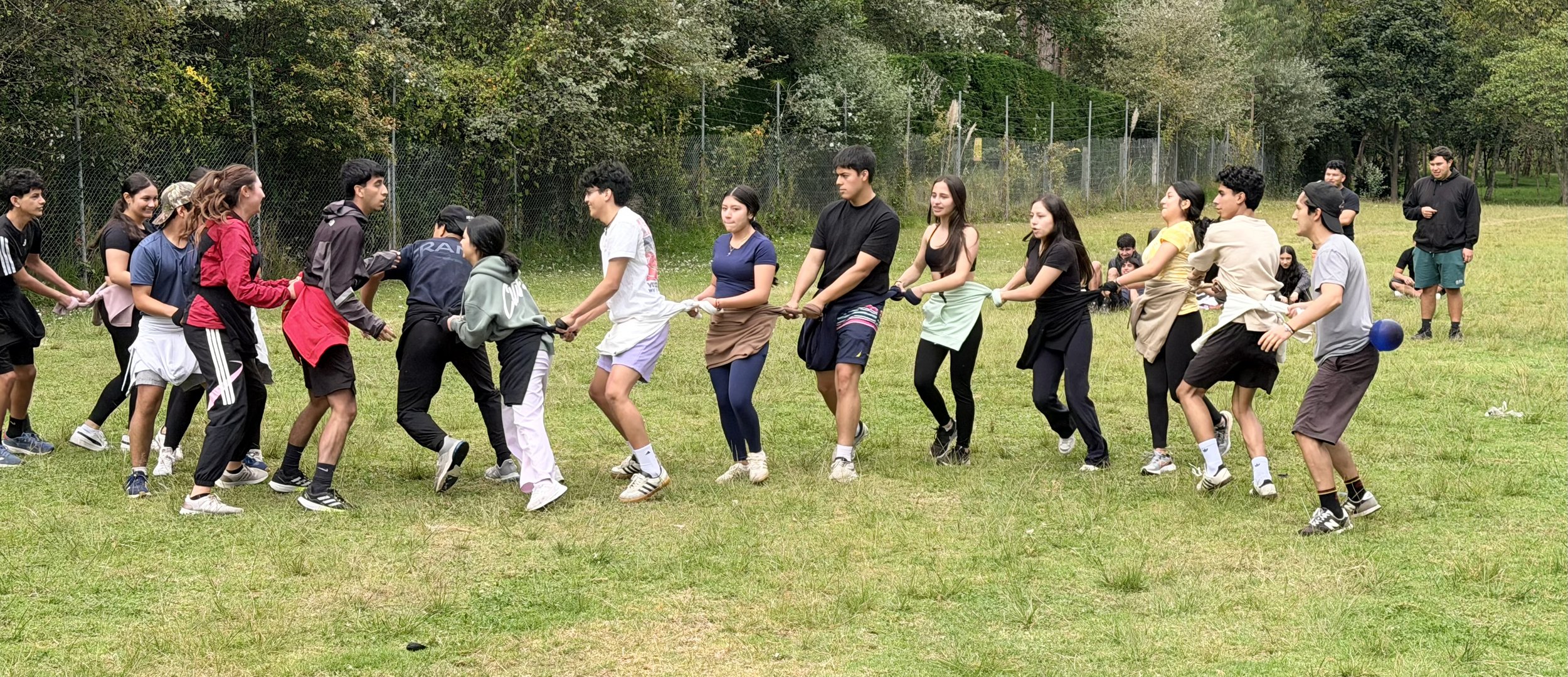
Two human “snakes” competed, with each team’s head trying to grab the balloons attached to the other team’s tail.
Then came the highlight of day two. Just when I thought things couldn’t get any more intense: boxing. Actual boxing—with a ring, headgear, gloves, and taped hands. Let me remind you: this was a municipally sponsored summer camp. Things are different here.
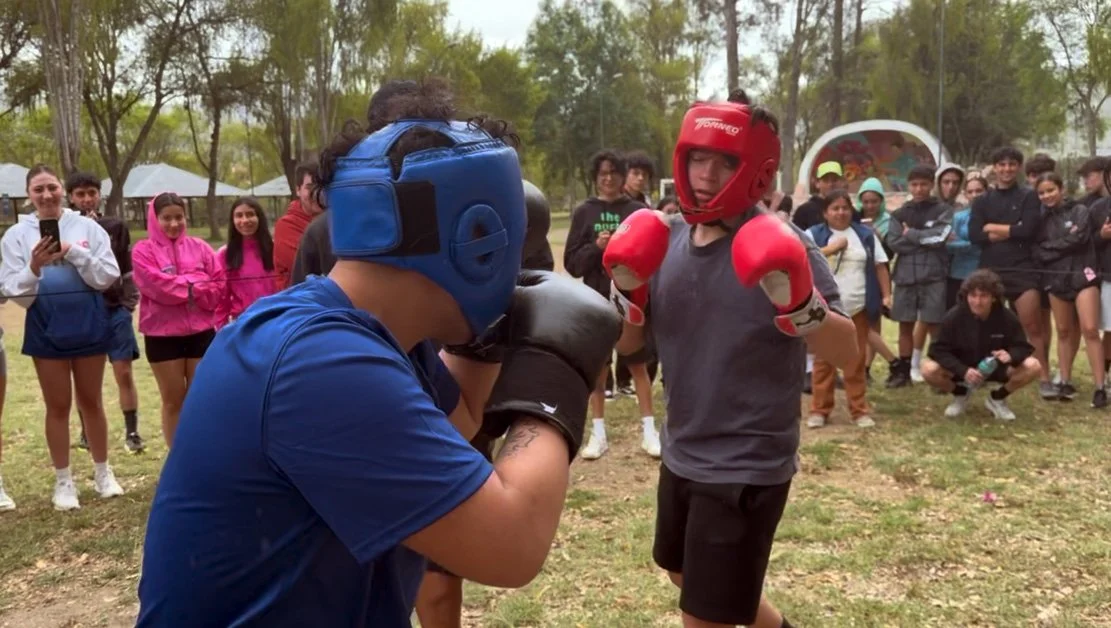
This was not gentle. There were four bouts—two featuring boys and two featuring girls.
My responsibilities were mostly limited to carrying supplies and serving lunch. It wasn’t much, but I joined the camp more than halfway through, and my Spanish is still developing, so my expectations were appropriately modest. Even so, it was fascinating to witness some of the cultural differences between life here and back home.
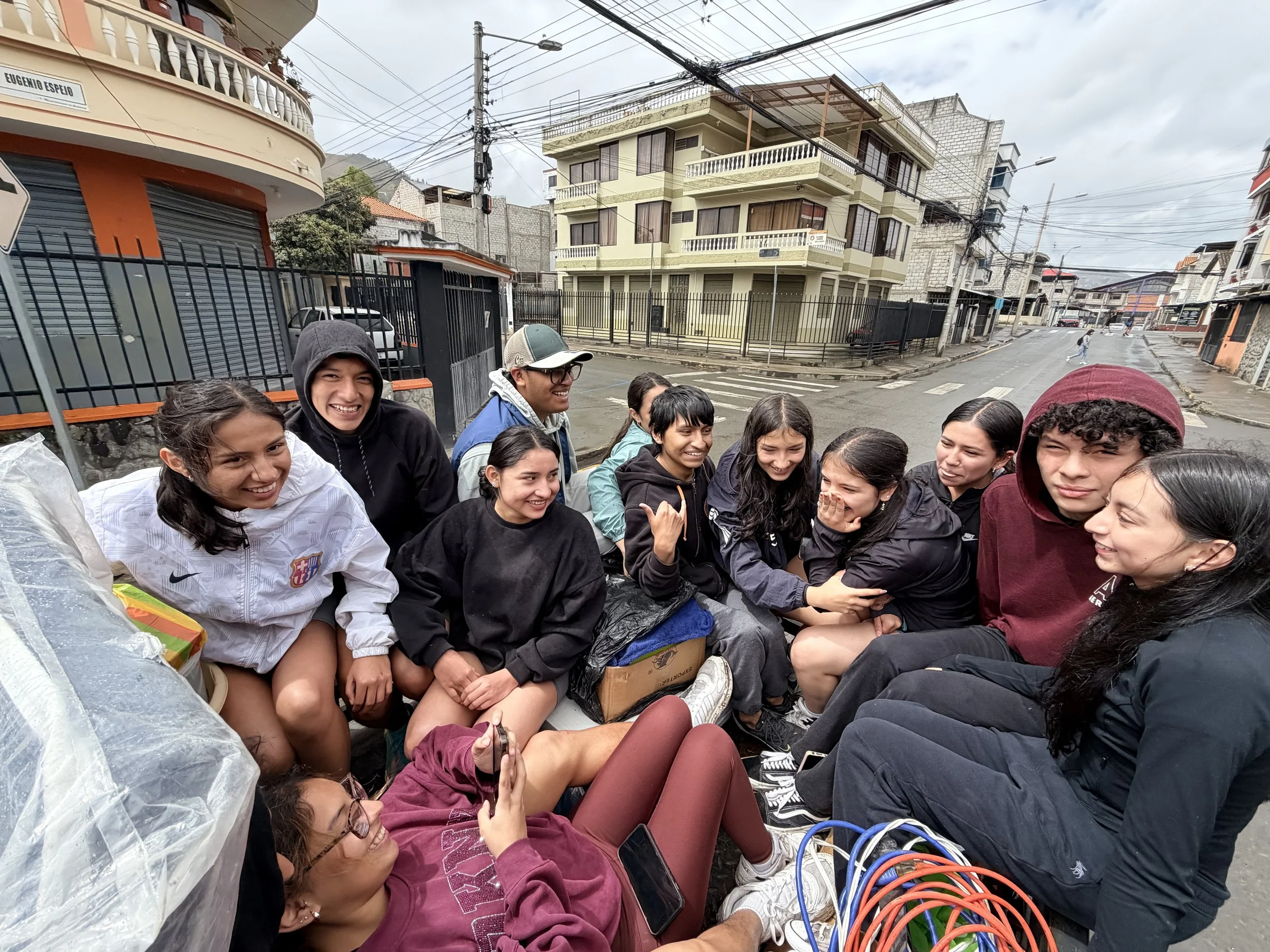
Due to some unexpected rain, we piled into the back of a tiny pickup truck and fled to a sheltered location where the sun instantly began to shine.
And some other random happenings…
If you’ve ever been to a market in Latin America, this scene will be familiar: a beautiful array of colors, smells, people, and noise. They can be overwhelming for the American shopper. The market in Chordeleg is quite small, but it offers the perfect variety of fresh fruits and vegetables. Can you find Jenny above?
It’s interesting that so many vegetables are available, yet the Ecuadorian diet is largely centered on rice, potatoes, and meat. One of Jenny’s hopes is to offer workshops for mothers on ways to incorporate more vegetables into their families’ diets. Her work has started out very slow, but she has lots of hope that there are many opportunities for her to help out. She meets the mayor tomorrow and then is attending a breast feeding workshop.
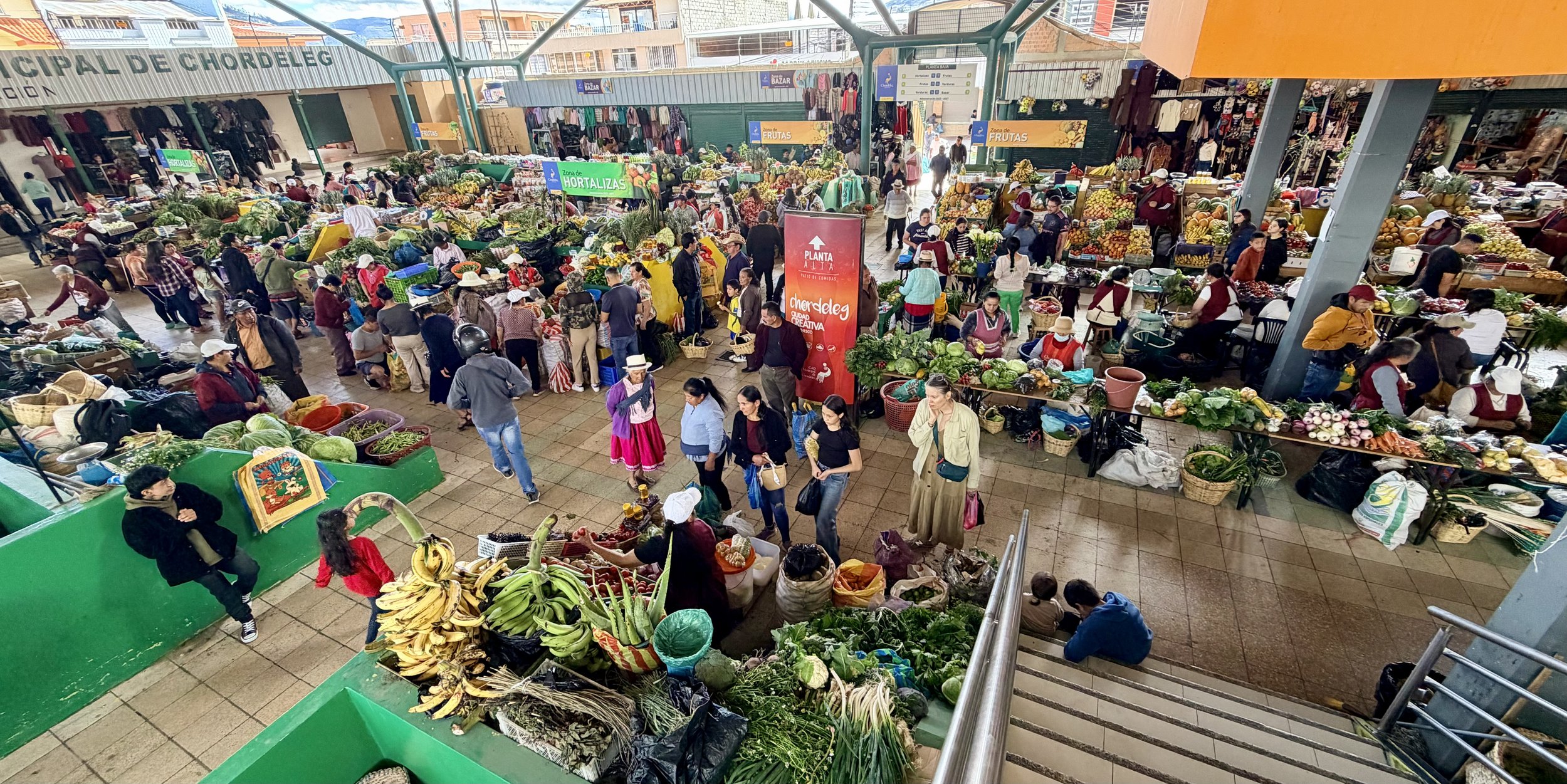
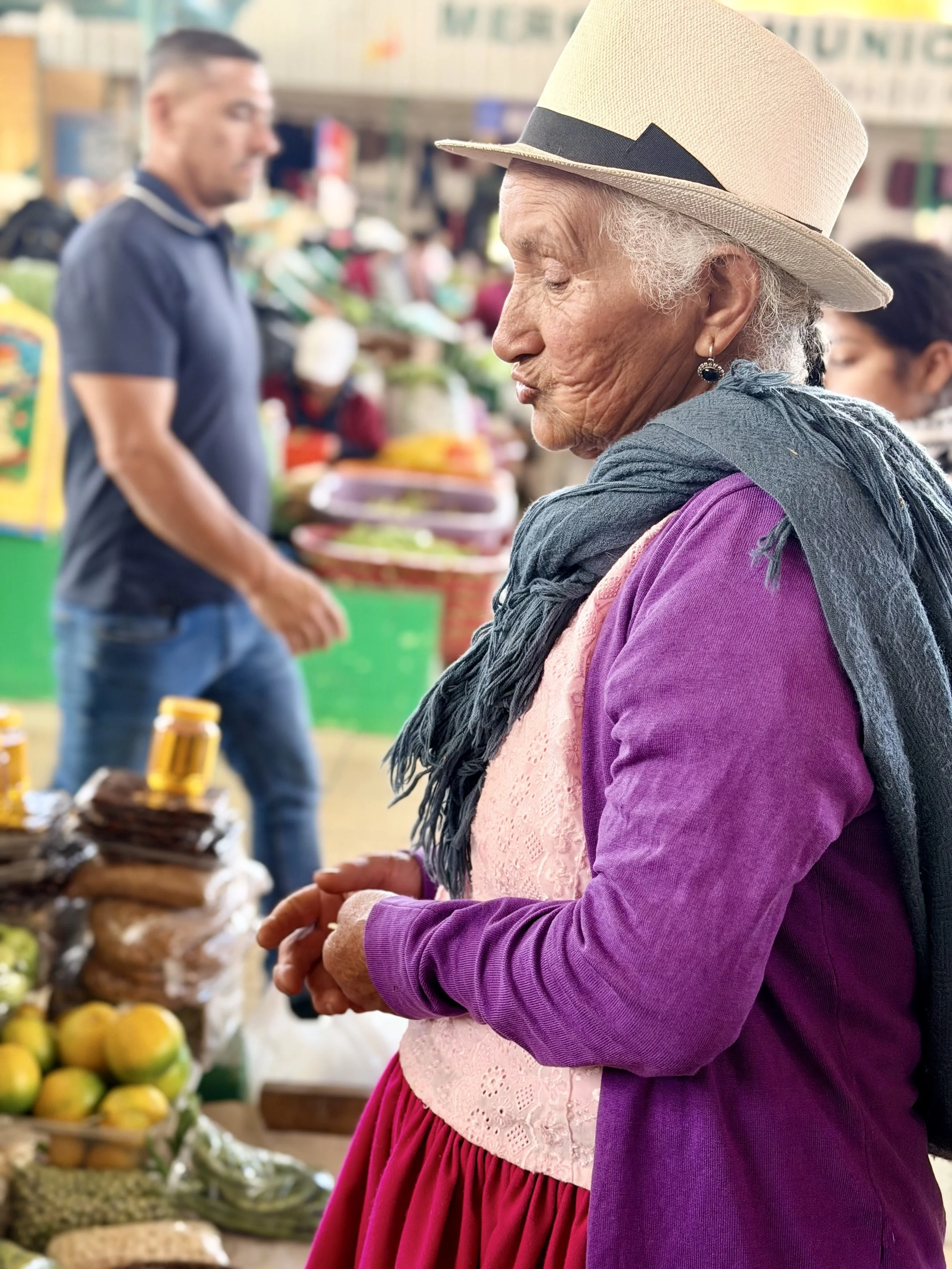
Chordeleg is not an Indigenous community, but the market is at its busiest on Sundays, when many people from the surrounding countryside come into town to buy and sell fresh produce.
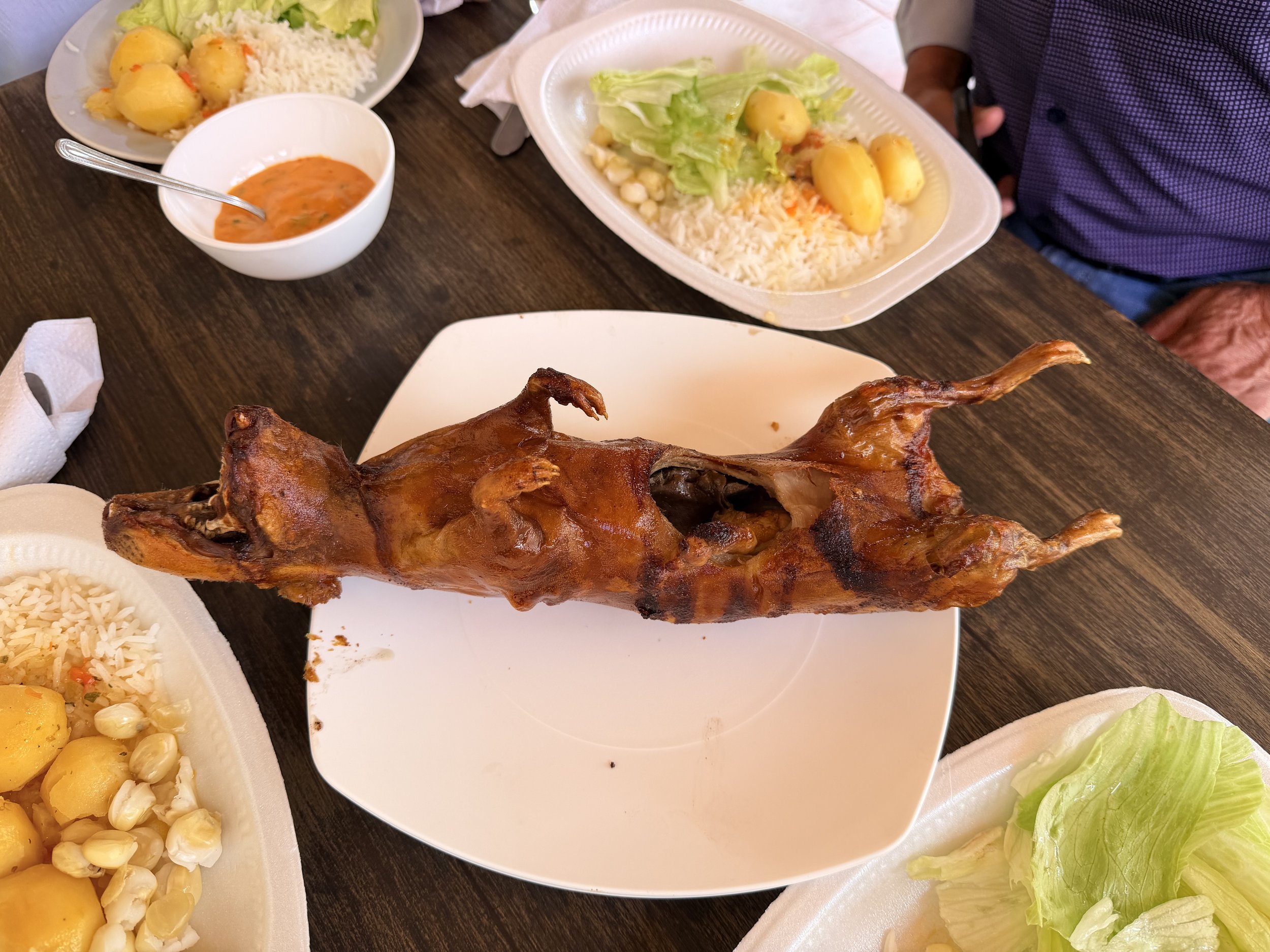
One of Ecuador’s best-known traditional dishes is guinea pig, or cuy, as it’s called here. It tasted a little like the dark meat of a turkey—not bad, not great—but eating it was still difficult for us. Clearly, our cultural biases came into play. I have no qualms about eating a roasted chicken, and I’ve never felt any great affection for guinea pigs as pets, but this was next level. Notice the plates nearby…yes, I see some iceberg lettuce, but also rice, potato and corn all together.
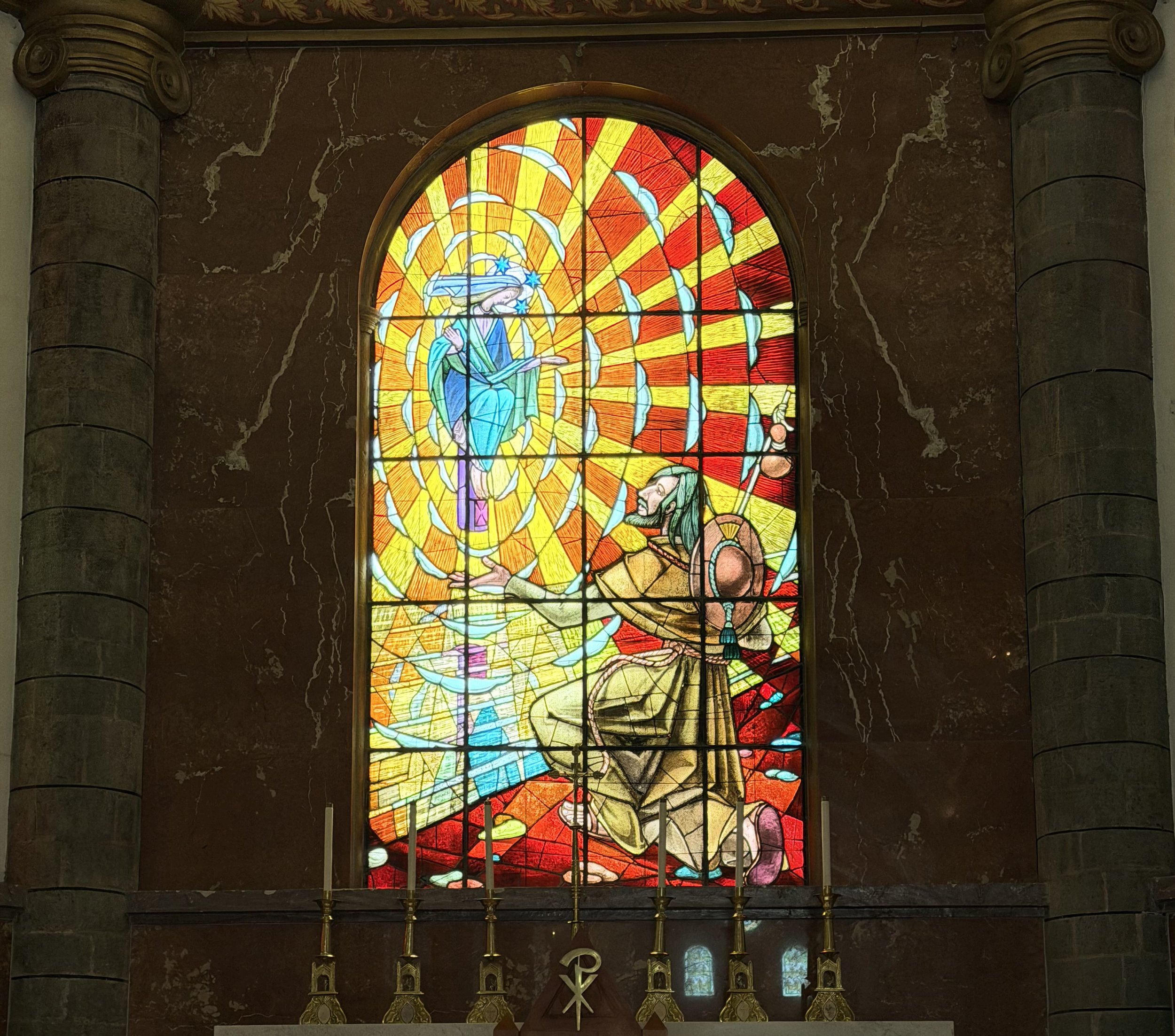
This is a beautiful stained glass in the Catholic Church in the town Gualaceo, where I work. It was created in 1961 and depicts Santiago el Mayor, patron saint of Gualaceo, while he was evangelizing in Spain. That’s Mother Mary up there on the pedestal. The church dates back to the year 1540, but it was rebuilt in 1850 and again in 1950.
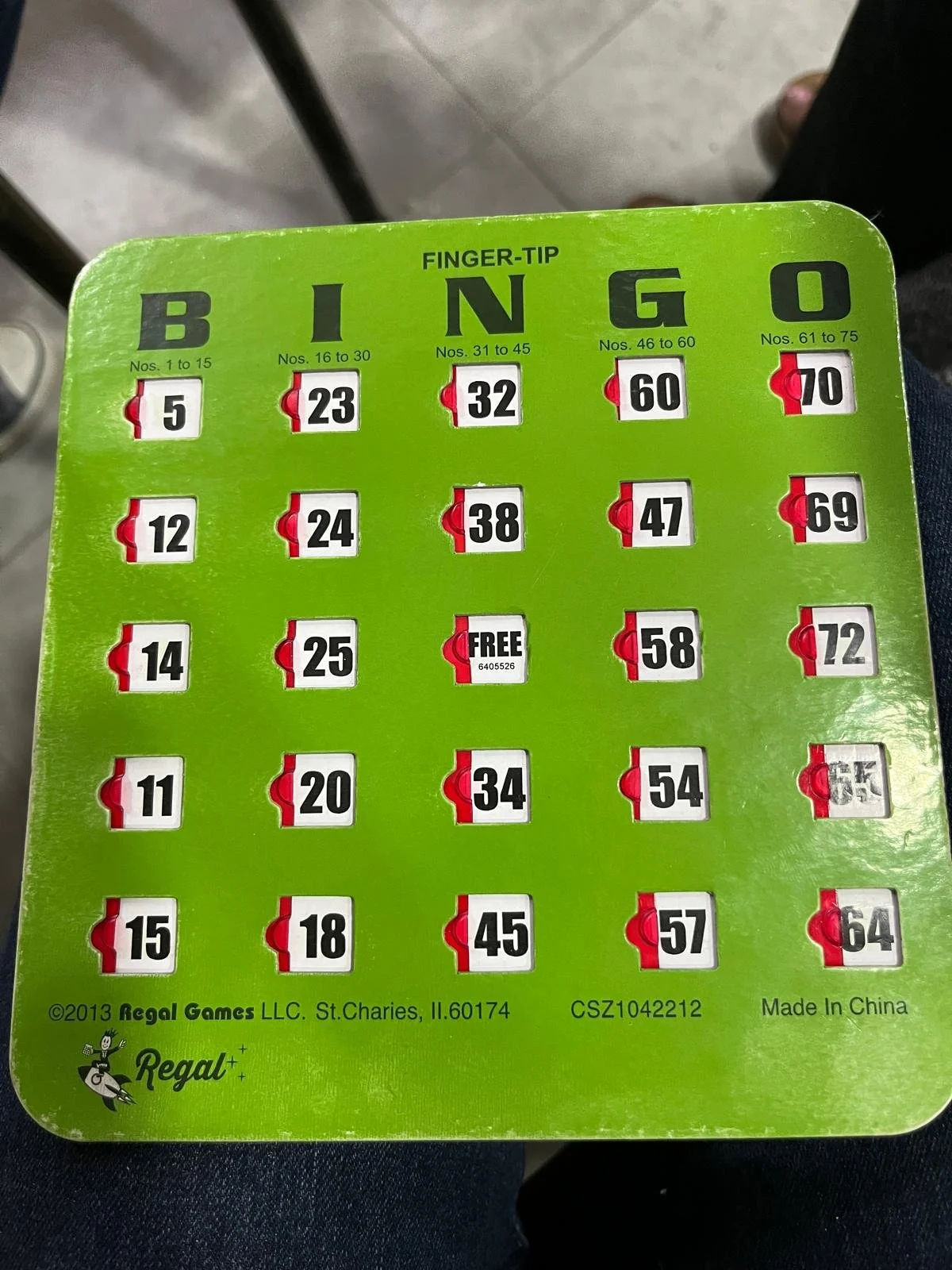
We’ve been to two bingo nights where each round wins a prize, mostly rice, but the most coveted prizes were three roasted cuy and two roasted pig heads. The most amazing part of the evening was the inscription at the bottom of the bingo card…St. Charles, IL! What?!? We are truly part of a global economy. Our grand prize of the evening was a cozy blanket we’ve been using during the cold evenings on our rooftop terrace.
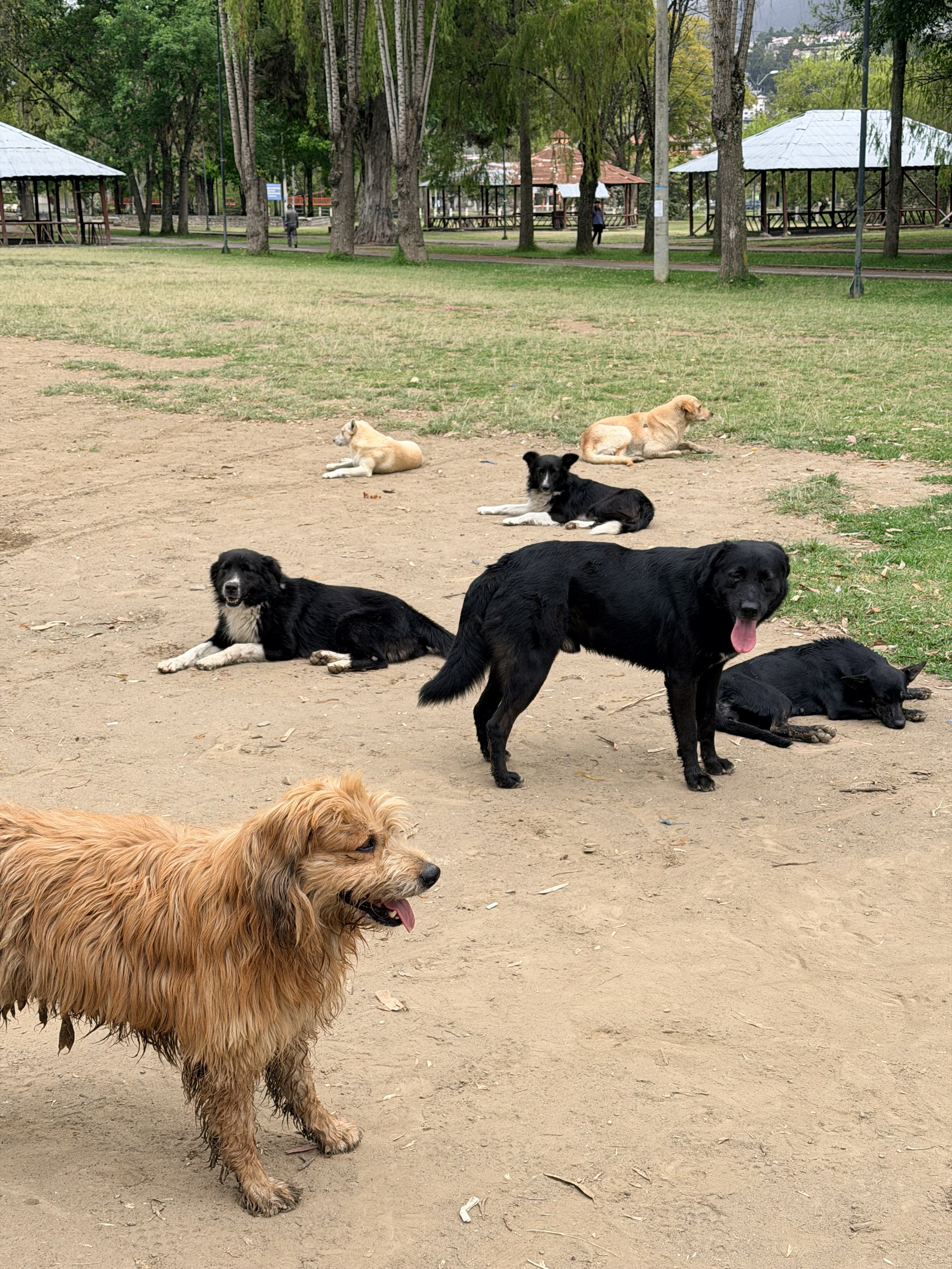
And finally — more dogs! I stumbled on an impressive pack of seven lounging at the summer camp, as if they’d signed up for their own session. This wasn’t a dog park and there wasn’t a single owner in sight—just a chill community of dogs enjoying each other’s company.

Coming Home to Chordeleg
The day after learning where we would be serving, Jenny and I—and the other 17 trainees we had spent the previous two months with—were sworn in as official Peace Corps Volunteers at Quito’s Botanical Garden.
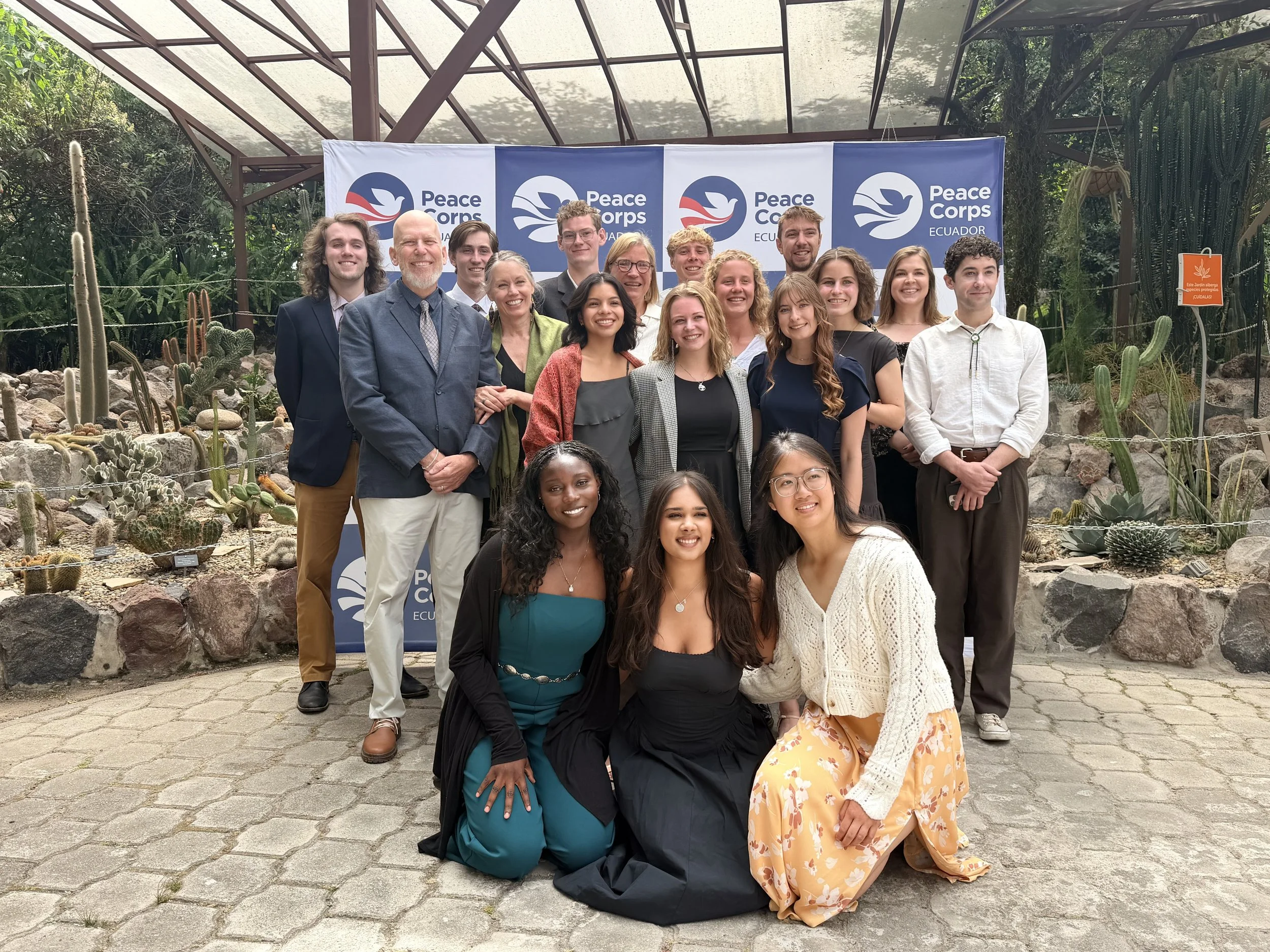
It was a fairly formal affair, with speeches from Peace Corps staff and representatives of the U.S. Embassy. Even with all the speeches and ceremony, it was a pretty meaningful moment for us. After two months of training, we were no longer just a group of people learning Spanish, sitting through workshops, and wondering where we would end up. We were officially Peace Corps Volunteers. Again.
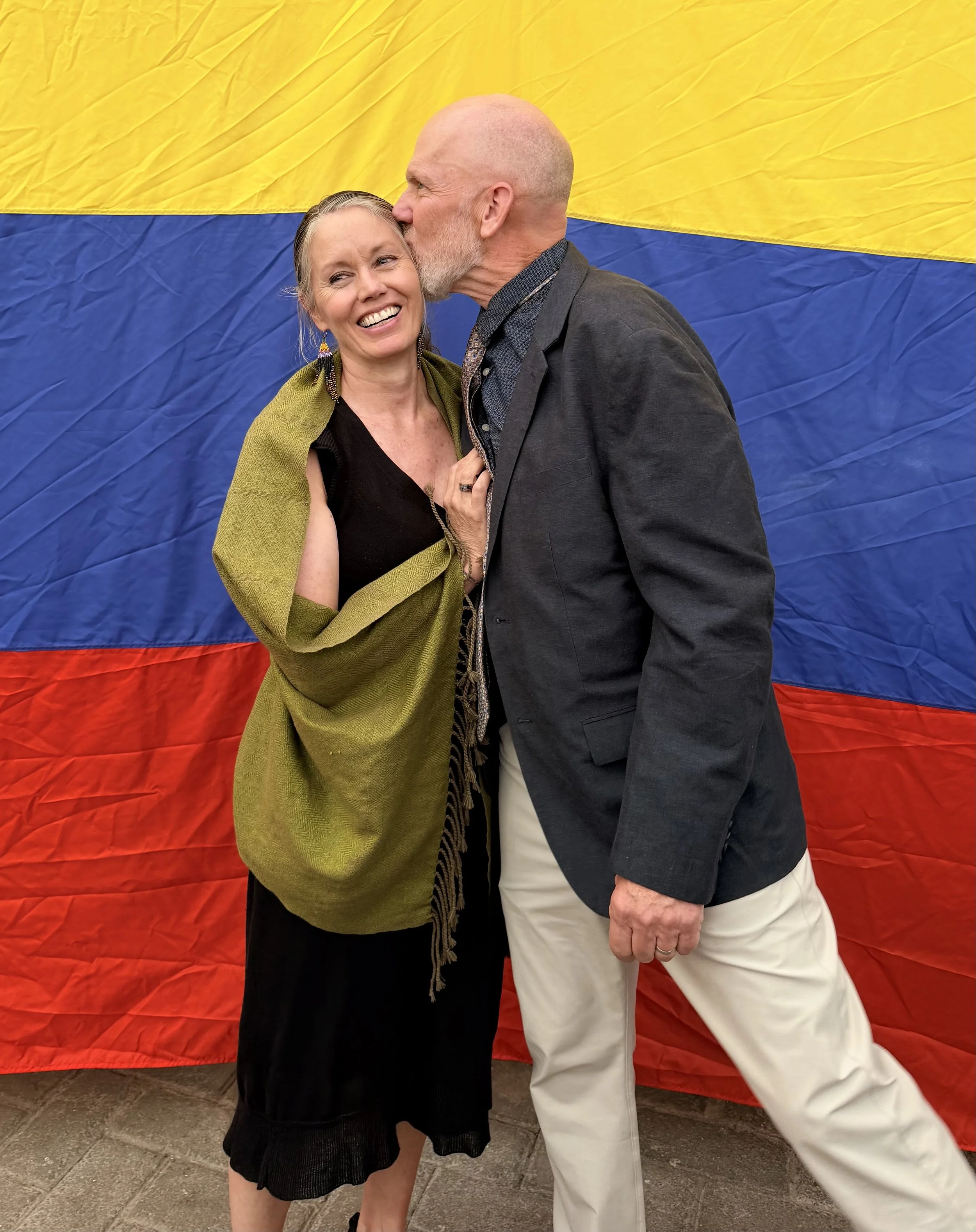
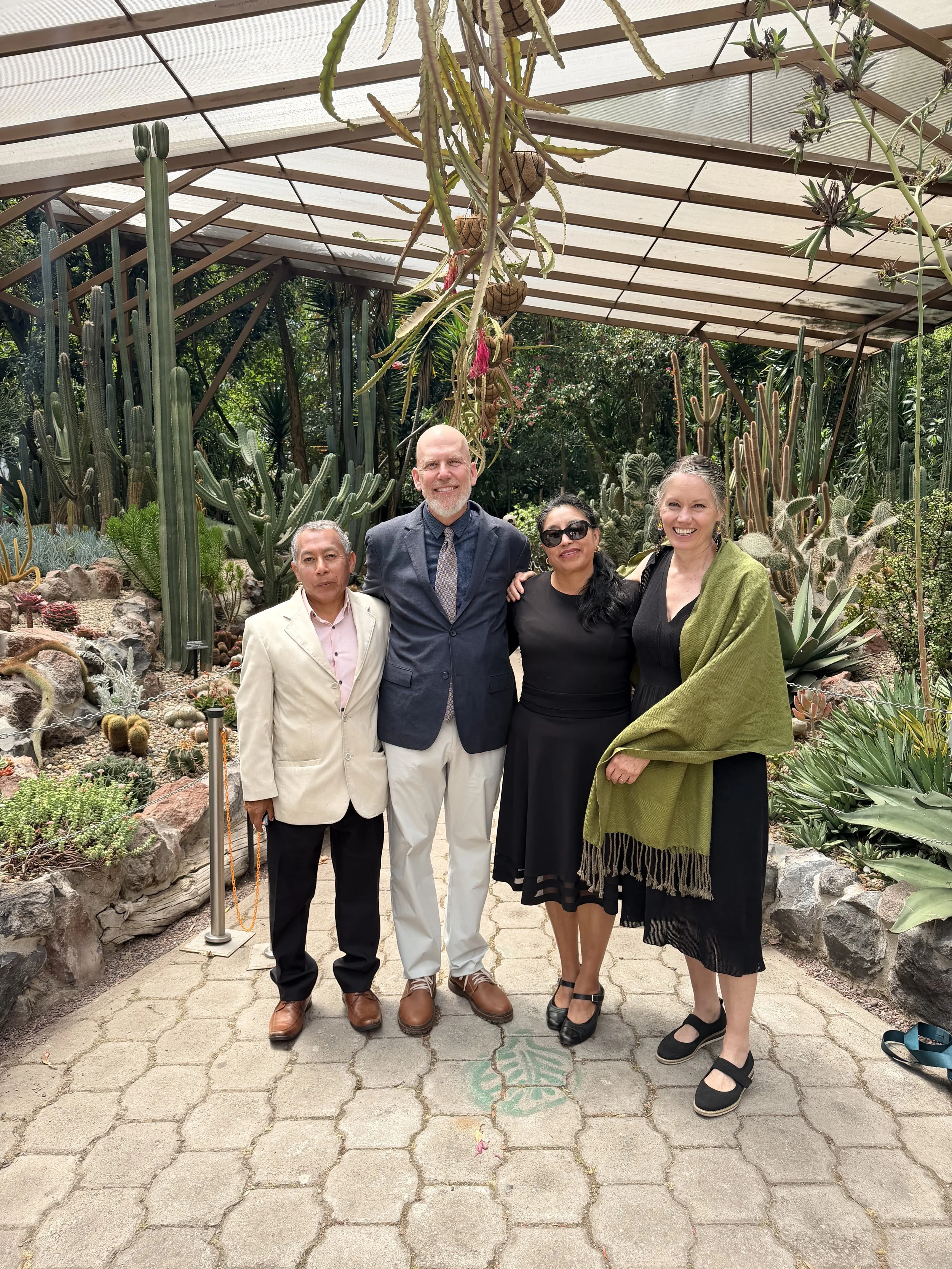
We had to say goodbye to our dear friends in Quito who hosted us in their home for 2 months.
The next day, a counterpart from each of our work assignments traveled to Quito for a full day of training. Since our sites are spread across the country, some of them had come quite a long way. The sessions focused on their responsibilities as host agencies and the ways they can help us succeed—particularly by helping us with our Spanish and introducing us to the people and organizations in our new communities.
Then it was time to leave Quito.
The following morning, Jenny and I climbed into a 14-seat Sprinter van and set off for our new home in Chordeleg. The drive was only about 300 miles, but this is Ecuador, the roads run through the Andes, and we made a lot of stops. Door to door, the trip took nearly 12 hours.
My dad was a real perfectionist when it came to driving, and I’m confident that, somewhere along the way, he would have dragged our driver out of his seat and tossed him over the nearest cliff.
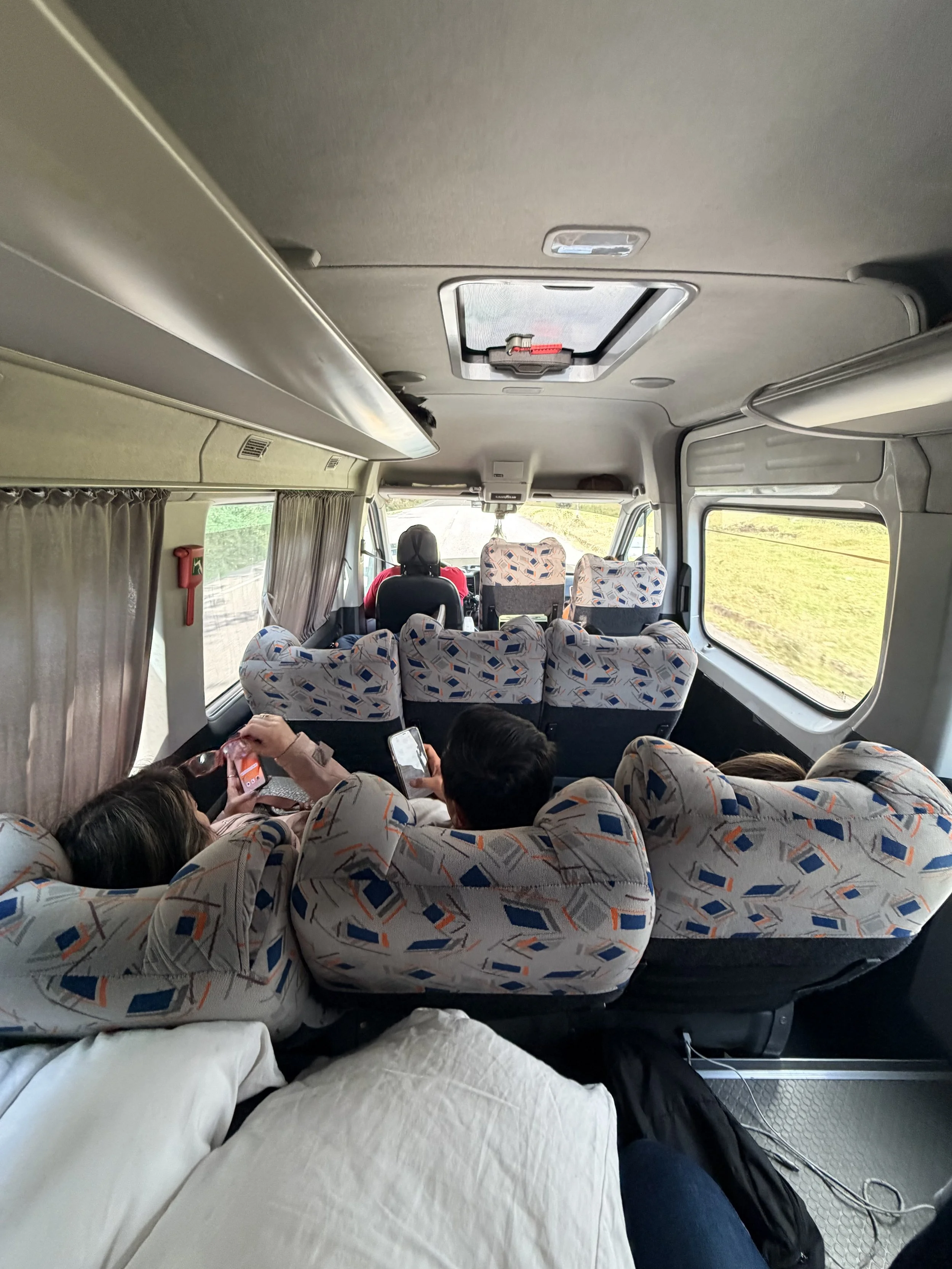
I lost count of the number of times we passed lines of cars on double-yellow blind curves. To be fair, Ecuadorians seem to have a much higher tolerance for this sort of thing, and they do give one another more room to pull it off. Still, I’m not sure that makes passing on a blind curve a good idea.
But the worst part was the constant pumping of the brakes. Maybe it’s a technique for keeping them from overheating on long mountain descents. I don’t know. Whatever the reason, after 12 hours it was getting a bit trying.
And then we arrived in Chordeleg.
There was a rooftop dinner party in full swing at our new home. As luck would have it, it was our hosts’ turn to hold a monthly gathering of family and friends, and we arrived just in time to eat, drink, and meet everyone.
After 12 hours in the van, it felt like magic.
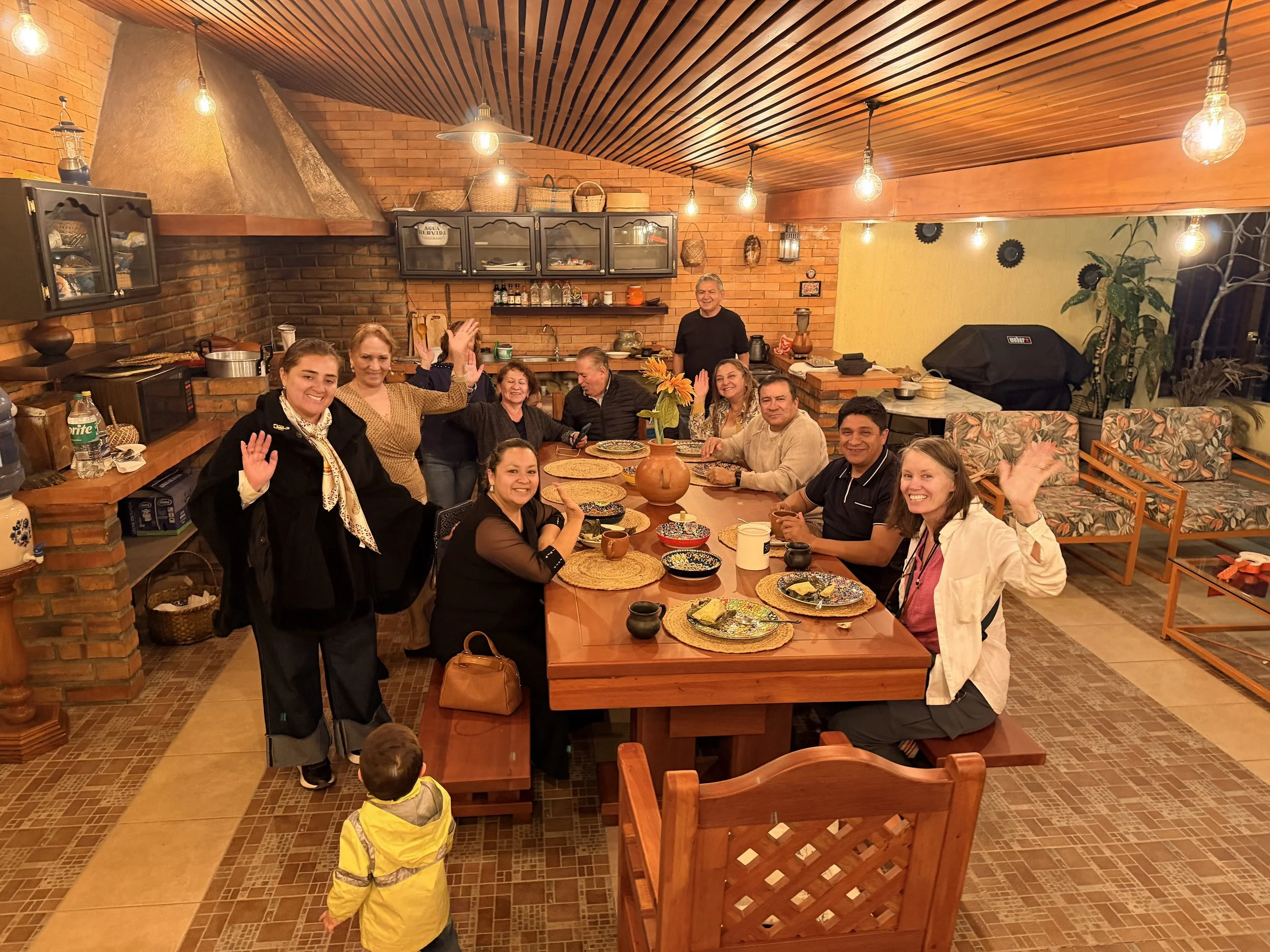
This is the rooftop kitchen where Jenny and I will be making our meals and spending our time. Not exactly a mud hut.
Our new hosts are Jorge and Mariana, and their family’s story is closely tied to the history of Chordeleg.
Chordeleg is a town of roughly 7,000 people, and it has something like 300 jewelry stores. Yes, 300.
The town is famous for filigree, a jewelry-making technique in which silver or gold is drawn into extremely fine threads and then shaped into intricate earrings, pendants, and other pieces.
It turns out that Jorge’s father was the first person in town to learn the craft and open a workshop. He was generous about teaching what he knew, so before long his relatives, neighbors, and seemingly half the town were making filigree and opening shops of their own.
I’ll admit that 300 jewelry stores are more than I need in my new town. Personally, I wouldn’t object to a little more variety in the shopping options. But there is no denying that Jorge’s father brought a great deal of prosperity to Chordeleg and the surrounding area.
Jorge worked in the family business before moving with Mariana and their four children to Queens, New York where they spent the next 30 years. Three years ago, they moved back to Chordeleg to enjoy their retirement in their hometown.
Yesterday, we went to another party, this time at the home of Jorge’s mother. She is 98 years old and looks amazing. We met even more members of the family and were treated to another very warm welcome. The Ecuadorians are certainly welcoming us with open arms.
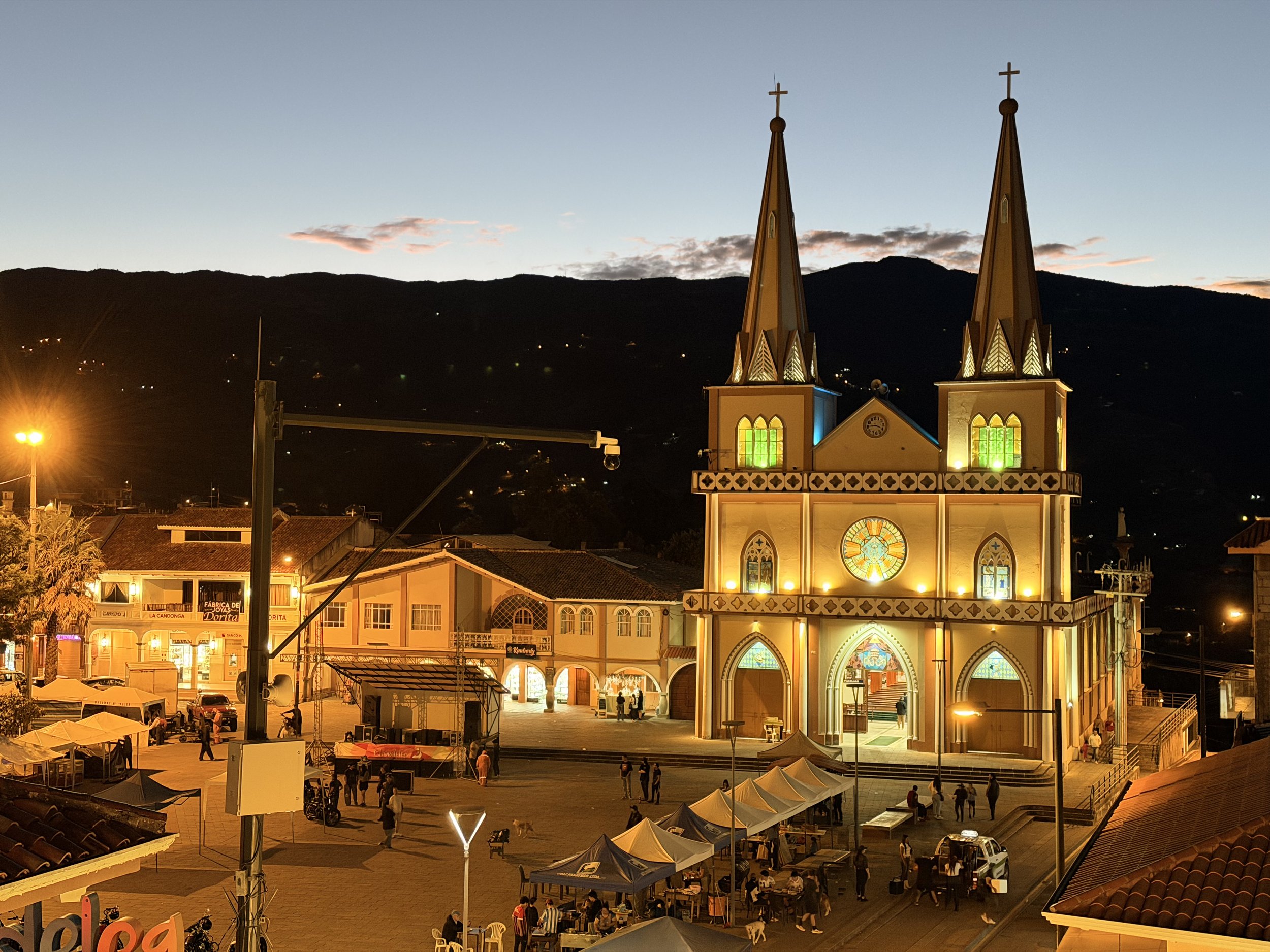
The view from our rooftop.
But there is one more part of this story that makes our being here feel especially meaningful.
In 1963, just two years after President Kennedy launched the Peace Corps, a Volunteer named Elana Thompson served in this area. She worked in small-business development and played an important role in helping Jorge’s father establish his workshop and store.
That workshop eventually became much more than a family business. It helped turn filigree into a signature industry for Chordeleg and created an economic legacy that has brought tens of millions of dollars into this region.
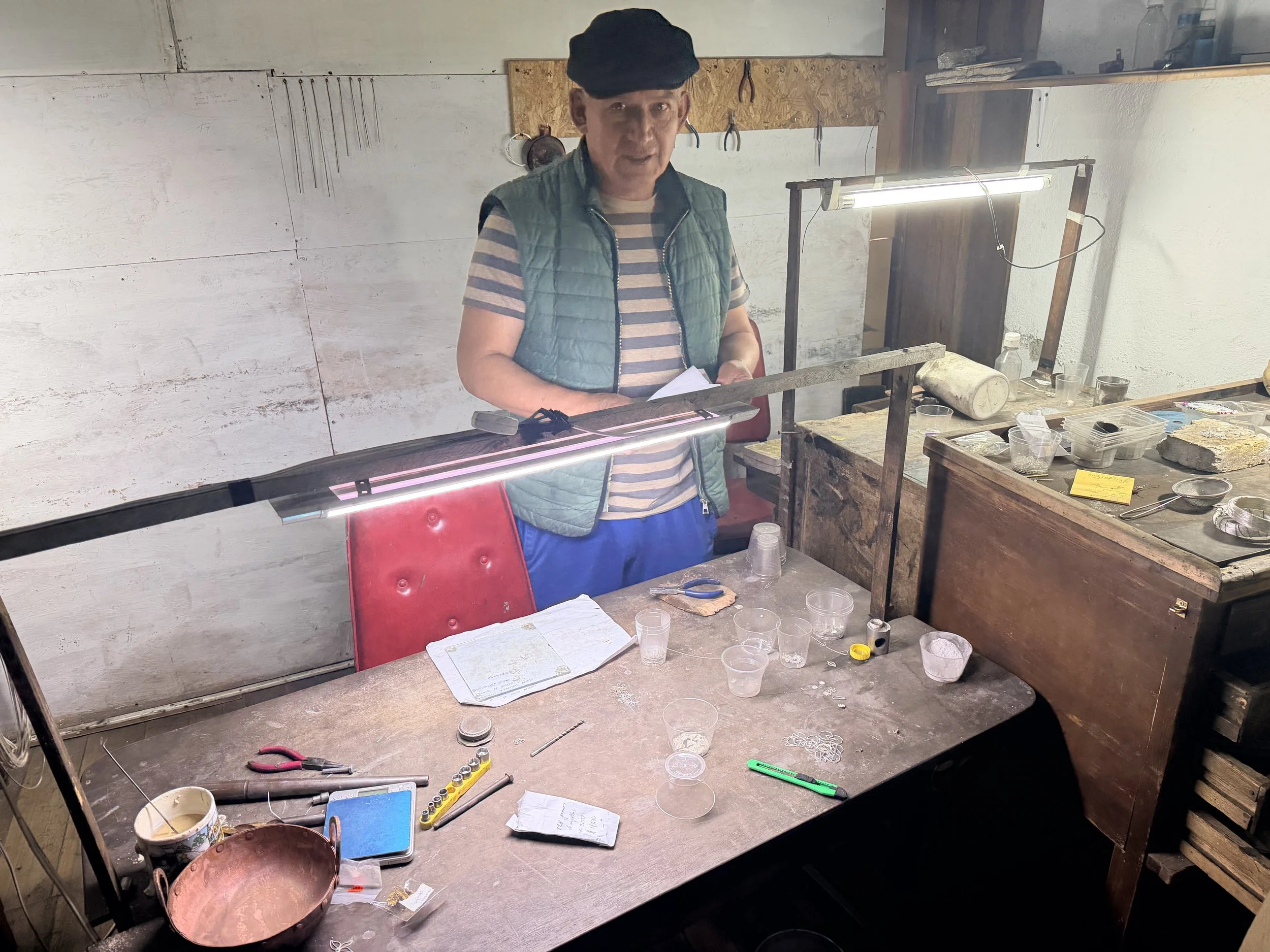
This is Edgar, Jorge’s brother, in his jewelry workshop.
More than 60 years later, Jorge and Mariana are hosting two new Peace Corps Volunteers in their home.
Tomorrow, Jenny will walk across the town square to the municipal offices and begin her work as a Health and Well-Being Volunteer. I’ll commute four miles to Gualaceo—a city of about 44,000 people—to start my work in Youth and Family Development.
Those are our official assignments, but the Peace Corps has made it clear that we have a fair amount of freedom to work on other projects that interest us, fit local needs, and support the broader goals of our assignments in health and youth development.
The Peace Corps’ three goals are:
To help interested countries meet their need for trained people.
To help the people we serve better understand Americans.
To help Americans better understand the people and cultures of other countries.
That third goal is one reason I’m writing this blog. If Jenny and I can do something useful here, share a little about ourselves with the people we meet, and help our friends and family back home better understand Ecuador, we’ll be doing exactly what we came here to do.
Here we go!
Off we go!
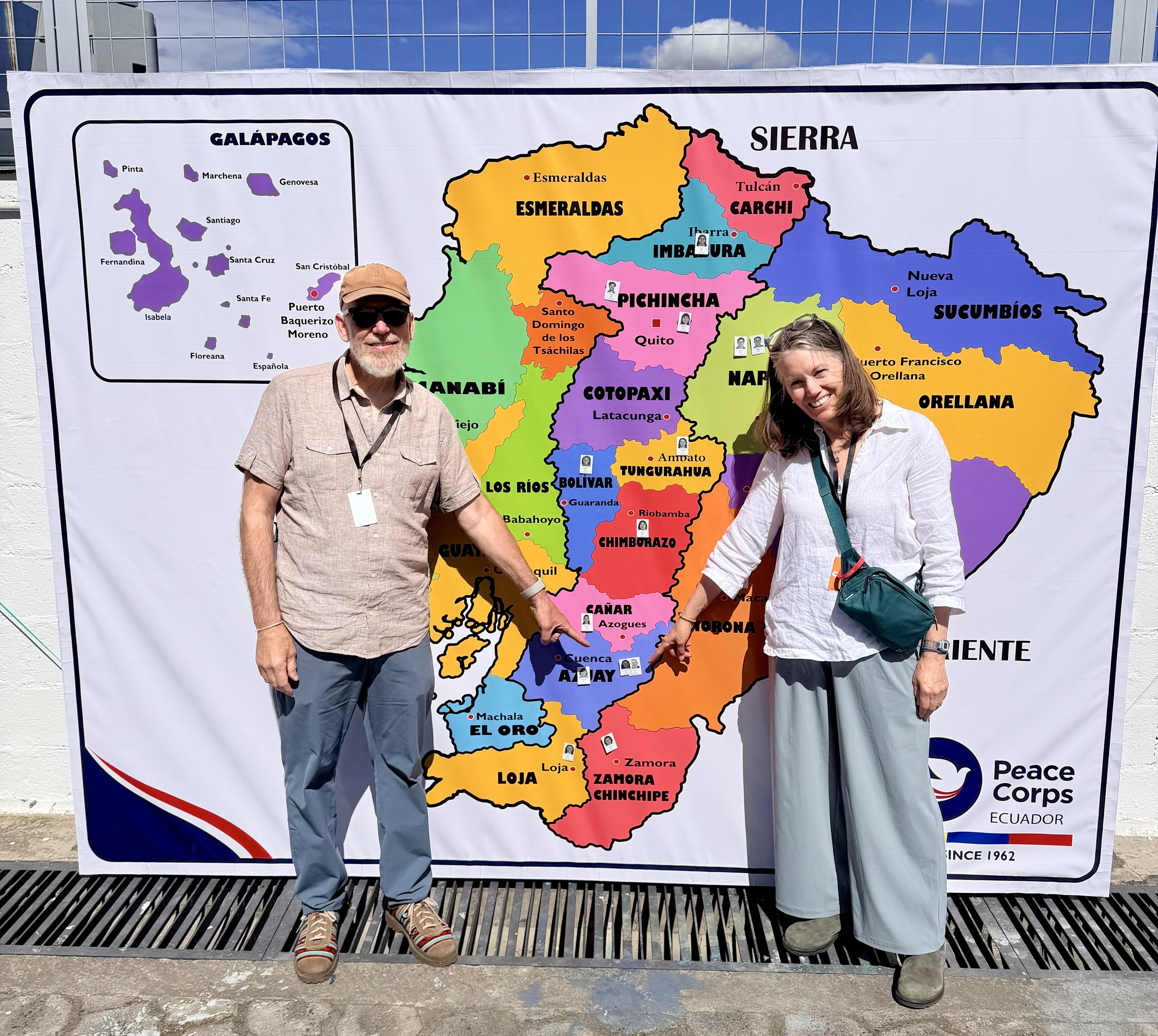
Well, after nine weeks of training filled with speculation and anticipation, we have finally learned where we will live and work for the next 24 months. Jenny and I will be relocating to Chordeleg, a town of 12,000 people in the south of the country known for its goldwork and jewelry. Apparently, there are 280 jewelry shops in this little town.
Jenny will work locally in public health, while I’ll commute four miles north to Gualaceo, a town of 40,000, to work on youth and family projects. I will be replacing a volunteer who recently completed her service. She ran after-school sports programs, so I’ll probably start there, but I’ll have the freedom to pursue other work if I find something that interests me more. Jenny is replacing a volunteer who built a community garden, but that’s not really her vibe. Instead, she’ll look for opportunities in nutrition, maternal health, sex education, and related areas.
So, what is Chordeleg like? Take a look at the 360° image below. We will be living on the third floor of the tan building to the right of the church. Our hosts—and landlords—are a retired couple. More on them in the next post. Drag the image left or right to see the amazing view we’ll have of the town square, the surrounding community, and the mountains beyond.
We are super excited to move on from training and start our service. We will be sworn in as official Peace Corps Volunteers on Wednesday, we will meet our counterparts (a person designated to be our initial co-worker at our sites) on Thursday, and will take the 12-hour bus journey to our new city on Friday.
Below is a social media post about our site reveal day put out by Peace Corps Ecuador.
And finally, here’s a little slideshow of selfies with all the kids we were in training with over the last two months. Super kind, smart, ambitious people we were honored to spend our days with and call our friends.
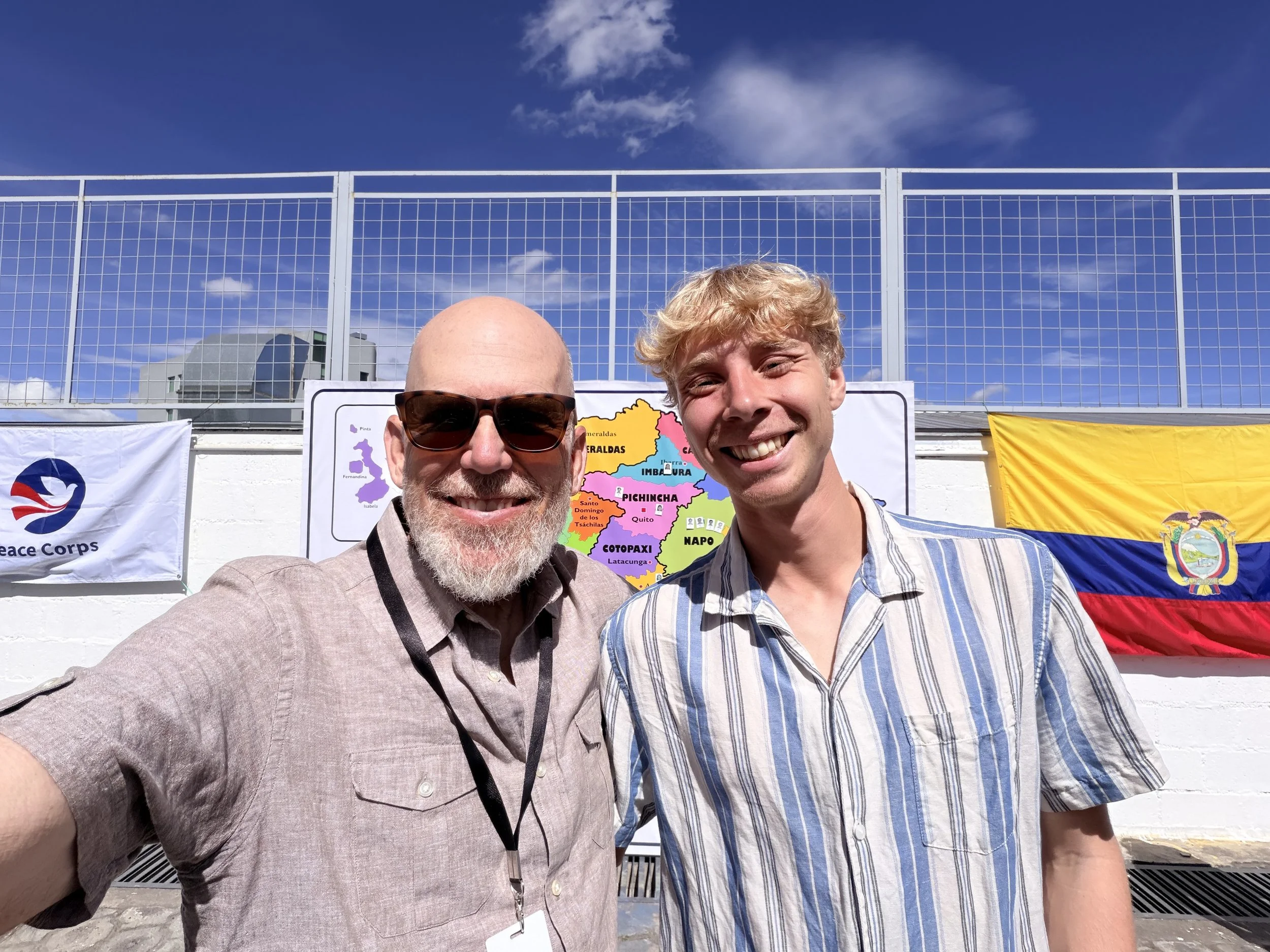
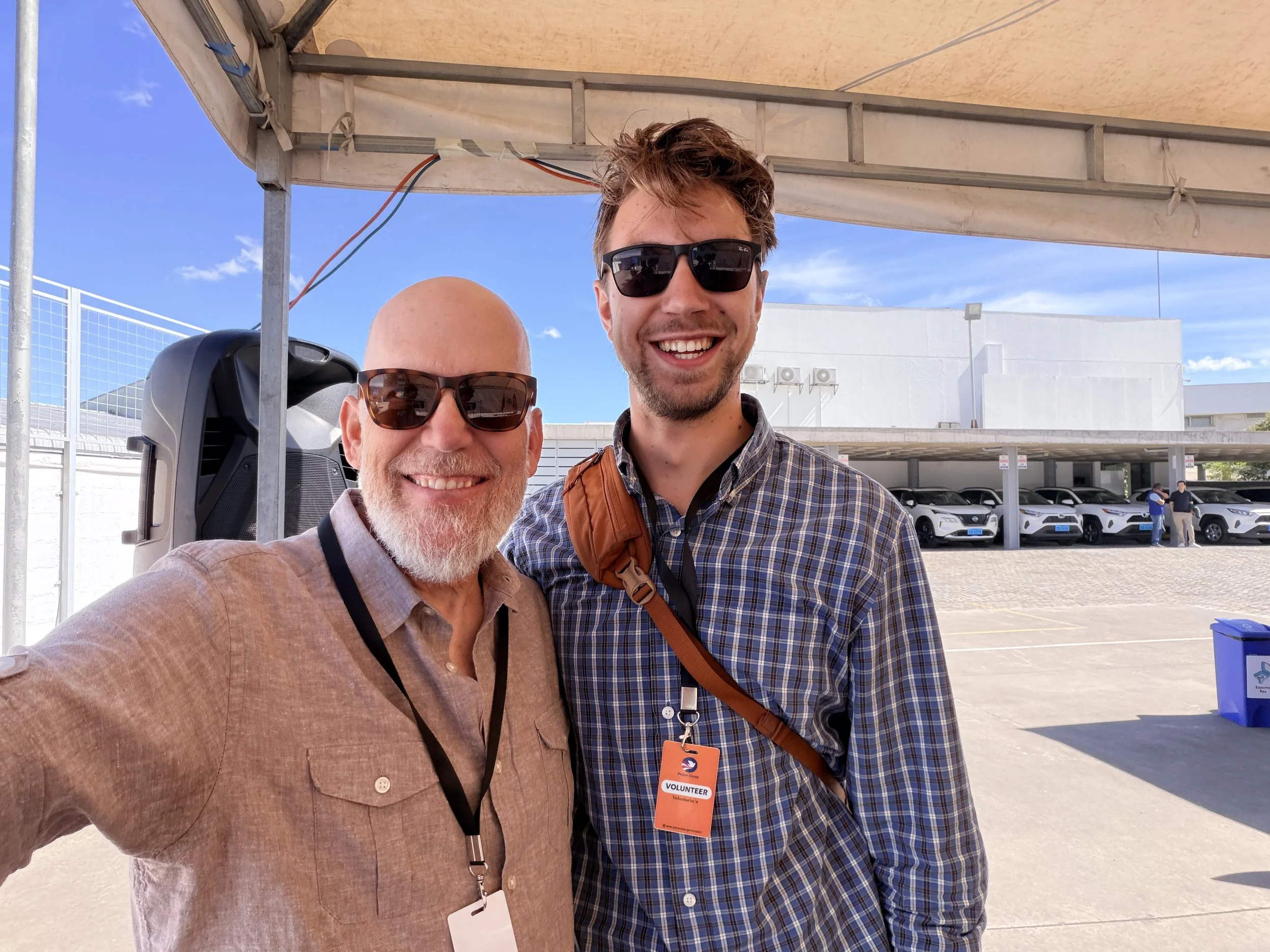
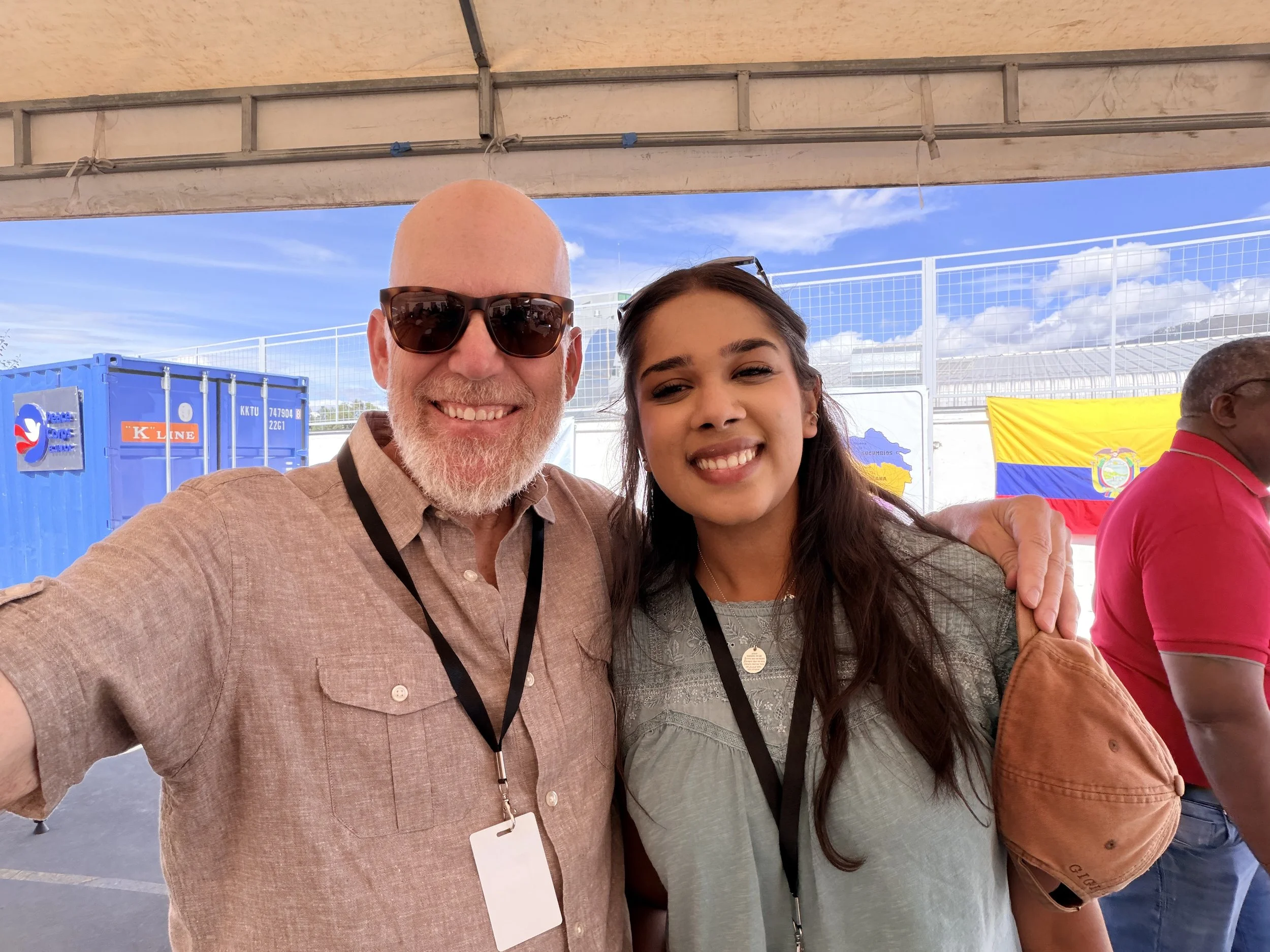
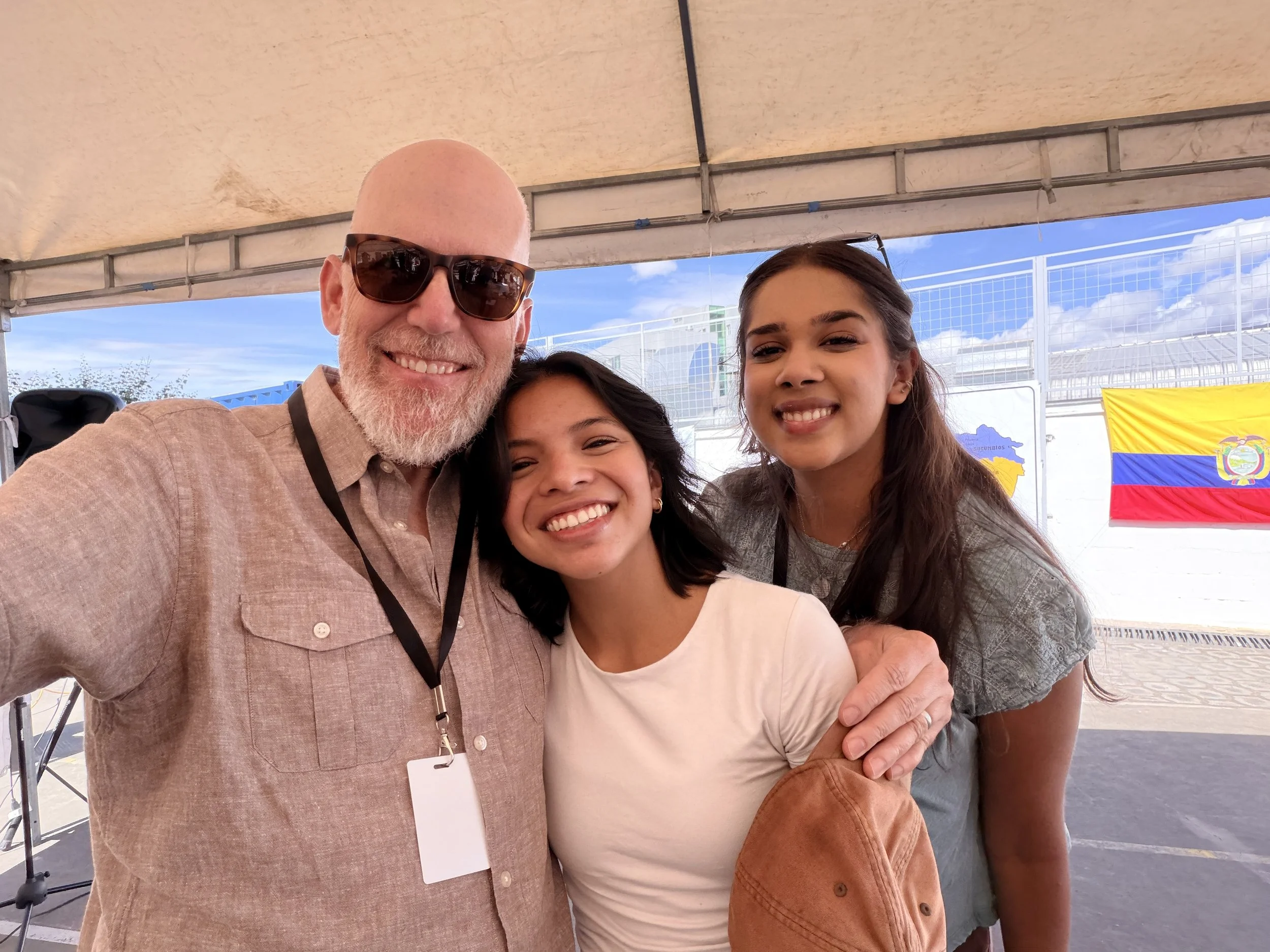
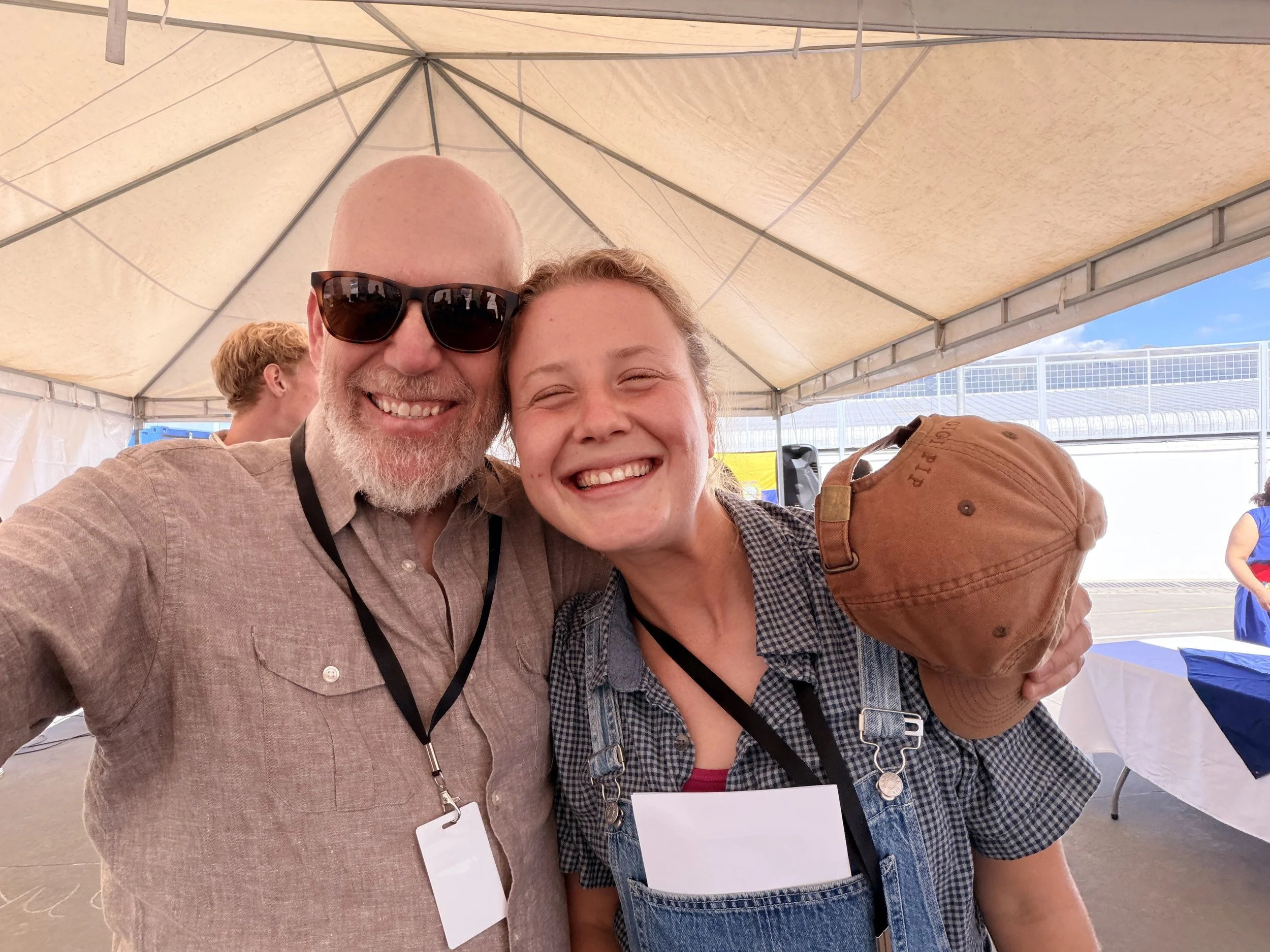
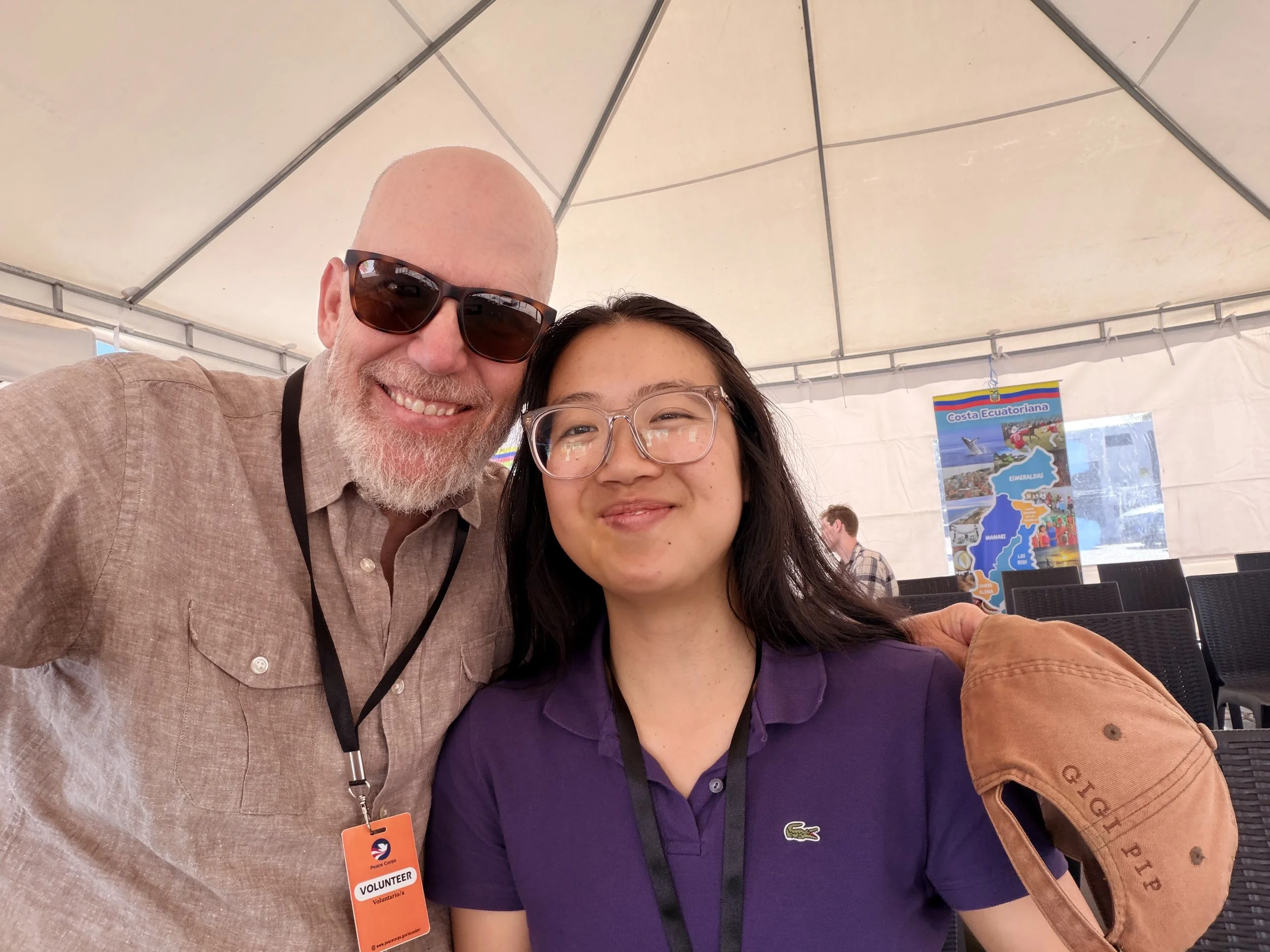
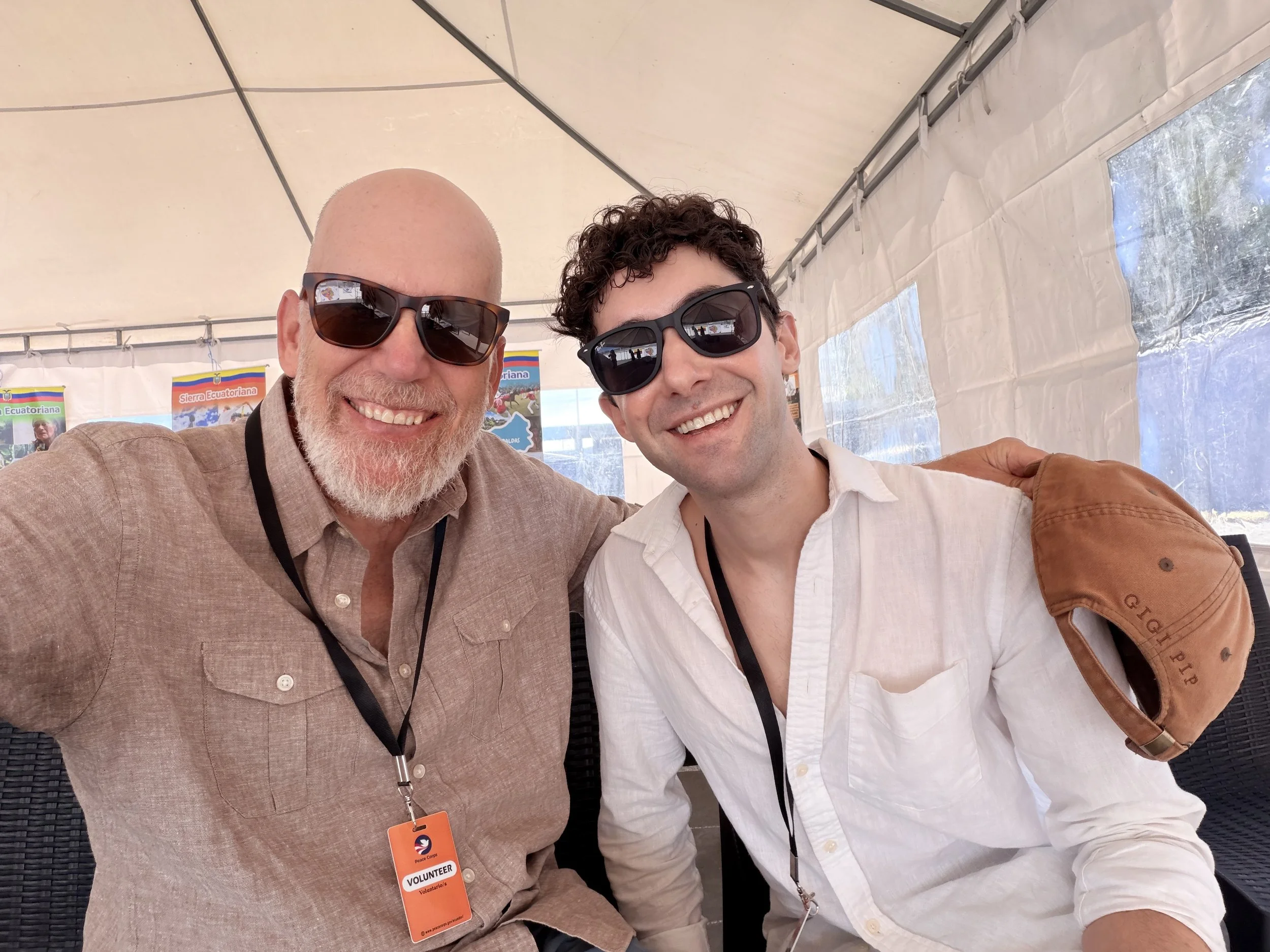
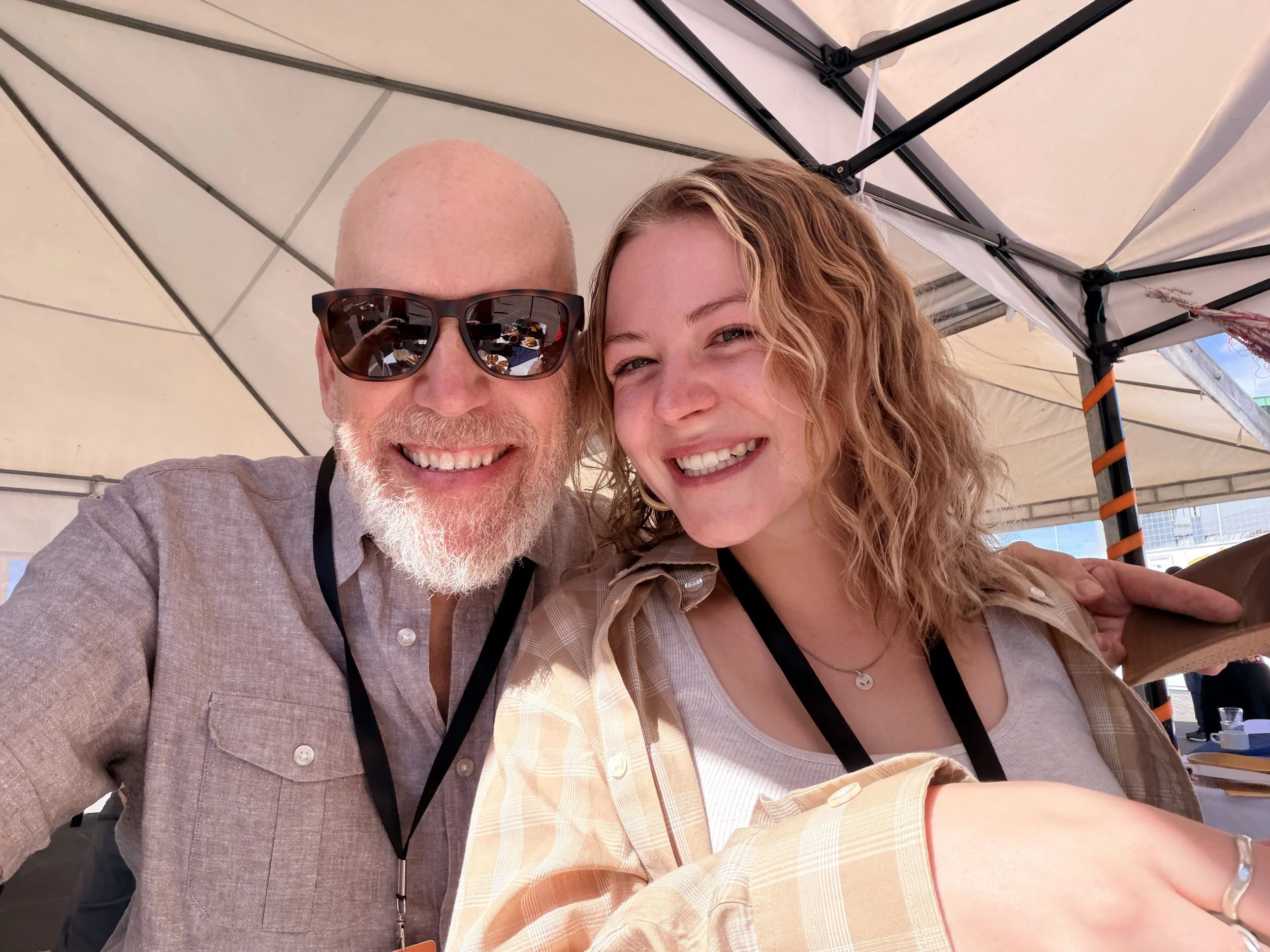
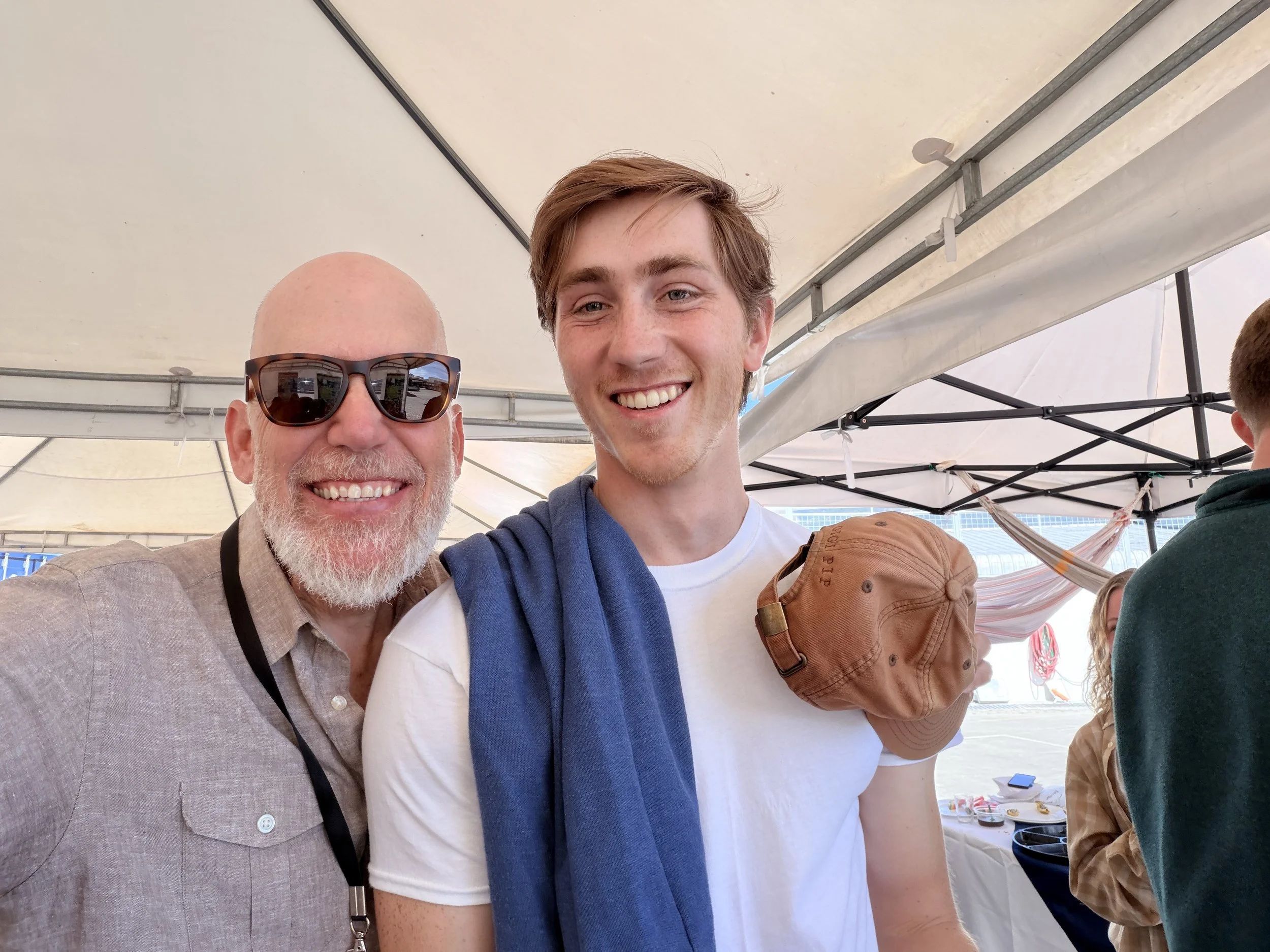
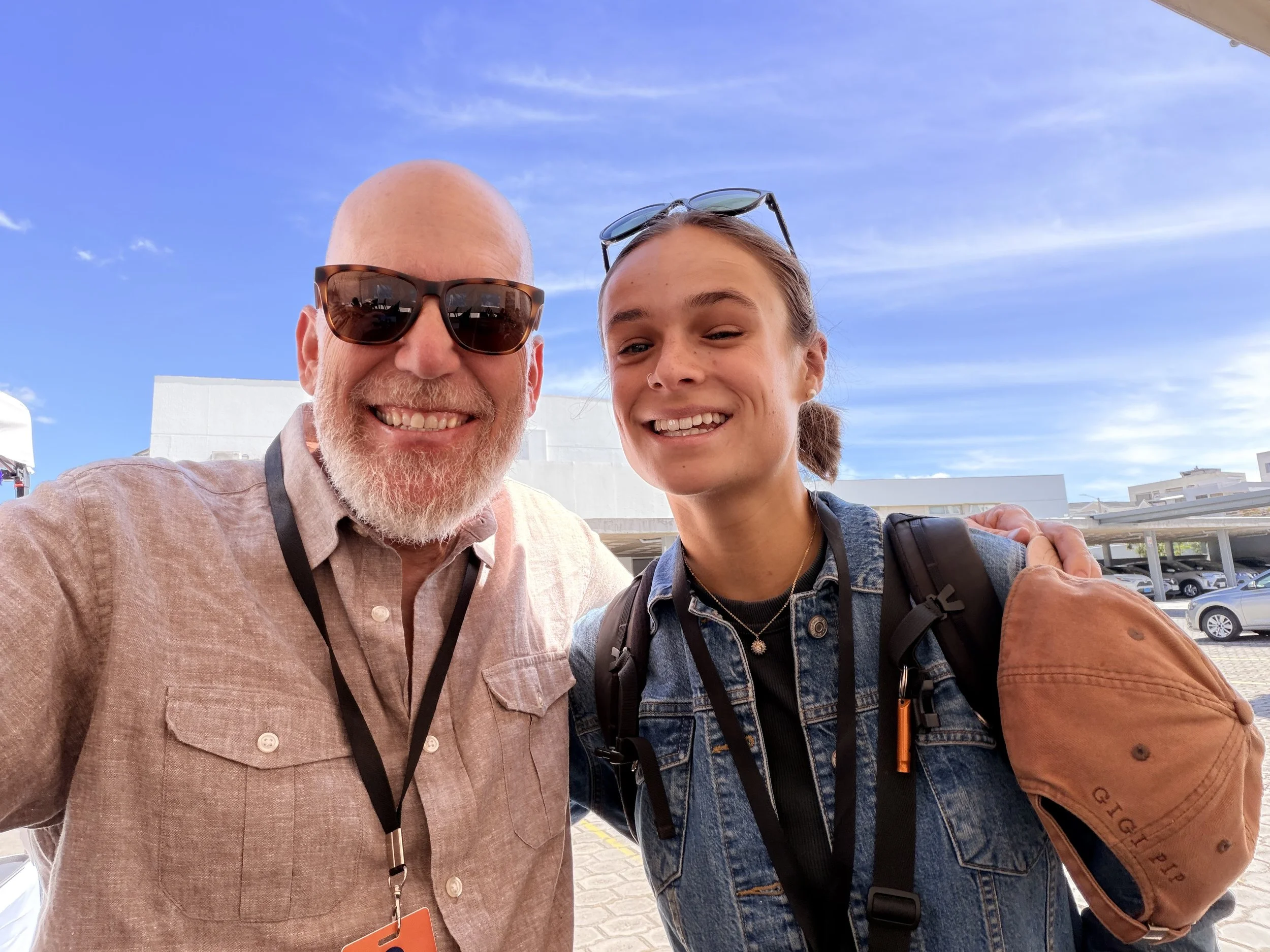
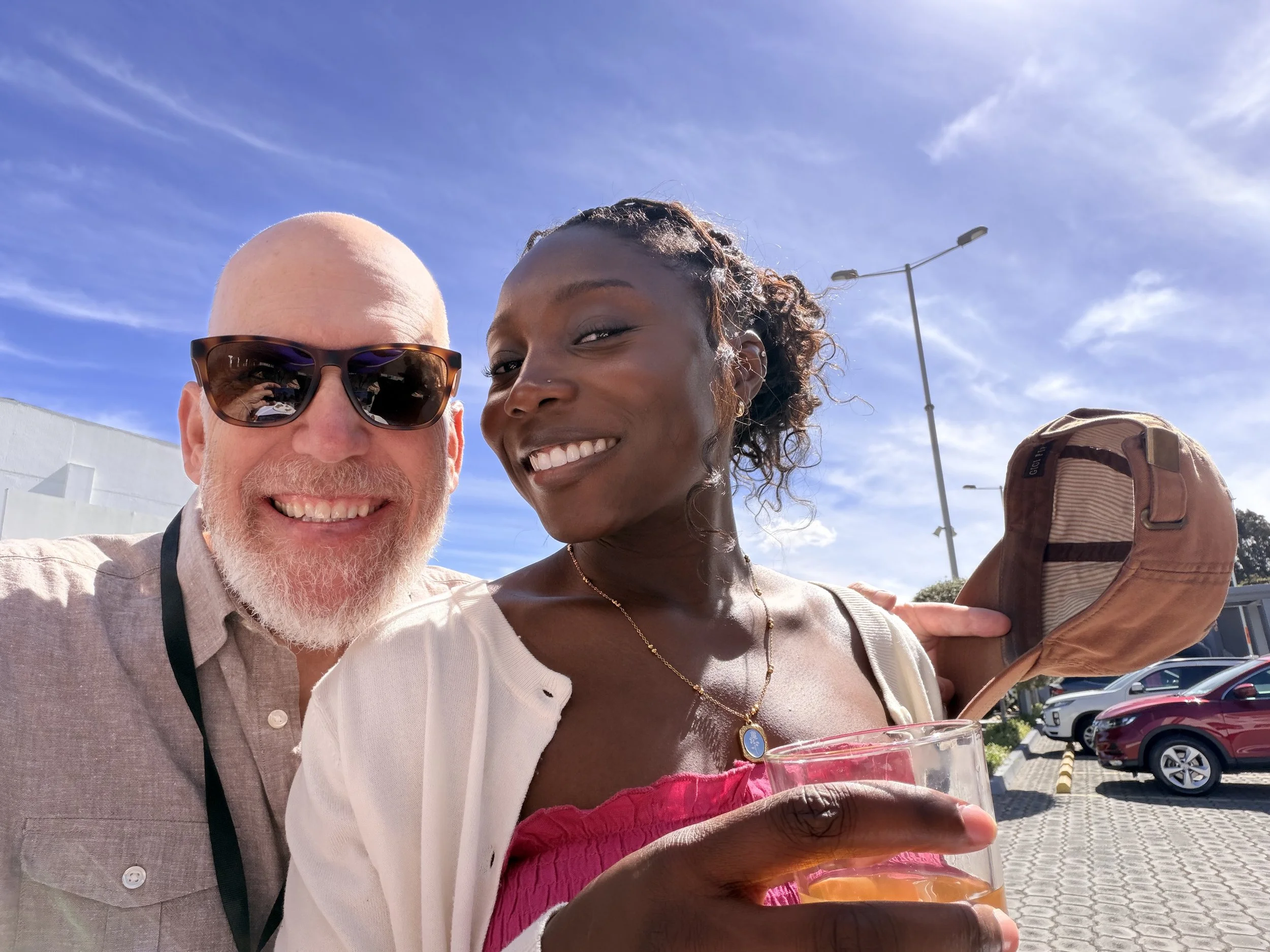
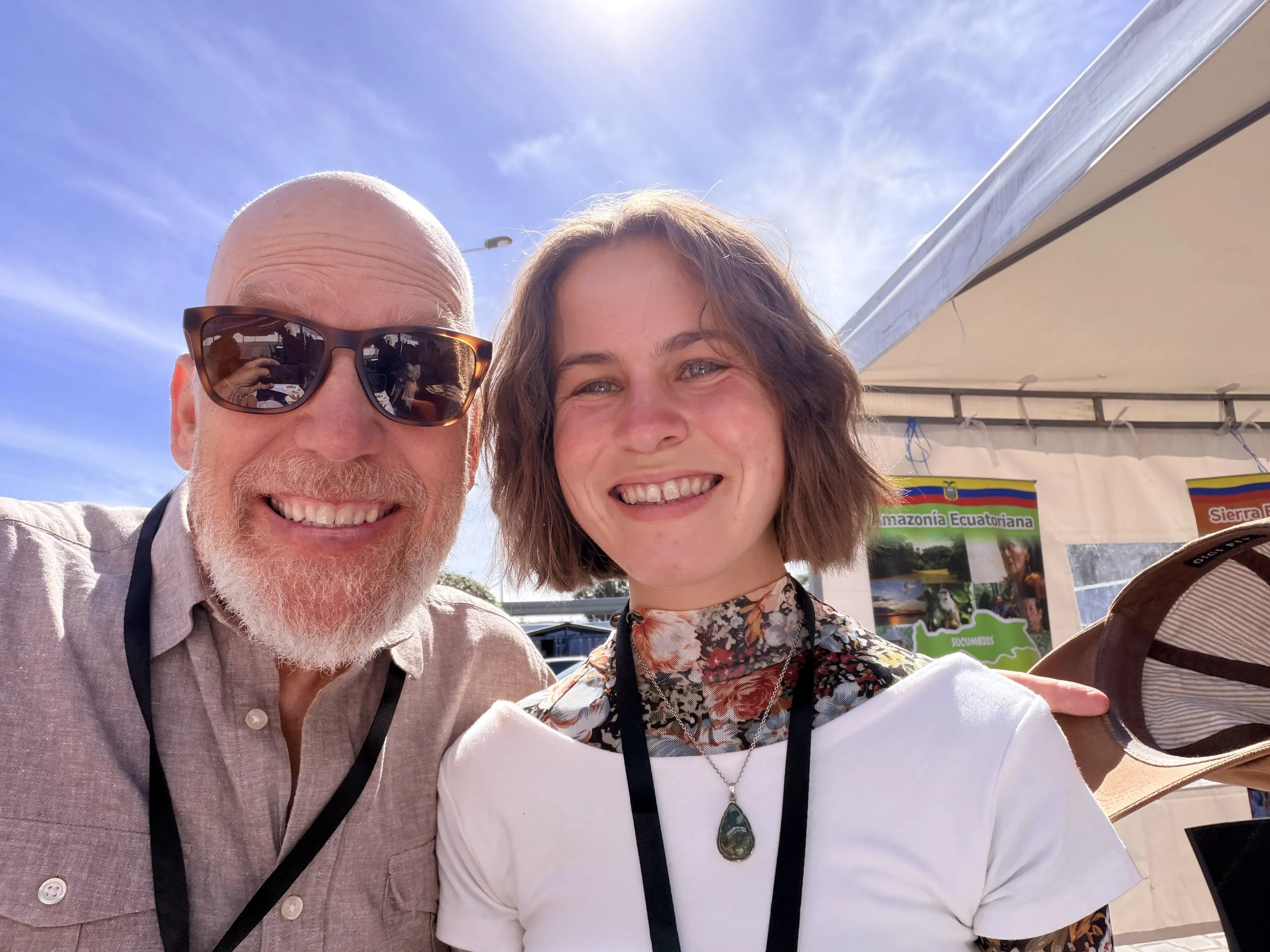
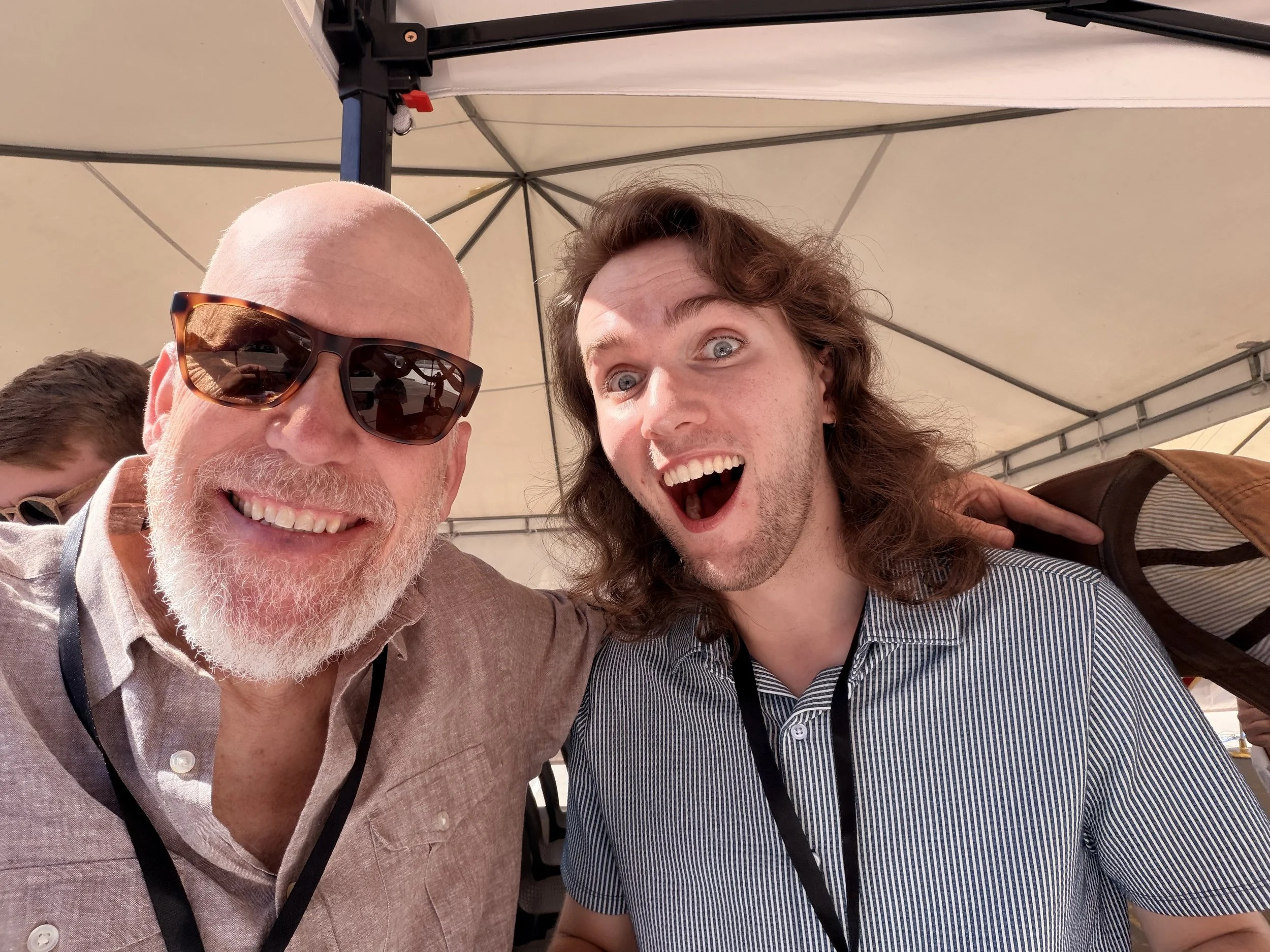
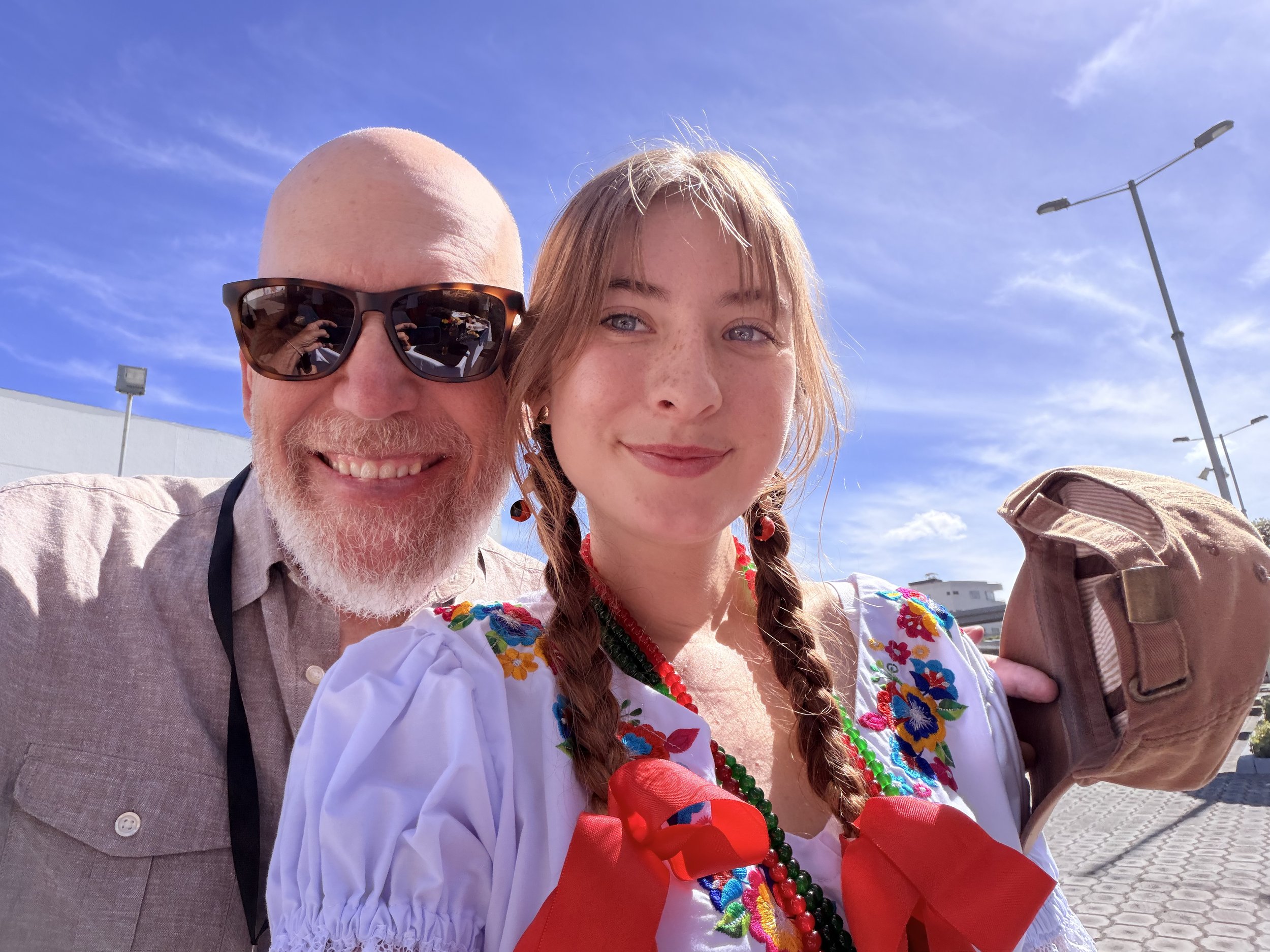
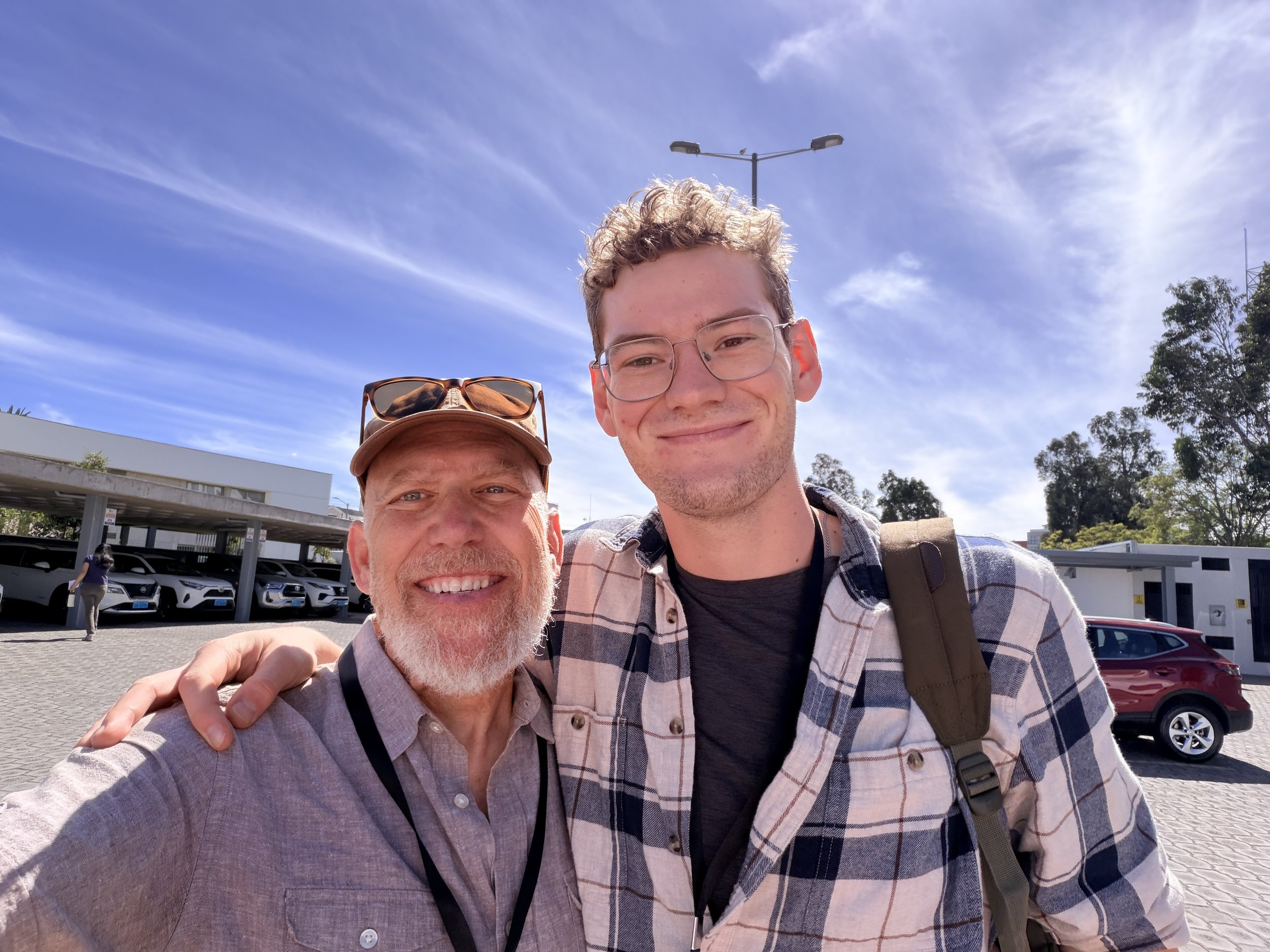
As always, thanks for reading and we love your comments. It definitely helps to know we are not alone on this adventure.
Much love, Andy and Jenny
These people know how to party!
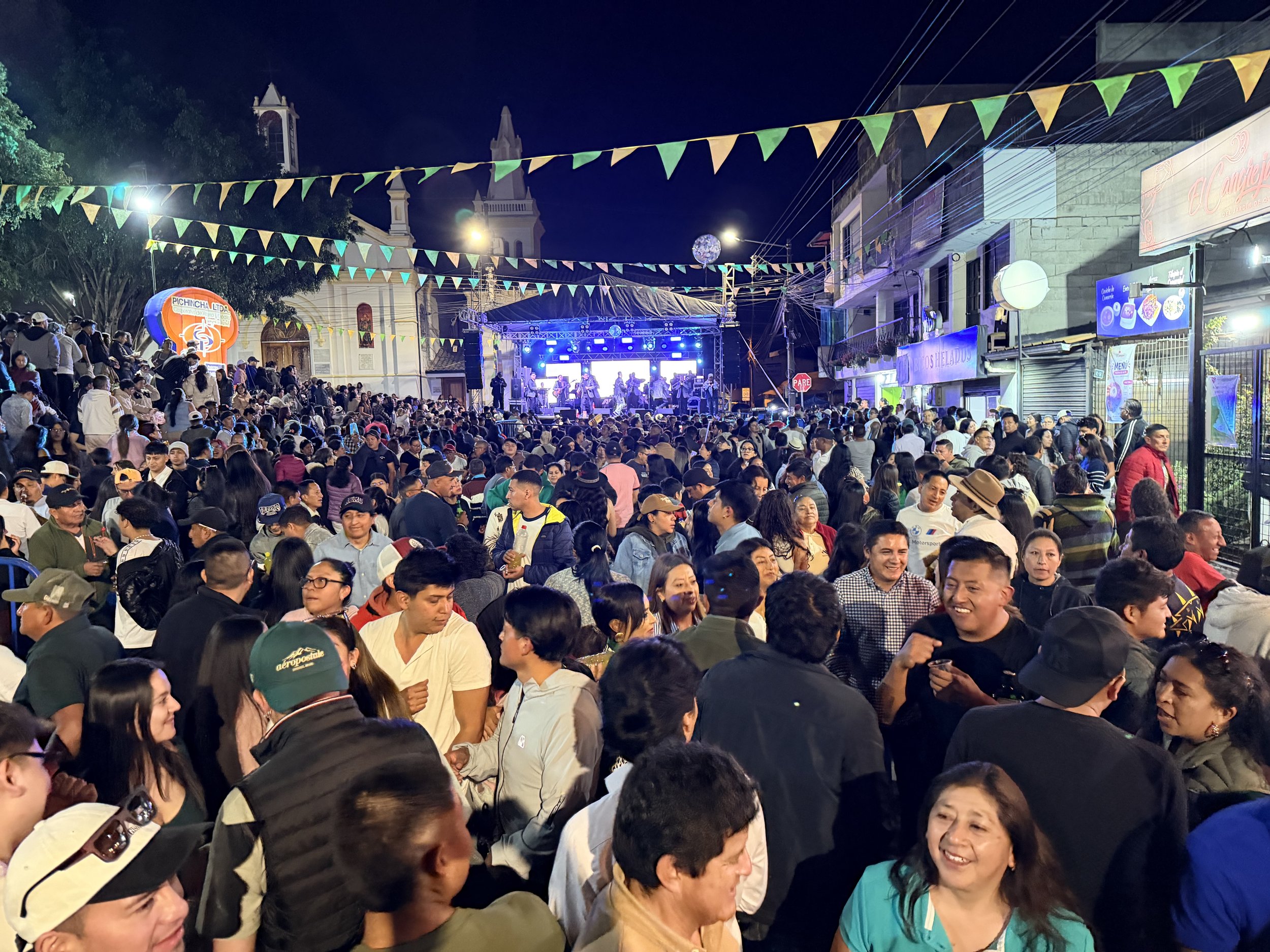
This was in front of me, there were twice as many behind.
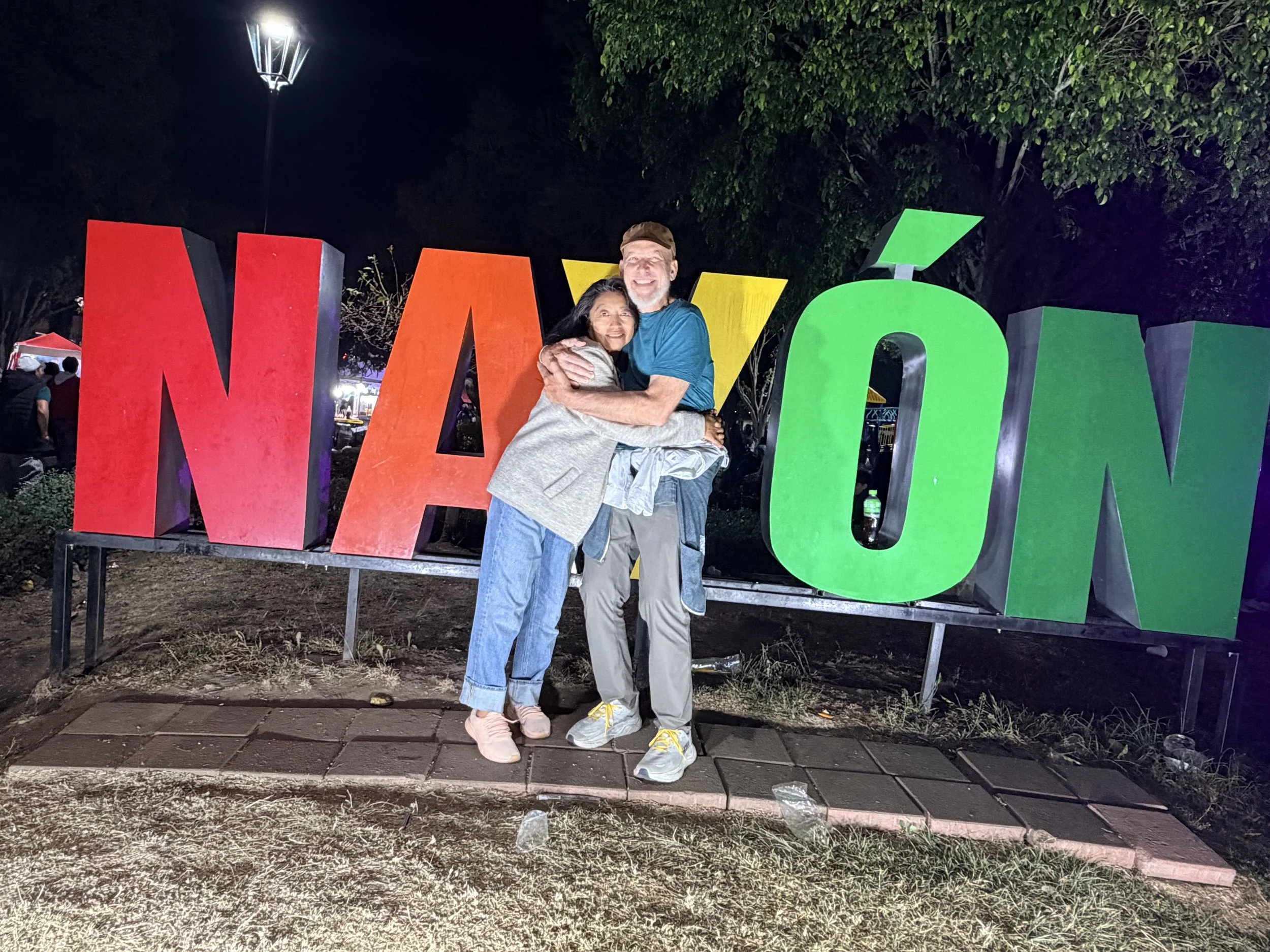
Our pueblo, Nayón, where we’ve been living during our ten weeks of training, has a population of about 30,000. For the past three weekends, it has hosted the “Festival of Nayón.” The festival could be boiled down to a stage in the town square with music and dancing, but it’s so much more than that.
When I think of our hometown—St. Charles, Illinois, population 33,000—and its biggest event, the Scarecrow Festival, I picture a mediocre craft show in Pottawatomie Park, a fun scarecrow display in Lincoln Park, and a stage on River Street with a bad cover band playing to a sparse crowd.
Not here. This place was bumpin’. (Is that the proper use of that word?)
Soooo many people packed the square to hear the bands—mostly brass ensembles playing traditional Ecuadorian music. People were dancing, drinking, eating street food, and genuinely having fun. It was infectious, and it was super fun to watch and be part of.
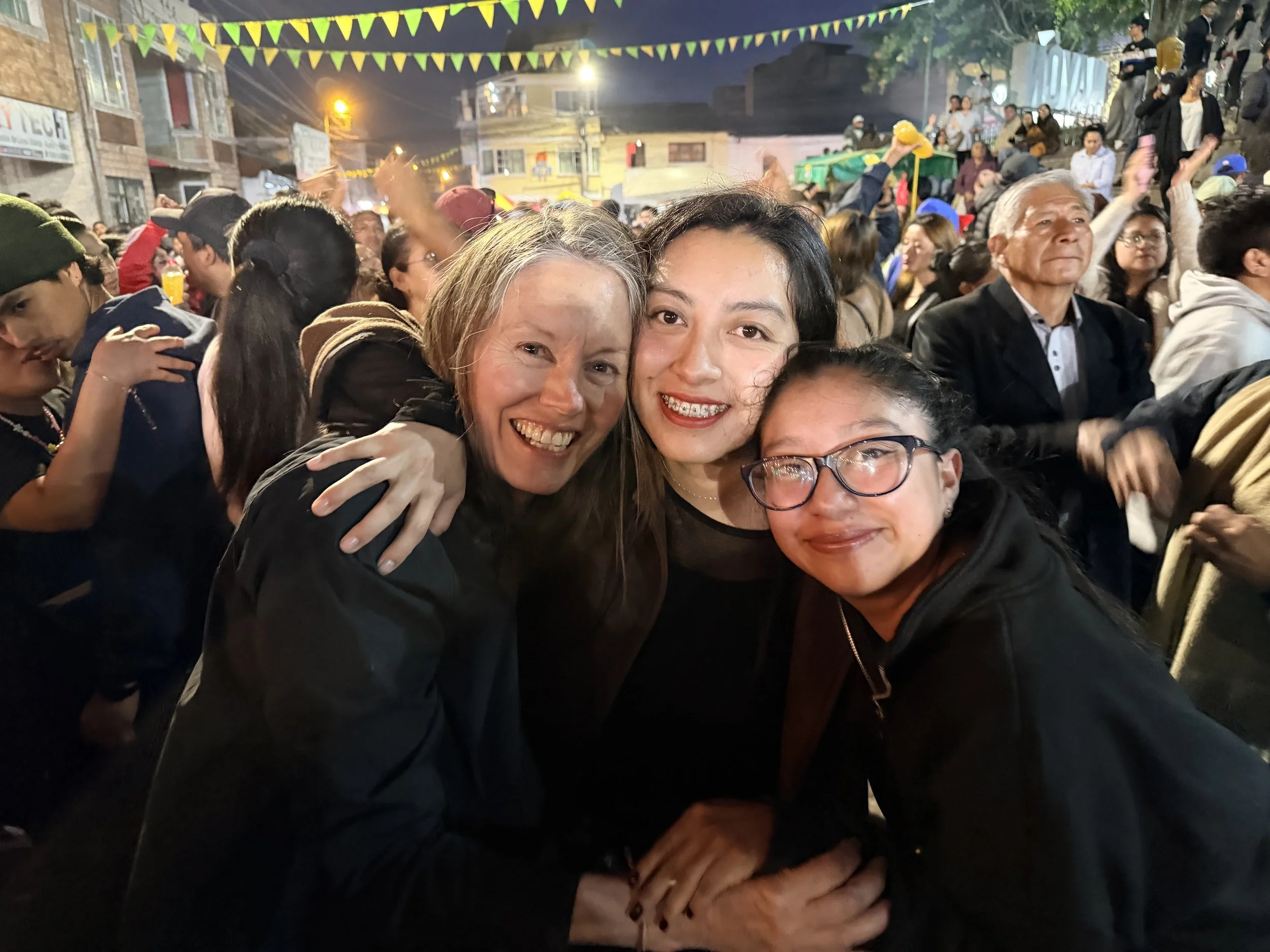
Jenny and our “sisters”, Pamala and Dyana.
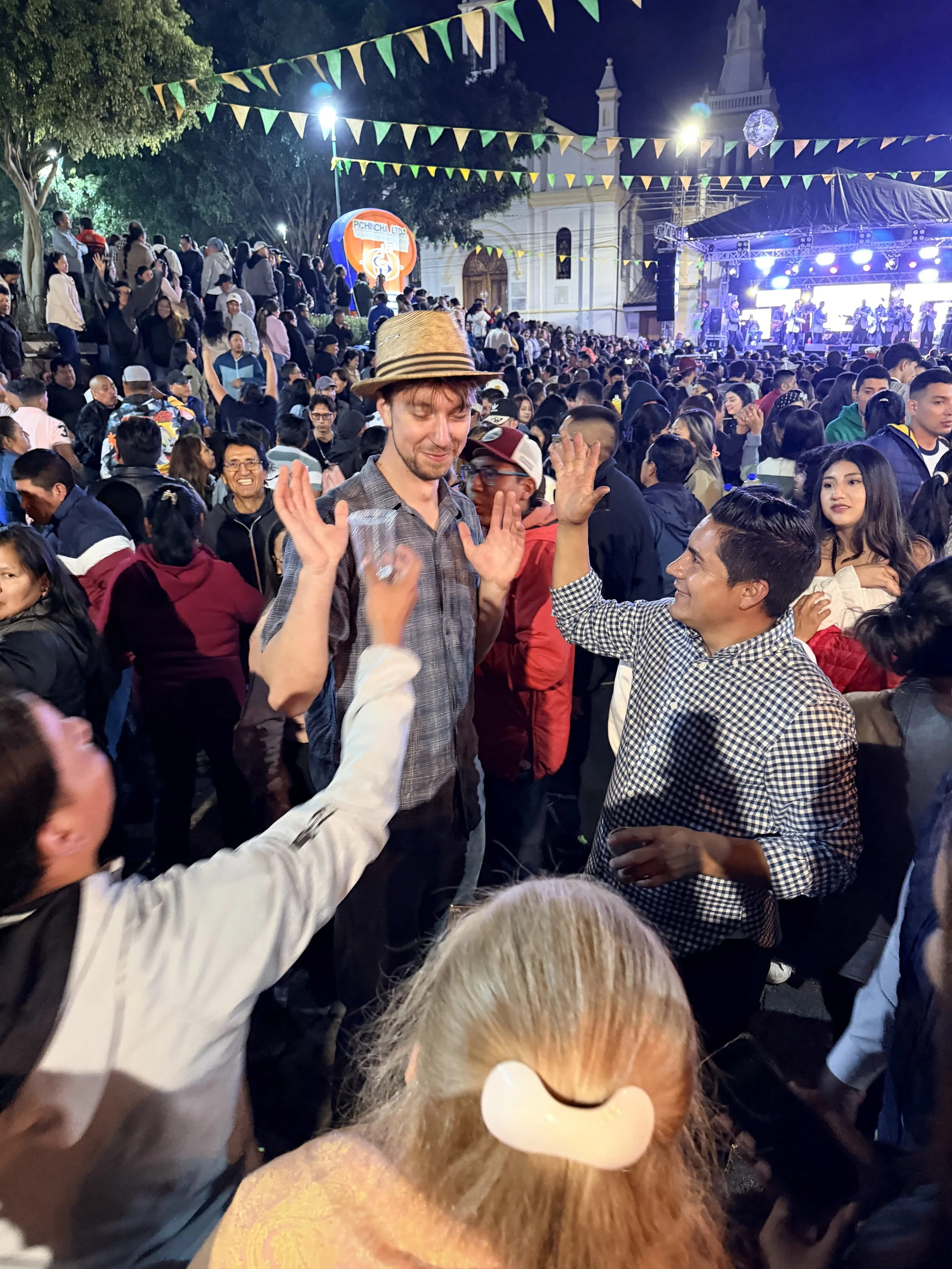
One of our favorite young volunteers trying not to accept yet another drink.
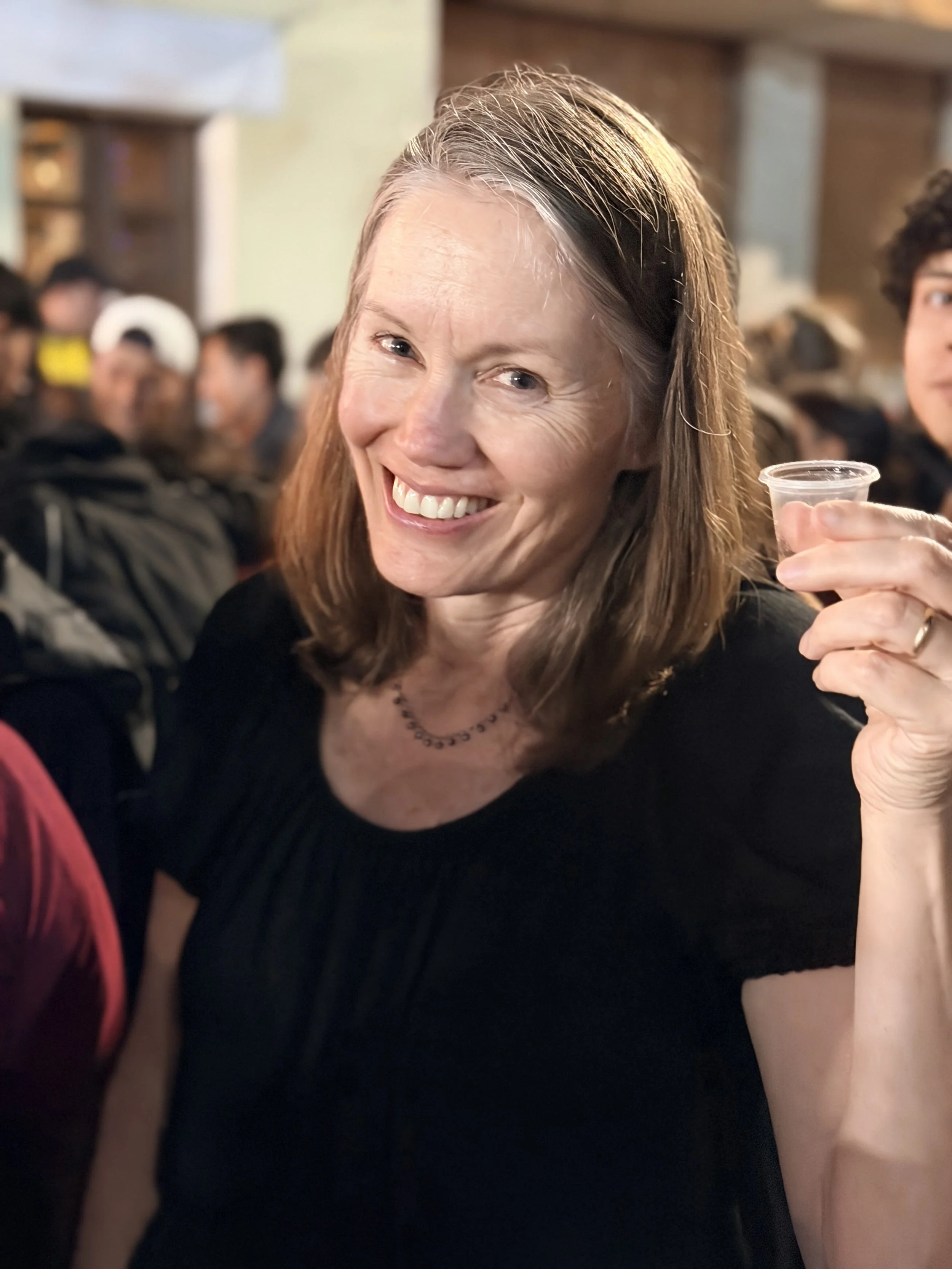
Cheers!
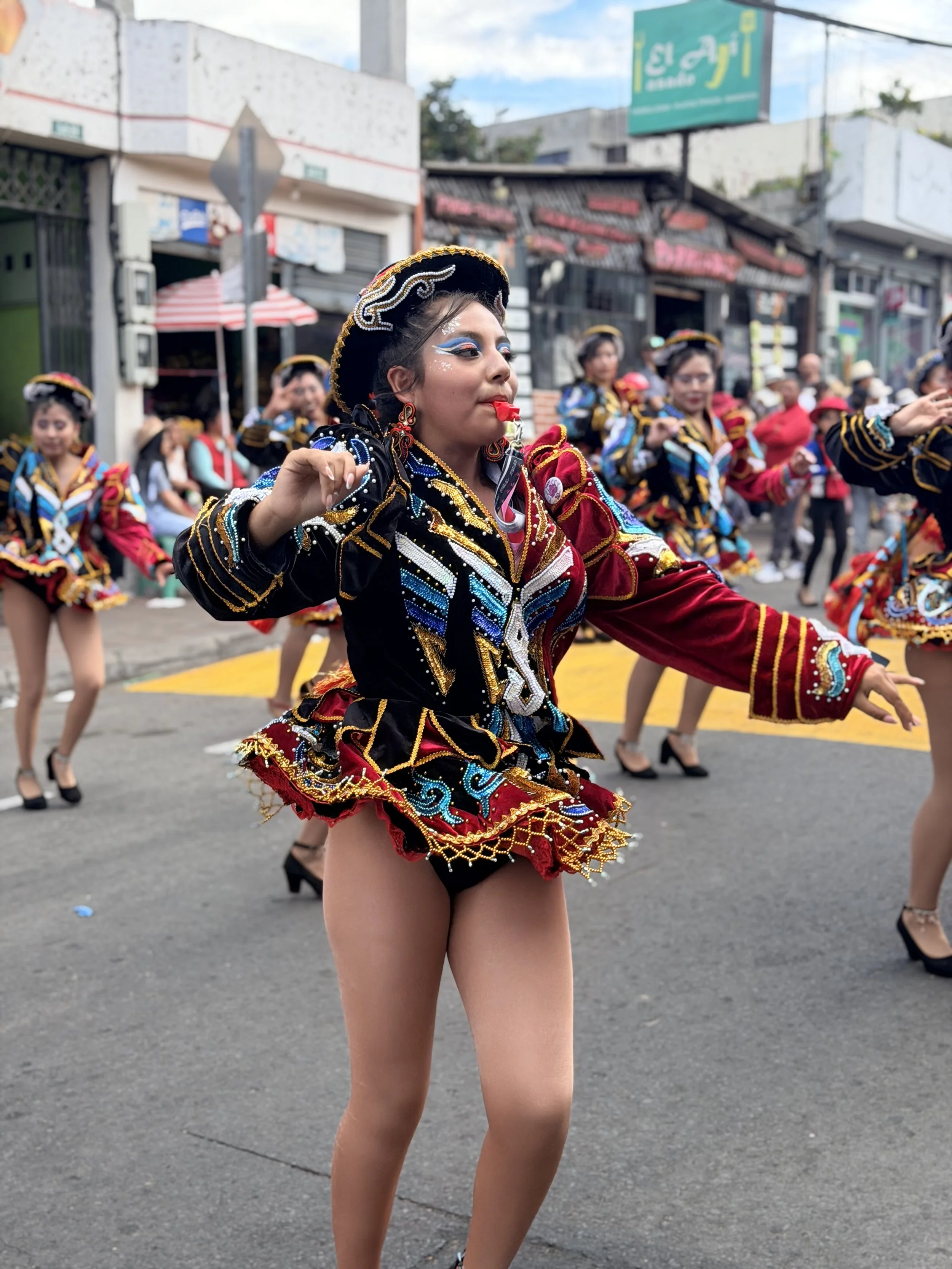
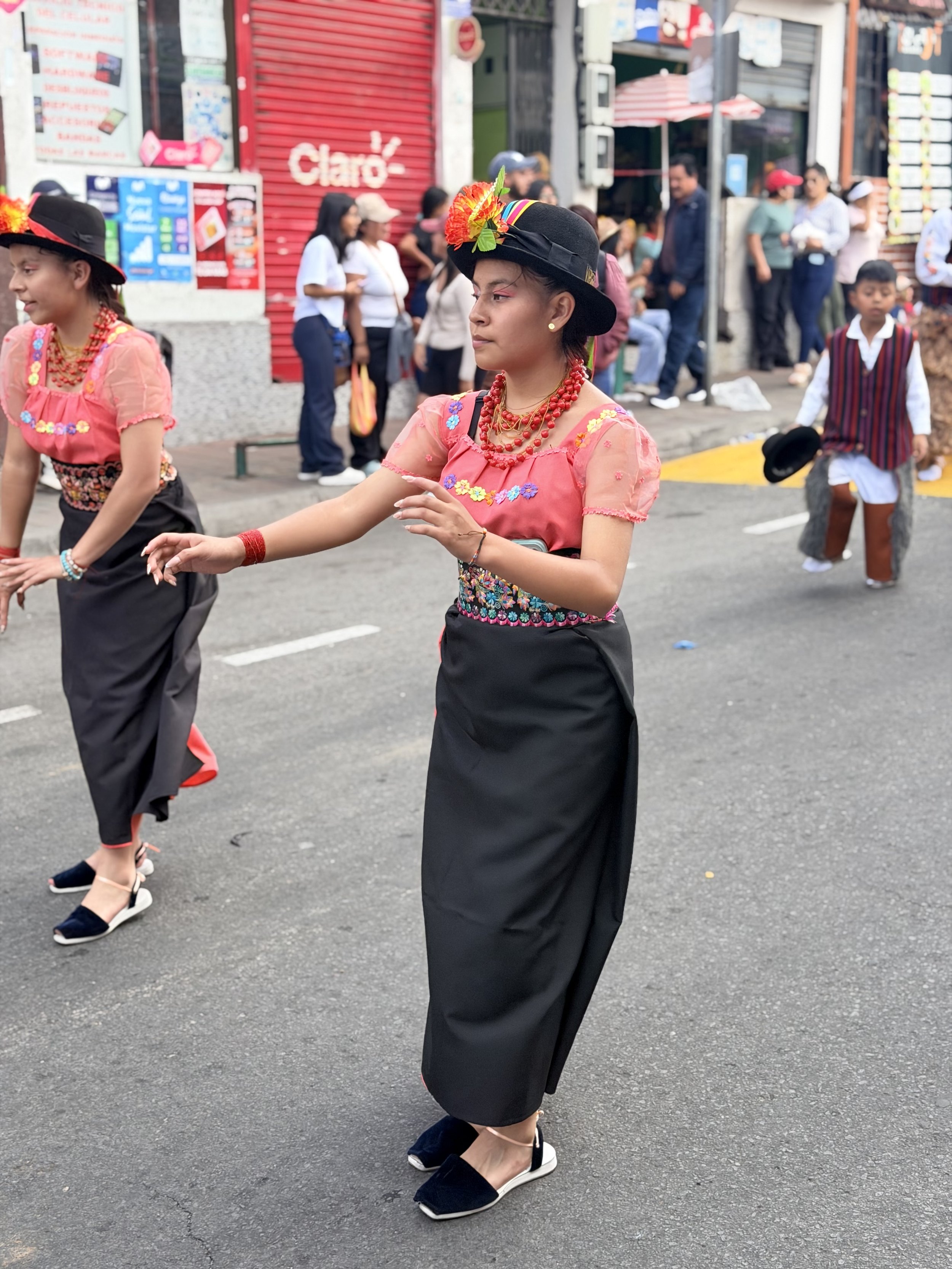
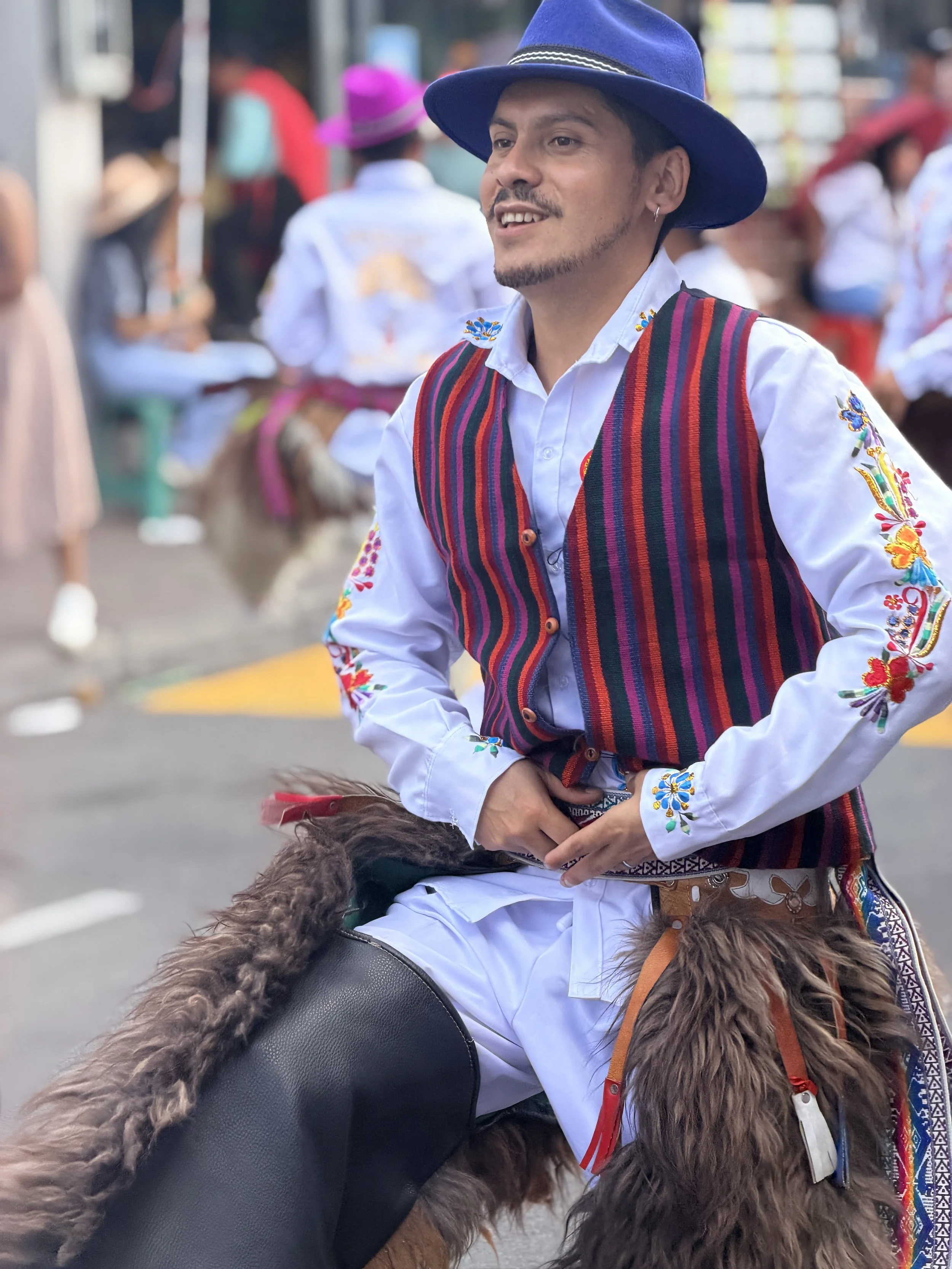
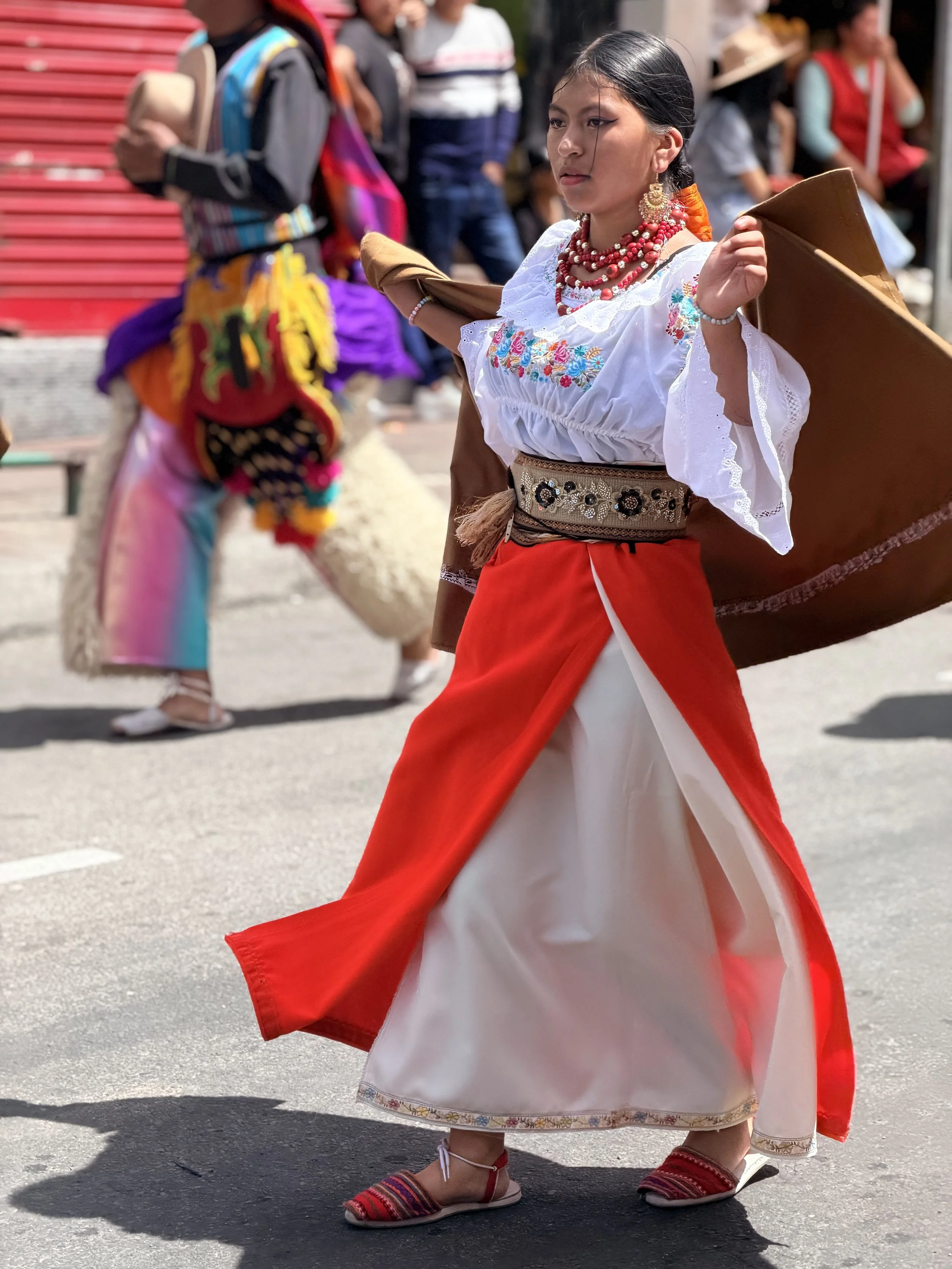
There was also a parade on Sunday. The dancing and costumes were amazing.
Earlier in the week we went on a cultural trip to visit an afroecuatoriano community called El Chota followed by a visit to an indigenous community called Agota. There’s not really much diversity in Ecuador, so it’s valuable for us to be able to visit and learn from members of these communities.
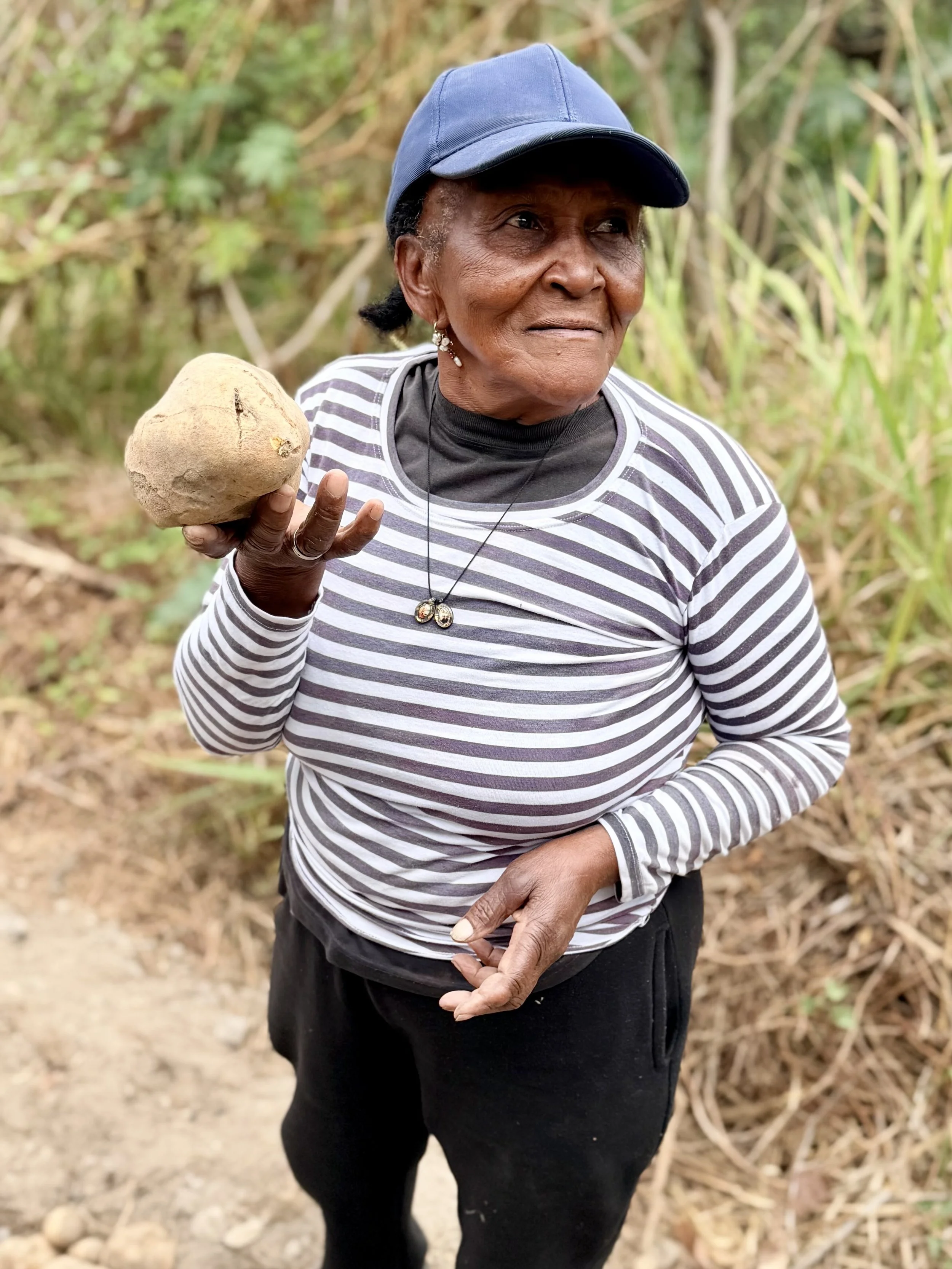
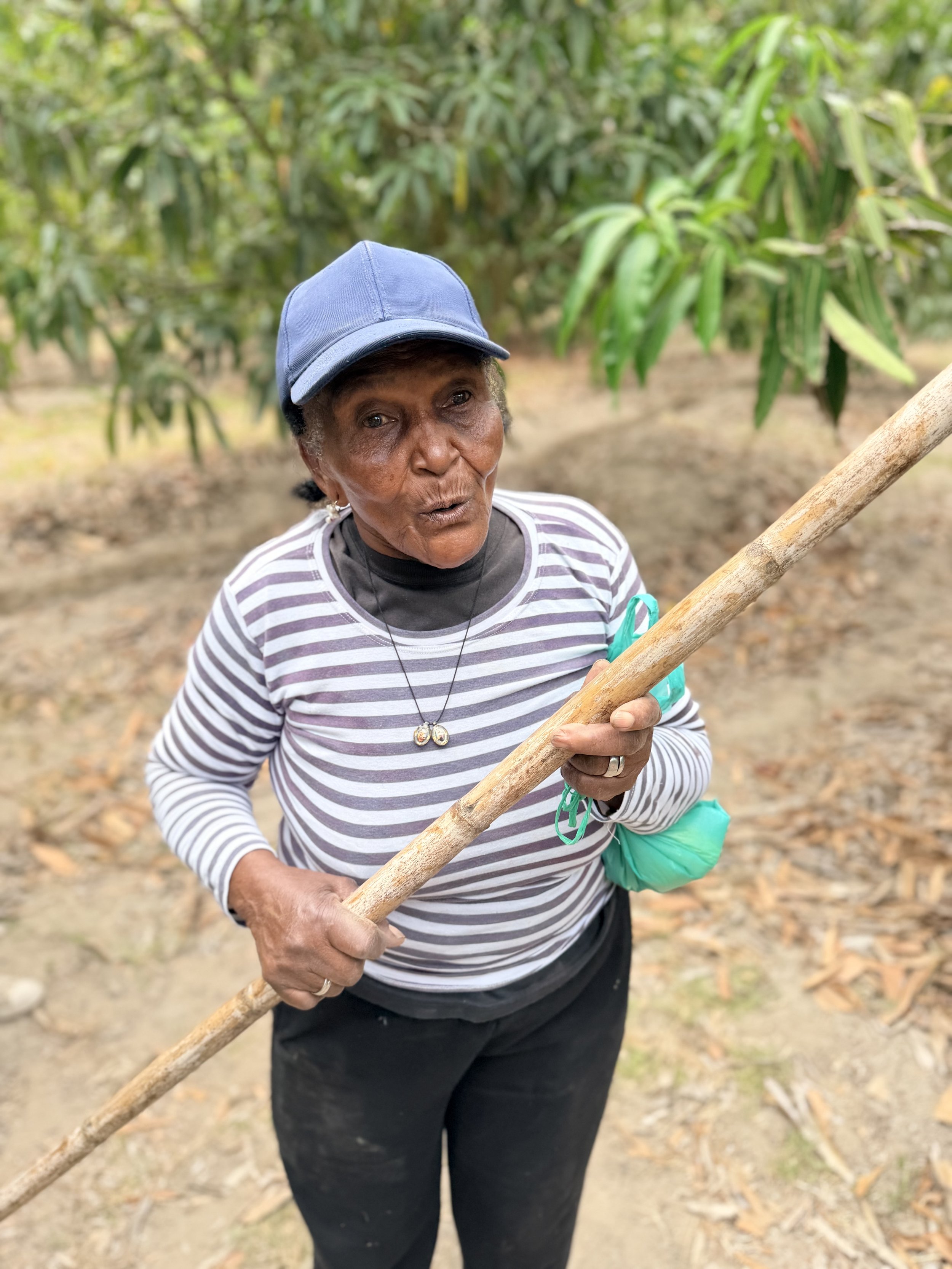
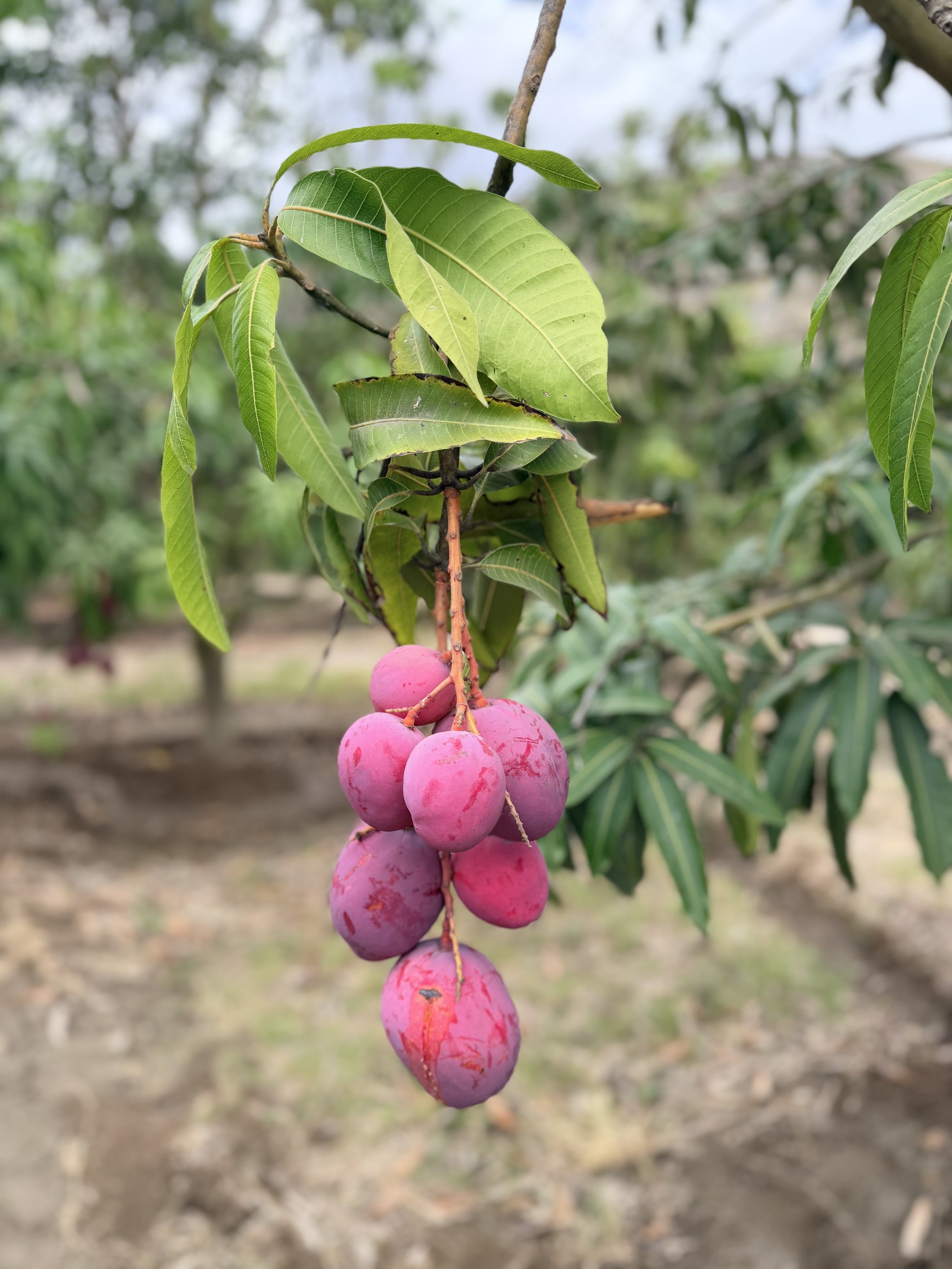
This is Dona Anita. She’s 80 years old and president of her pueblo. We chased her all over a mango orchard as she picked the ripe fruit. Jenny and I were lucky enough to have dinner and spend the night at her house.
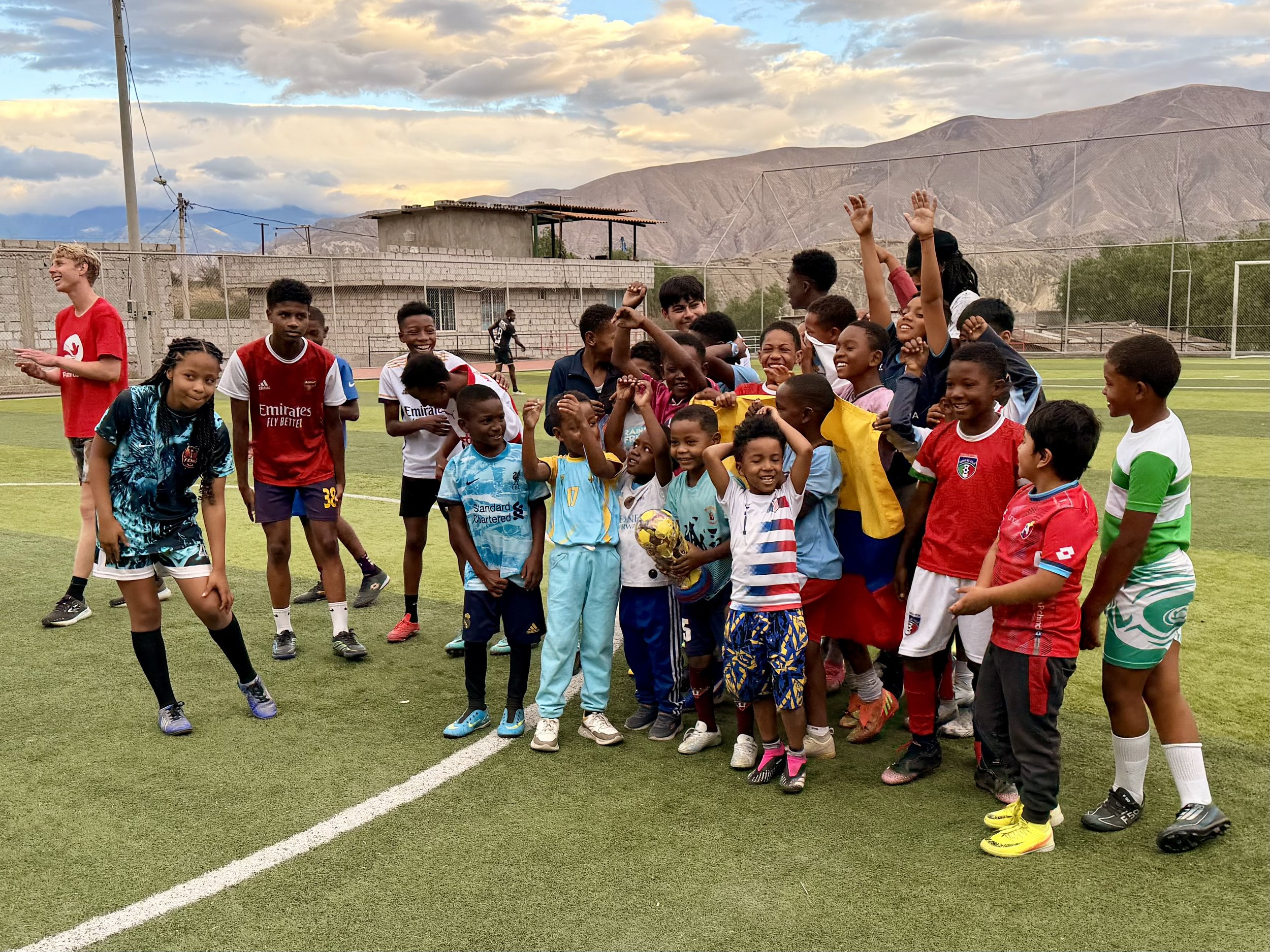
Us volunteers played a game of football against these kids and the results were as you would expect. 10-2 Ecuador.
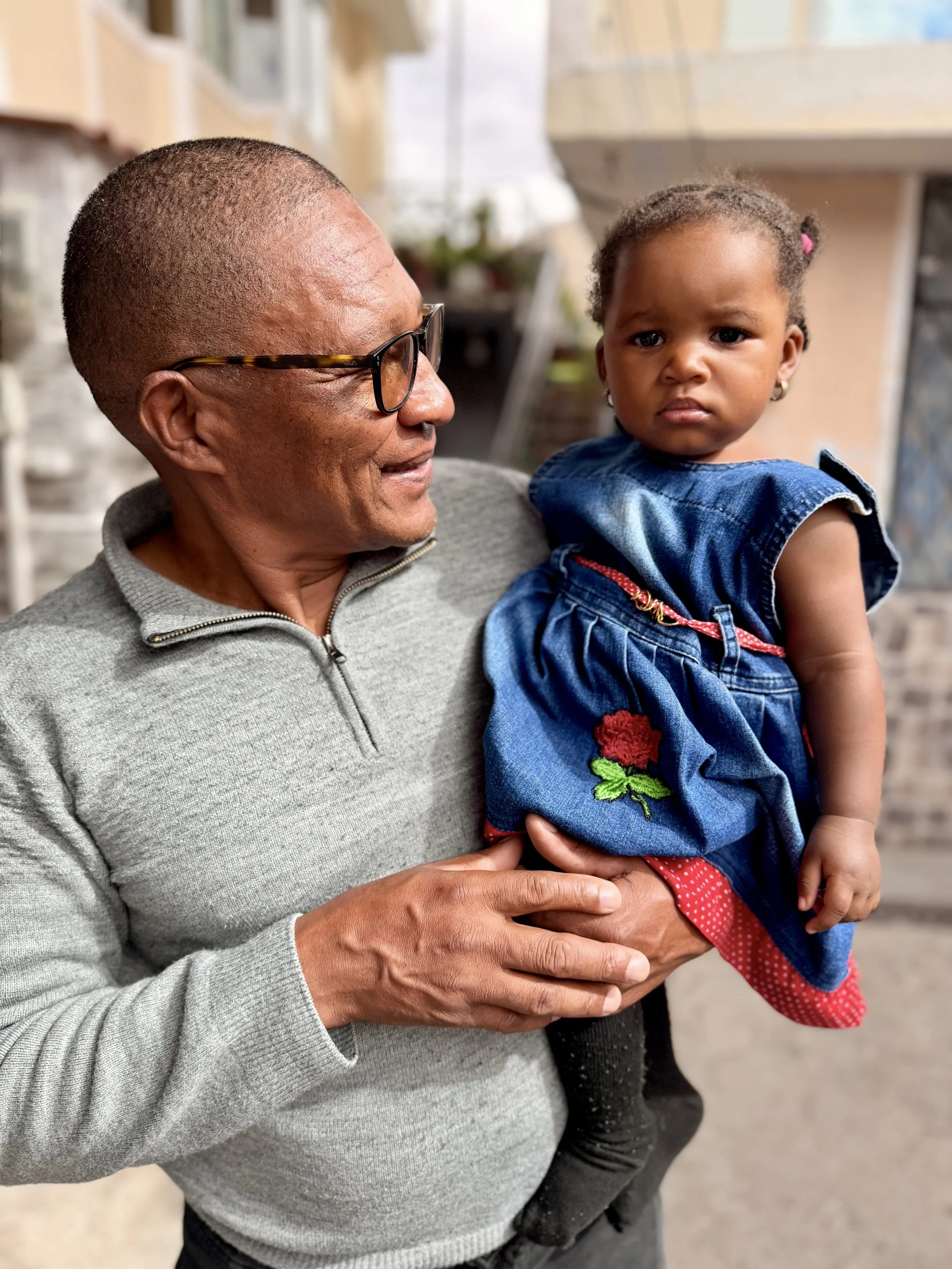
This is Jenny’s Spanish teacher, Rolando, and his granddaughter. Rolando grew up and still lives in the community.
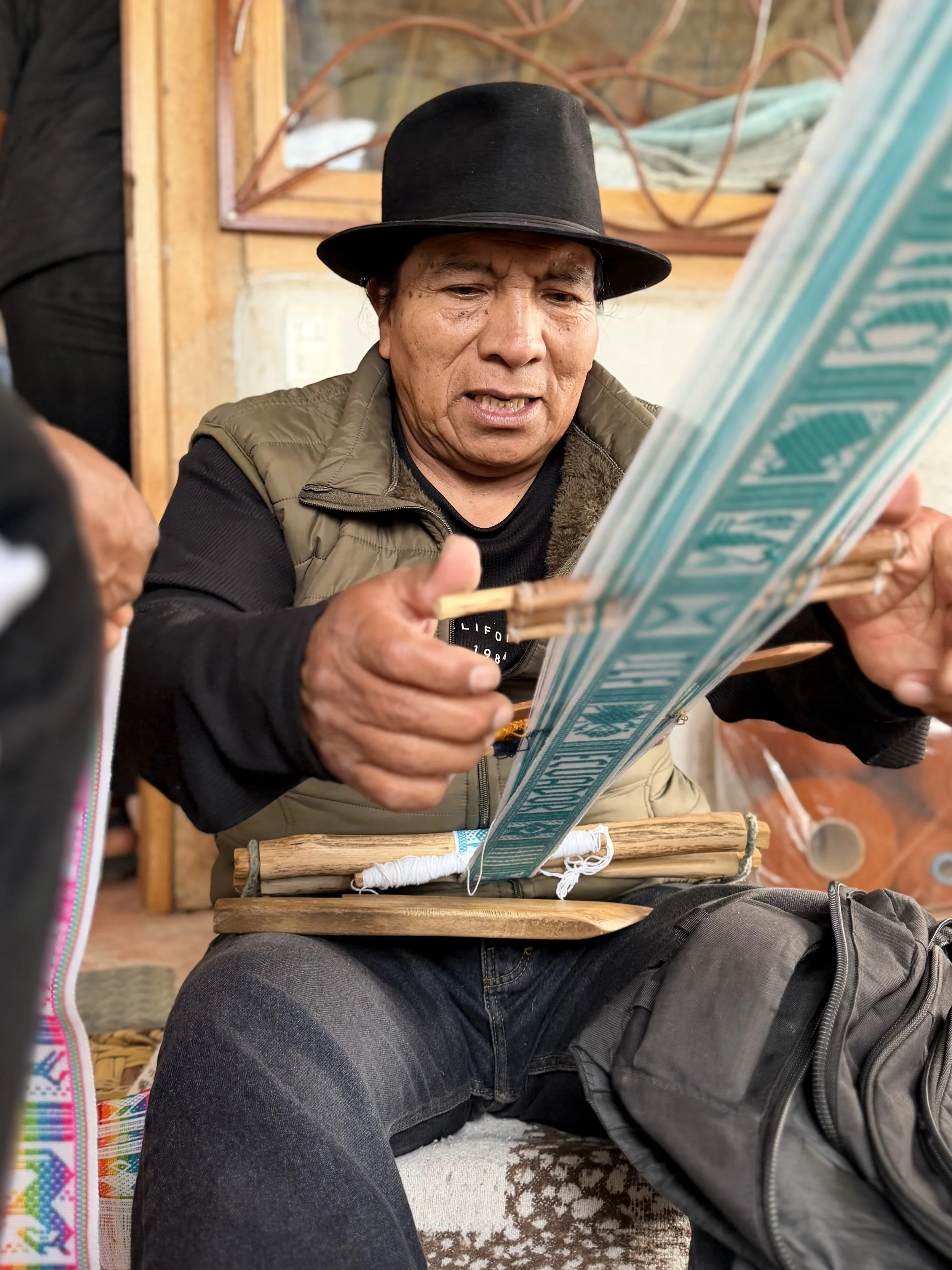
We visited a traditional textile workshop.
Next week we learn where we’ll be living for the next two years! Stay tuned and thanks for reading!
And now for something different.
Perhaps as a reward for the abuse of the preceding few weeks, the volunteers scattered to the wind around Ecuador in small groups to visit current volunteers at their job sites. Jenny had an overnight bus ride to Loja in the south of the country while I was sent 4 hours north to Ibarra.
Jenny first.
Jenny dreaded the idea of such a long bus ride, but it wasn’t actually too bad. The bus was luxurious with seats that reclined almost into beds, but that didn’t make up for the rough and curvy Andian roads that made her feel like she was on a mail boat in the middle of the Atlantic sea. That said, she loved Loja, liked all the volunteers she met and traveled with, and commented that she would be happy if that turns out to be our permanent site.
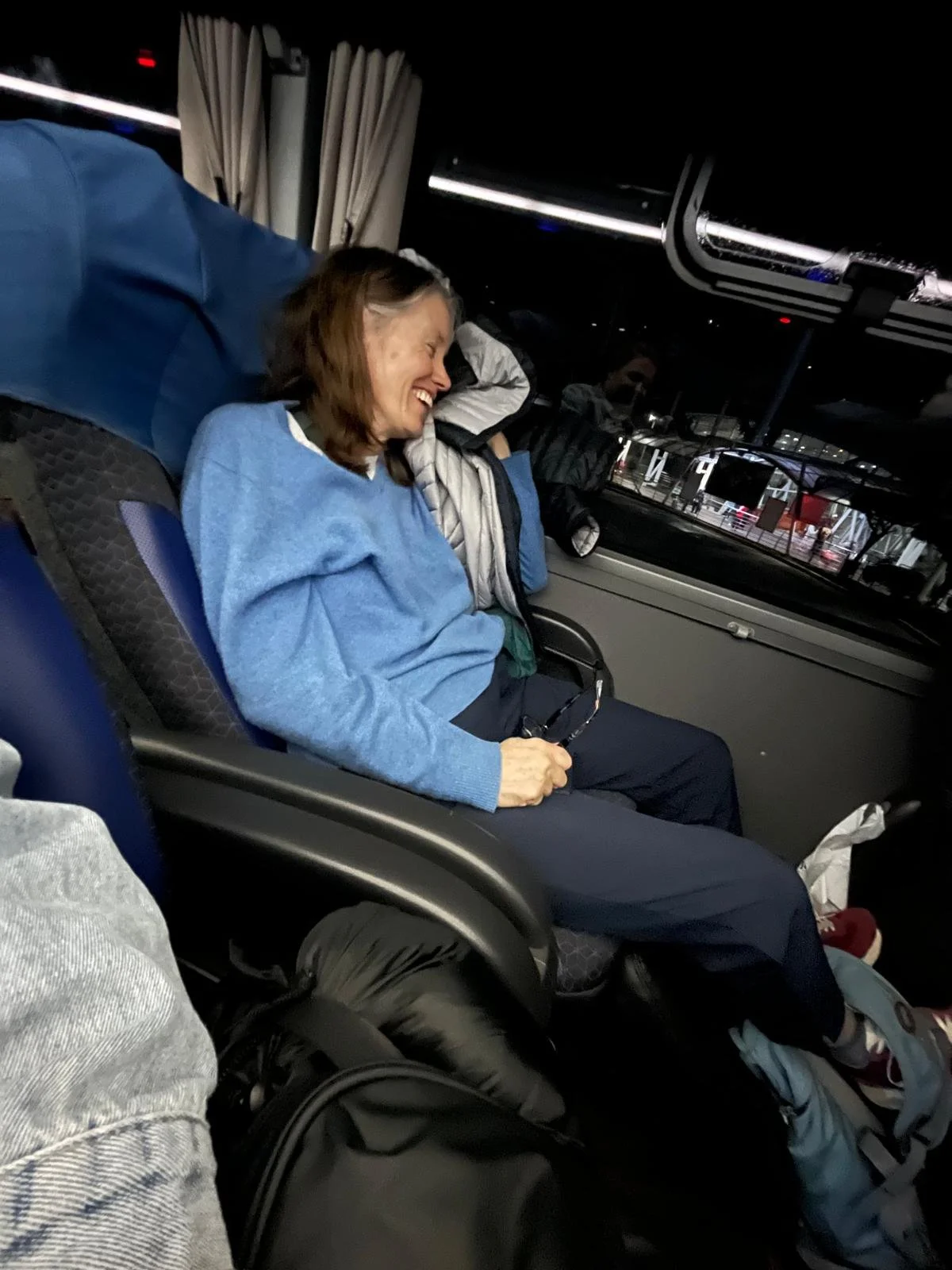
Jenny pretending to sleep. Notice her foot through her backpack shoulder strap to keep it from being stolen.
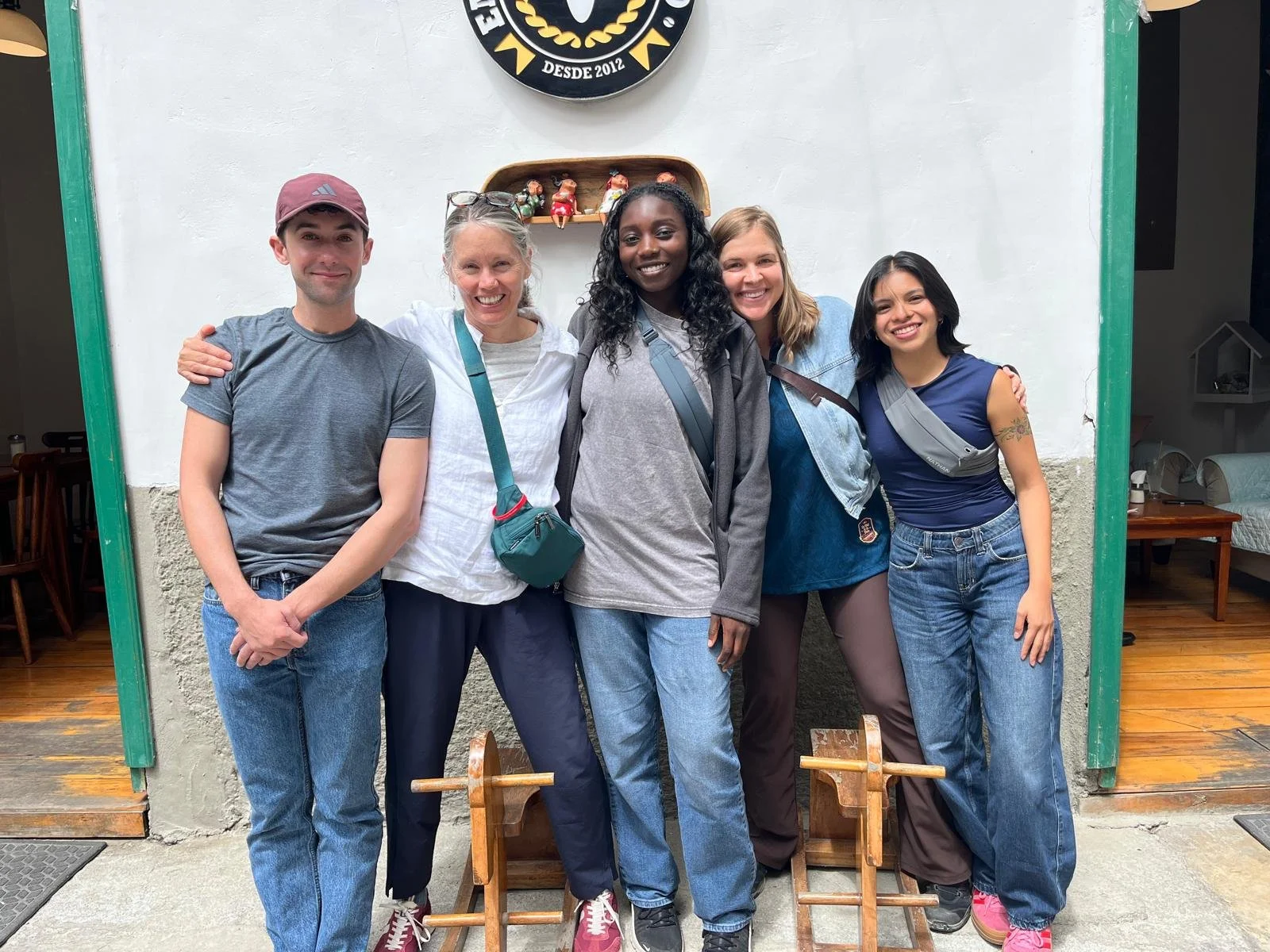
Jenny and the other volunteers who traveled to Loja.
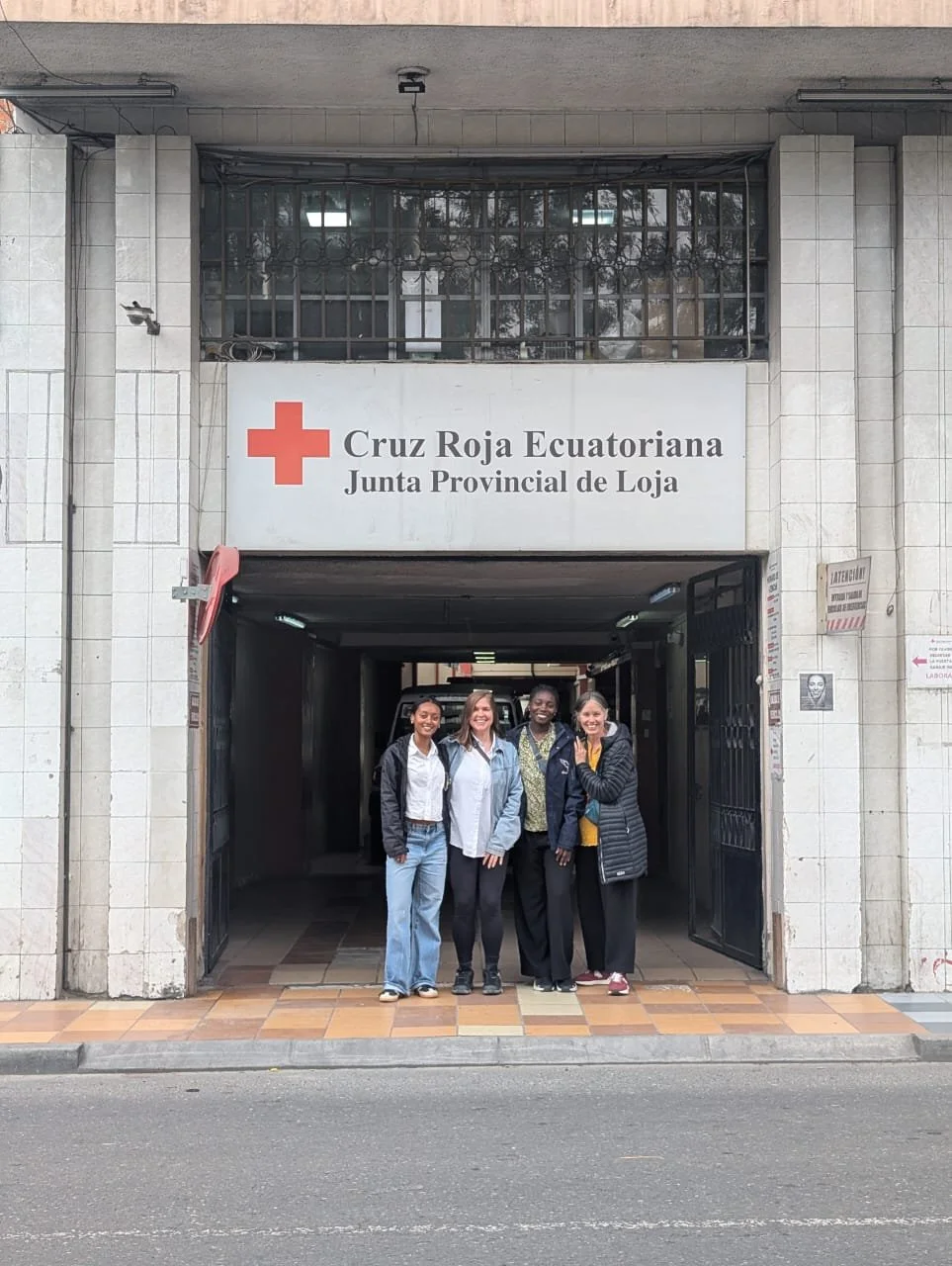
One of the sites they visited was the Ecuadorian Red Cross.
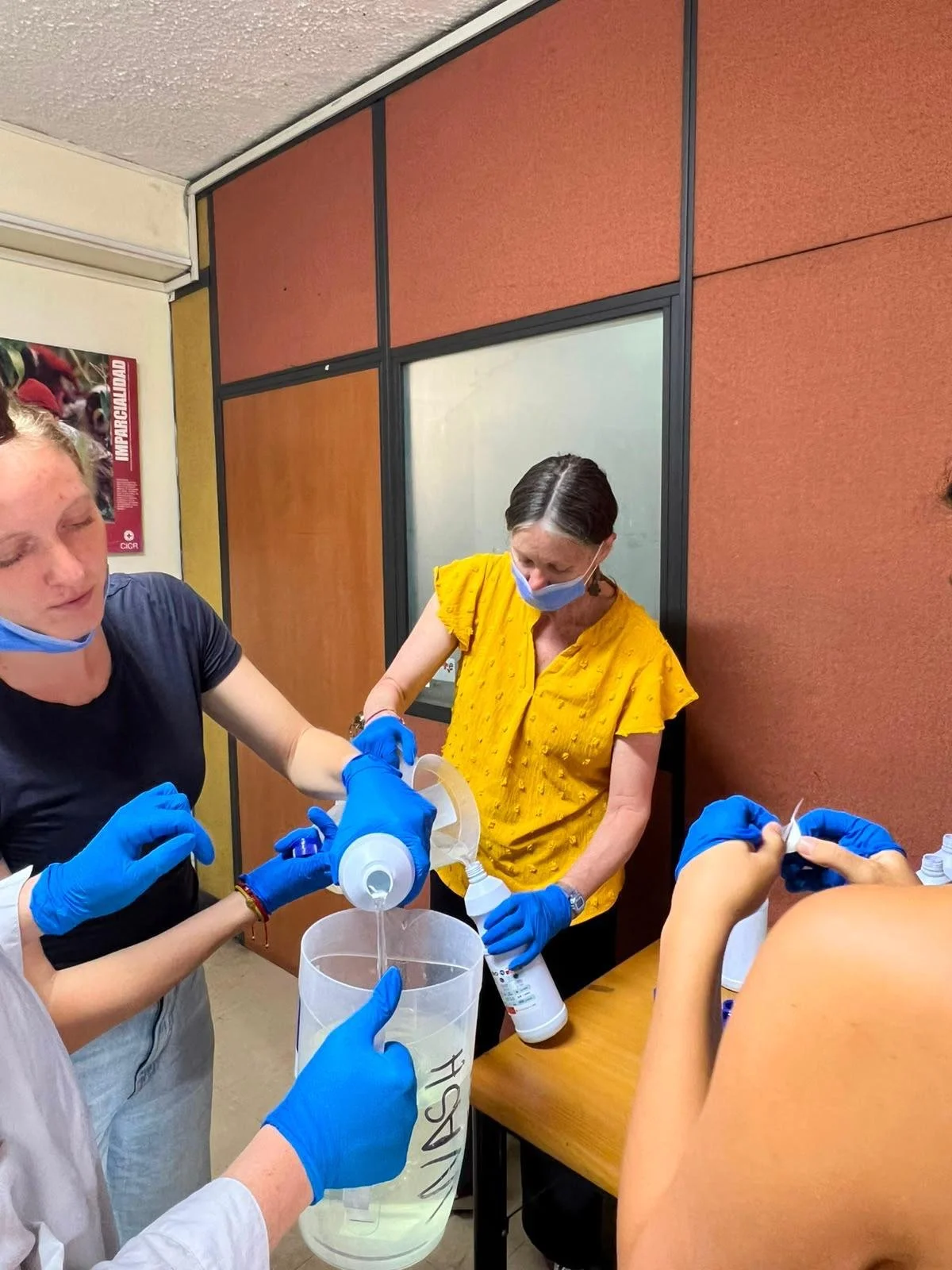
At the Red Cross they prepared bleach solutions to distribute.
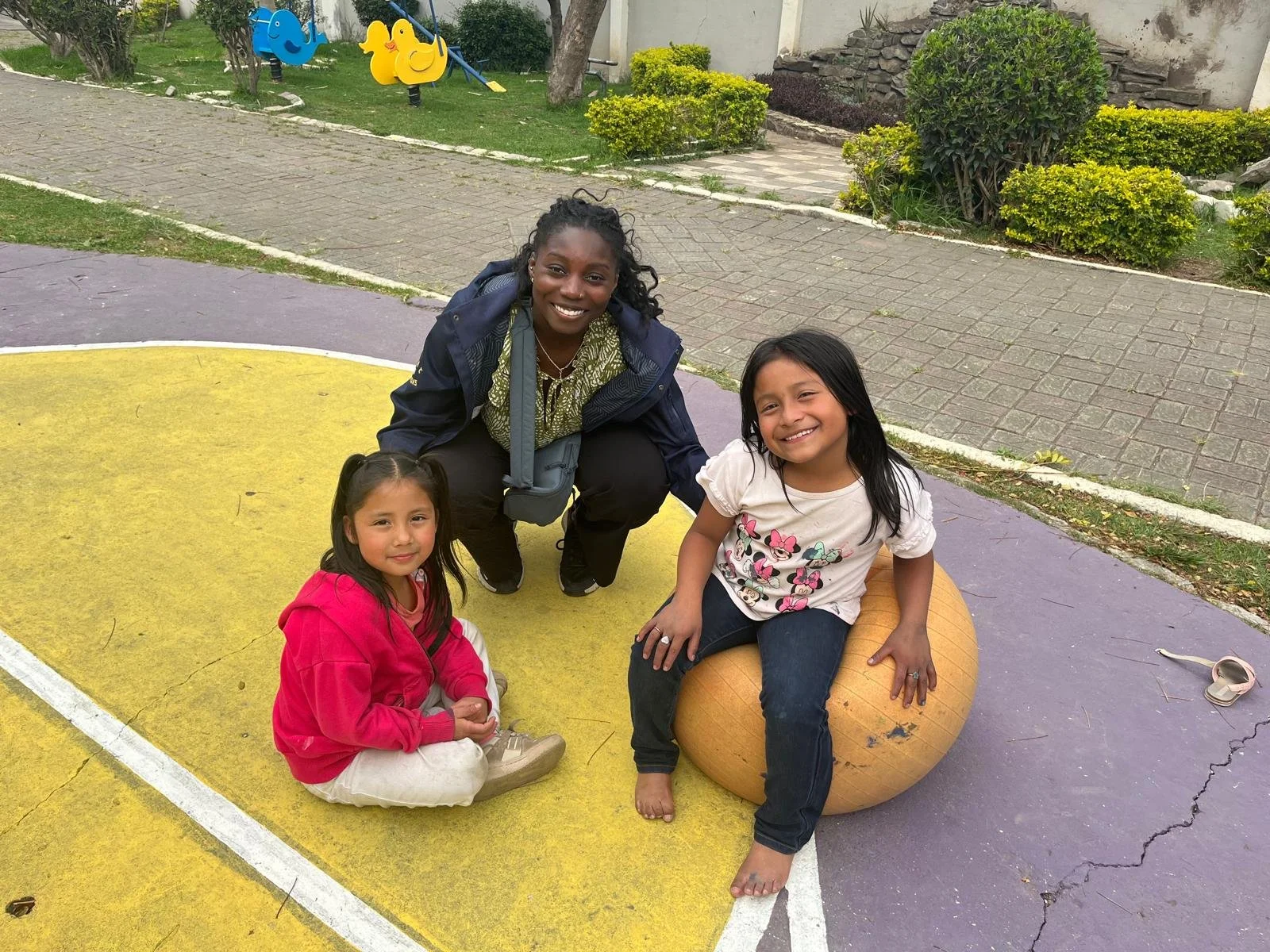
Another site visit was to an orphanage that was more than a little heart breaking.
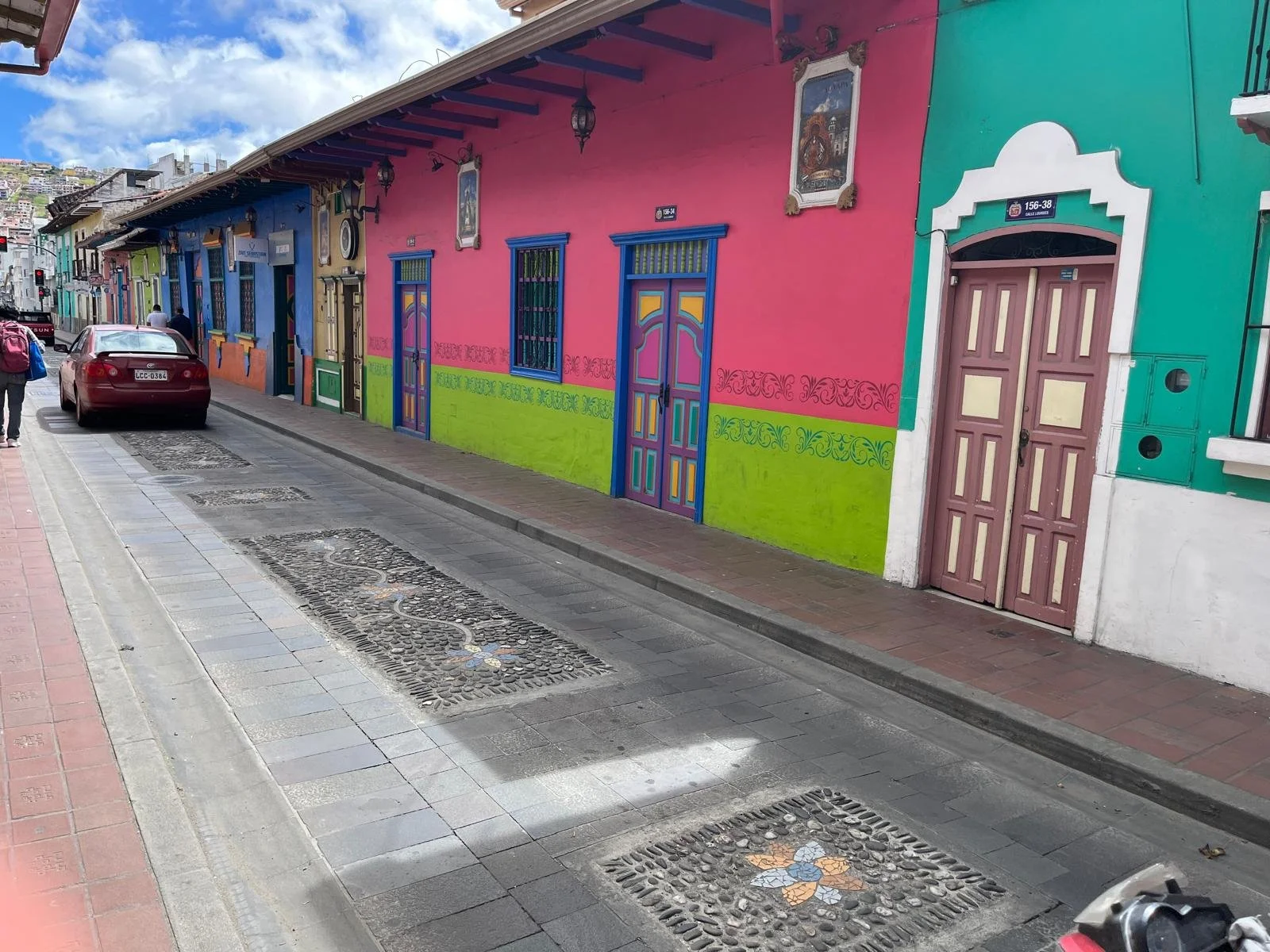
The historic center of Loja was clean, safe and beautifully preserved.
Then there’s Andy.
Overall my visit to Ibarra was good, but I didn’t love the town. It sits at 7,000 ft, so it was nice to escape the altitude of Quito (9,300 ft.), but the city itself was kinda blah. That said, we visited a site where the current volunteer has created, in cooperation with a division of the mounted police, an equine therapy program for kids with developmental disabilites. It was really sweet to see the impact Natalie is making in the lives of kids and families.
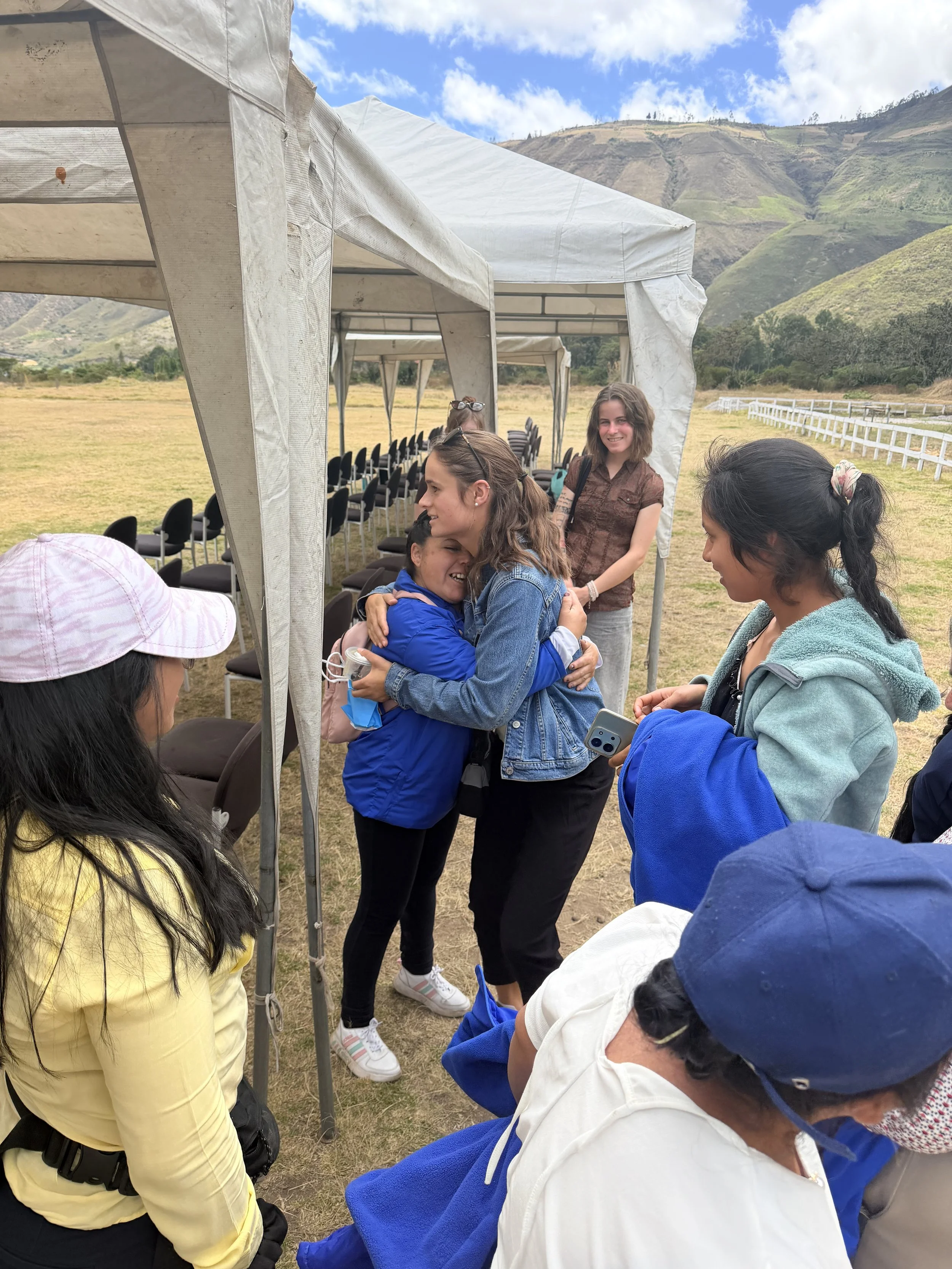
The other cool thing we did was attend an indigenous celebration called a “pampa mesa” which translates to “field table.” It’s a communal feast where community members dig a large hole in the ground and fill it with hot rocks.bring potatoes, carrots, corn, beans, plantains, pineapples and meat.
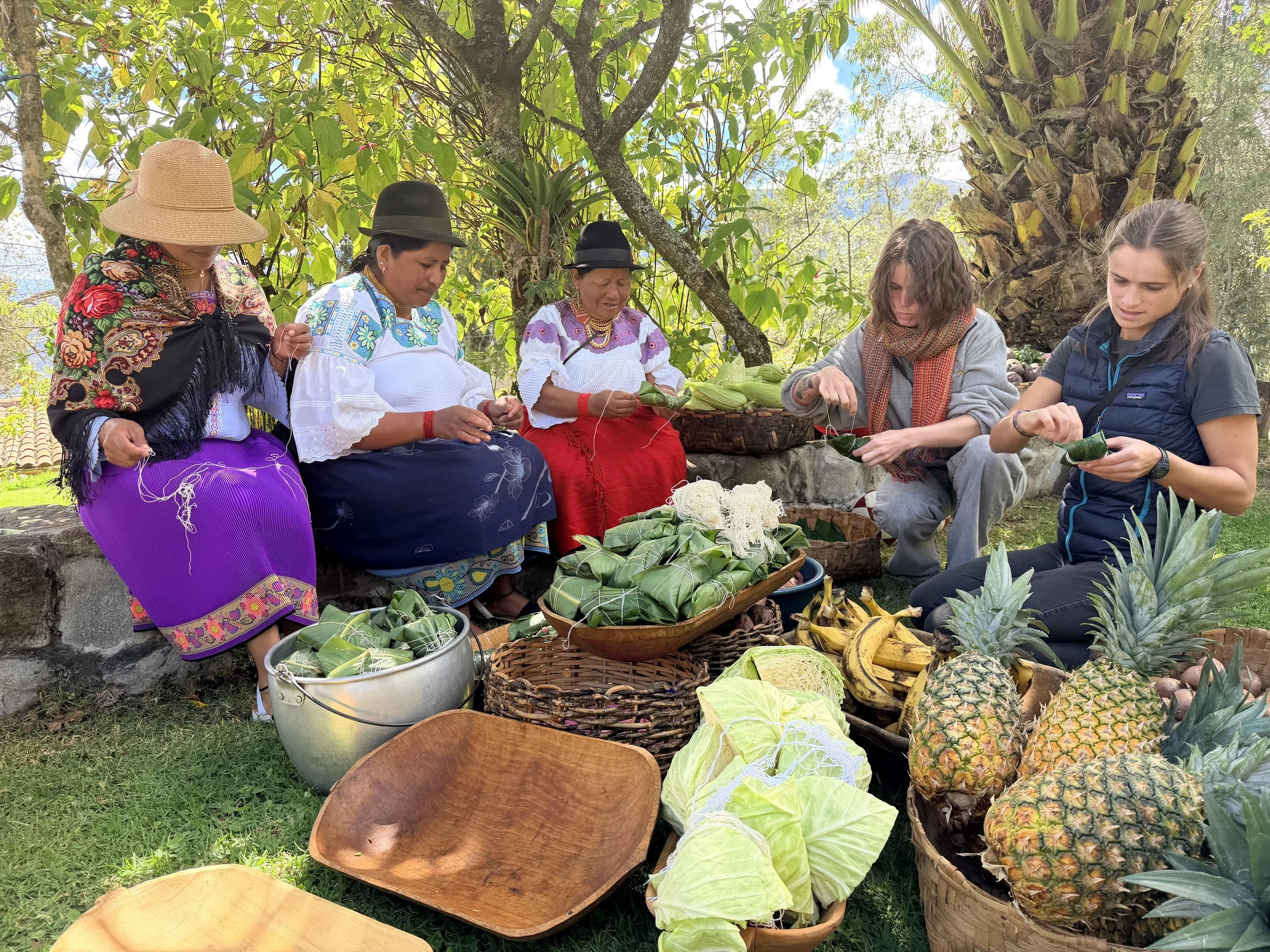
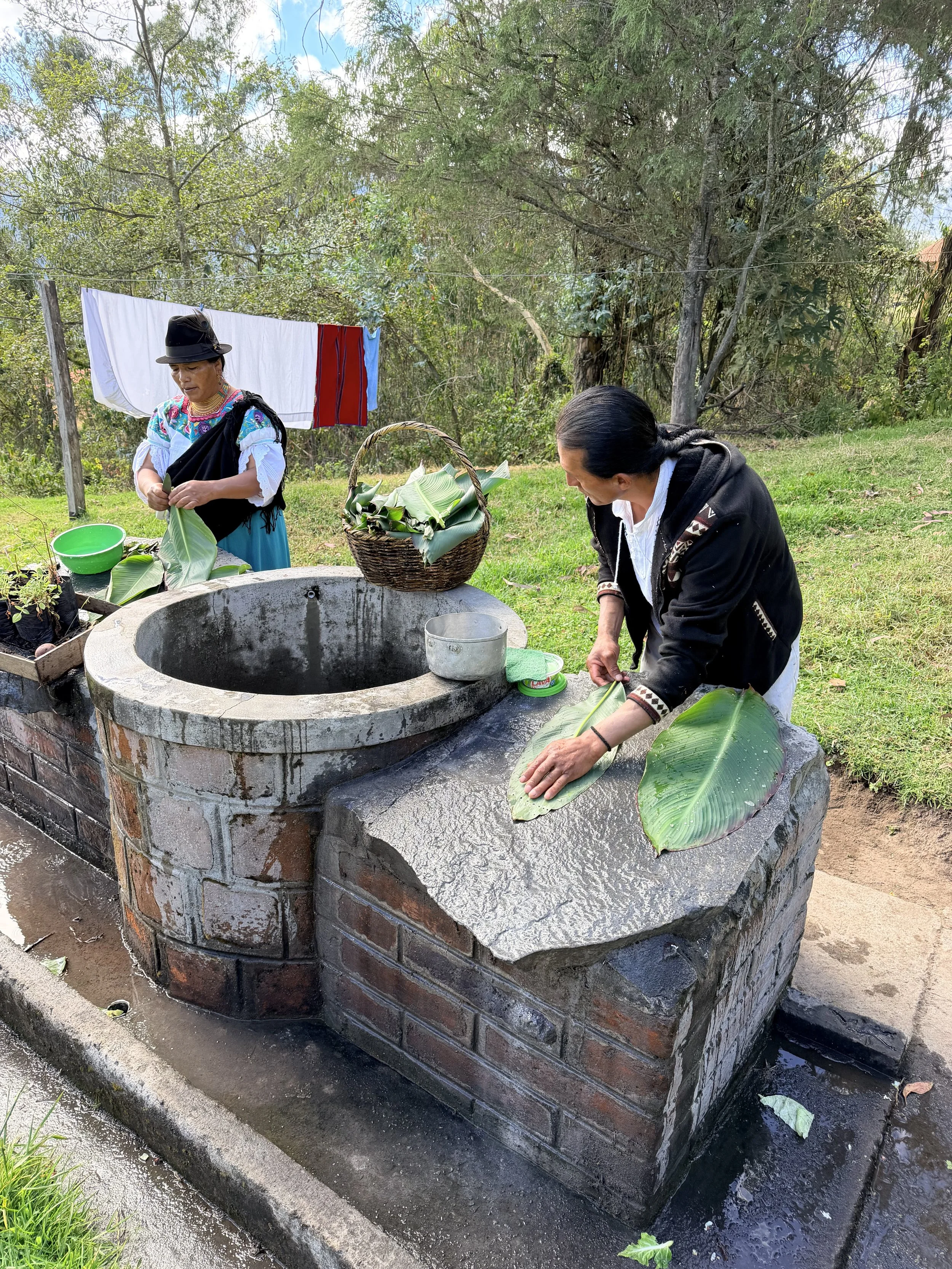
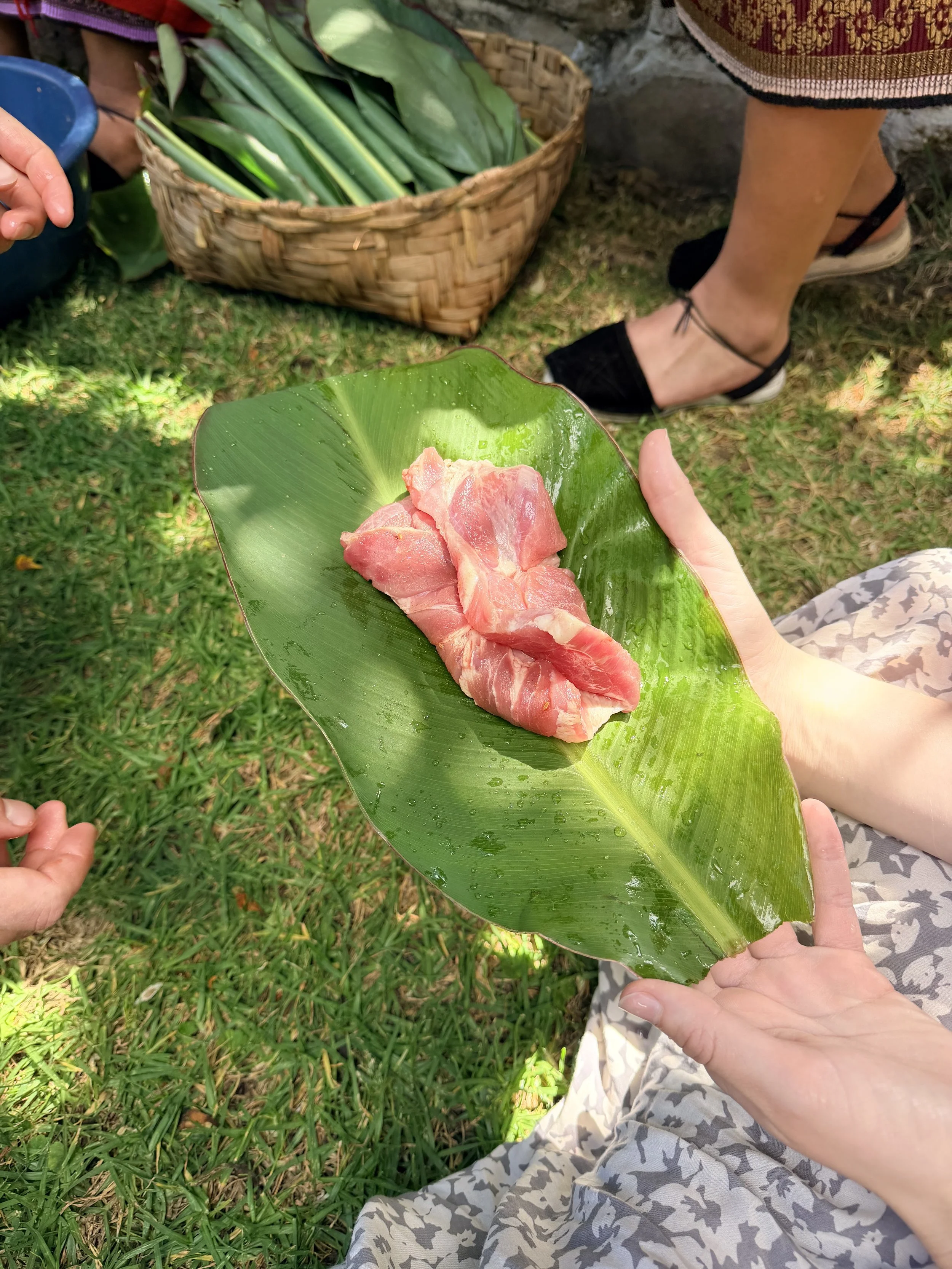
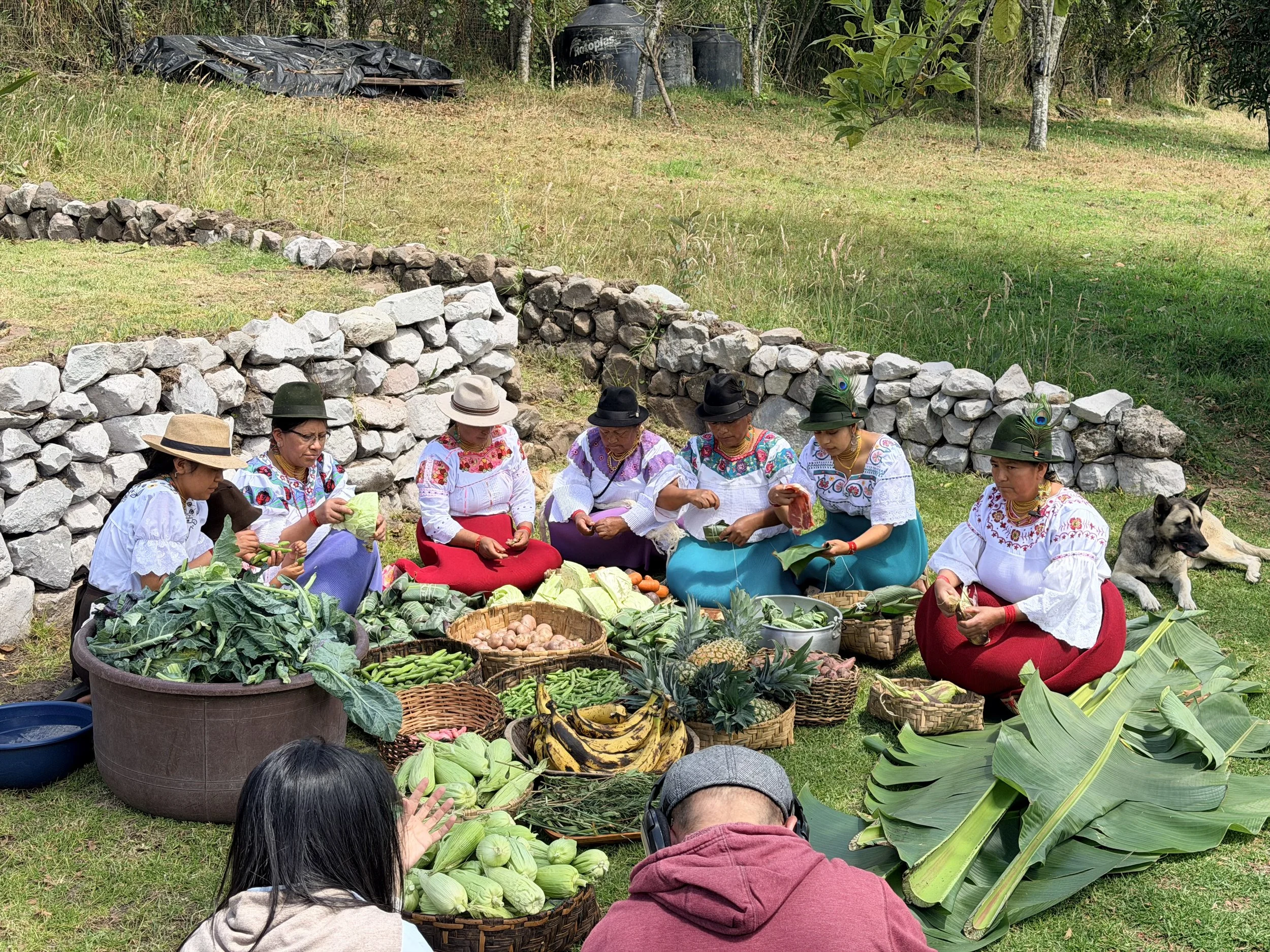
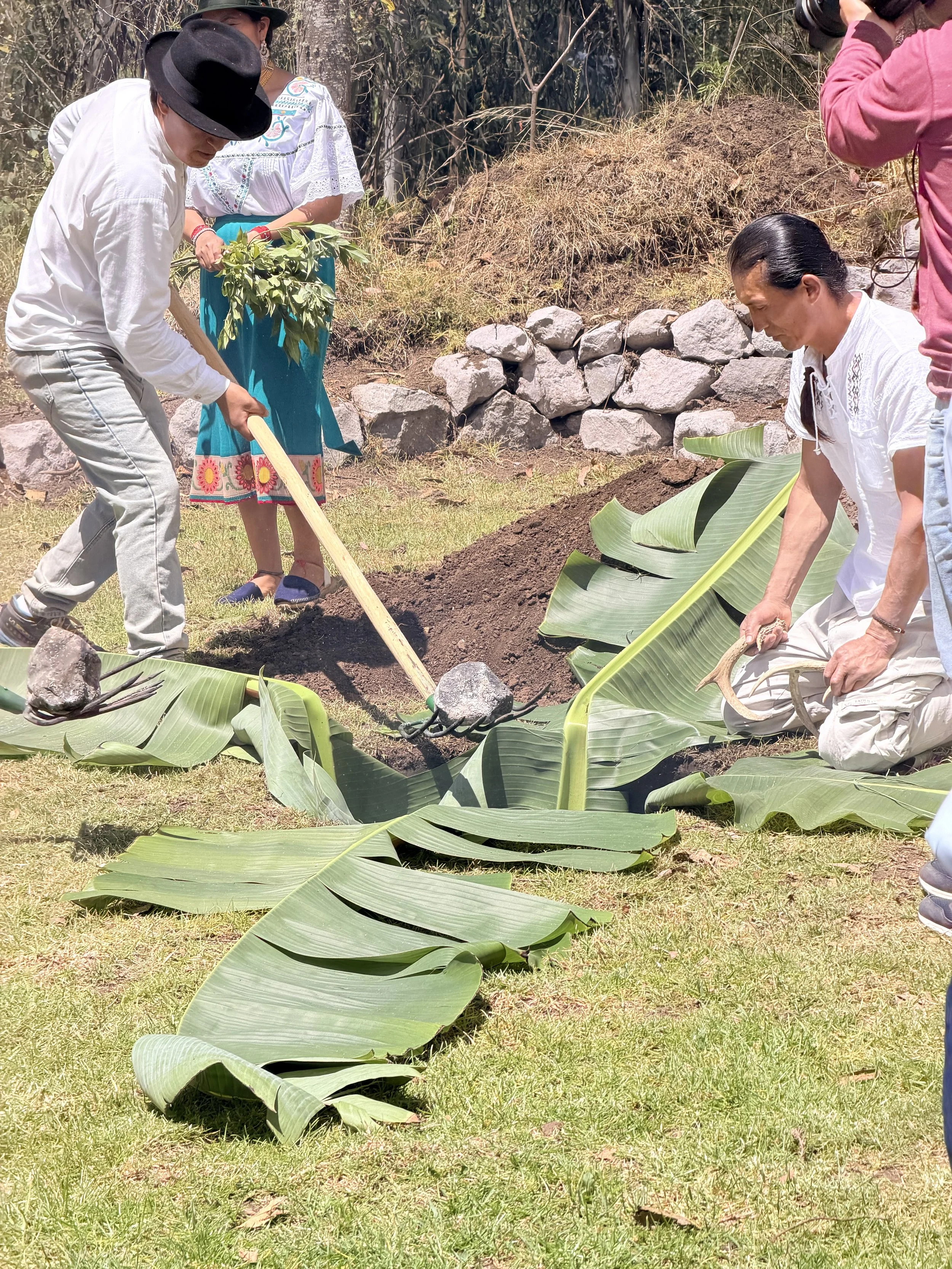
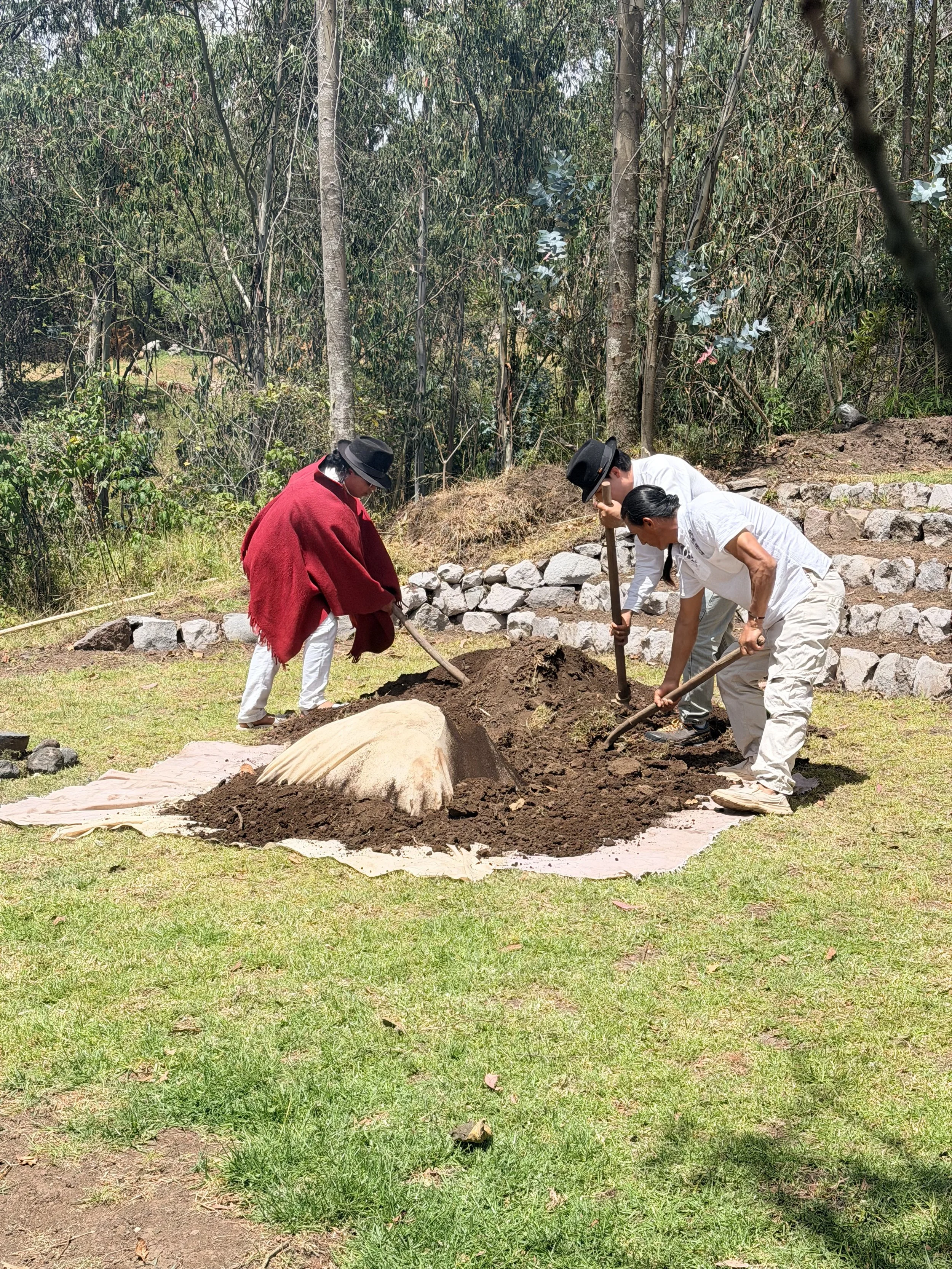
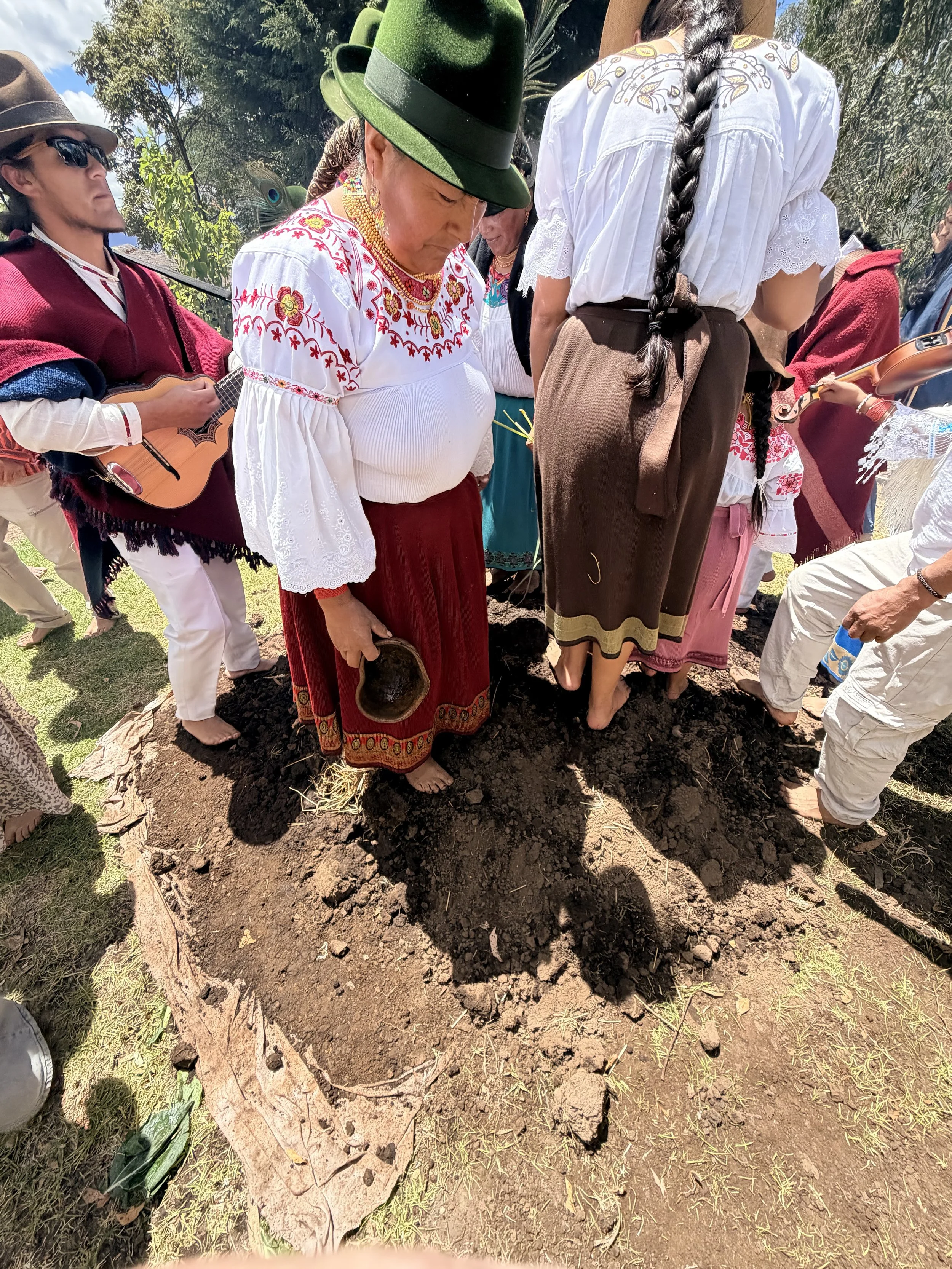
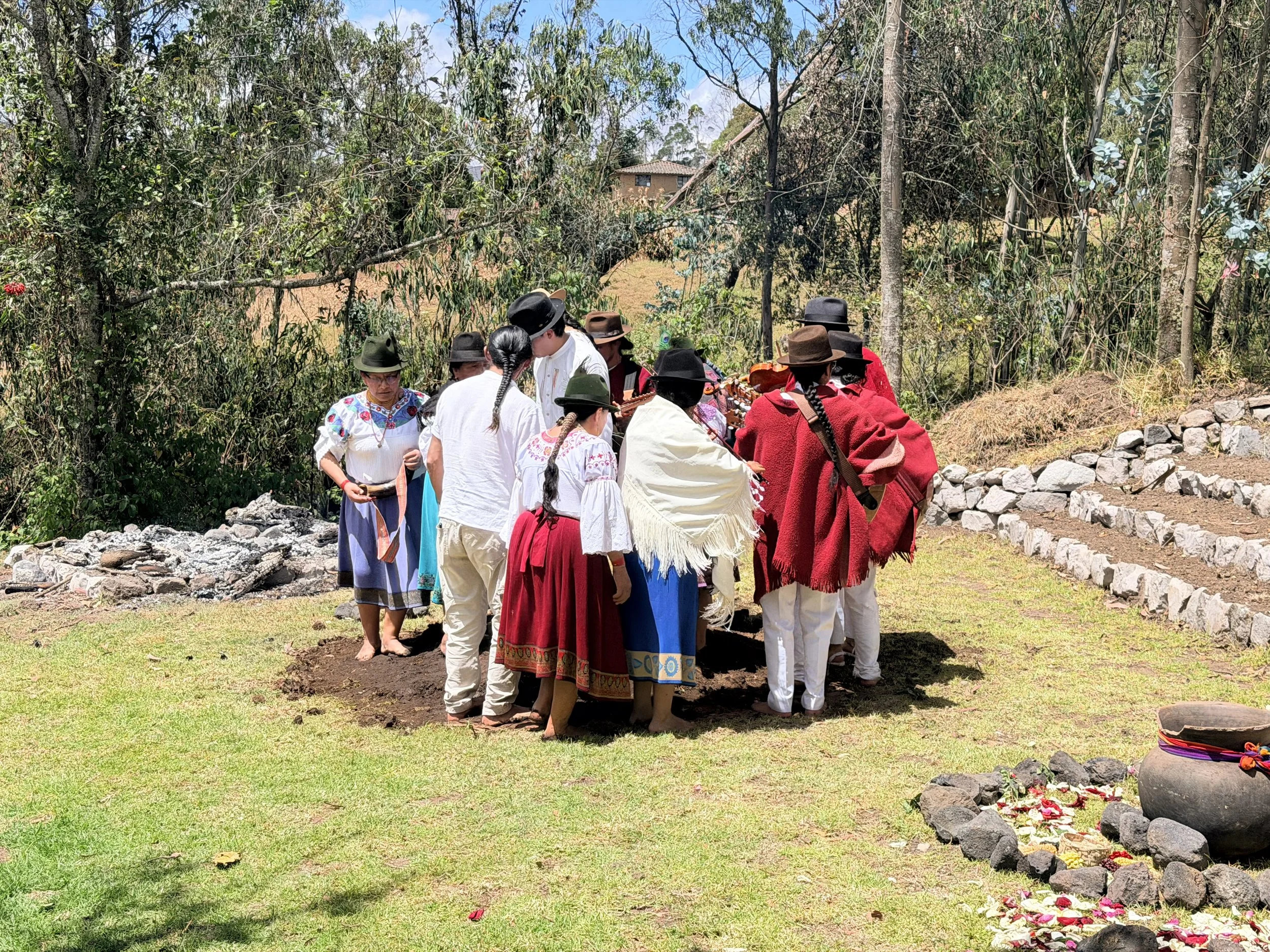
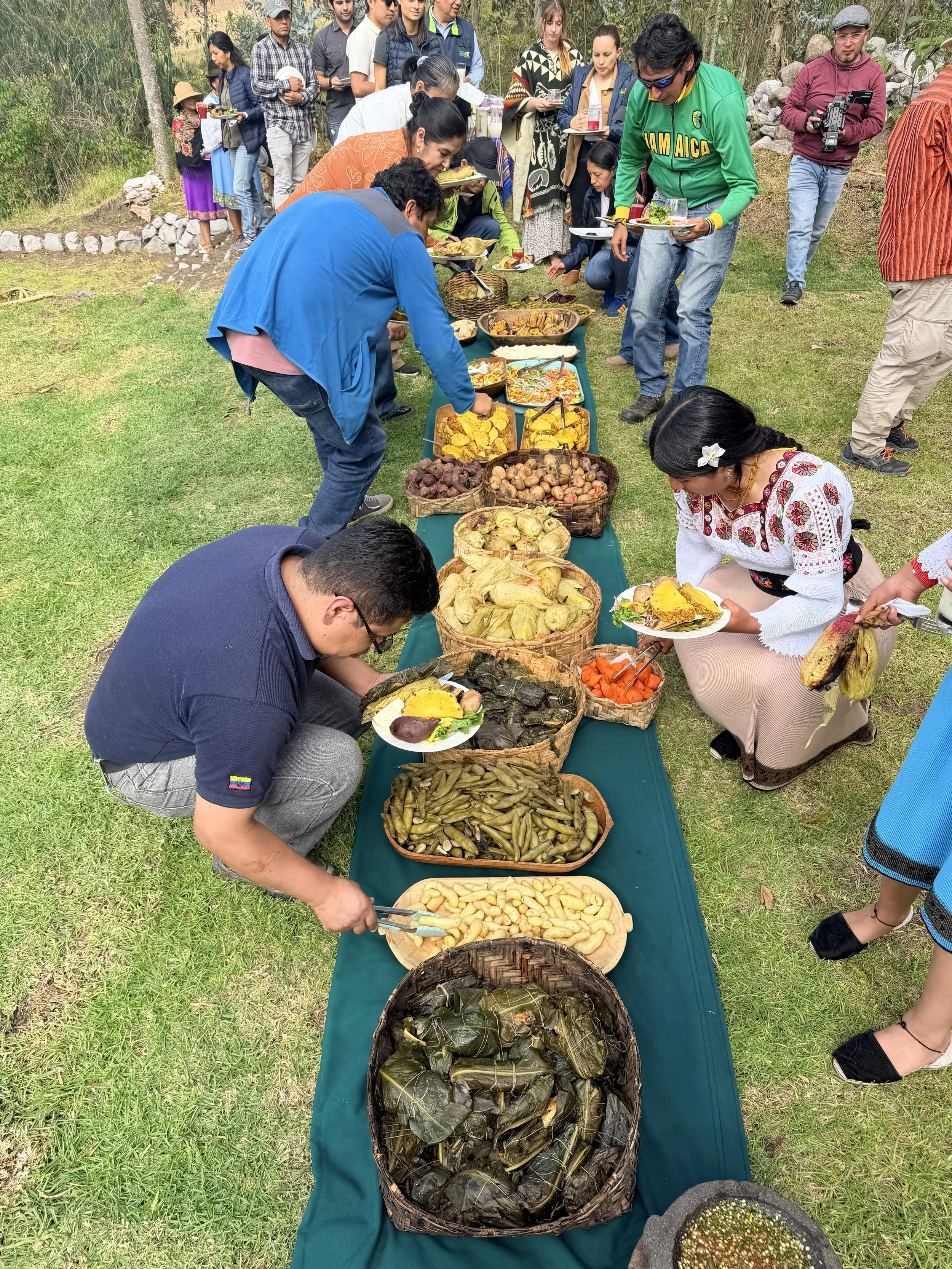
In case you missed it above, here’s a YouTube link to a video of them dancing on the earth oven.
The community is working to move from agriculture towards tourism, which explains the film crew there. The event will air on Ecuadorian TV in August on a show called, Dia a Dia, the equivalent of our 60 Minutes.
This week we are back in the PC office for more training, then on to another cultural trip at the end of the week. Stay tuned!
Hugs, Jenny and Andy.
P.S. Please feel free to share this blog with anyone you think might be interested. Muchas gracias!
Whew…that’s over.
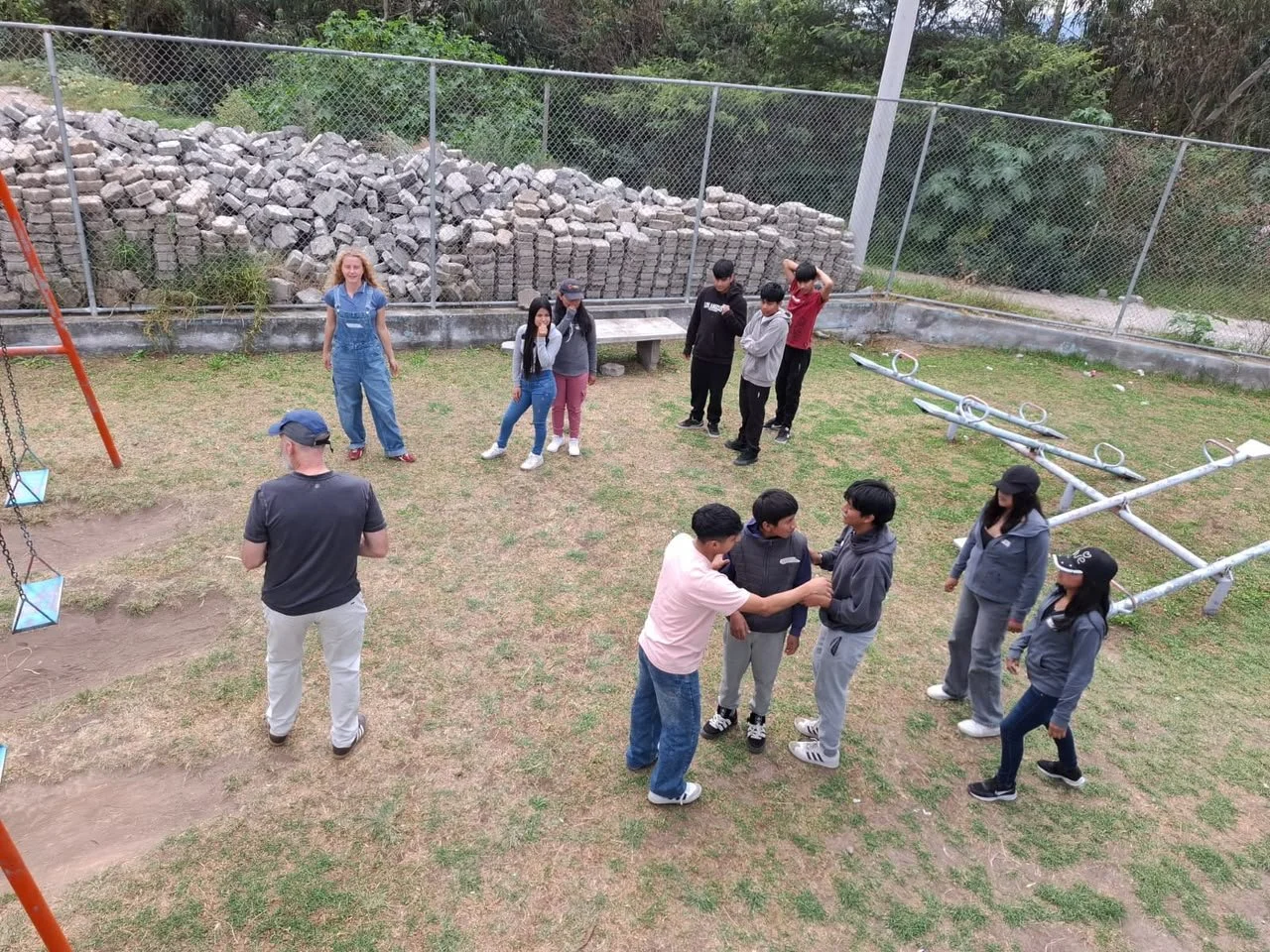
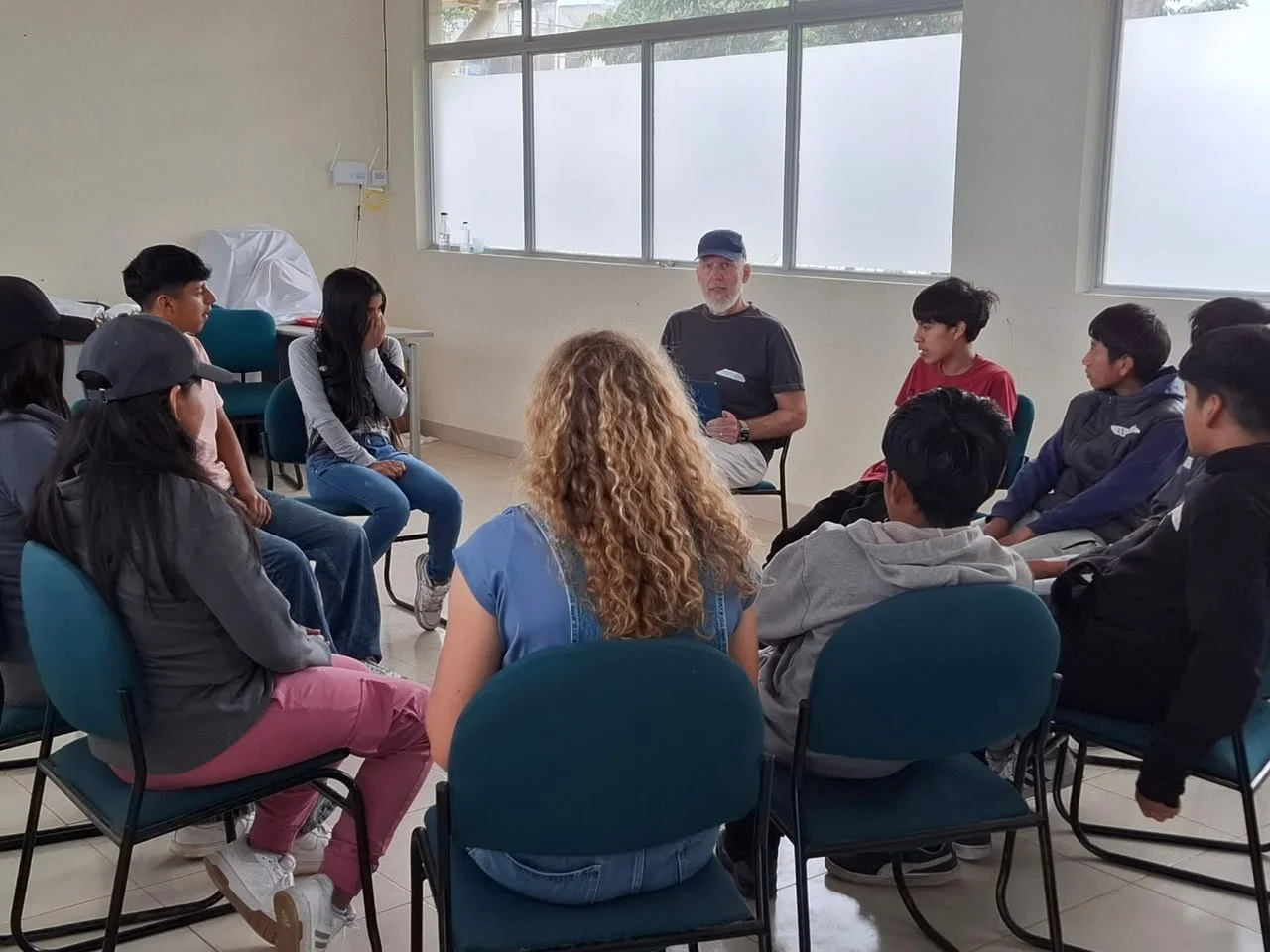
Well, sort of. For now at least, the reality show portion of our training is over. We’ve finished the “Experiential Learning” phase where we had to create and execute programs for our respective populations. It was…interesting. We definitely got mixed results. I did six workshops in two weeks, five of them with 14- and 15-year-olds, and one for parents.
The first workshop focused on self-esteem. I framed it in terms of superheroes and superpowers. “What’s your favorite superhero movie?” “What superpowers would you like to have?” “Let’s draw a picture of ourselves as superheroes—but what are our real superpowers? (Think kindness, intelligence, friendship…)” Crickets. They literally refused to participate. I can’t say I blame them too much. I mean, I’m weird. Really weird. I’m old, gray, bald, and hairy. And my Spanish is bad! (Though it’s getting better…I tested at the intermediate-medium level. Thank you to my Mexican Spanish teacher, Angel, who gave me such a great head start!)
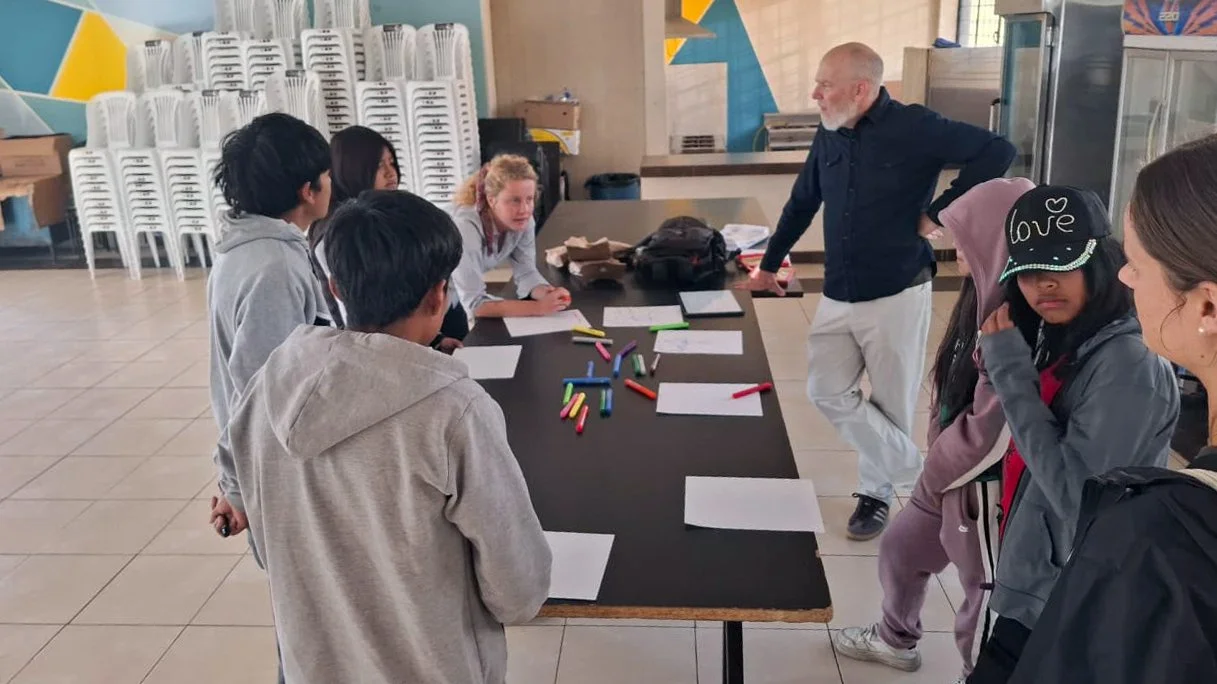
This is the exact moment they refused to pick up the markers. I’m looking at my fellow volunteer, Aerin, with body language that says, “What now?”
It did get better from there though. That first session only had five kids, and four were painfully shy. After that we had 9–10 kids and better energy. I adjusted my content to have much more action and far fewer words. I brought candy. If our activities needed teams, I kept the boys and girls separate to lower the shyness level. I worked with Aerin, who speaks very good Spanish, and she was a huge help. It wasn’t easy, but I did learn a lot.
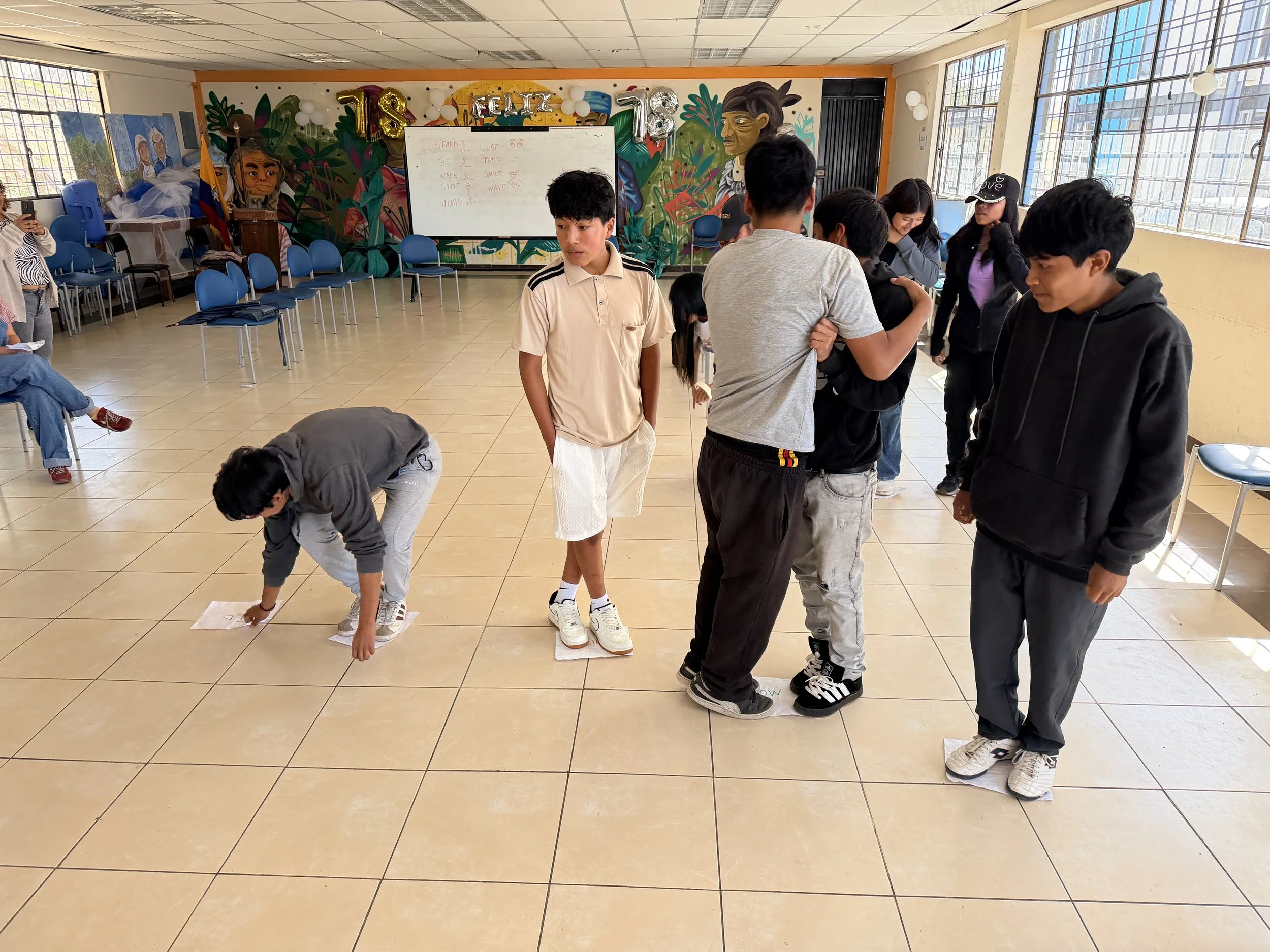
Jenny, on the other hand, was enjoying success after success. She is working in the Health and Wellbeing area, and her population is mostly older adults and the “third age” (that’s what they call senior citizens in Ecuador.) Her attendees were there by choice, not because their parents told them to be. She did workshops on music and dance, healthy eating, emotions, and relaxation. Her final workshop was a health fair at the local community center with young parents. Last Friday night we went to a festival in our little town, and Jenny was like a celebrity, saying hello to all these old ladies she had connected with over the last two weeks. I was so proud of her.
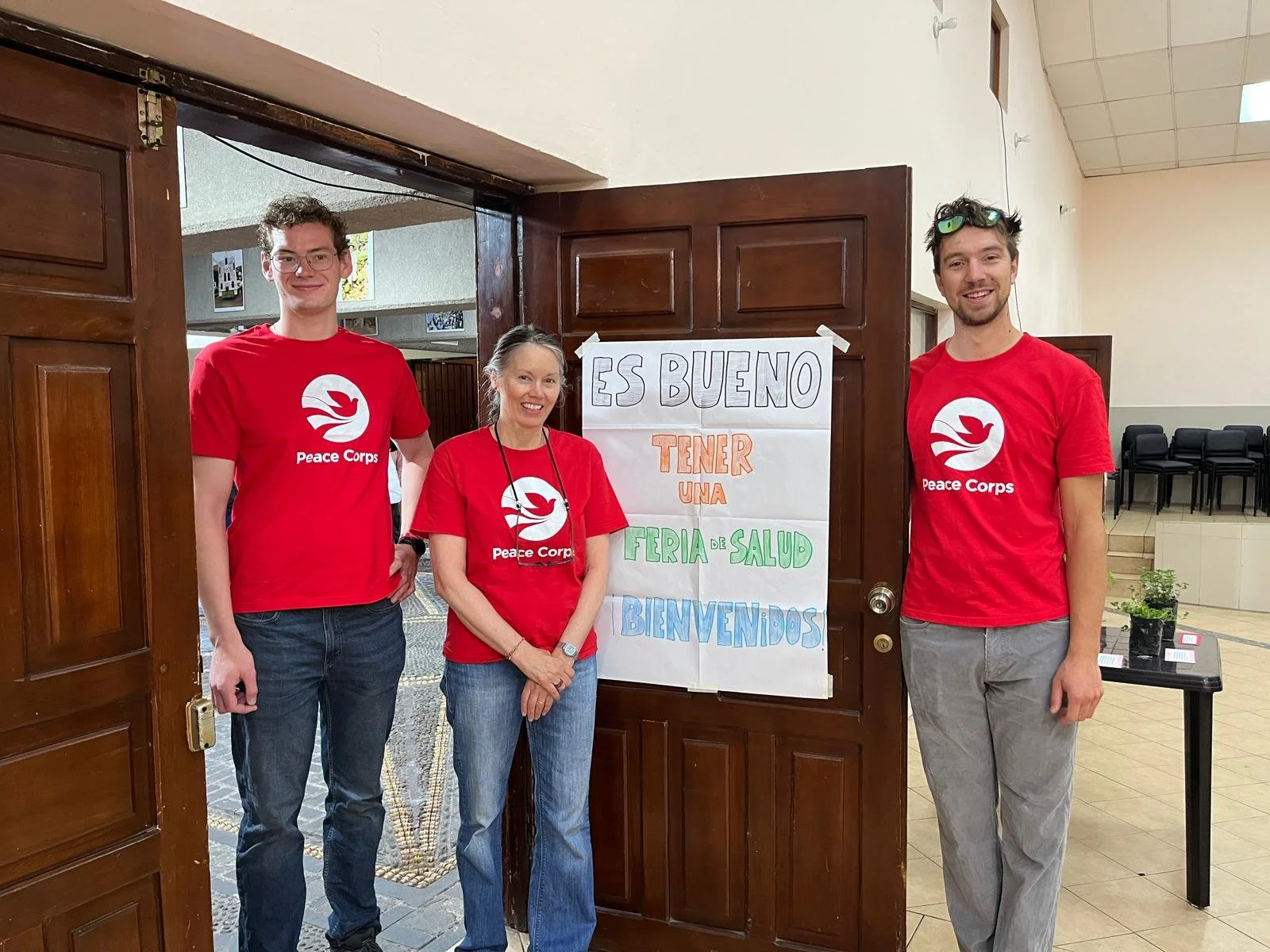
Jenny with Zander and Aden. We don’t yet have any action shots with her community.
Other stuff happened too!
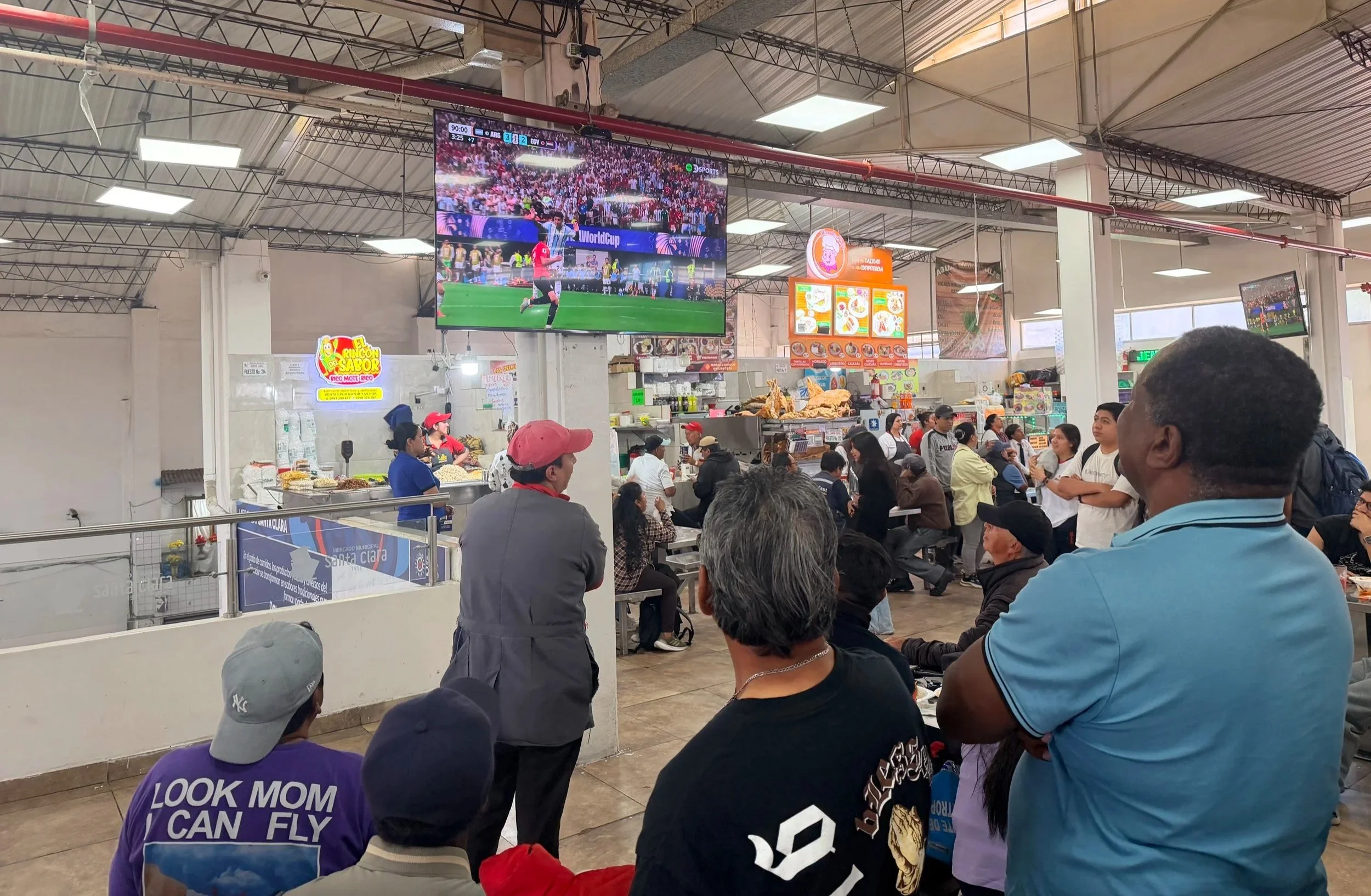
We were in a market in Quito when Argentina beat Egypt in the World Cup. The Ecuadorians are certainly rooting for the only Latin American country left in the tournament.
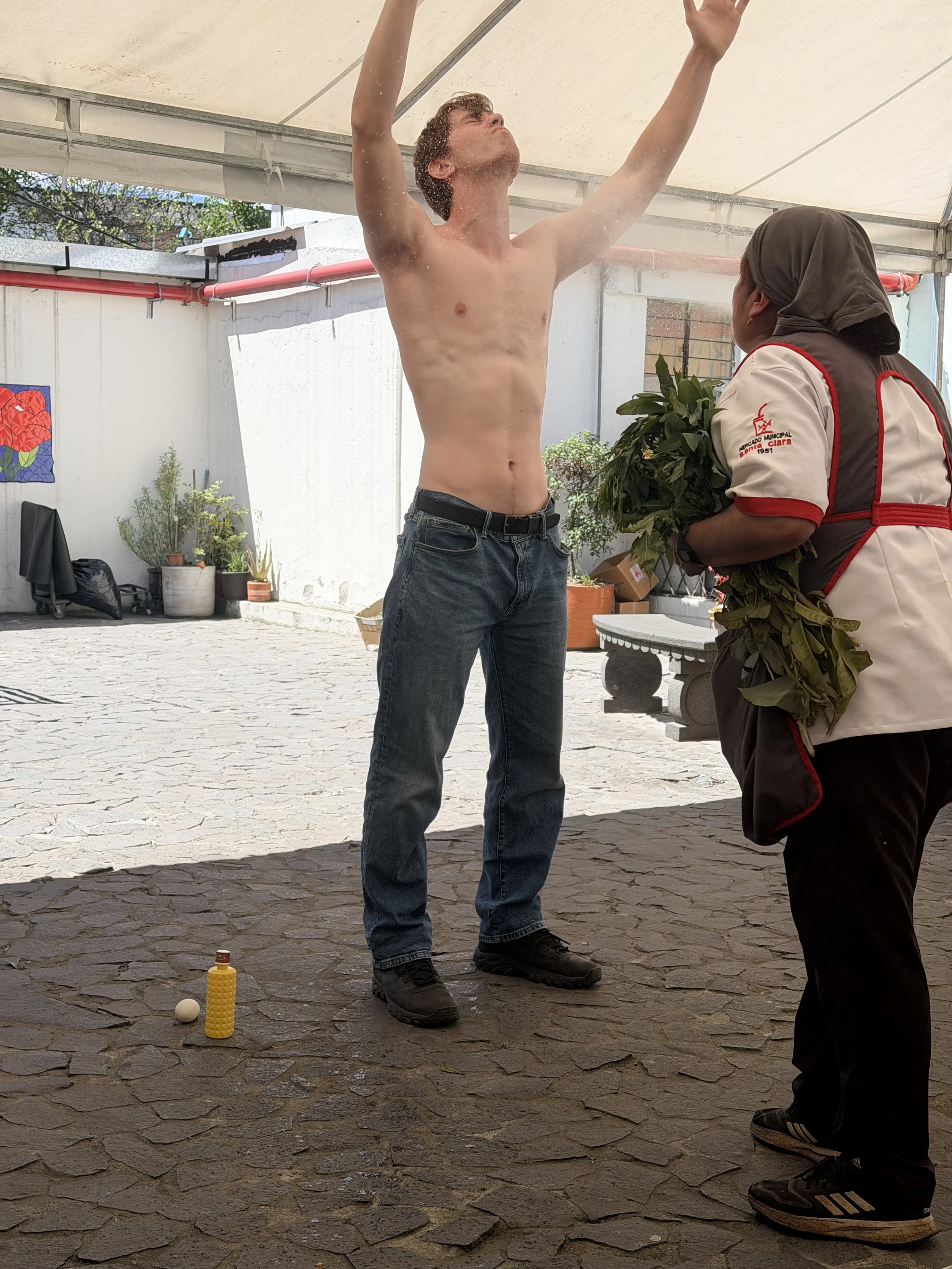
Also at the market, Ryan volunteered to be “cleansed”, an indigenous practice of purification where she rubbed him all over with that egg on the ground, spit alcohol all over him, then beat the evil out of him with a plant of some sort. It wasn’t gentle.
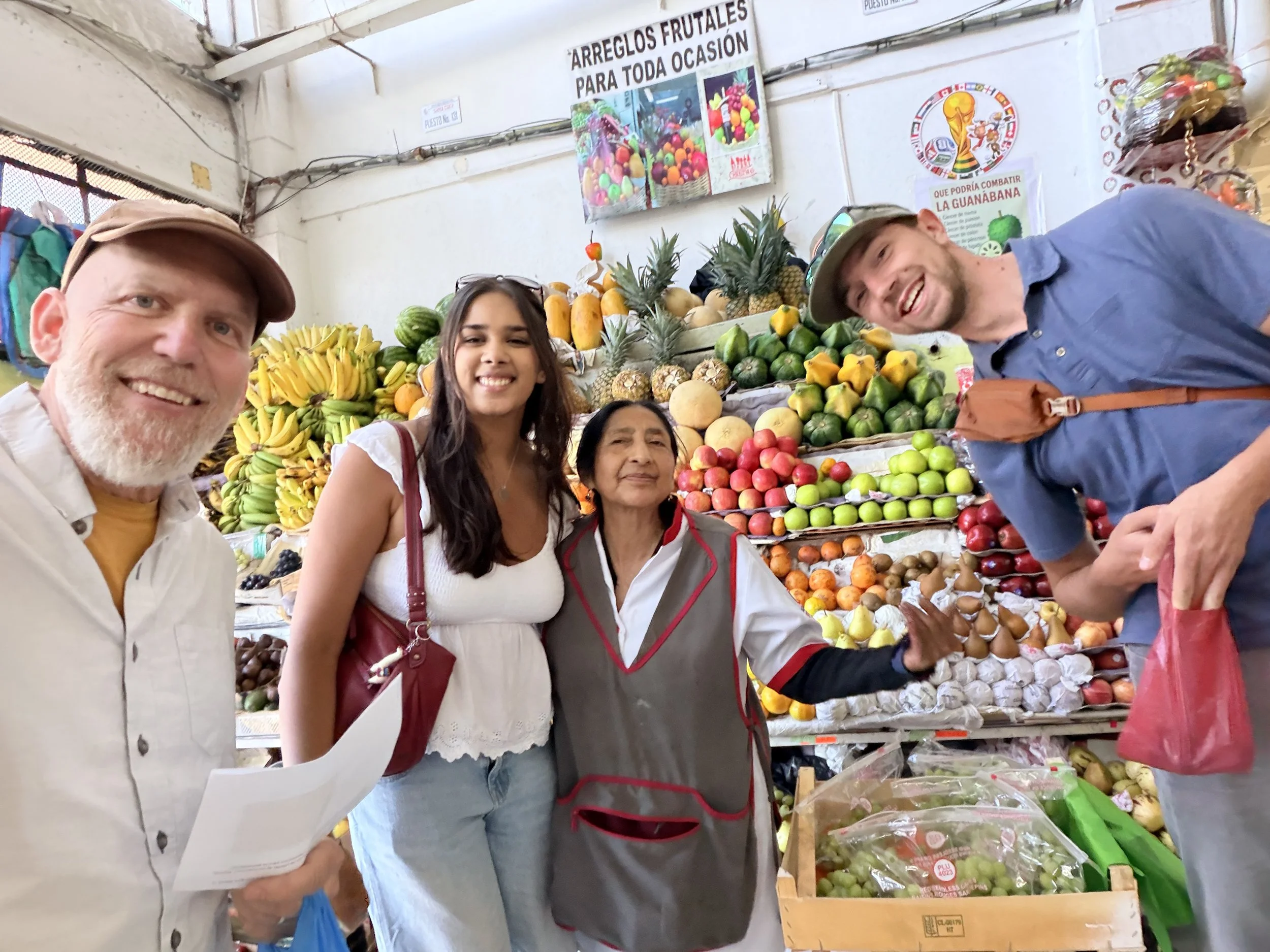
The author (me!) and two other volunteers had to travel the market asking vendors questions about exotic fruits and vegetables in an effort to practice our Spanish and learn about commerce in Ecuador.
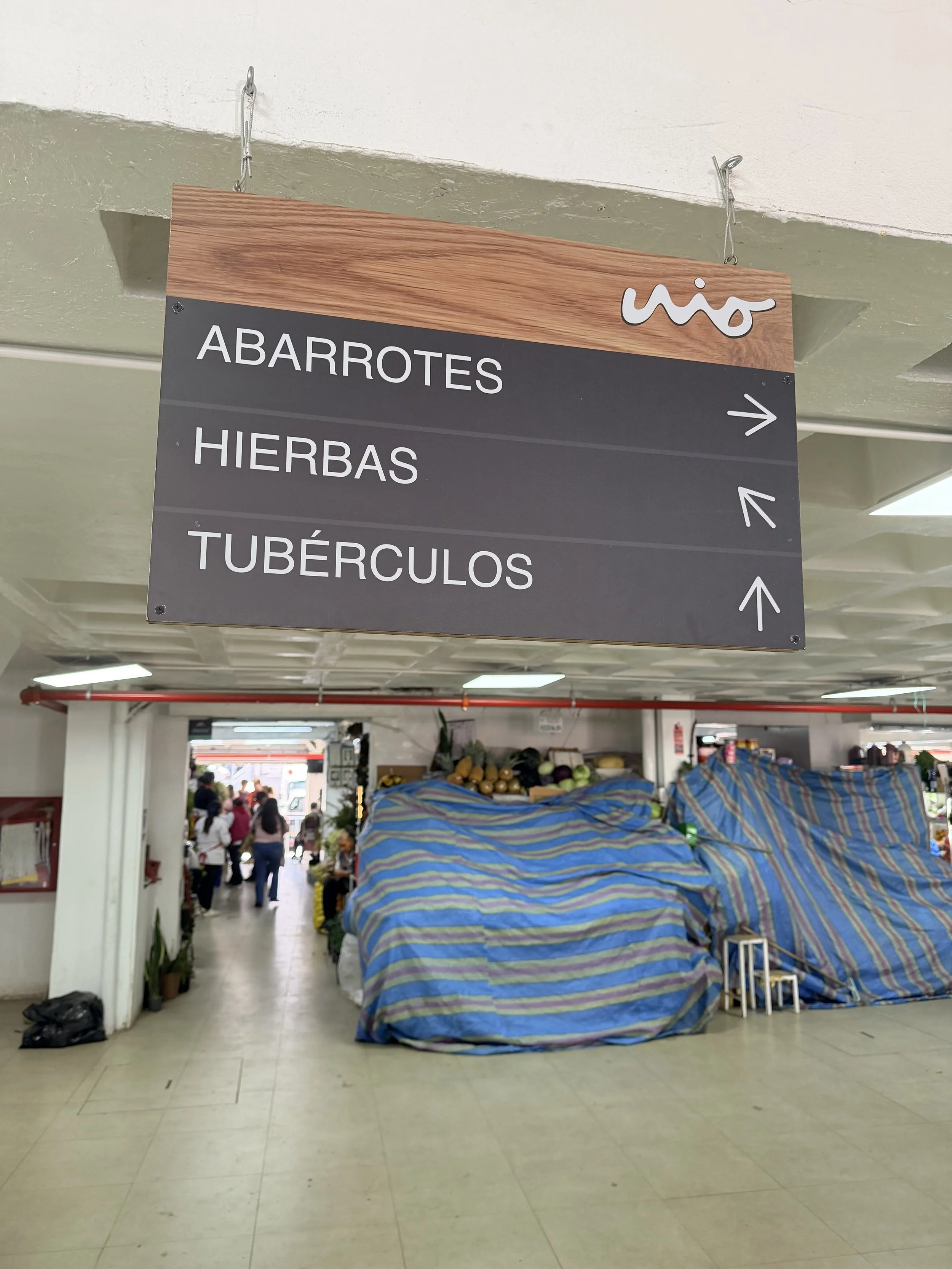
Turn right for groceries, left for herbs, and go straight for tuberculosis.
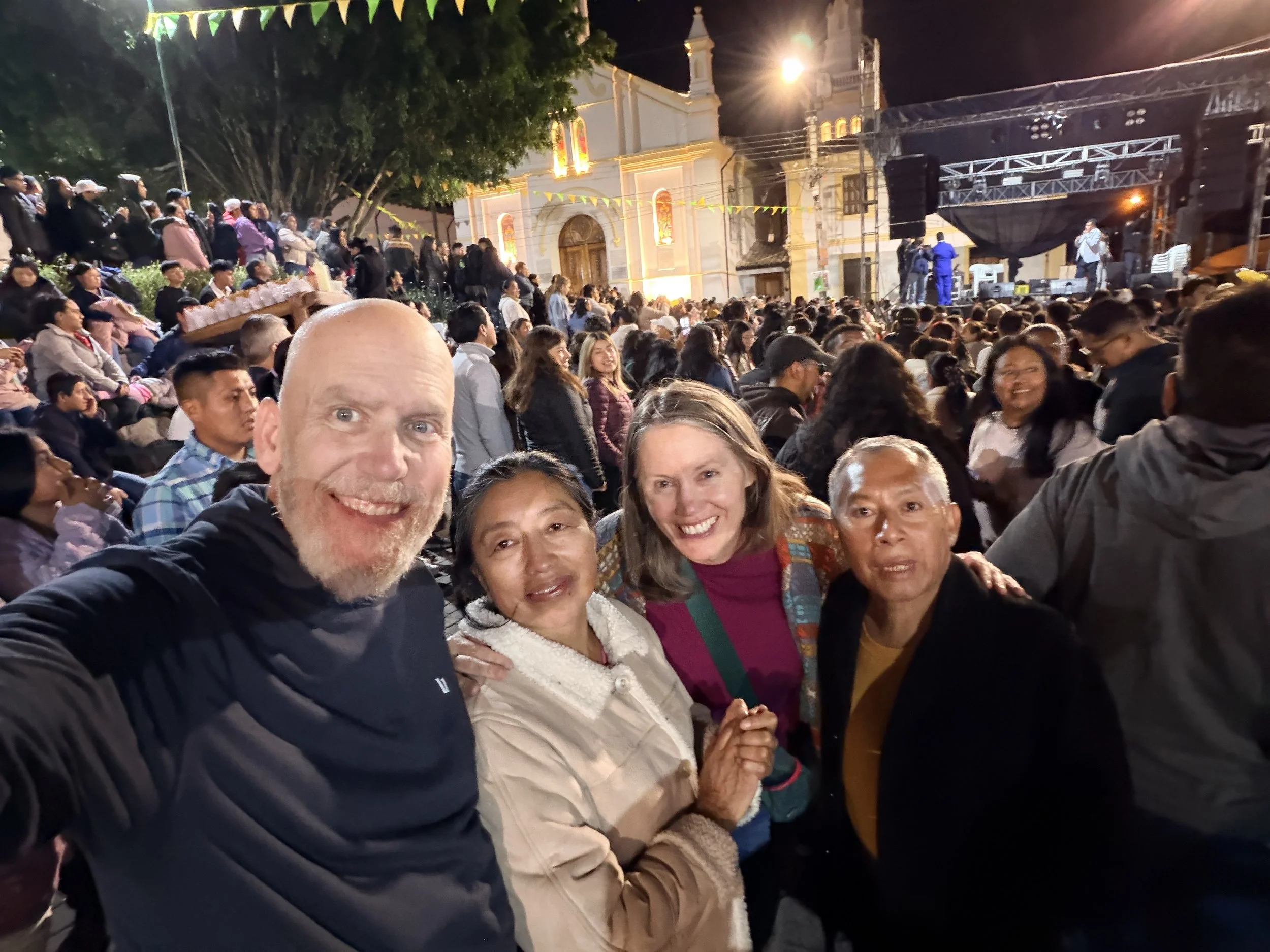
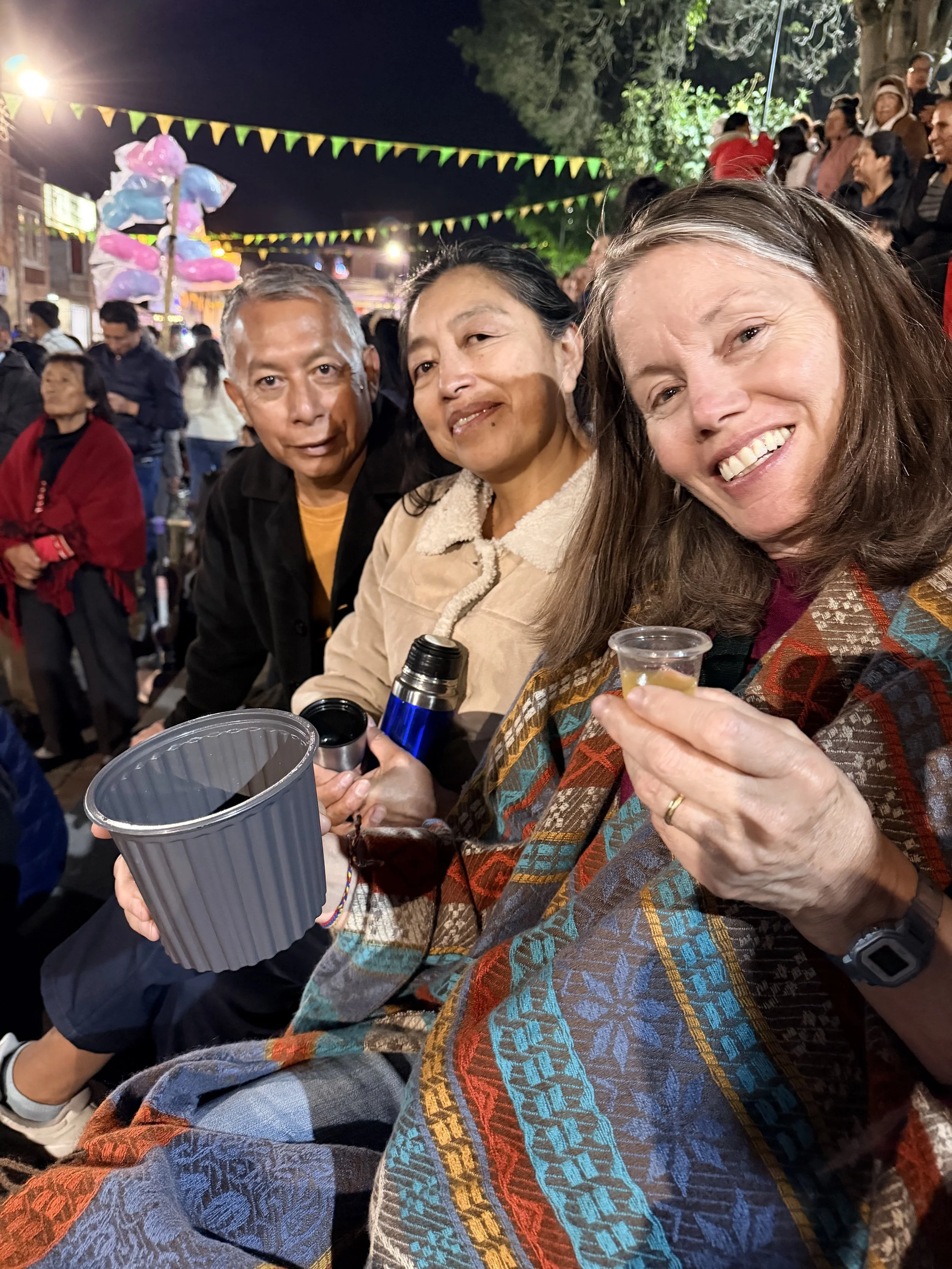
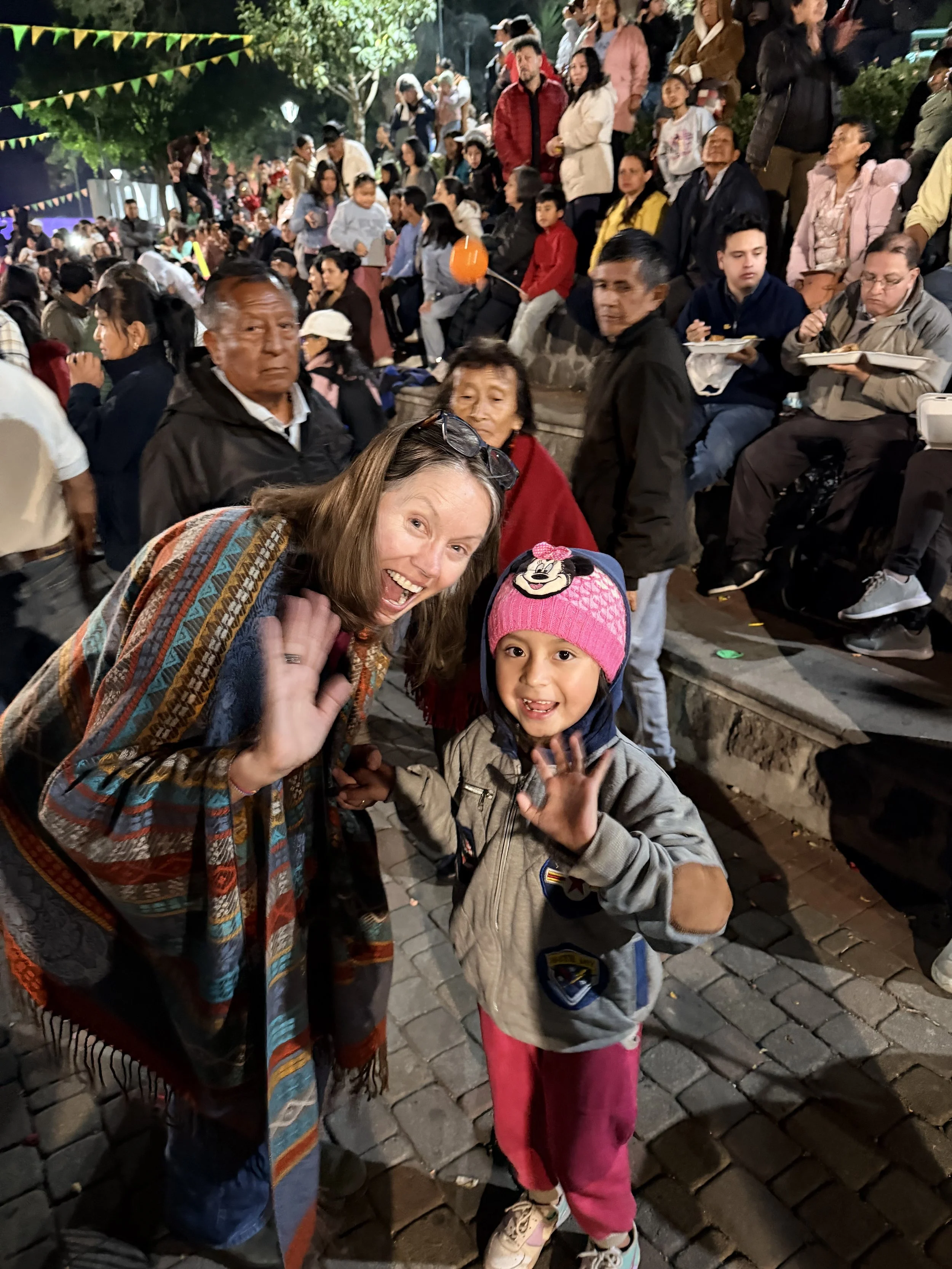
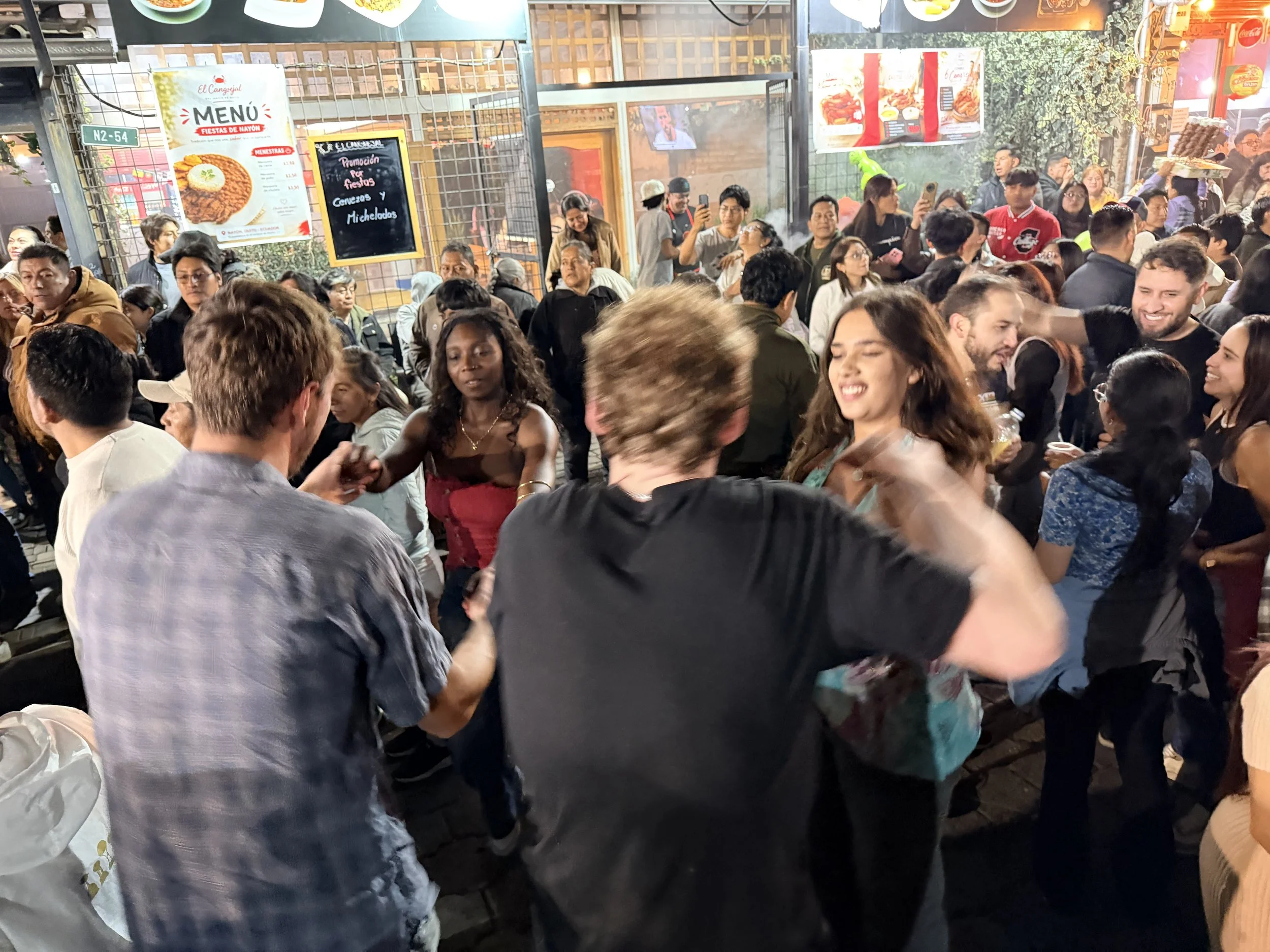
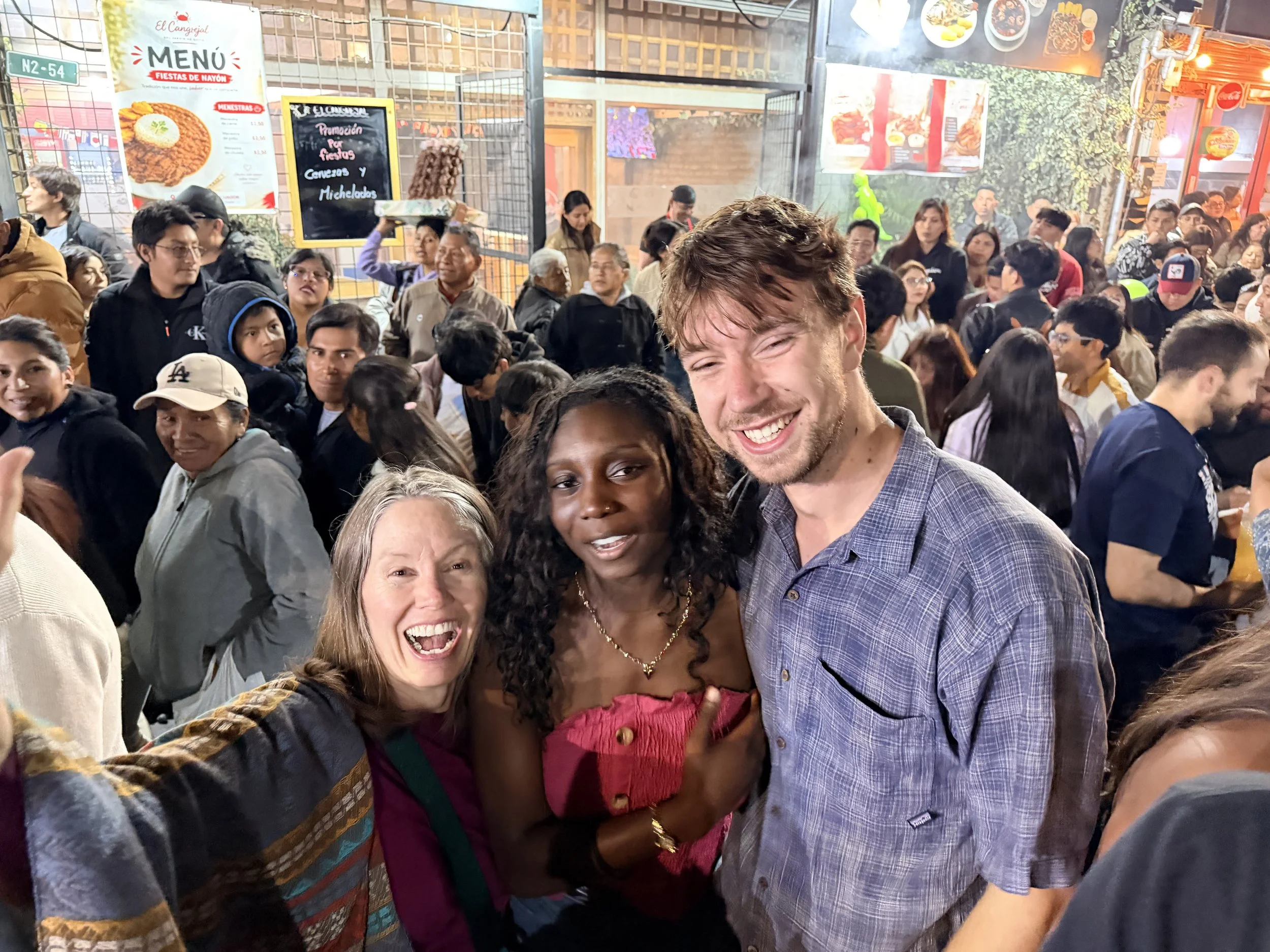
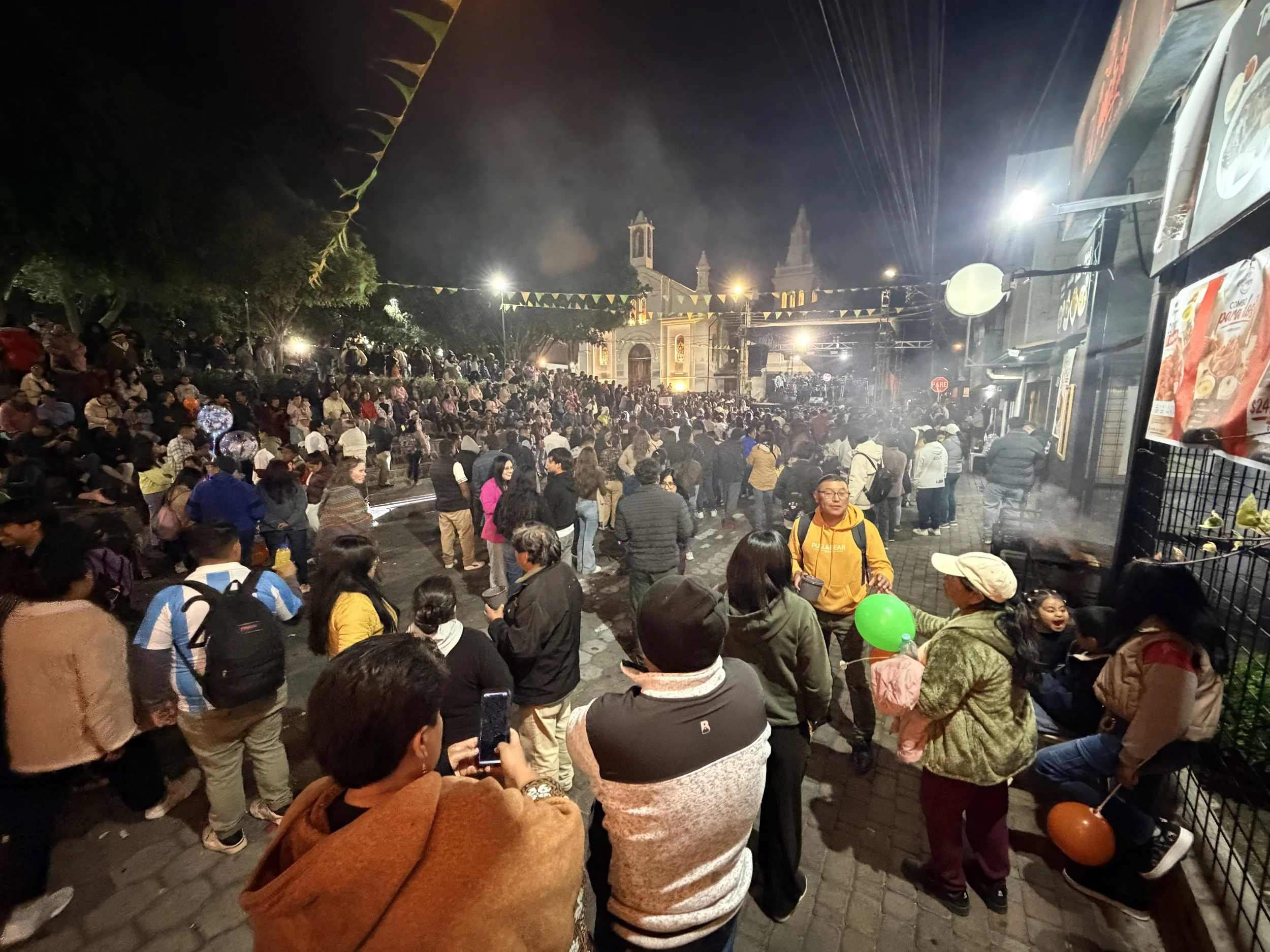
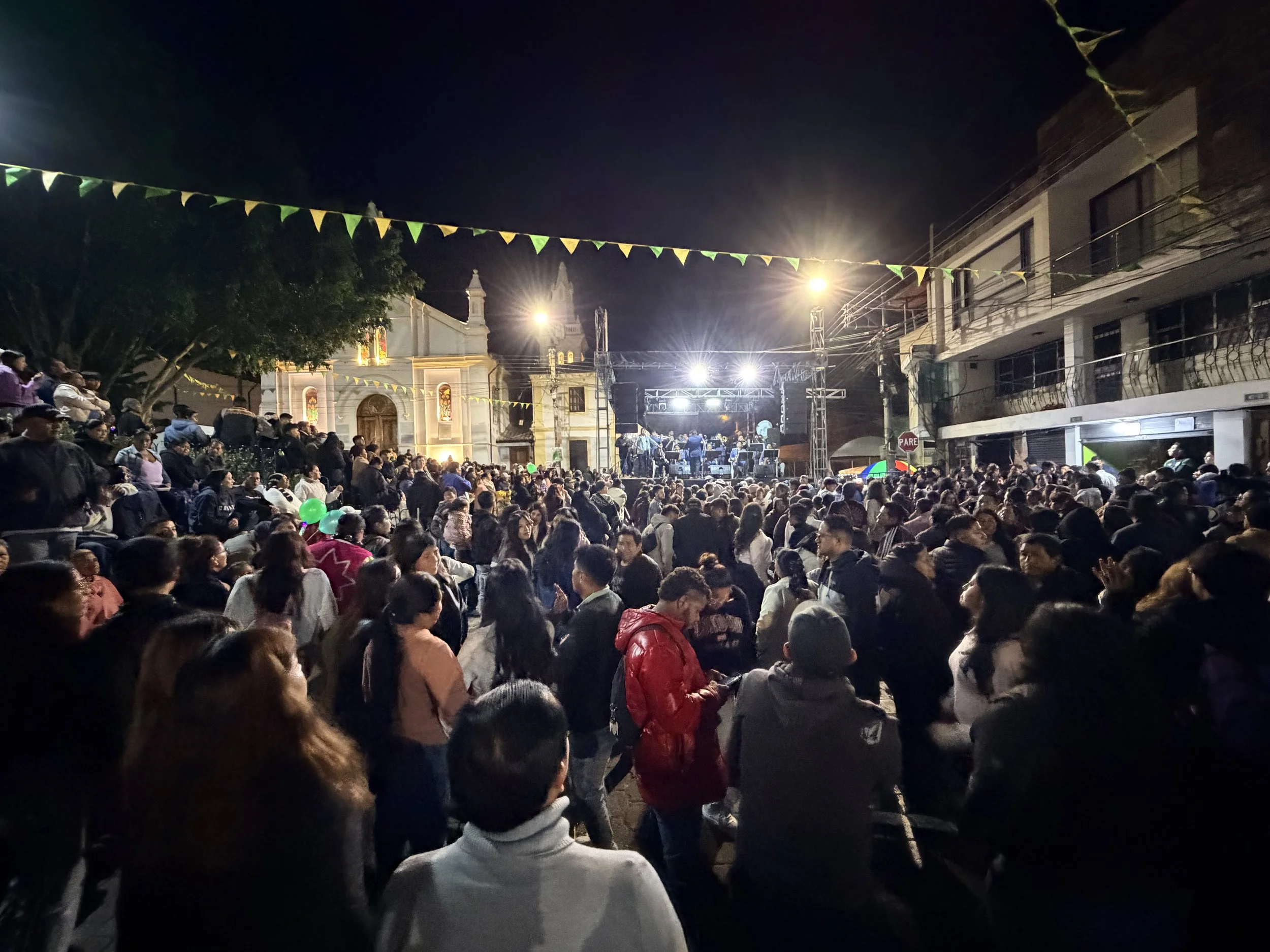
We finished off the week with a really fun street festival. The tradition is that you buy, for $1, a tub of homemade hot toddy that is similar to a spiked apple cider, but without the apple. Then you drink it out of that little plastic shot glass Jenny is holding. Everybody shares the same shot glass. Some random people bought it for us. A bunch of the young volunteers were there too, whooping it up. Oh to be young.
So, next week will be all about travel. I’m traveling 2½ hours north to the town of Ibarra with two other trainees to visit a volunteer who lives and works there while Jenny will be taking a 12-hour overnight bus ride to Loja, a city in the south of the country. We’ll get to see how volunteers live, work, and relate to their communities. And in a few short weeks we’ll be done with training and moving away from Quito and to communities of our own. We don’t know where that will be, but we will find out in week 8. Stay tuned!
And a special shout-out to our daughter, Ellie, who turns 25 years old today. We love you Ellie!

Is this just a reality TV show?
Dear Reader,
I’ve never been a big fan of reality shows. You know the classic setup: Producers take “fish out of water” contestants and put them in difficult situations where they have to work as individuals or as a team to achieve some objective they’re probably not prepared for. Then, at the end of the episode, some unfortunate soul gets voted off the island.
Well, I’m pretty sure Jenny and I have unwittingly signed up for starring roles in one.
Here’s the premise: Twenty-one gringos, most in their early 20s—but just for laughs, let’s add a Midwestern couple in their early 60s—are dropped into the homes of local families in a small pueblo in a small South American country and told to learn the language in just a few weeks. To distract them from that already daunting task, they’re given mind-numbing classes on history, personal safety, culture, theories of international development, natural disasters, kitchen fires, crisis management, the current political climate, food safety, how to treat in-grown toe nails, child protection, mosquito-borne diseases, and on and on and on and on and on.
Then, on top of that, in their fourth week they’re tasked with preparing, from scratch, four 40-minute workshops on topics like self-esteem, decision-making, and emotional control, and then presenting them—alone—to a room full of shy 14- and 15-year-old kids, all in broken Spanish. All the while, the Ecuadorian staff (the show’s judges?) watch from the sidelines, offering what can only be described as confusing feedback and thumbs ups.
And, we are only in training! When we finish in a month or so we will move to our permanent site. Where will that site be? We don’t know! It could be low in the Amazon basin or high in the Andes mountains. The producers think it will be fun to keep that information secret until the “big reveal” in the 8th week of the production.
And two of the contestants have already left the show. One twisted her knee and didn’t feel she could complete her rehabilitation in-country. The other had gotten married just a week before we left the States and decided she missed her new husband.
Really?
And as if all that weren’t enough, we’re living at 9,300 feet above sea level, and somehow I’ve managed to lose 14 pounds in just one month through a combination of bouts of dehydration, weekly diarrhea, and a day with a 101.9 degree fever. Are we having fun yet?
So yes, it’s been quite a lot, but despite all that, it’s been an amazing, time. We are surrounded by our fellow Peace Corps Trainees everyday, a truly fine set of young people you’d be proud to call your own. Our Ecuadorian host family is a joy to be with, always interested in our day, eager to hear and share stories, and ever patient with our poor Spanish. And we ARE speaking a ton of Spanish every day. Sometimes it feels like I don’t speak the language at all and other times it flows easily, but as they tell us, “poco, poco.”
They say that the training is the hardest part of the Peace Corps experience and we are now ½ way through. Perhaps it’s a little like basic training in the military. That’s probably a bad analogy for a number of reasons, but my thought is that they are trying to throw us into the deep end of the pool to see if we can save ourselves from drowning. Us making fools of ourselves is just a happy by-product.
So we continue on, trusting the process and knowing that this too shall pass, not wishing away the days, and knowing that we are learning and growing from every challenge we face. Which is one of the main reasons we are here, to continue learning about the world, ourselves, each other.
Thanks for subscribing to our blog. It makes us feel a little less disconnected knowing that people are interested in what we’re experiencing here. Please feel free to share the link with anyone you think might enjoy following along.
Am I an NBA prospect?
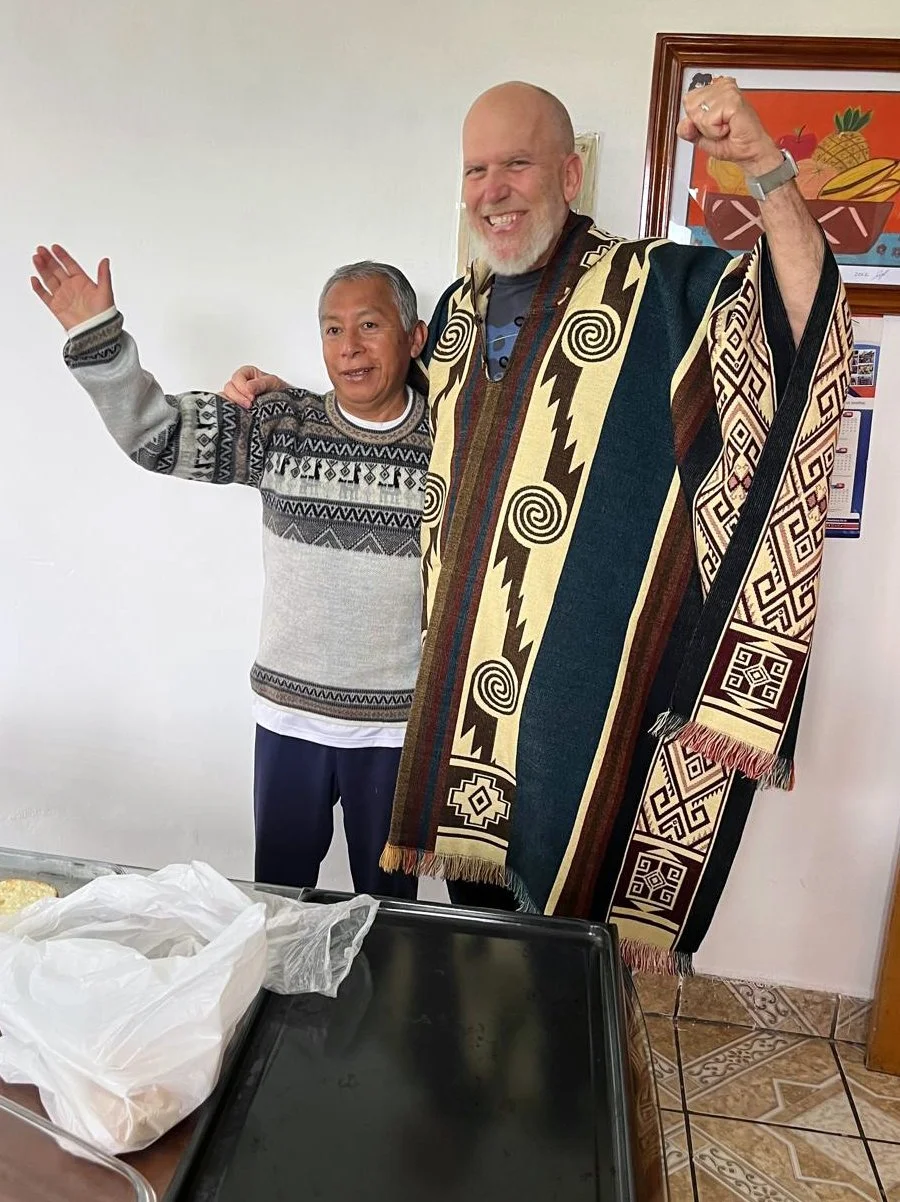
My friend, John, after seeing some of my photos, suggested that I join an over 50 basketball league, saying I would dominate on the boards and control the paint. Perhaps I would get a glimpse of what it’s like to be an NBA player like 7’4” Victor Wembanyama, but I would probably just end up end up breaking a hip.
Anyway, that’s a cute photo of my Ecuadorian “dad”, (I call him my papasito, but his name is German-like the language) and me on Father’s Day. The kids in the house gave German the sweater he’s wearing and me the poncho. So sweet of them!
Jenny and I made hamburgers and Five Cheese Pasta to celebrate the day. We are the 14th PC Volunteers that the family has hosted, but we are the only old ones who know how to cook, so we’ve been having fun swapping recipes and turns cooking.
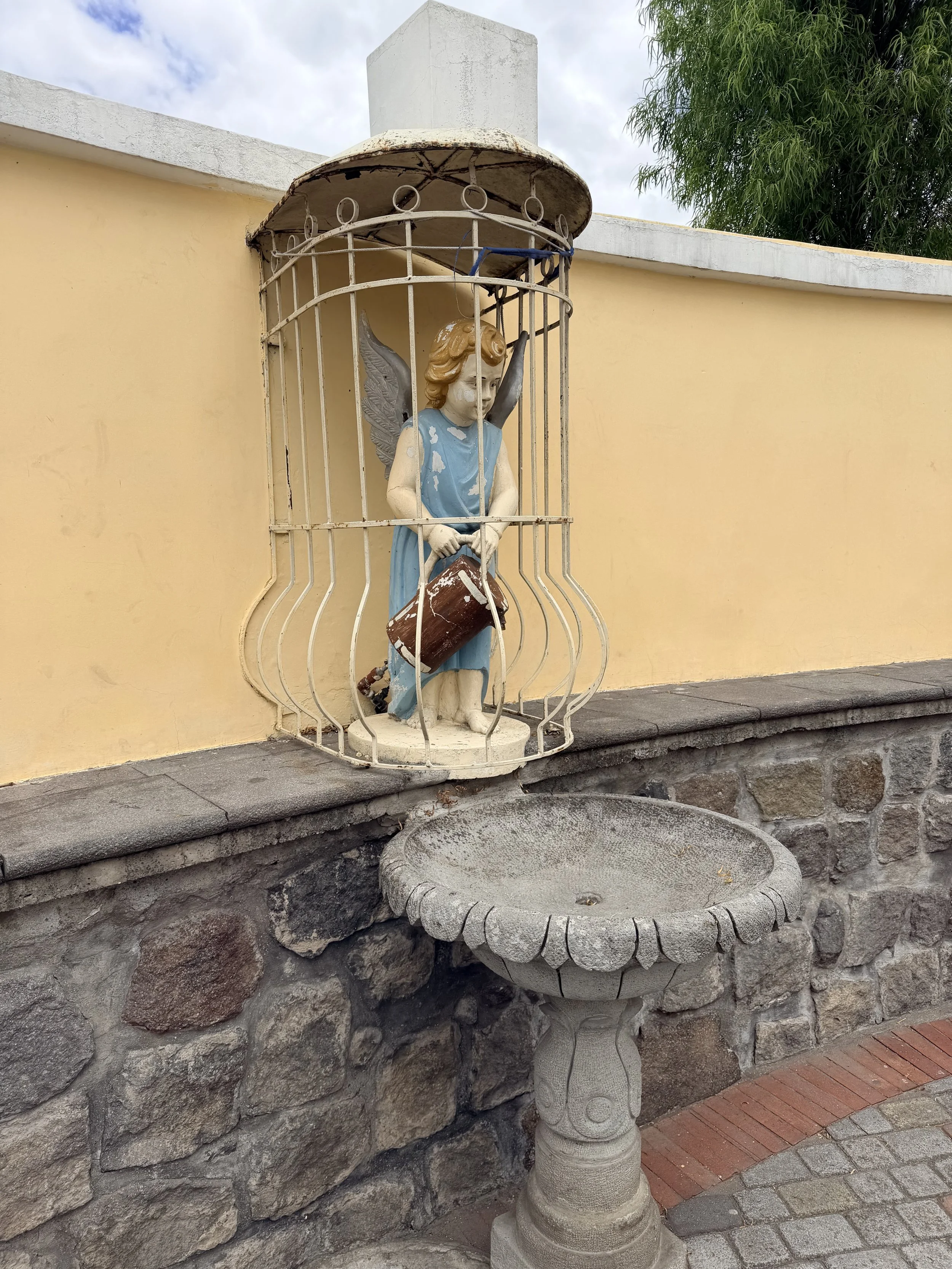
This poor little angel must have broken some rules.
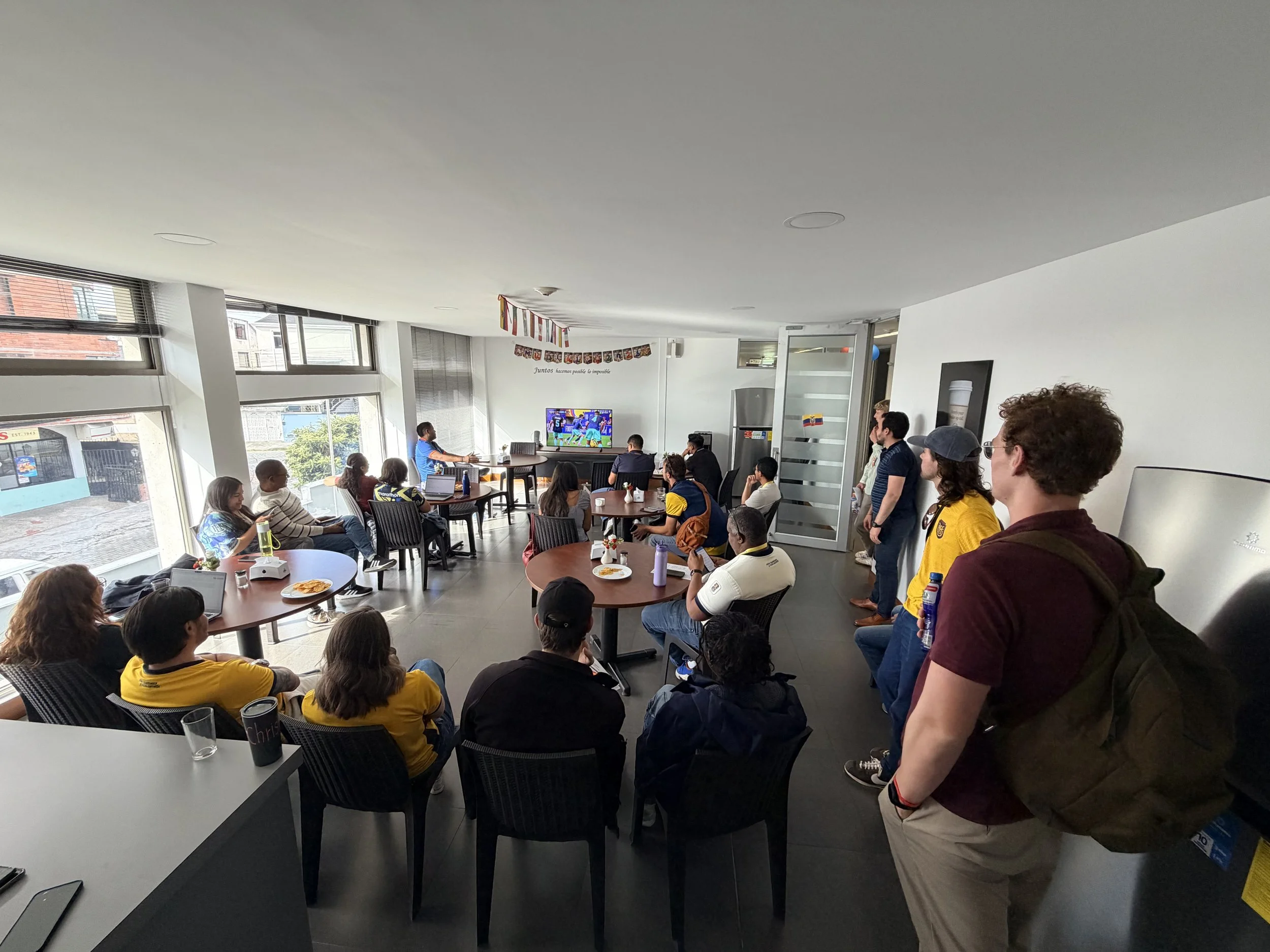
Volunteers and PC staff watching the Ecuador/Germany World Cup game.
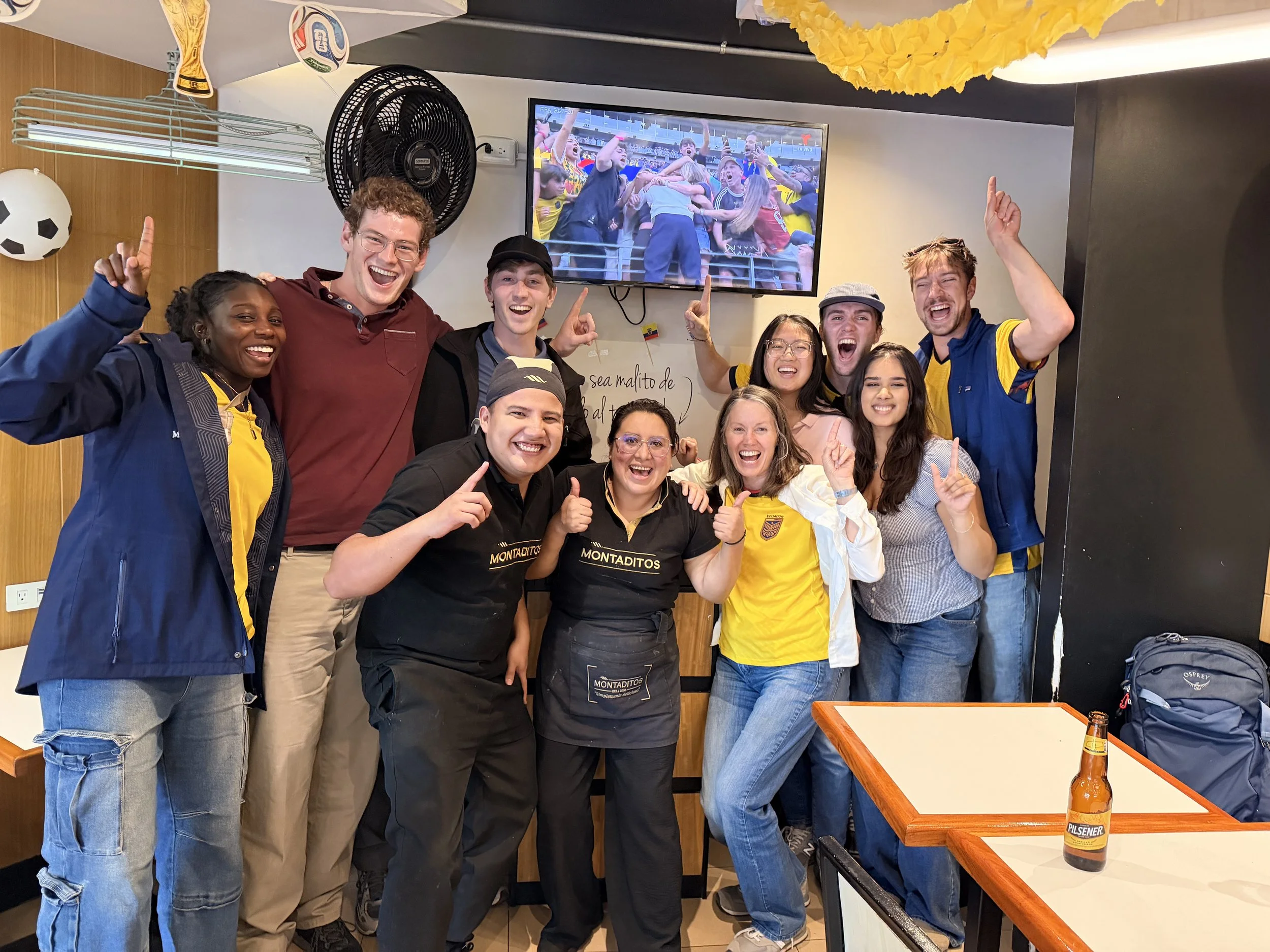
We found a tiny little restaurant that had a TV and beer where we watched the second half with the restaurant staff. Ecuador beat Germany, 2-1 and advanced out of the group stage. It was such a big deal that the Ecuadorian president gave the country the day off the next day.
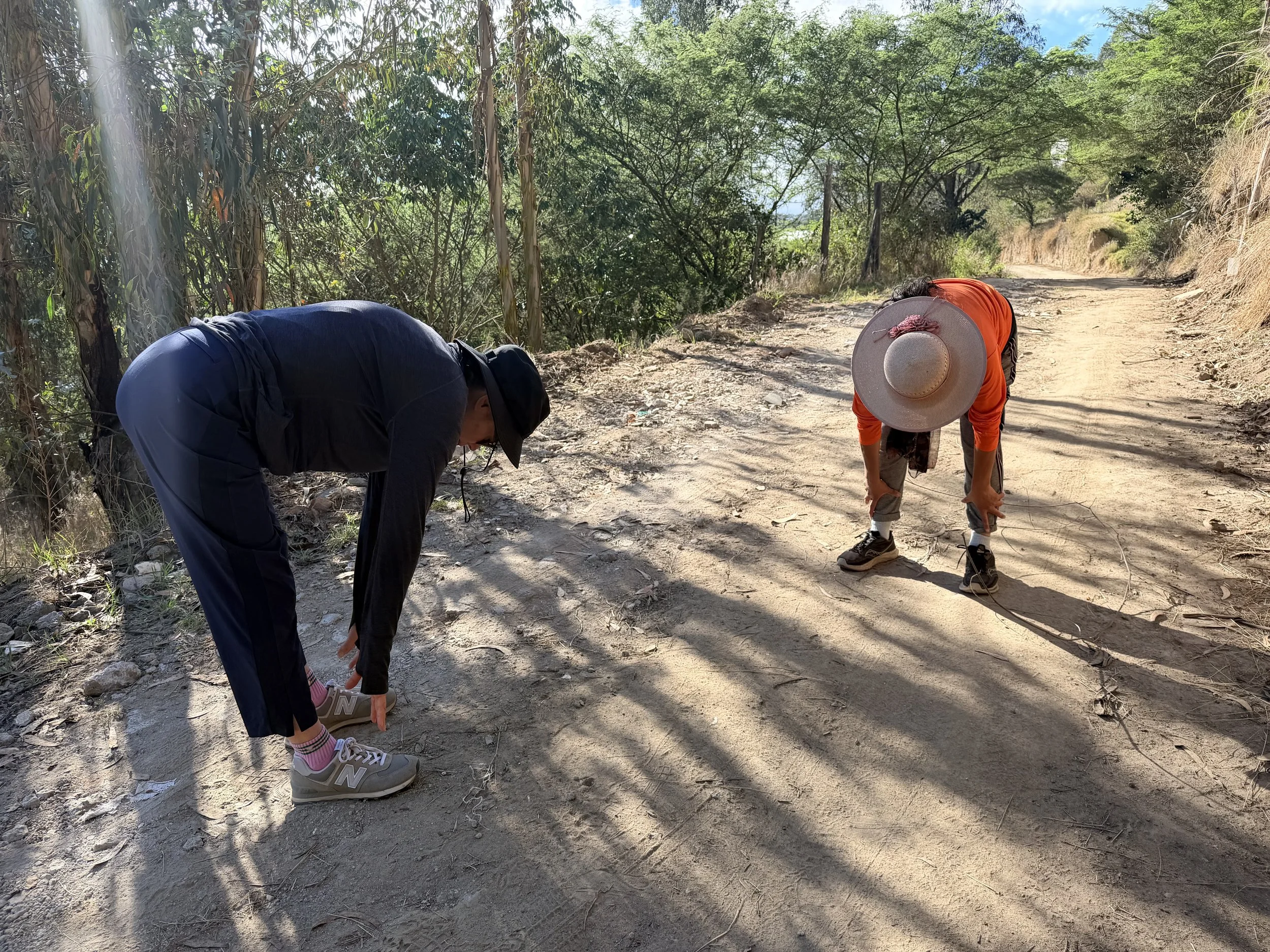
We go on a 2.5 hour walk with Marcia every Saturday morning. At the ½ way point we stop and do exercises then climb the mountain back into the town of Nayón. German has lived in this little town all his life and was born into a house with 9 kids and no electricity. His father was a taxi driver (neither German nor Marcia have ever driven a car) and his mother sold fruit on the street, yet 4 of the 9 kids were able to graduate from university.
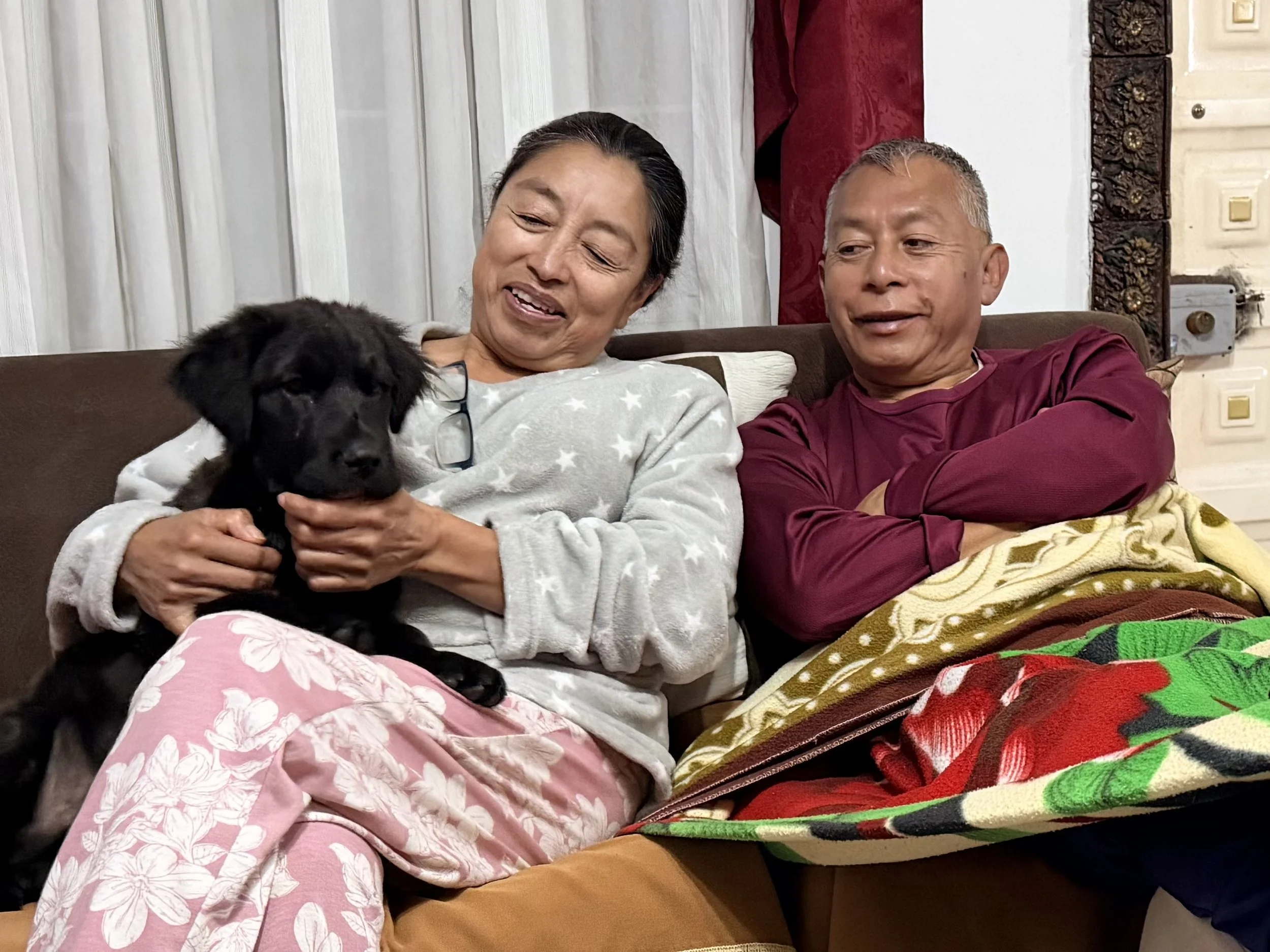
They have shown us so much kindness and we feel super lucky to have landed in their home. We spend our evenings cooking, talking, and watching World Cup games.
Love to all from Ecuador! Thanks for reading.
Dogs!
And more…
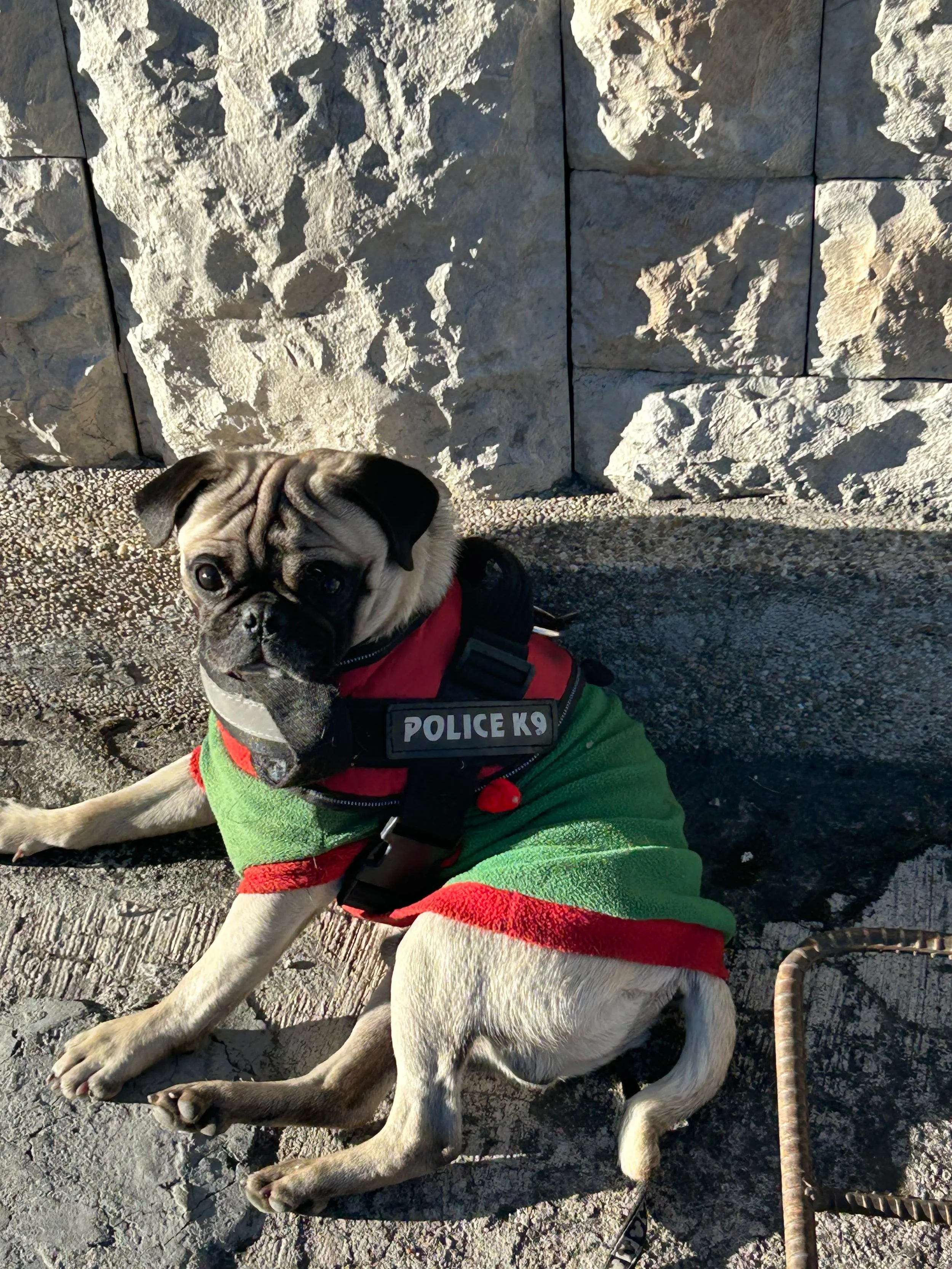
If you know me, you know I’m lukewarm on dogs, but come on—how can you not love a dog in a shirt? It’s funny that people think the dogs will be cold. It never drops below 50 degrees, and the day can be 70 degrees.
You’ll notice that most of these dogs are just wandering around on the street. I’m only taking pictures of the ones appropriately dressed, but there are SO MANY STREET DOGS! Apparently, most of them have homes they go to at night, but their owners just let them out during the day to have at it—dodging cars, playing with their friends…seems like a good life.
The problem is that all the untended dogs do their business EVERYWHERE—especially on the sidewalks! So humans need to be constantly vigilant not to step in it. I see it as a problem, but Ecuadorians seem to roll with it. The only real solutions would be to keep the dogs under control, or have the municipality clean the streets, neither of which seem to be happening.
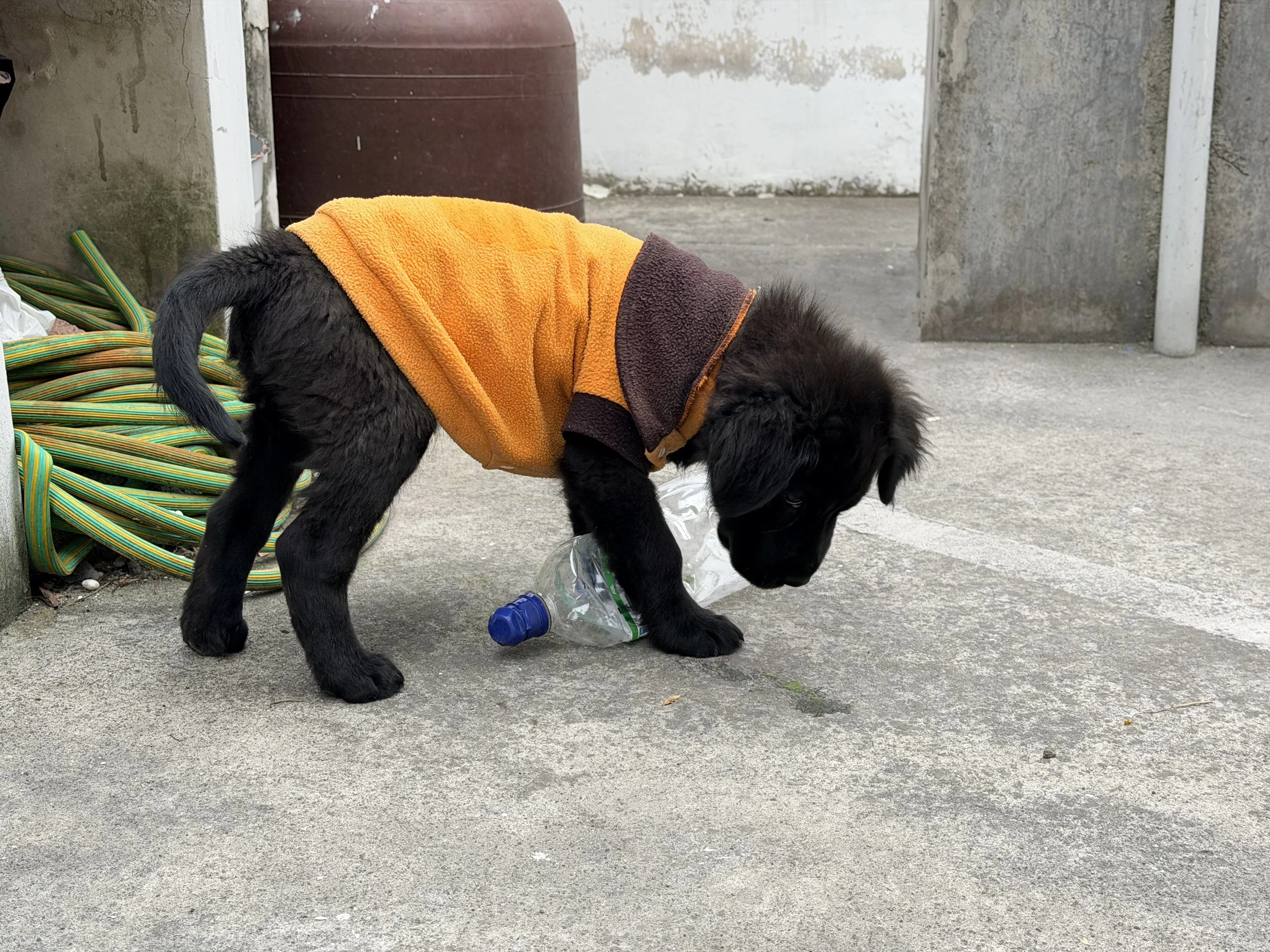
This, of course, is Apollo, our dog. He’s twice that size now. He stays home and is not allowed to go out into the street.
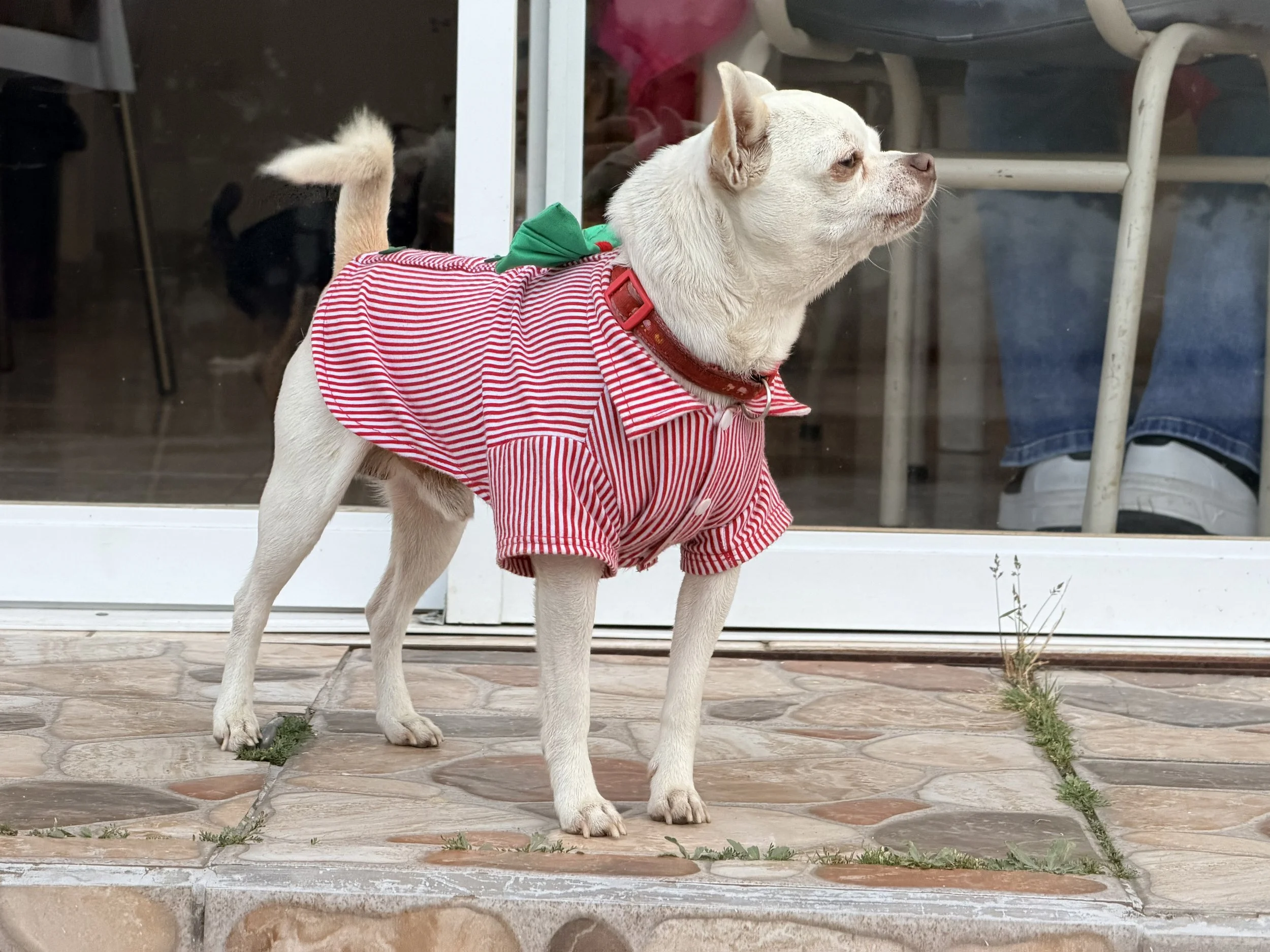
This is a brave little guy.
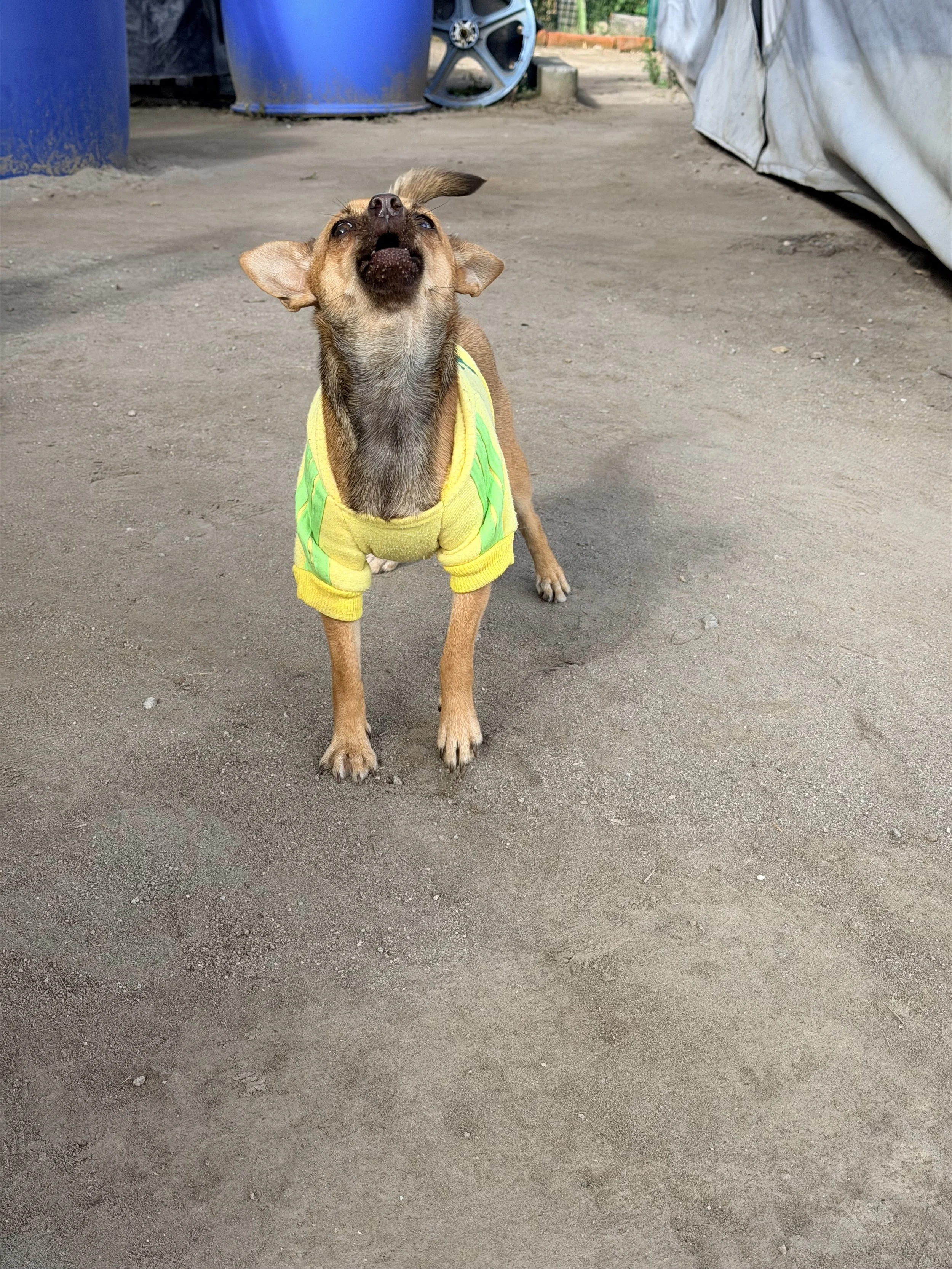
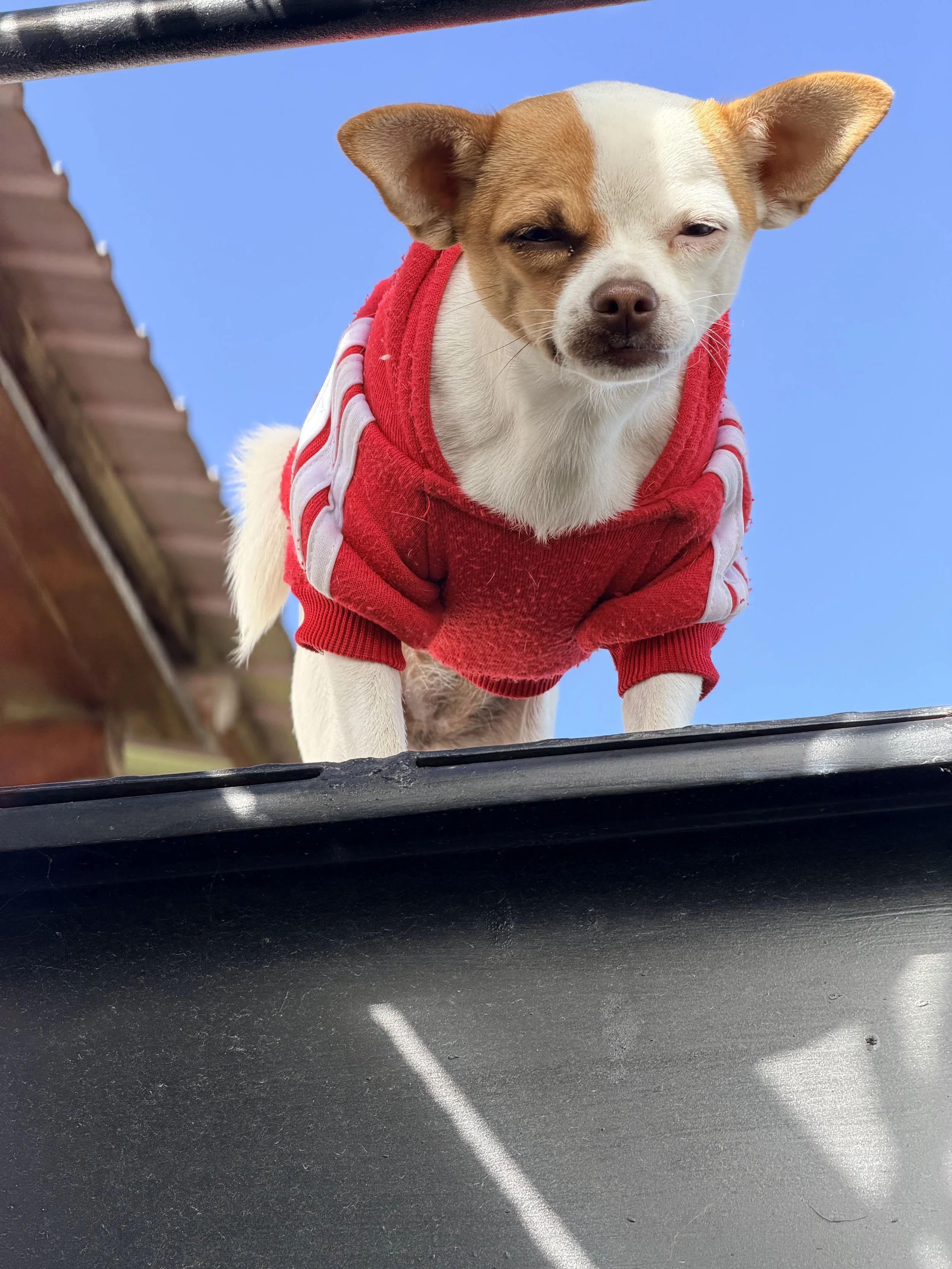
This guy is giving me the evil eye.
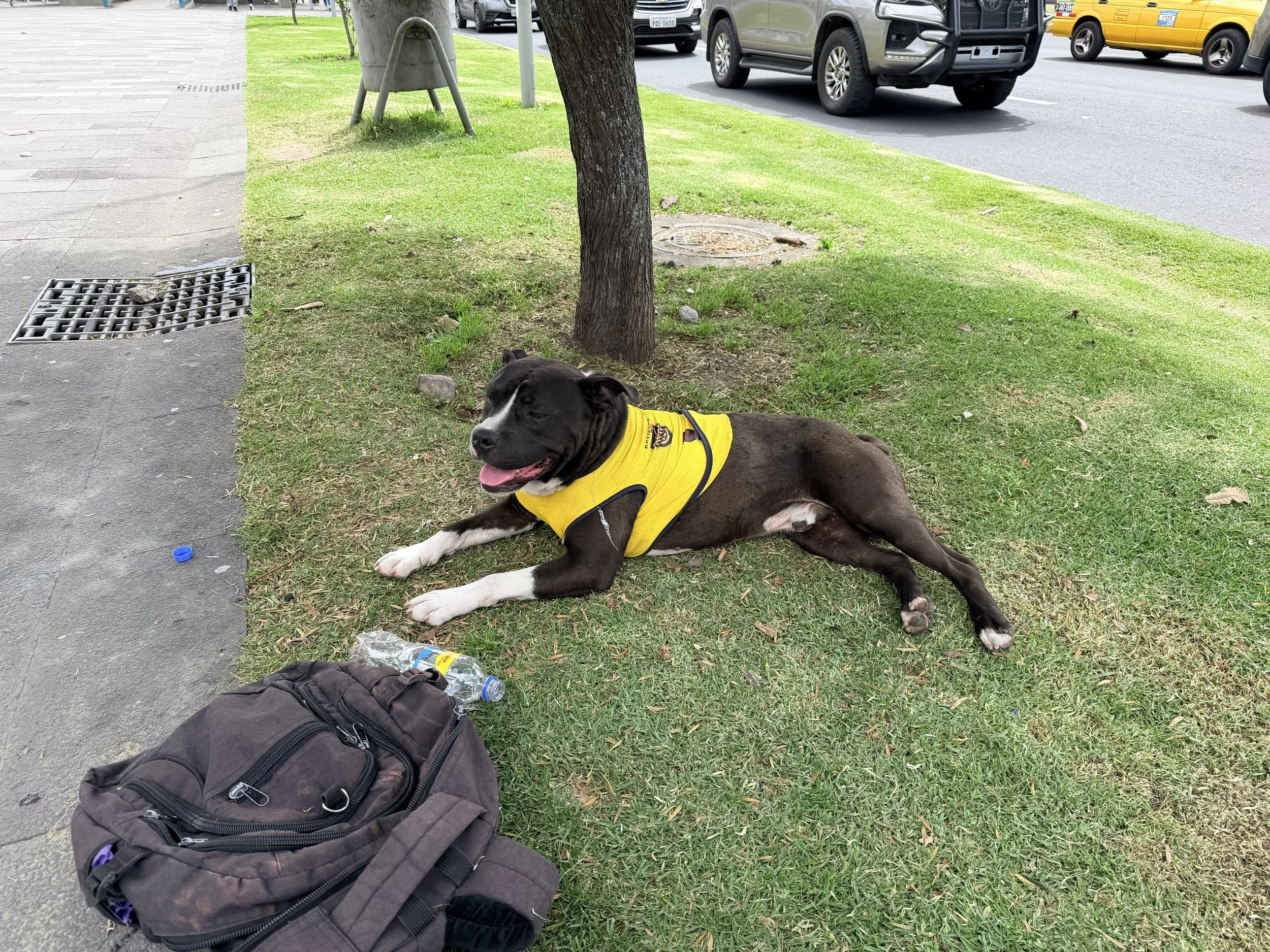
This one is sporting the team jersey for the Ecuadorian football team.
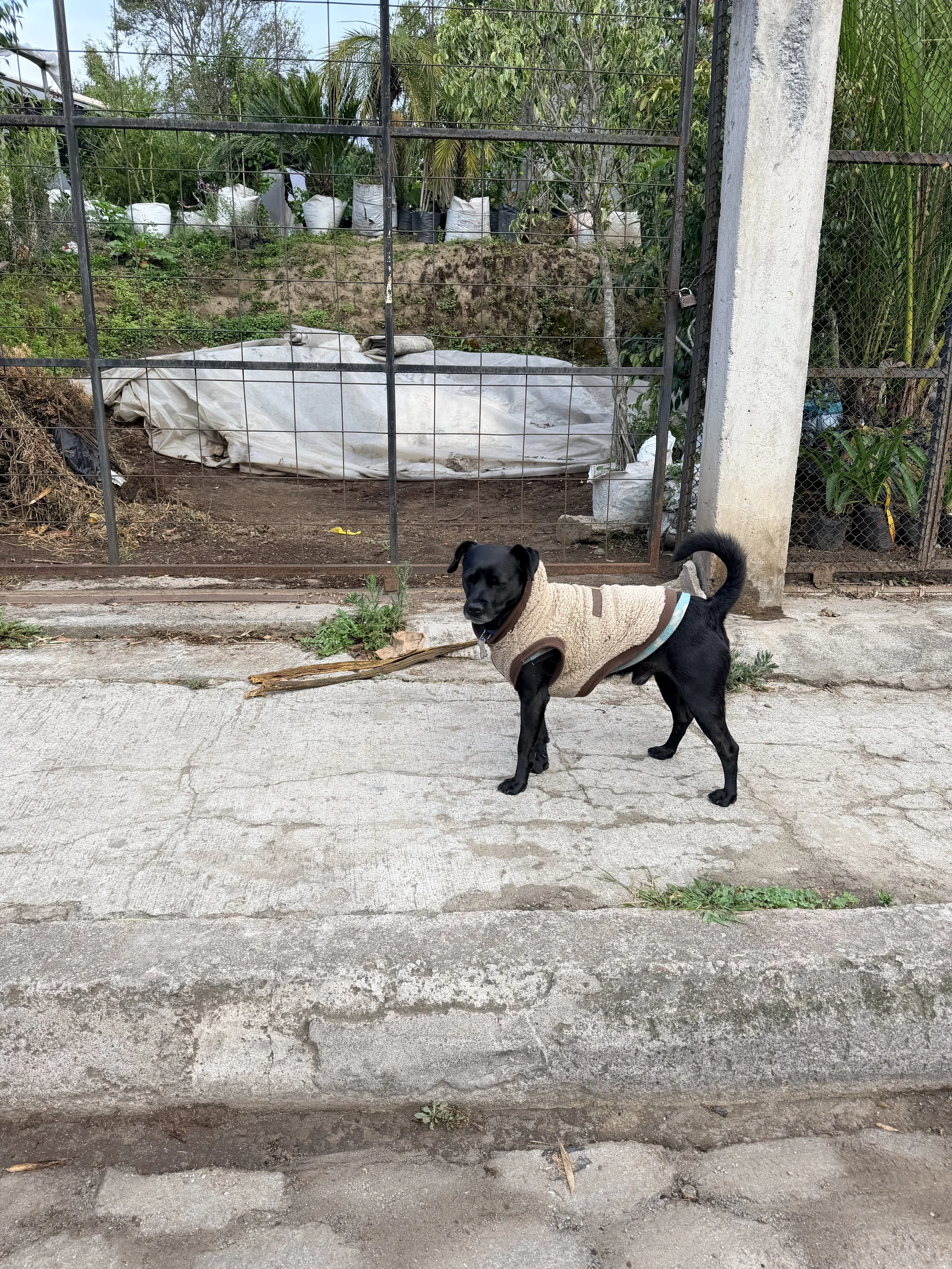
He had two shirts on.
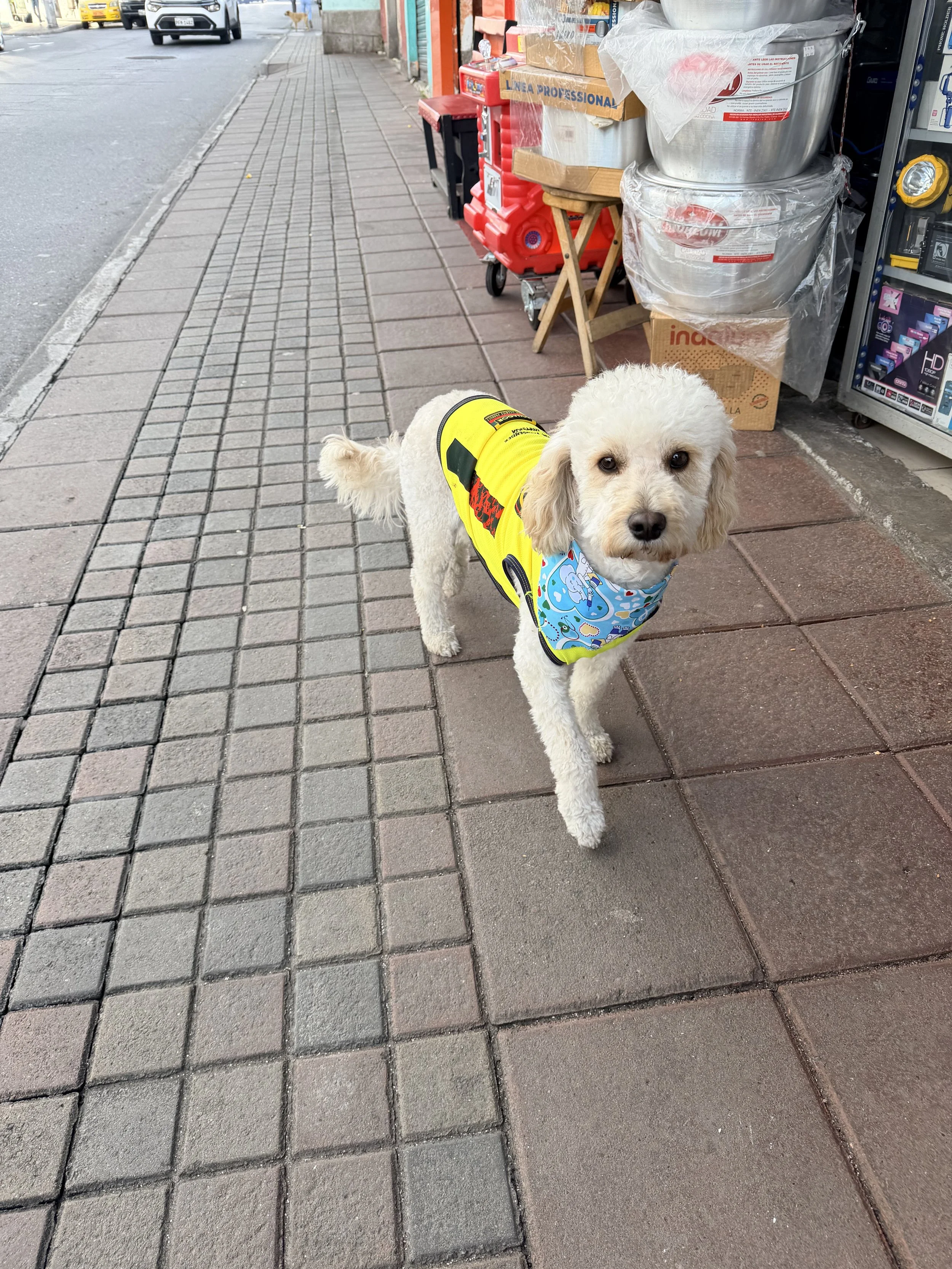
Beyond taking photos of all the dogs, we’ve been super busy. We’re in training from 8–4 every day. The Peace Corps office is only about 2.5 miles away, but the bus commute takes about 45–50 minutes and costs 35¢. So why not walk? You have to climb a mountain and the road has no sidewalk, so it’s really not an option.
Ecuador adopted the U.S. dollar in 2000 to combat inflation that had reached 96% the year before. German told me stories of prices rising every week, one week you would get 8 pieces of bread for 1,000 Ecuadorian sucre, next week you would only get 7 for the same price. It was terrible. “Dollarization” has been very effective at curbing the inflation rate. The current rate is less than 1%.
Our Peace Corps training is a daily mix of personal safety, health care, SPANISH!, Ecuadorian culture, theories of sustainable development, workshop design methods, role plays, acronyms on top of acronyms, etc. Honestly, it feels like we’ve enrolled in a master’s program in international development. We get home exhausted every night. I’m currently freaking out because in a week I have to present a 40-minute self-esteem workshop to a class of 15-year-olds. It has to be 100% in Spanish, and I have to create all the content. Trial by fire, I guess.
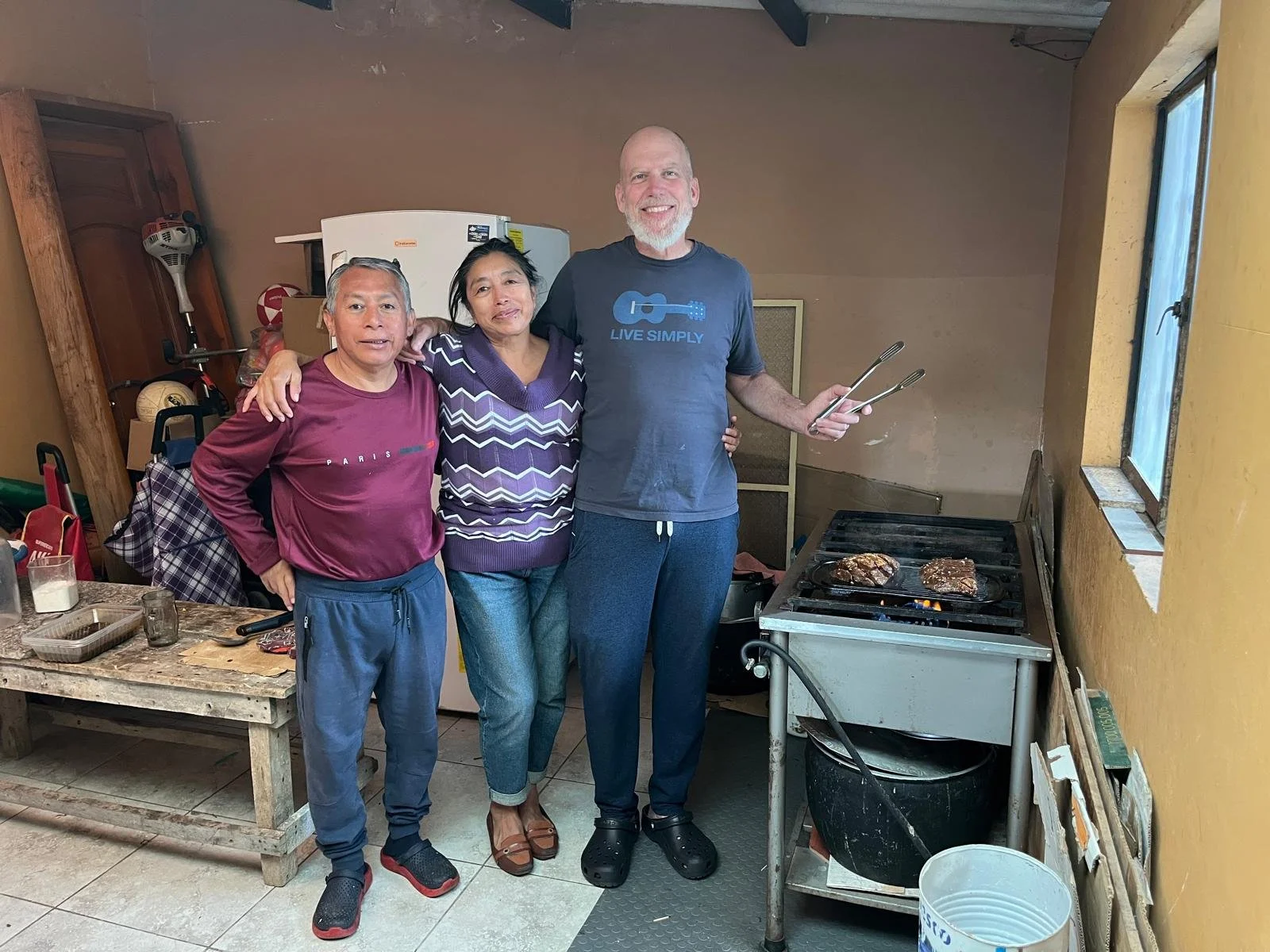
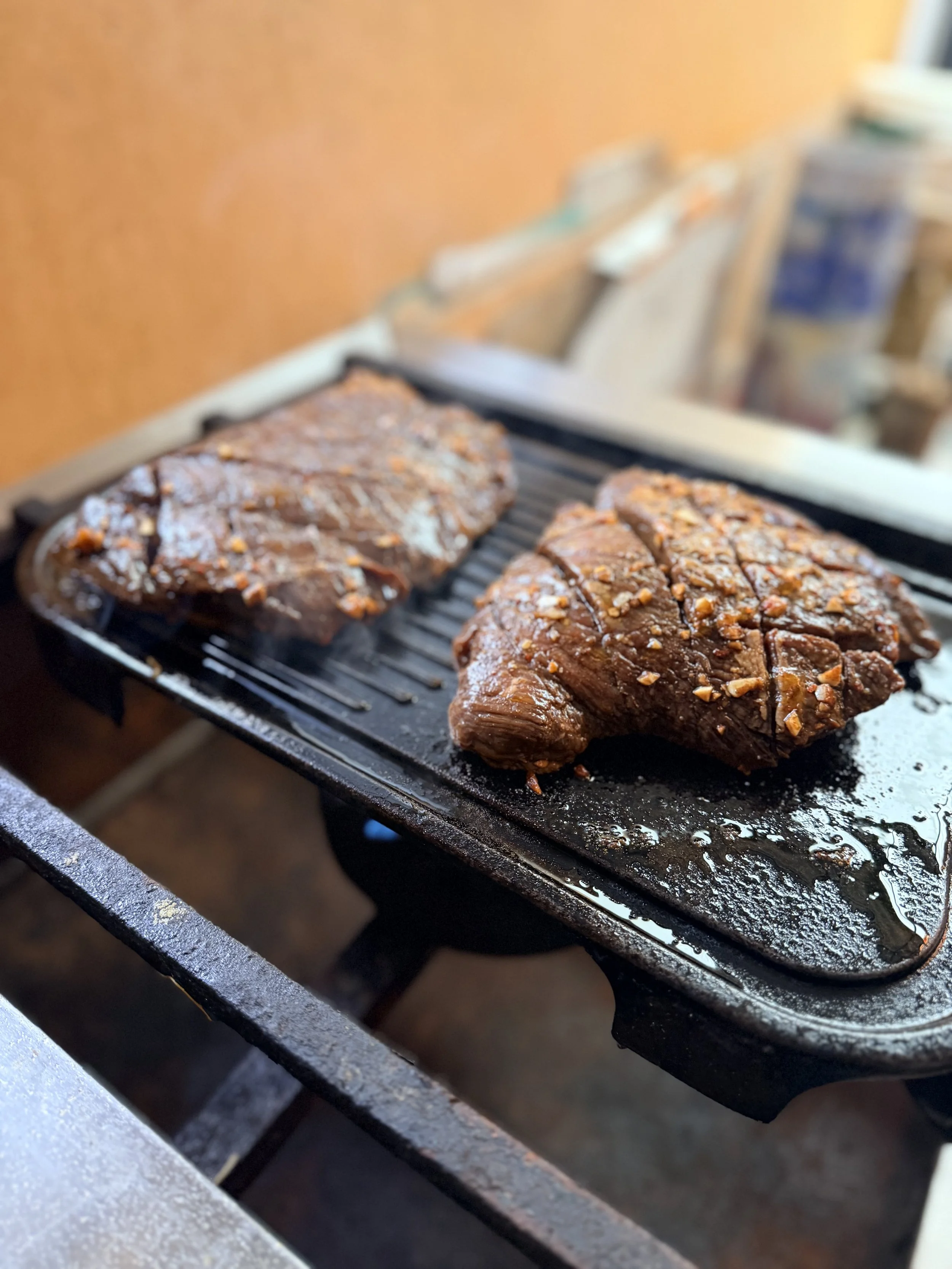
We made a flank steak dinner for the fam. It was delicious, but the cut of beef was super tough. And, by the way, this is not their real kitchen, just an extra stove in a storage space behind the house. The house is pretty nice and very comfortable. Jenny and I have a queen-sized bed and our own bathroom. Some other volunteers came by and were envious of our comfortable environs.
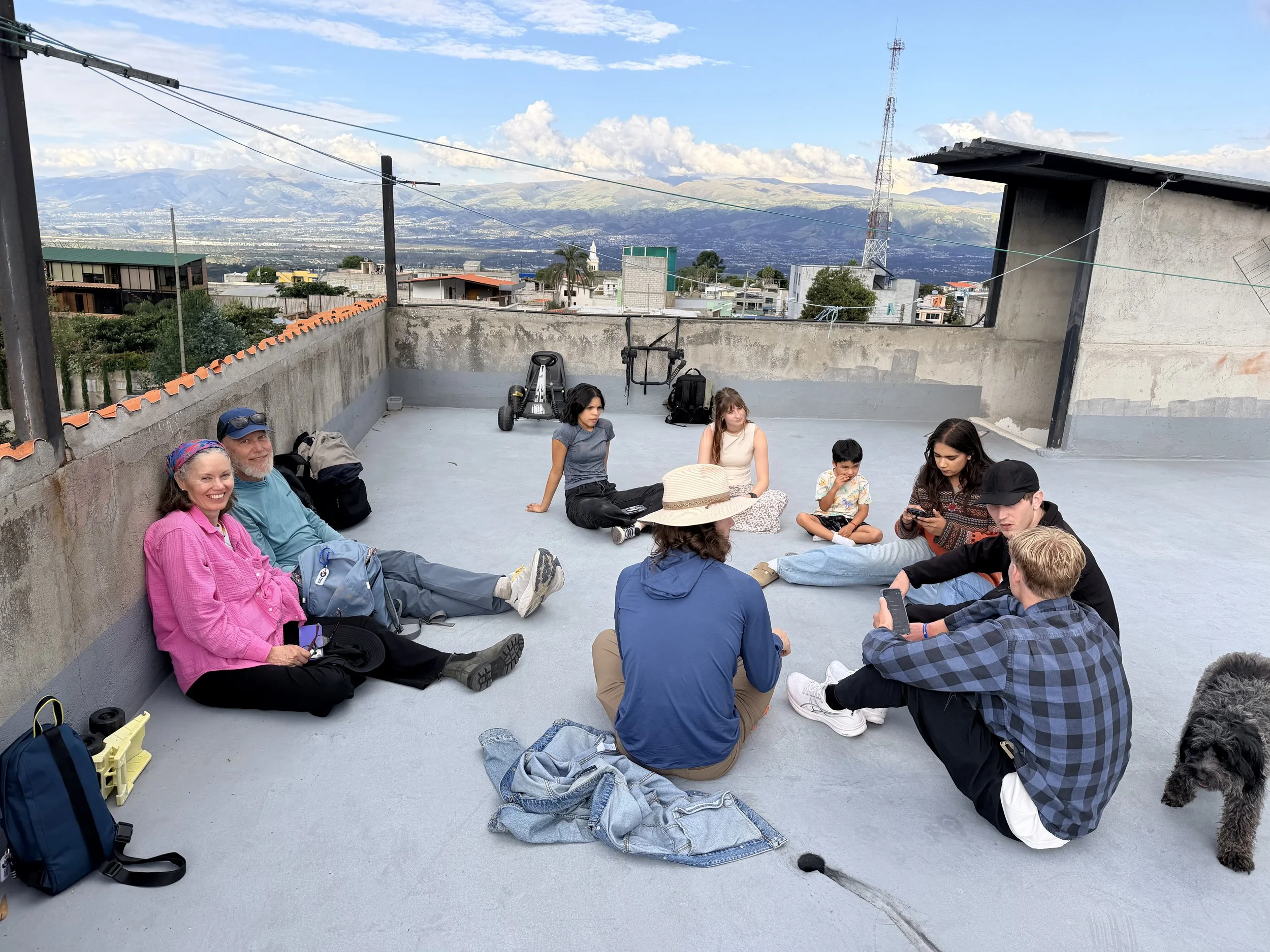
One of our young friends has a rooftop deck where we gathered one night. It’s crazy that you can see 20,000 foot peaks from our houses.
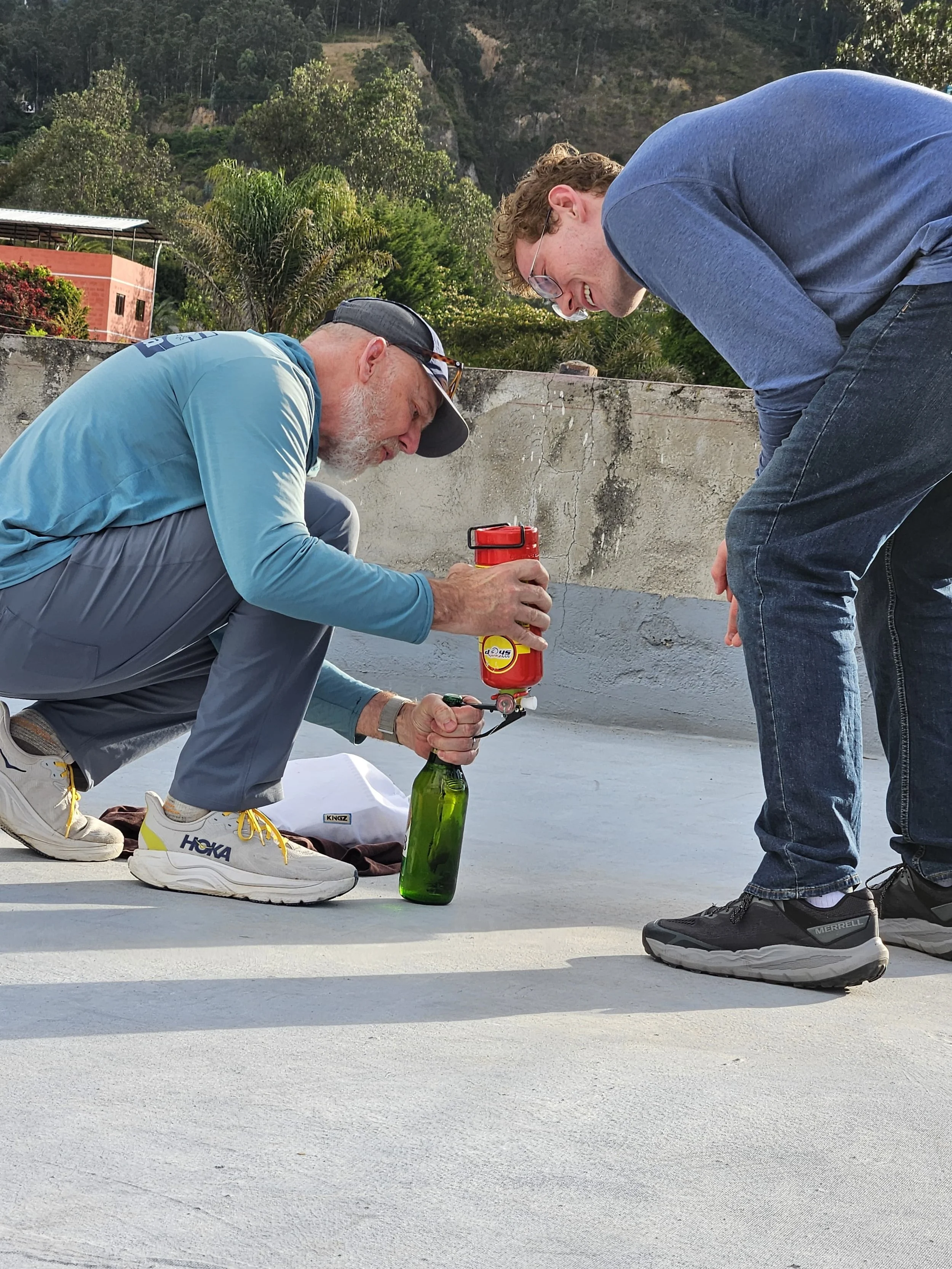
The PC issued all the volunteers a fire extinguisher. I put it to good use by showing Zander how to open a beer bottle when you don’t have an opener. These kids have so much to learn…
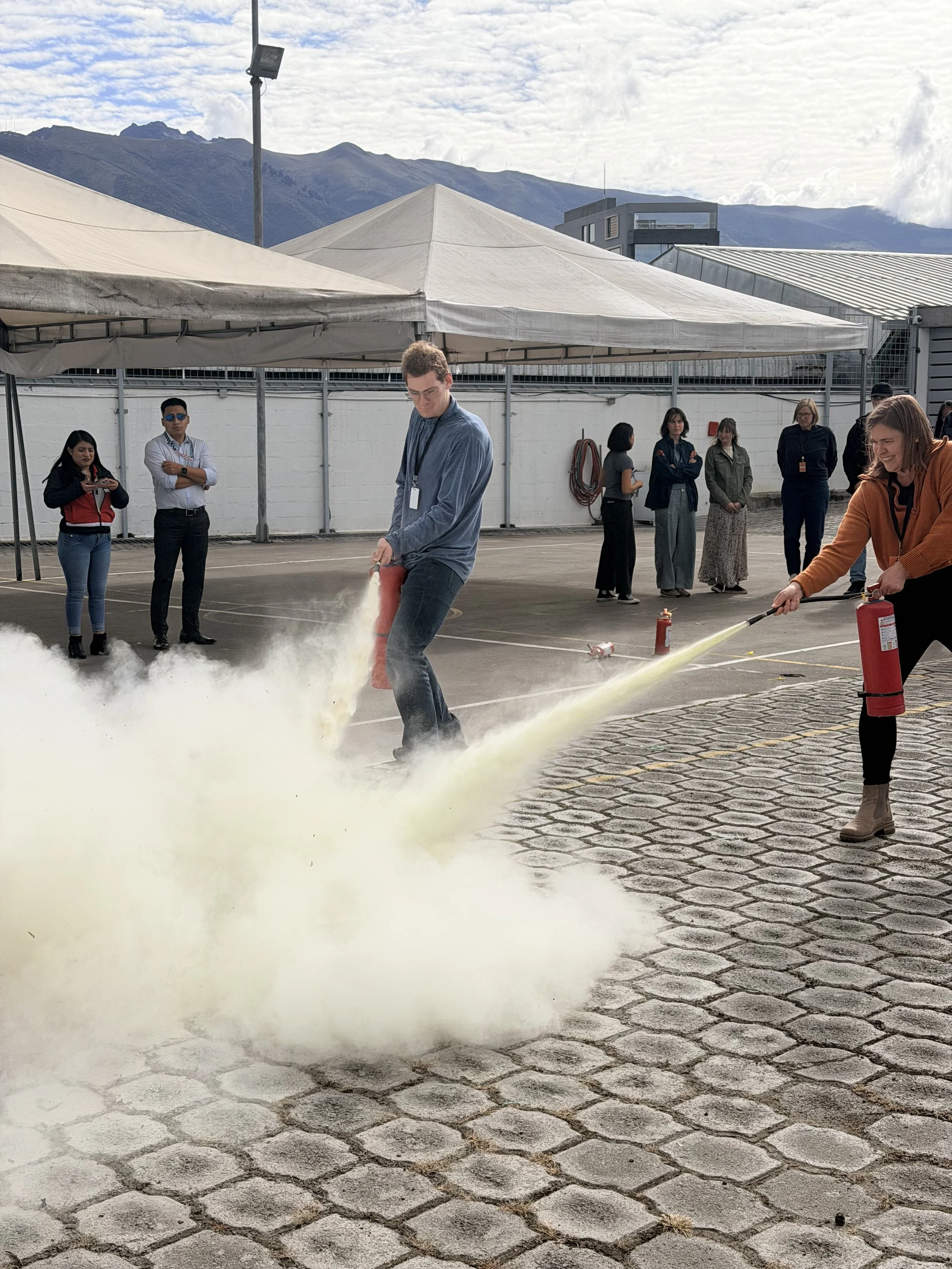
This is Zander and Marlee earlier that day learning how to put out a kitchen fire should one occur.
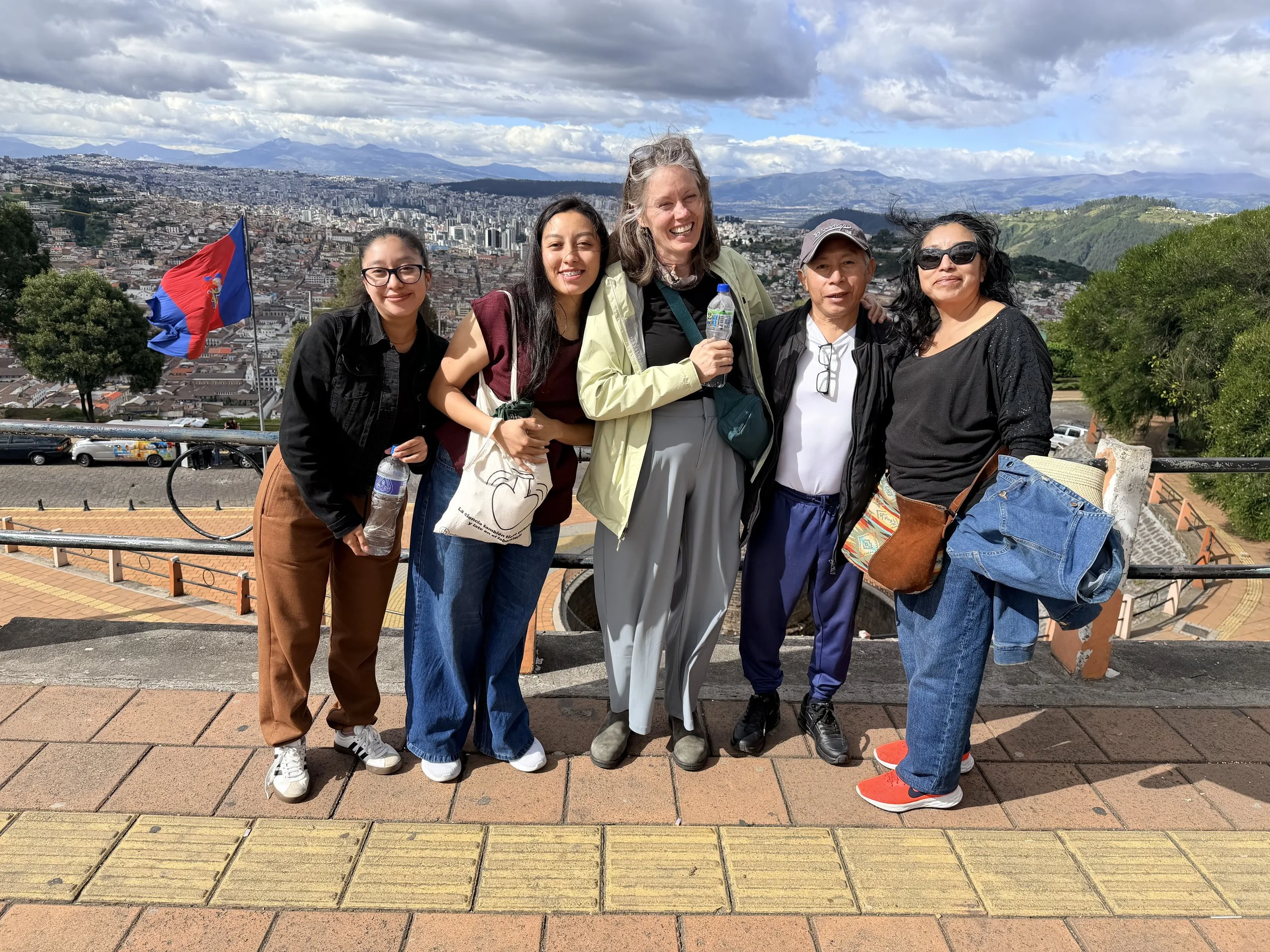
The family took us out on an excursion to see a bit of Quito. From left: Dyana (22 and a bio-tech student), Pamala (25 and working as a clinical psychologist), sweet Jenny, German (65 and a retired architect), and Marcia (56 and our “Host Mom”). We are the 14th volunteers they have hosted.
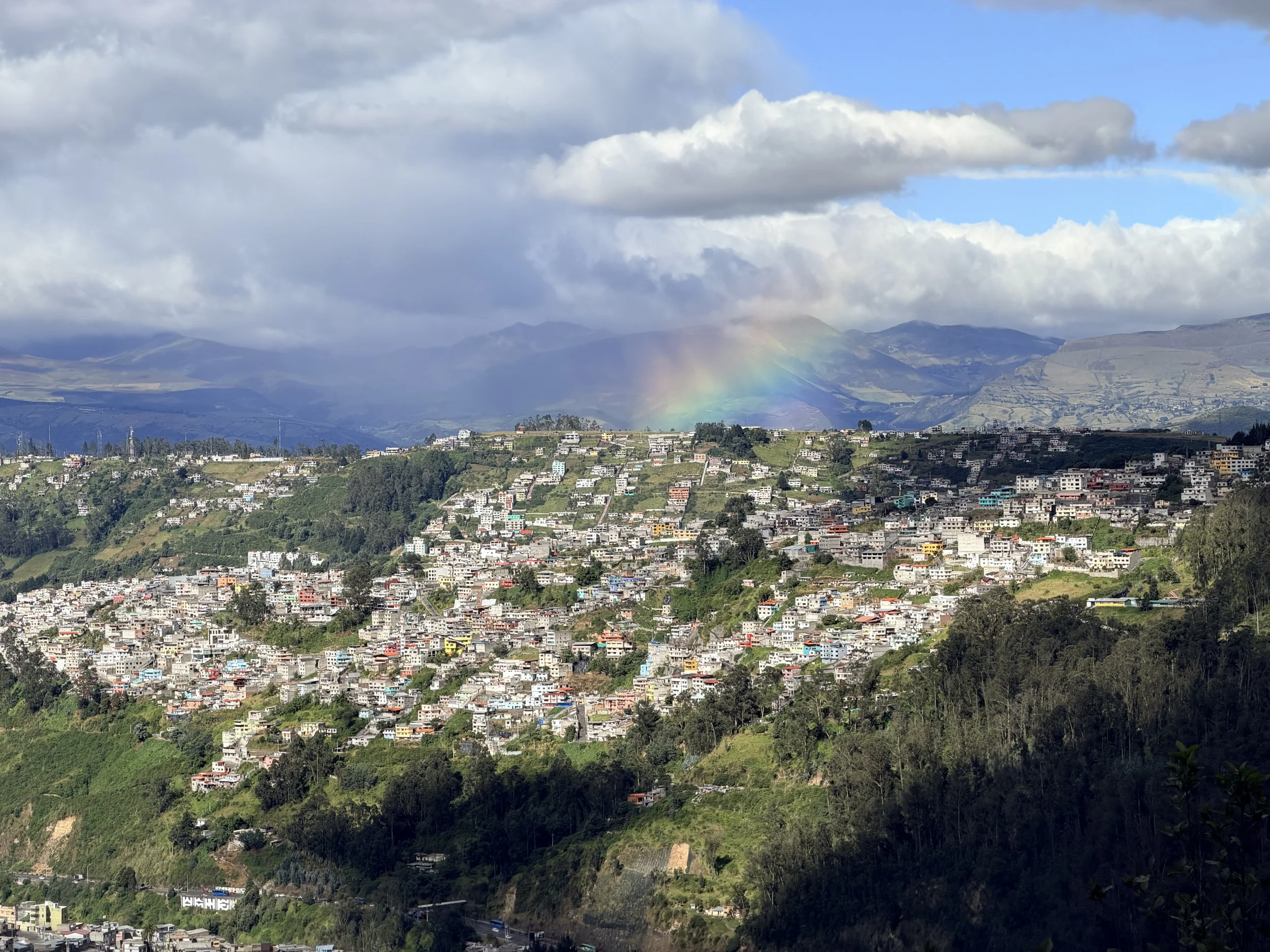
A view of Quito which is the second highest big city in the world, behind LaPaz, Bolivia. We are almost twice as high as Denver, Co, known as the “Mile High City.”
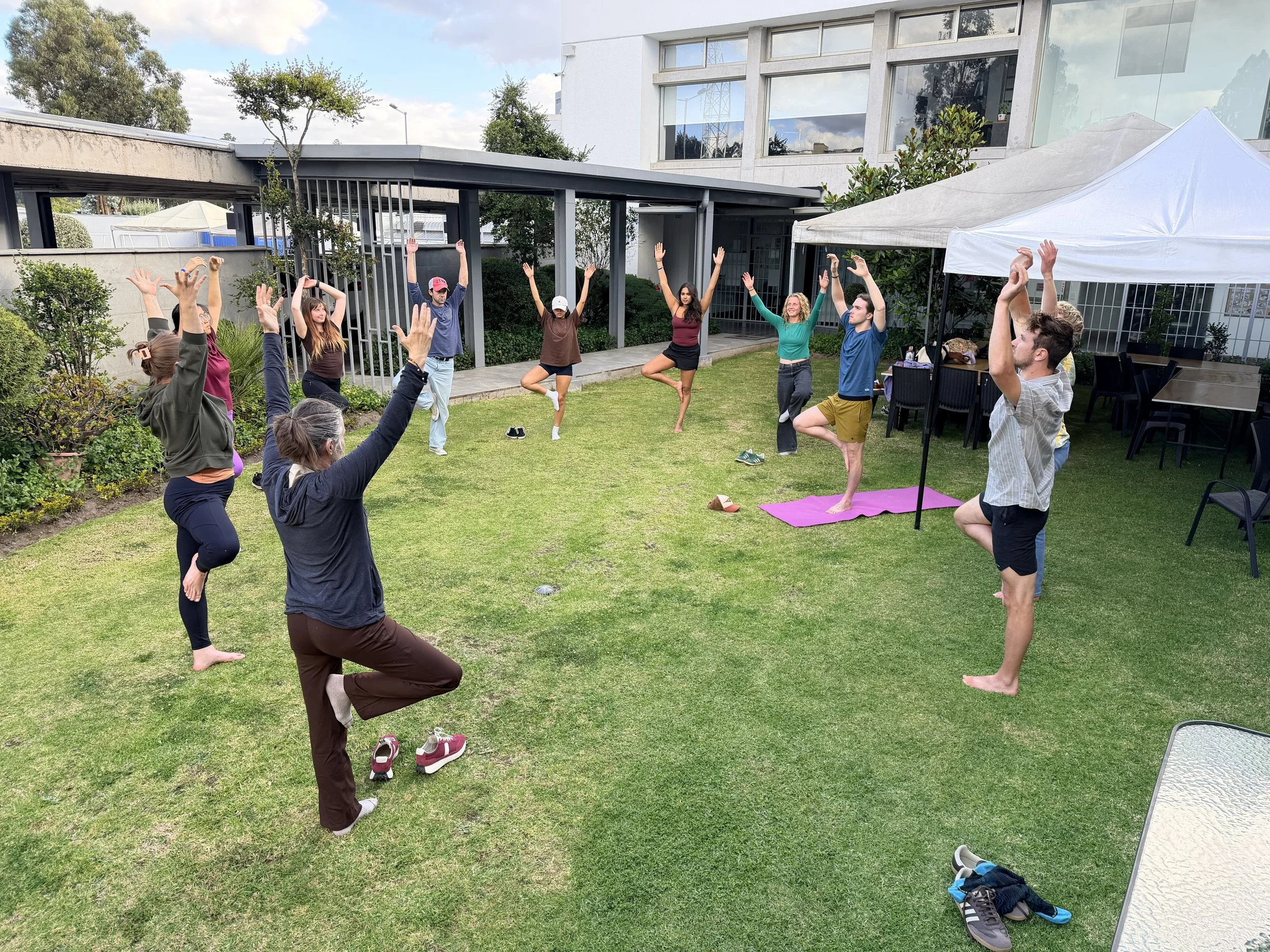
Some of the volunteers gathered for a yoga class after sessions ended. Marlee (next to Jenny) is a certified instructor and led us all in a wonderful practice.
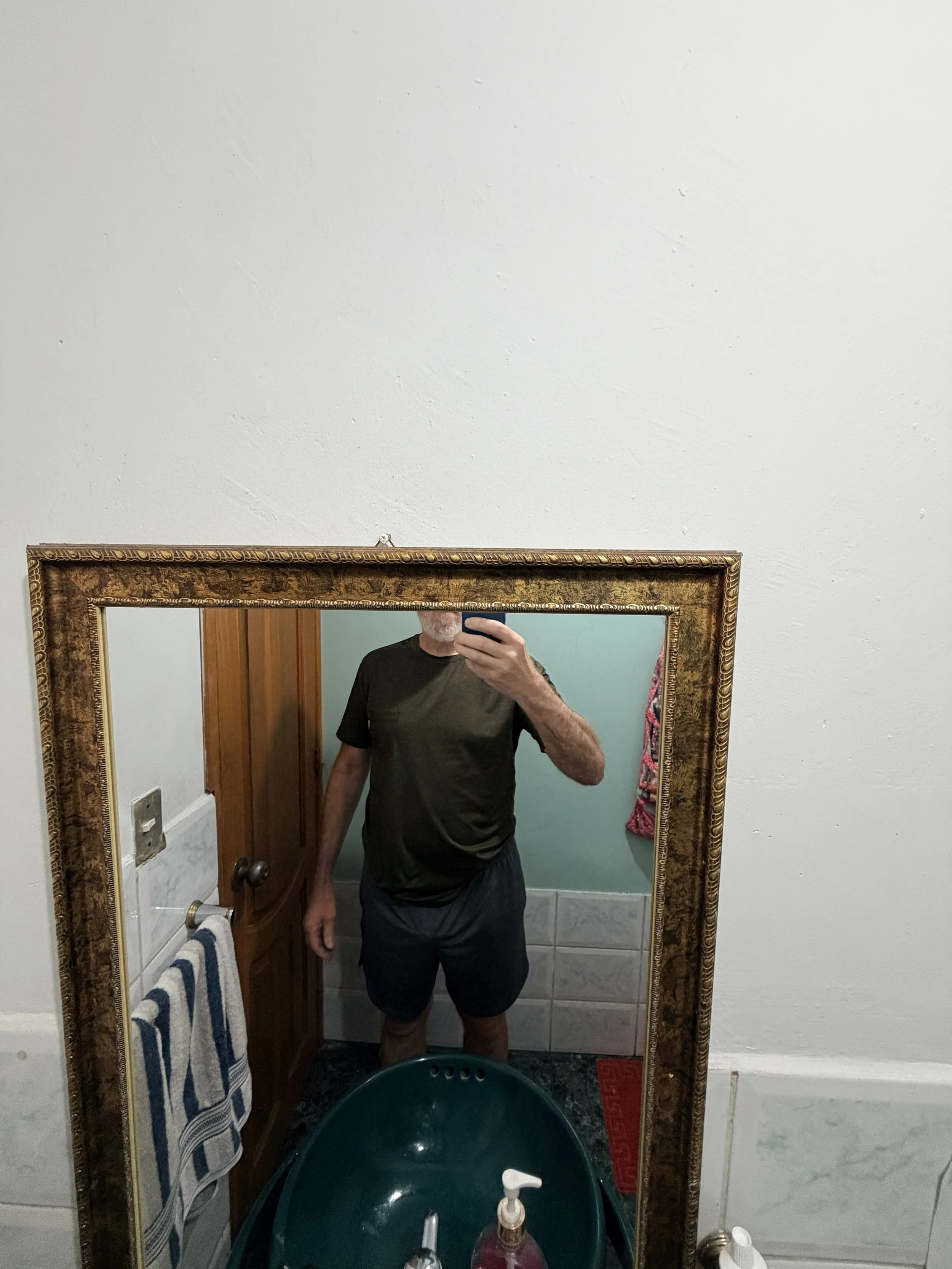
And finally, I took this picture to demonstrate that this country is not designed for gringos. If I stand up straight in the bathroom, this is what I see. I guess I’m not missing much…
That’s all for now. Thanks for reading. Much love from Ecuador!
Week one done…
…and only 117 to go.
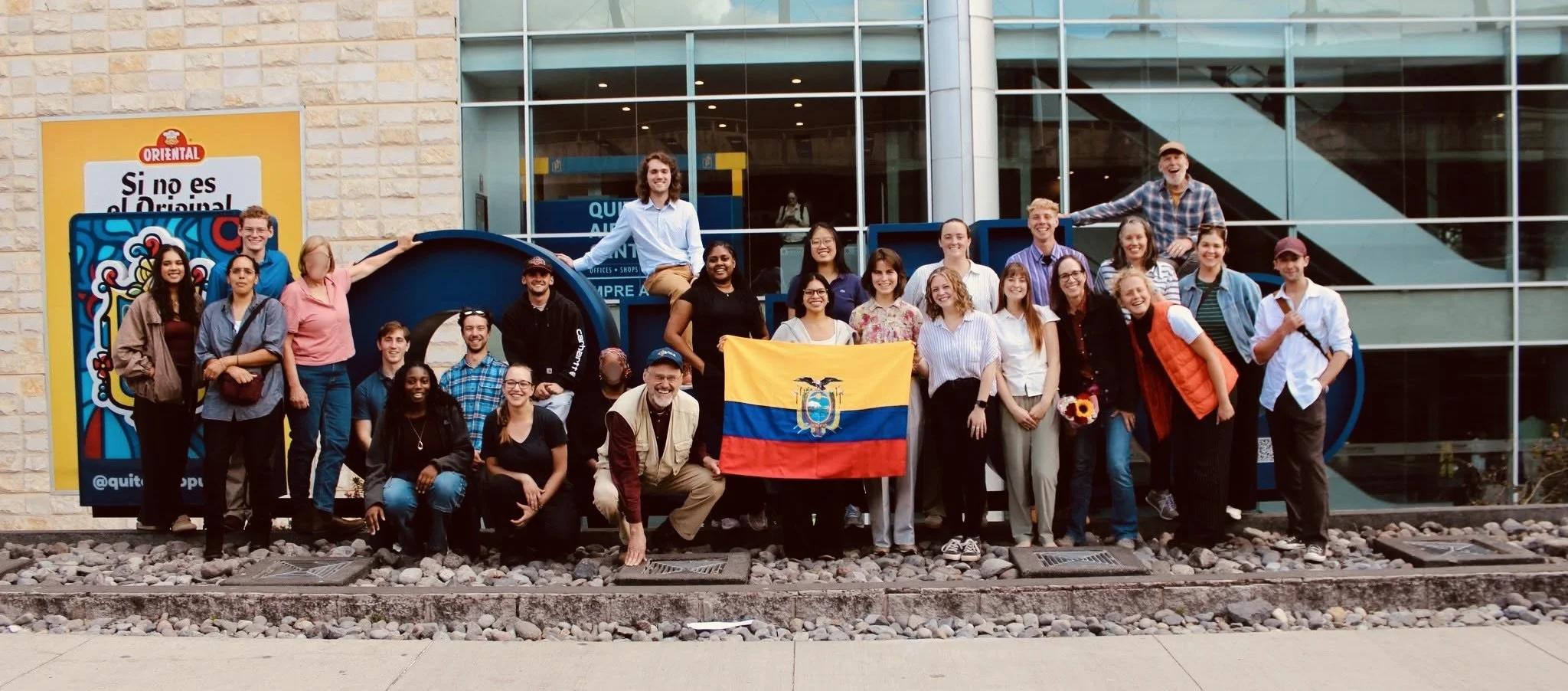
It’s been a lot.
Meeting 26 fellow volunteers. Dozens of Peace Corps staff members. Our Ecuadorian family for the next nine weeks. Sessions on safety and security, health care, frameworks for sustainable change, international development — SPANISH! SPANISH! SPANISH!
It’s been a lot, but we’re feeling well and excited for each new day.
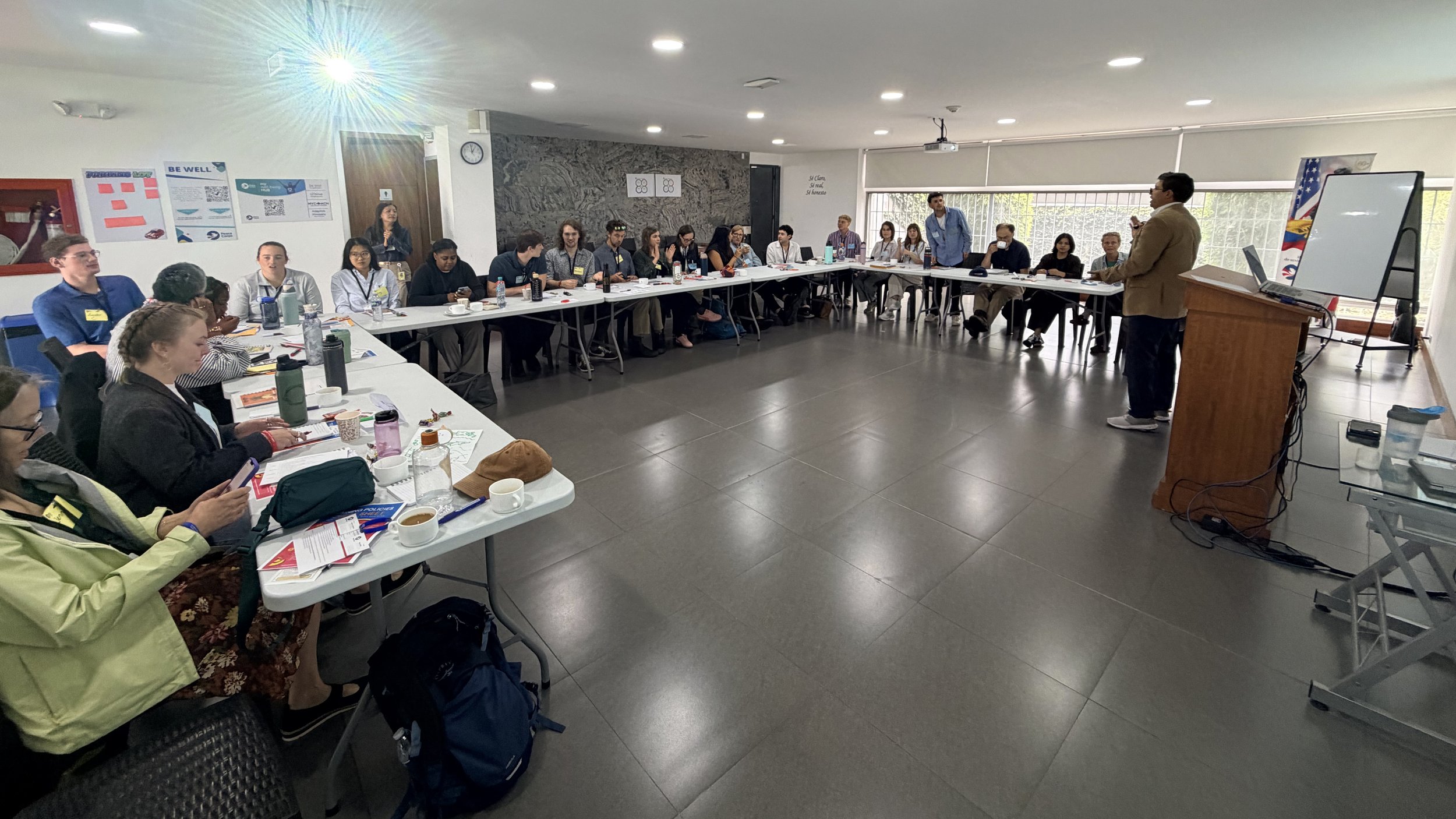
Unfortunately, like many places in the world, crime is a serious issue in Ecuador, and gringos are especially vulnerable to pickpocketing and robbery. We learned how to behave in public and on buses, where much of the crime occurs.
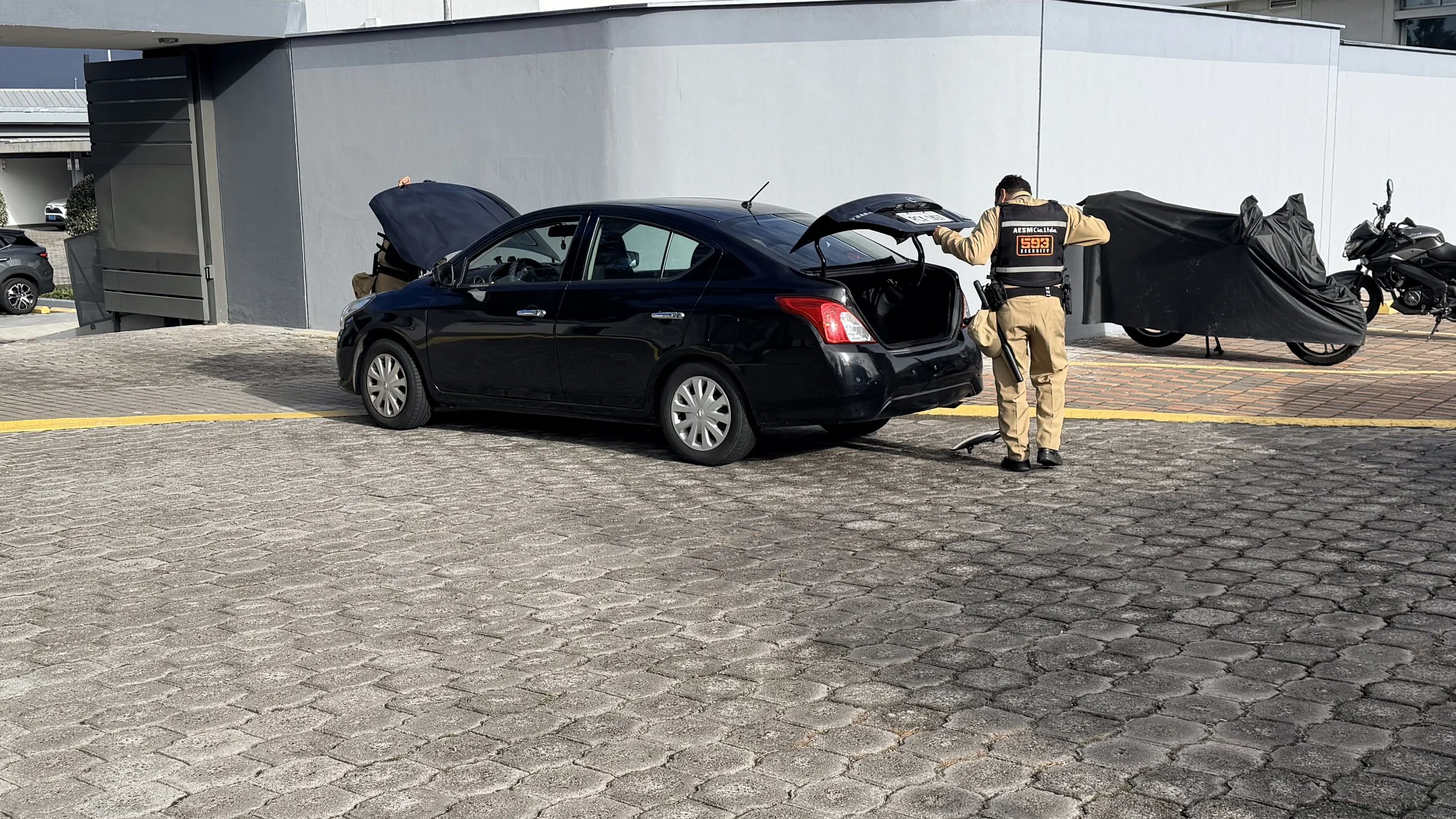
In 1990, our Peace Corps office in Saint Lucia was above a hardware store. You walked up a flight of stairs and found three or four small offices and an open meeting area. In 2026 Ecuador, the Peace Corps office feels more like a fortress — armed guards in bulletproof vests, 10-foot walls, and bomb checks on every vehicle entering the compound. Thanks, 9/11, you bastard you.
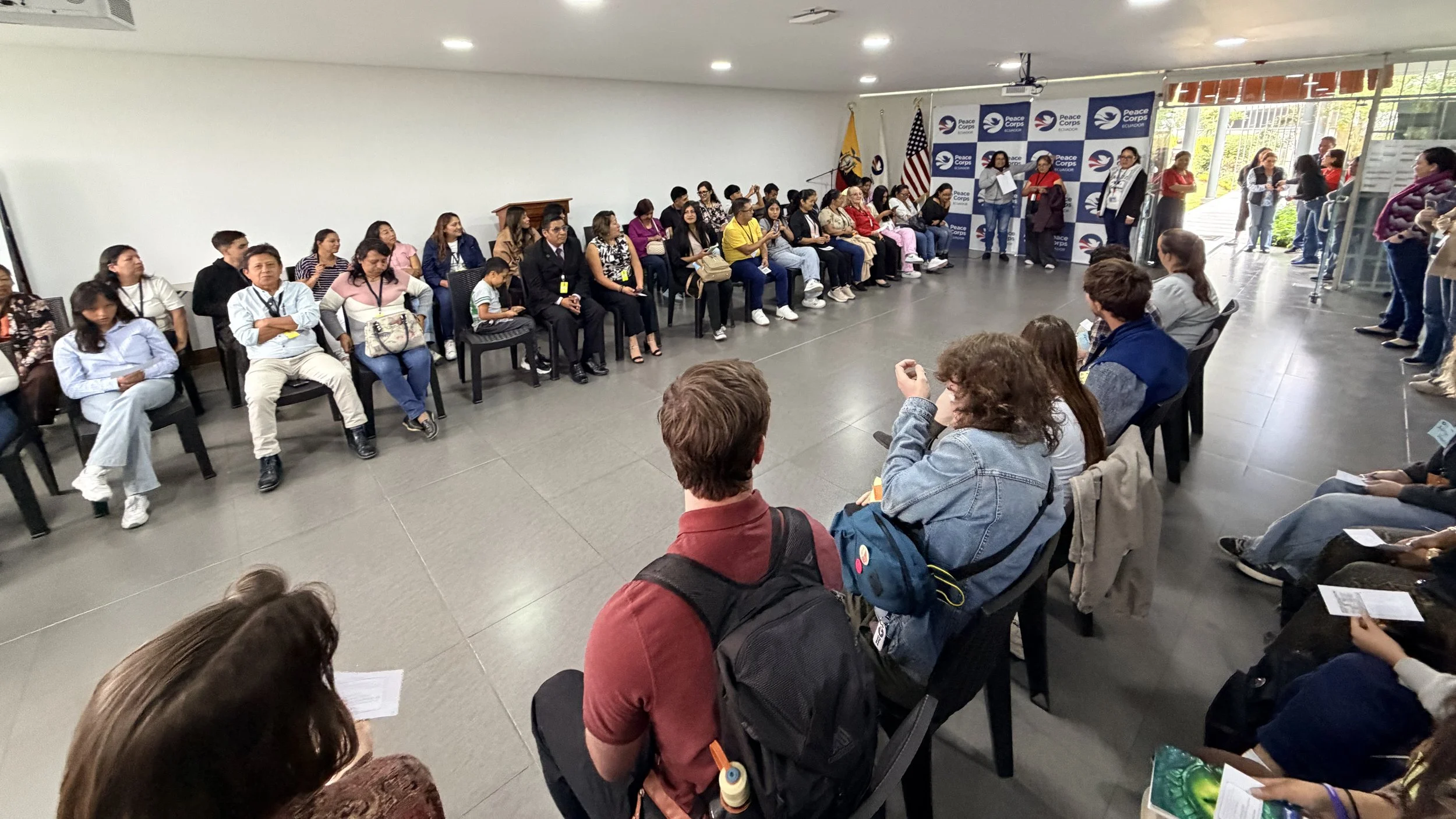
Finally came the day we met our host family!
It was a lovely ceremony, after which the volunteers moved into their communities and began learning Ecuadorian culture firsthand. I’m pretty sure Jenny and I hit the family lottery with the Peraltas: German and Marcia, their three twenty-something kids — Pamala, Dyana, and Andre — and their cute dogs, Toby, a 13-year-old poodle mix, and Appolo, a three-month-old puppy. Did you catch that? I said they are cute dogs…that’s saying something.
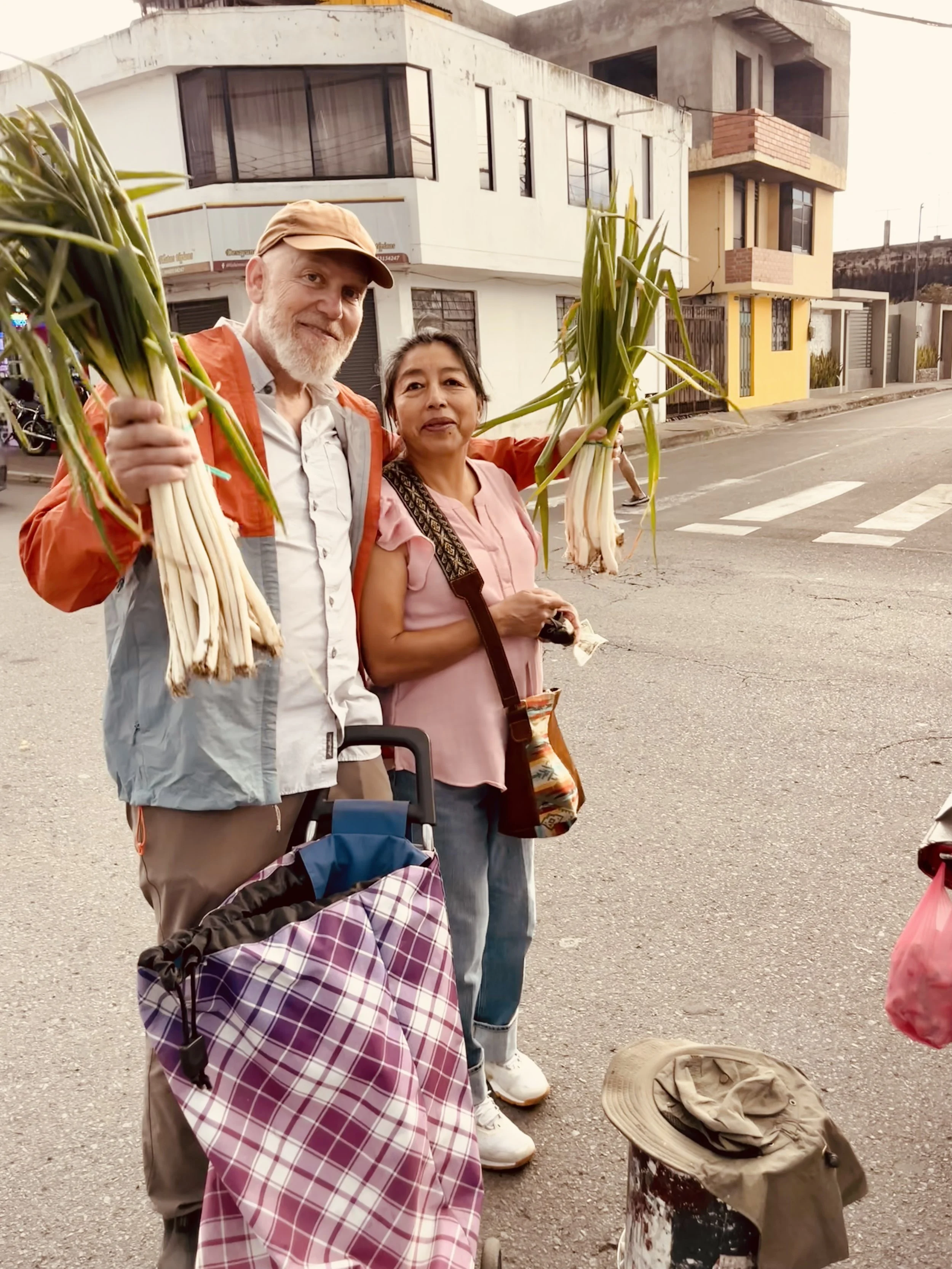
The biggest green onions you’ll ever see.
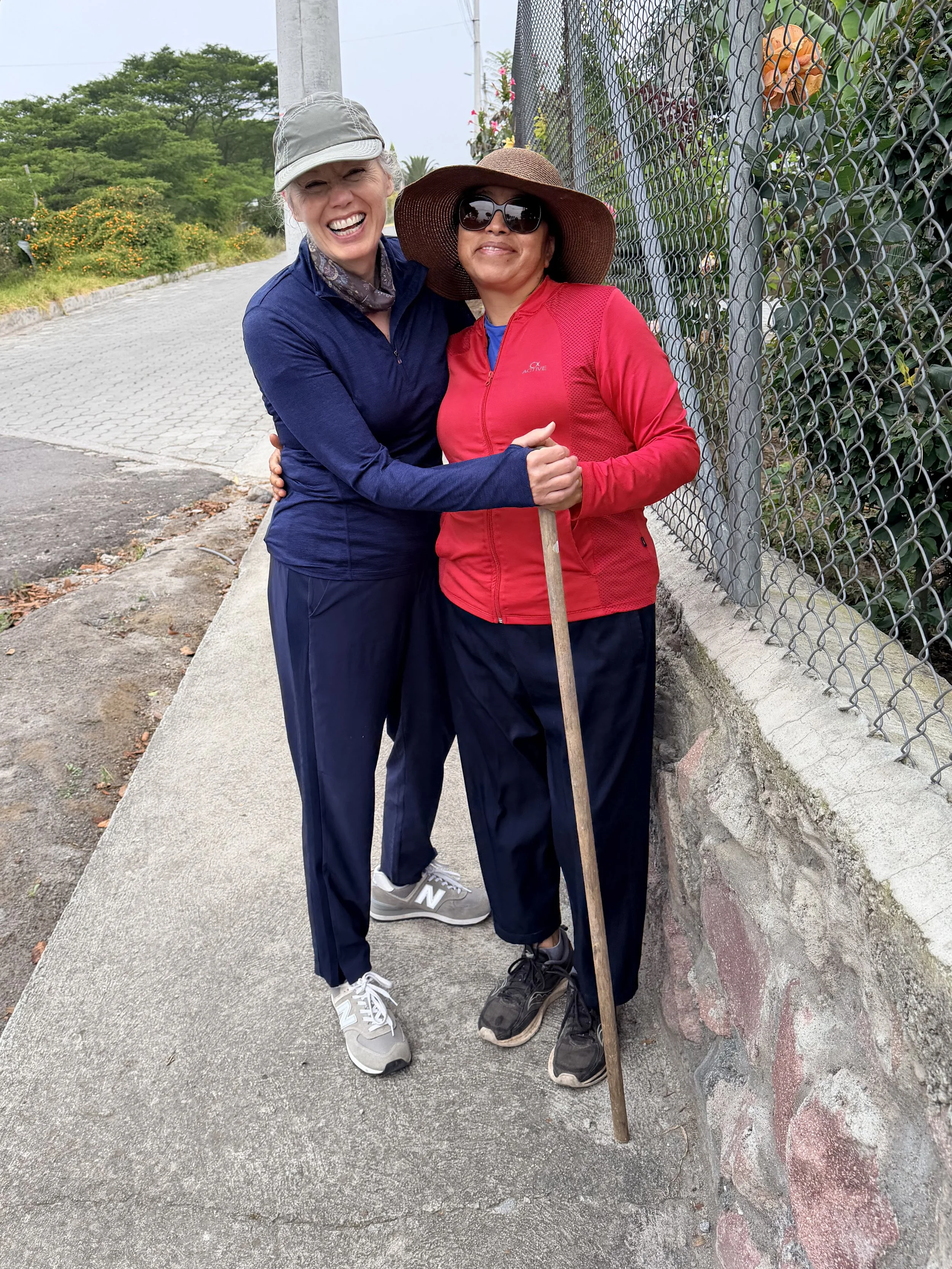
We thought we were heading out for a little stroll and instead ended up on a 2½-hour hike with Marcia! She carried a stick to fend off the dogs we encountered once we left the urban center. The city dogs totally ignore you, but the country dogs are much more territorial.

Welcome to South America! The cables are insane! And notice the sign on the restaurant in the background. See the happy guinea pig? They’re not pets here…you get the picture.
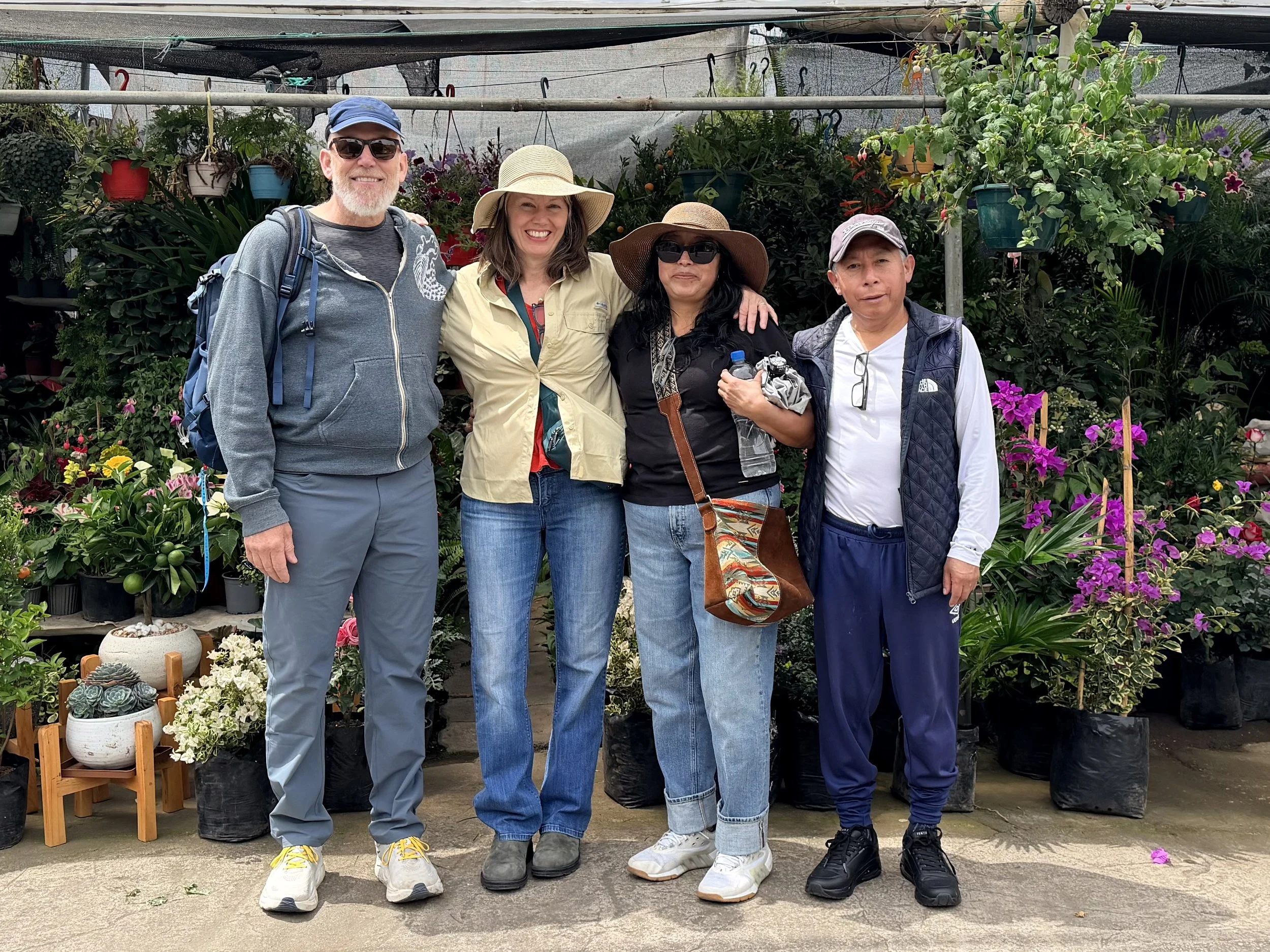
We live on the outskirts of Quito in a town called Nayón. It’s known for its nurseries and garden centers. They are beautiful little mom & pop operations all over town.
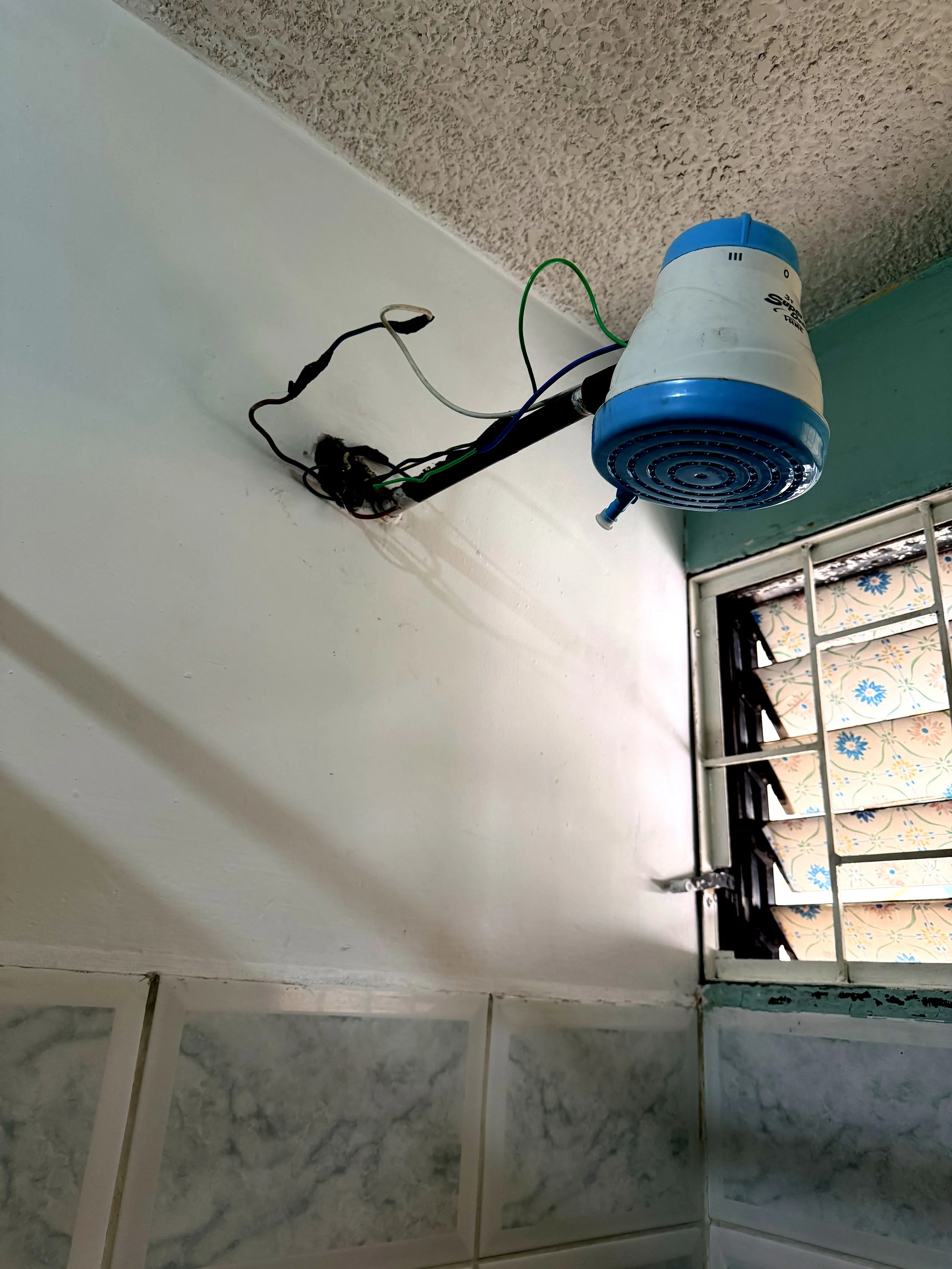
Welcome to South America part two. Your water is electrically heated right at the spout and the wires are exposed, right near the water flow. It has always freaked me out a little.

And finally, meet Apollo! So cute!
Thanks for reading our blog and mucho gusto!
And so we begin.
After so many months, so many medical forms, so many nights lying awake thinking about it, and so many sweet goodbyes with dear friends and family, May 31, 2026, finally arrived.
We started the morning by saying goodbye to our beloved dog, Herman, which left Jenny more than a little teary-eyed.
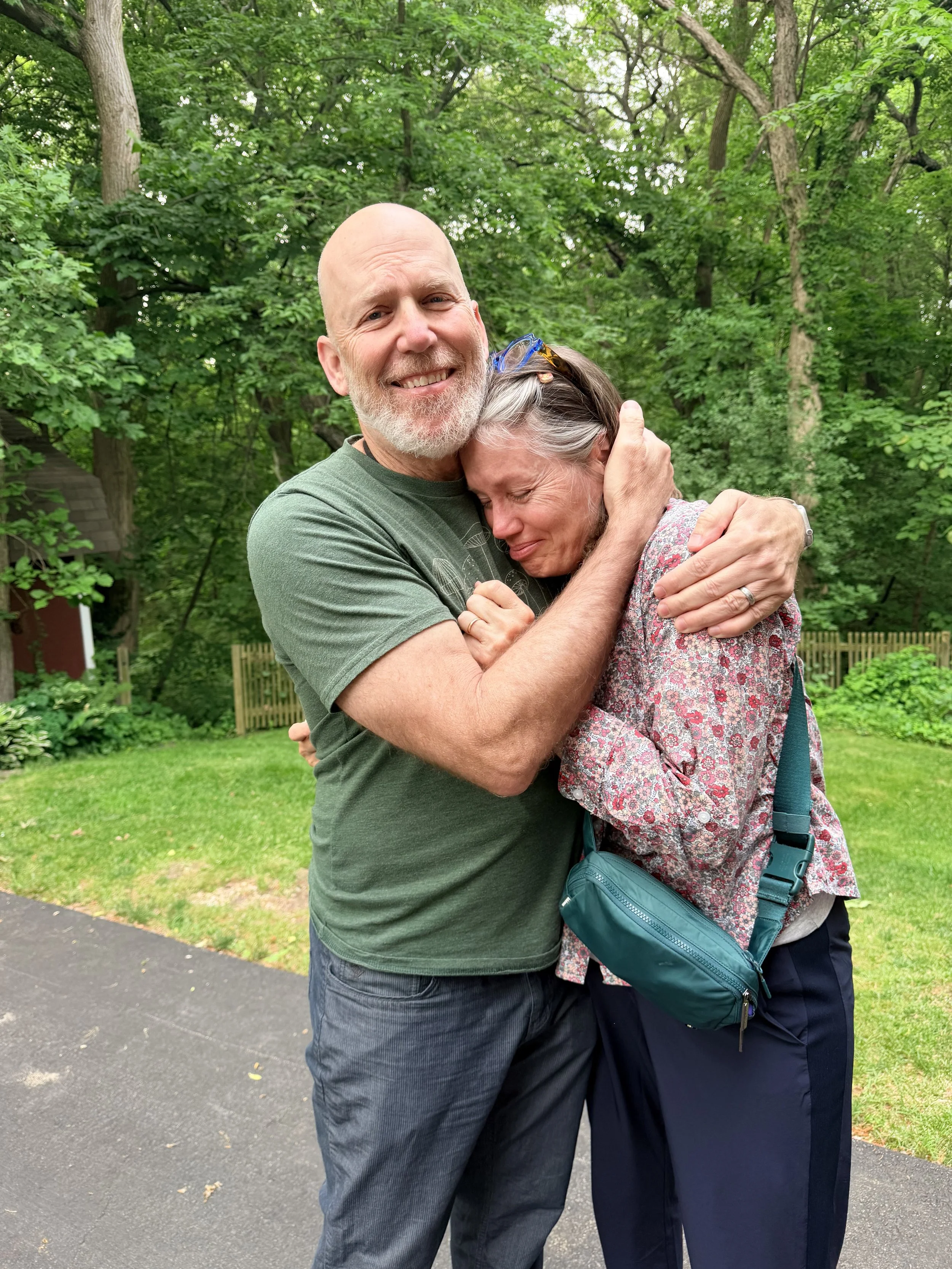
We started down our driveway and didn’t make it a tenth of a mile before we were stopped in our tracks by a group of dear friends gathered in the road to wish us a final farewell. At that point, it was my turn to turn to mush.
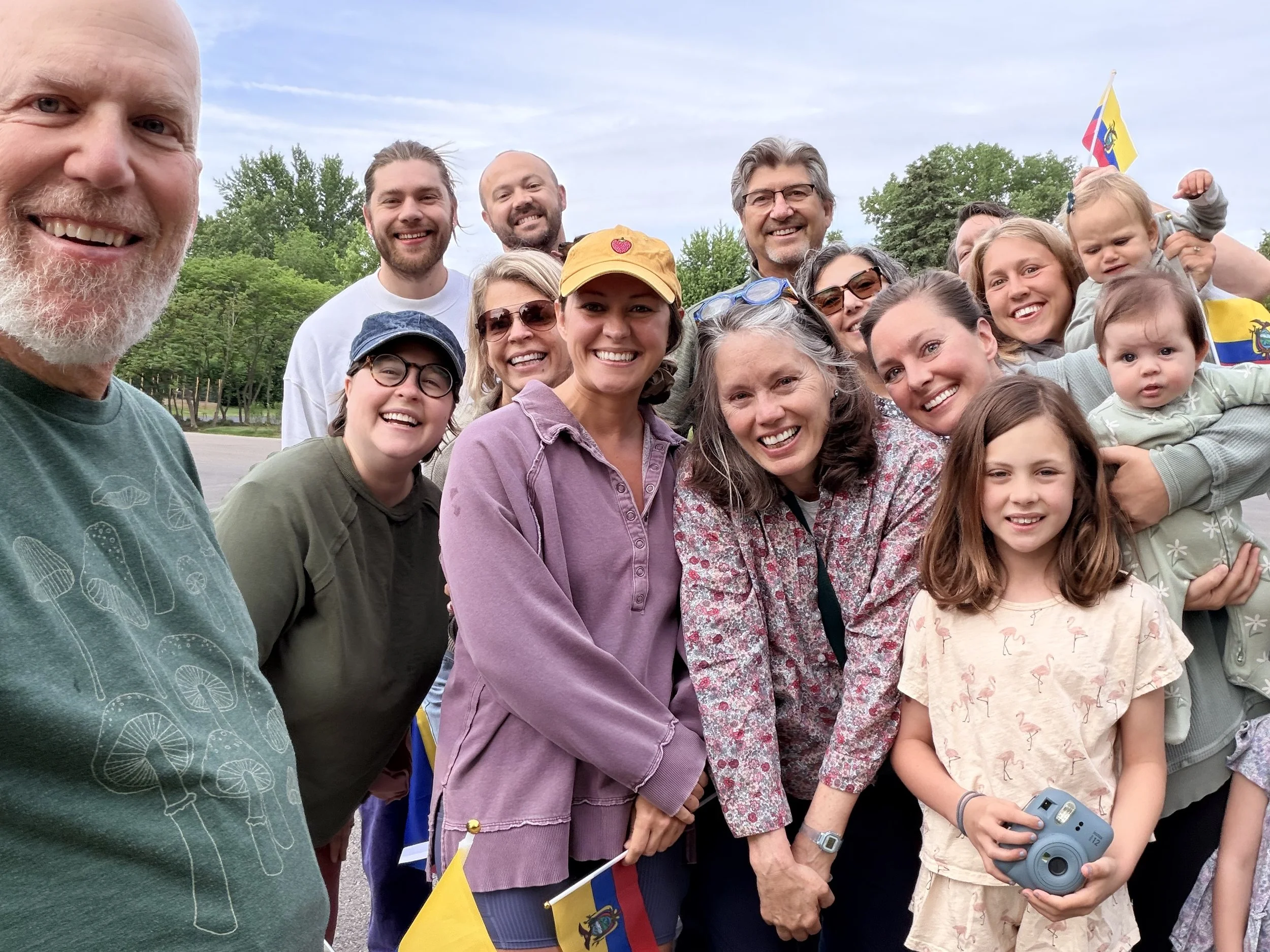
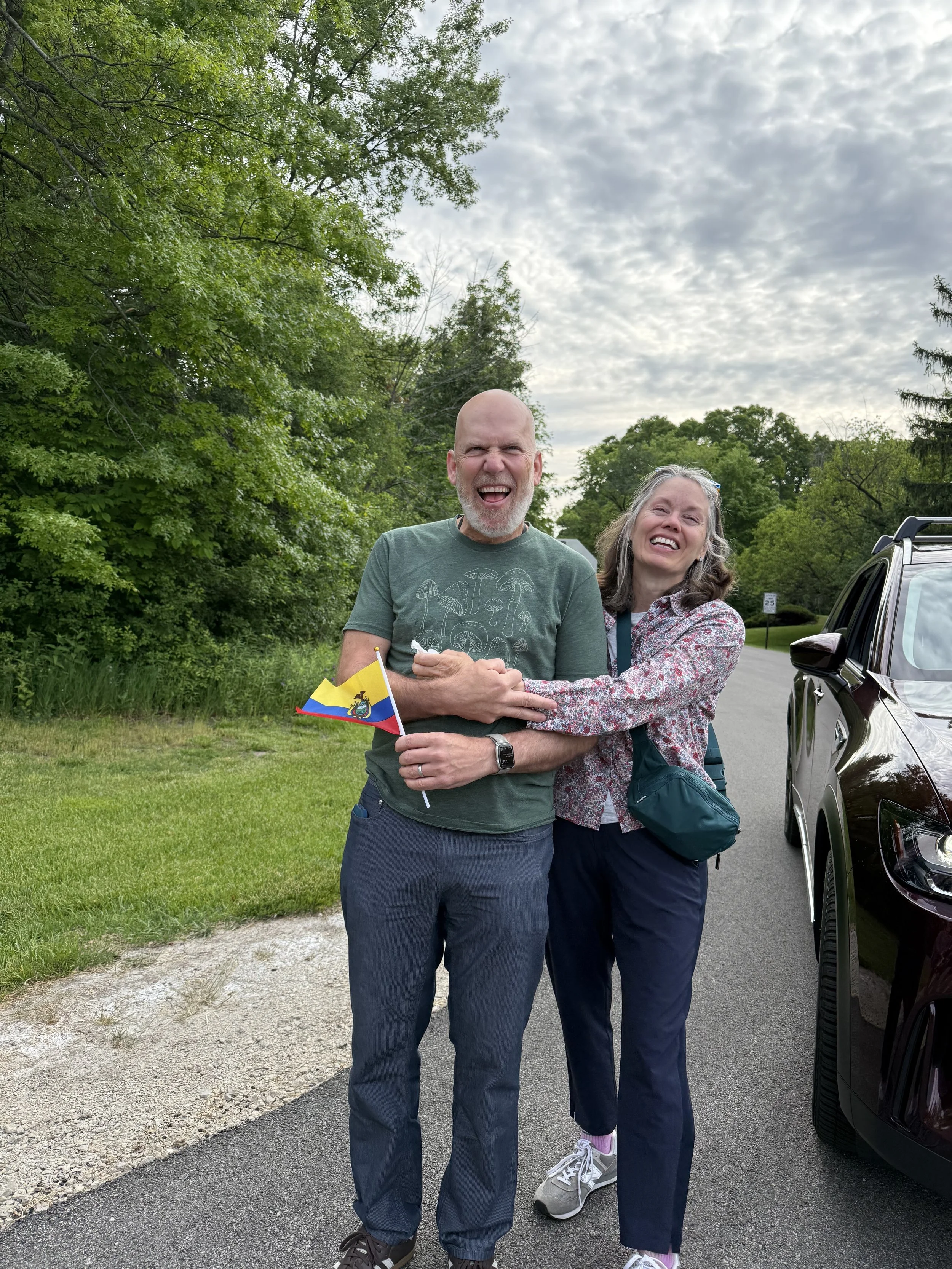
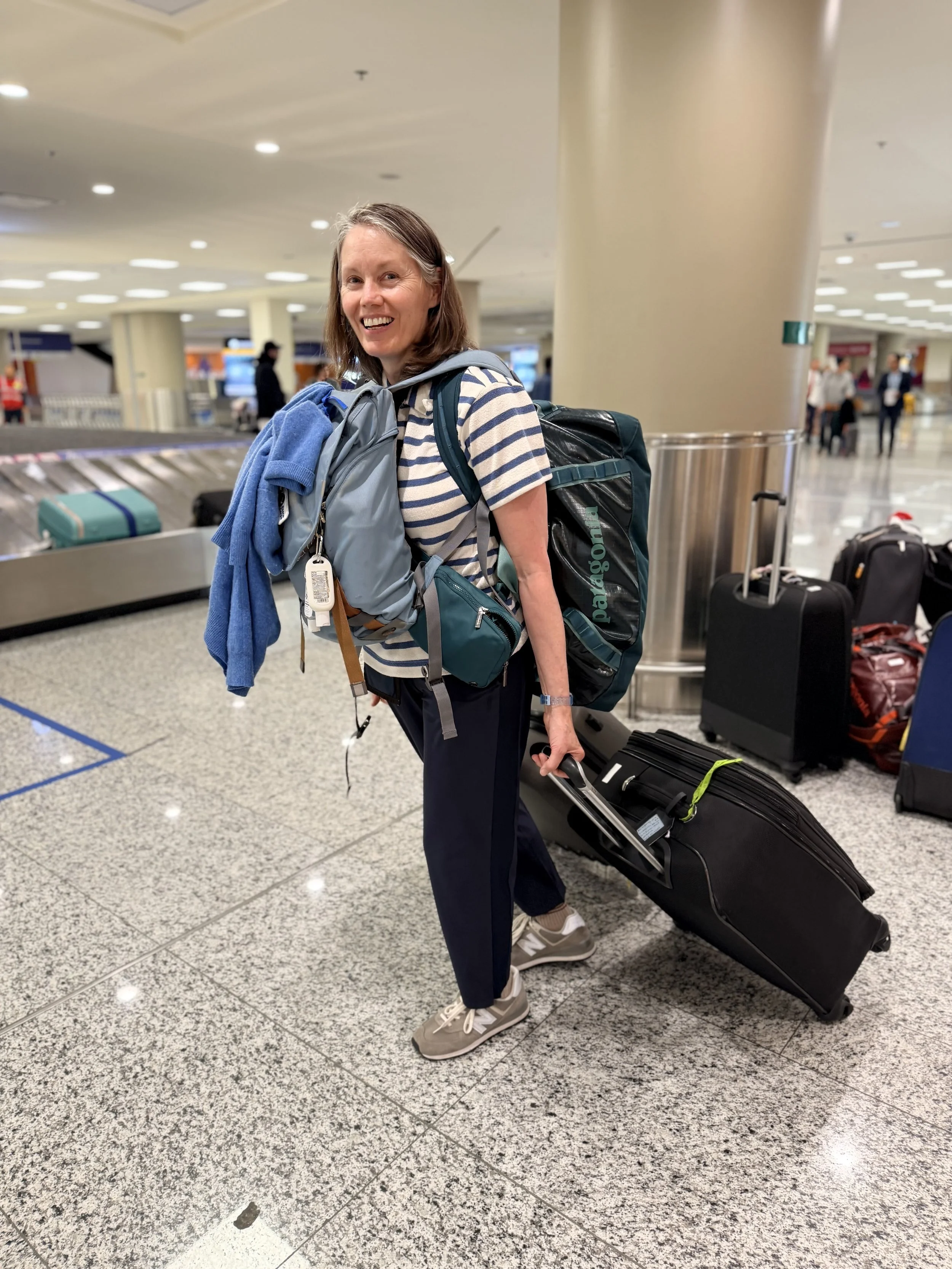
At O’Hare Airport, we met our first fellow volunteer at the gate for our flight to Miami. She recognized us from the Zoom calls we had attended and, apparently, from our general crunchy-granola vibe.
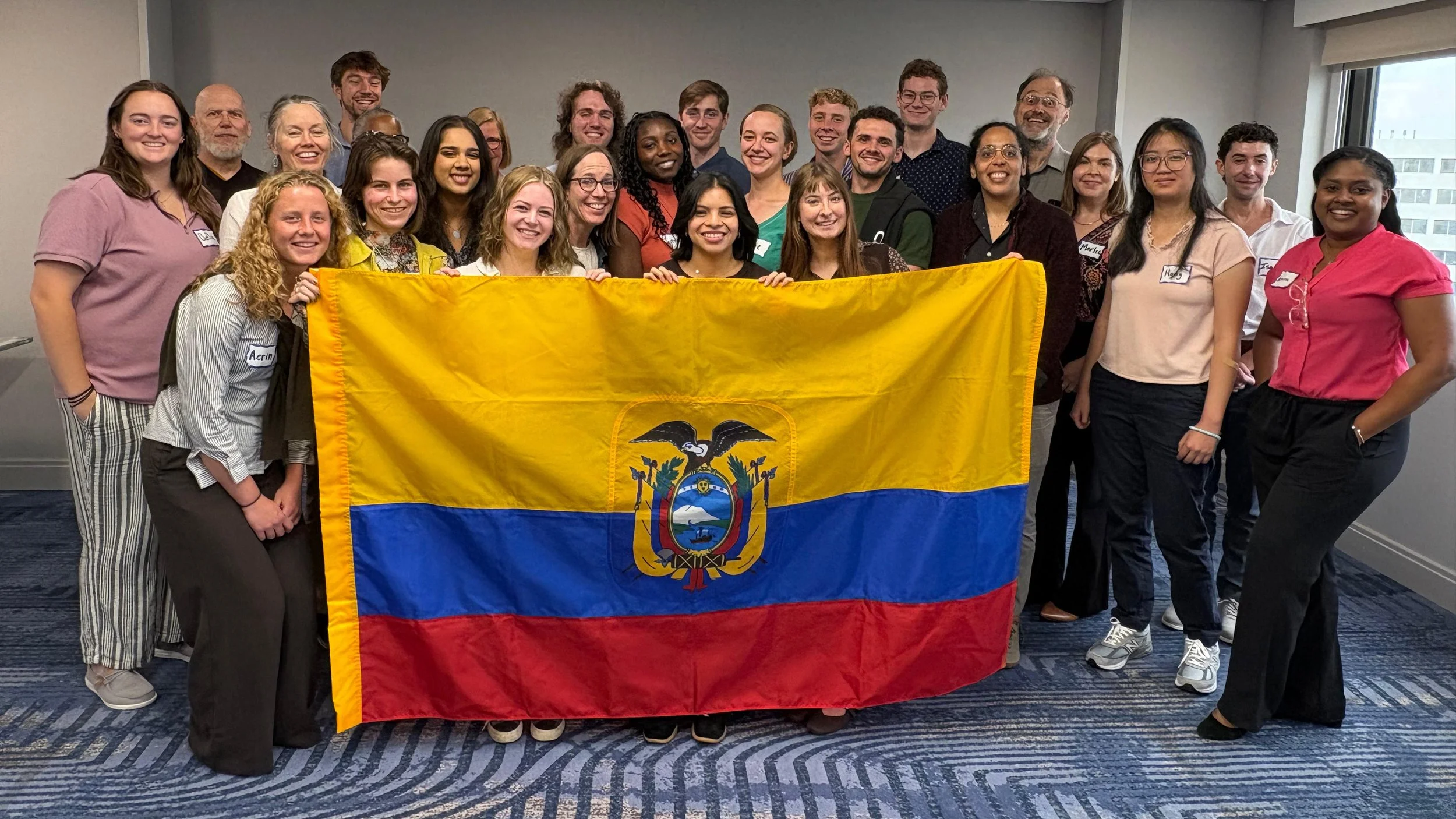
We arrived at our hotel in Miami for pre-departure staging and began meeting the rest of our cohort. Ours is the 134th class of volunteers to serve in Ecuador. We are the only couple in the group, but there are a few women in their 50s and one man who is 65. There are 21 volunteers serving the full two years and six Rapid Response volunteers who will serve for just one year. A few of them are headed to the Galápagos Islands to do environmental work.
On the evening before our departure for Ecuador, we were lucky enough to meet up with Eduardo and Julia, who happened to be in Miami while searching for a place for Julia to live during her upcoming graduate studies. What a fun surprise!
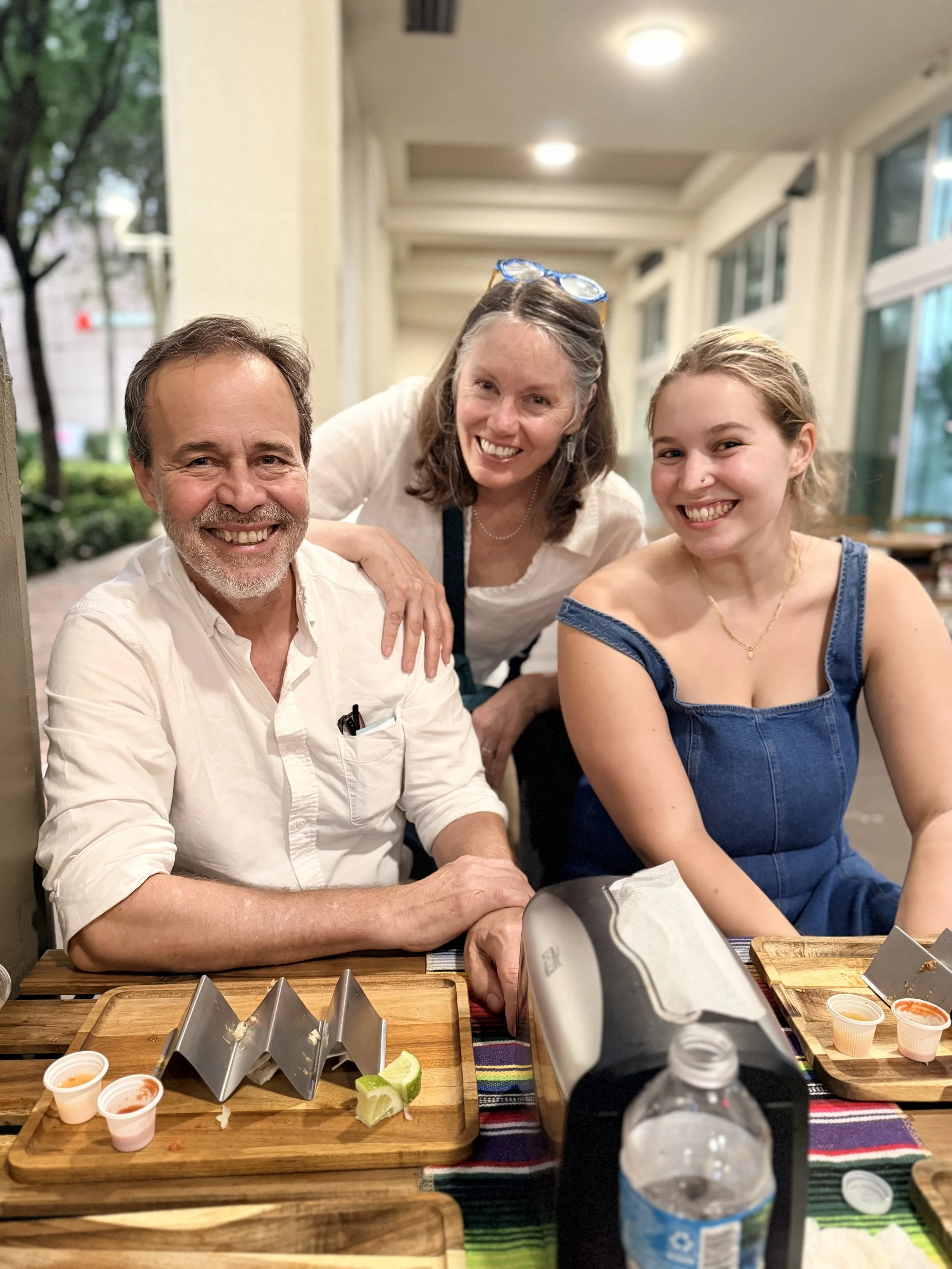
And by the following afternoon, we were in Ecuador. The months—really, years—of planning and preparation were behind us, and 27 months of a new life stretched out ahead.
Feeling the love…
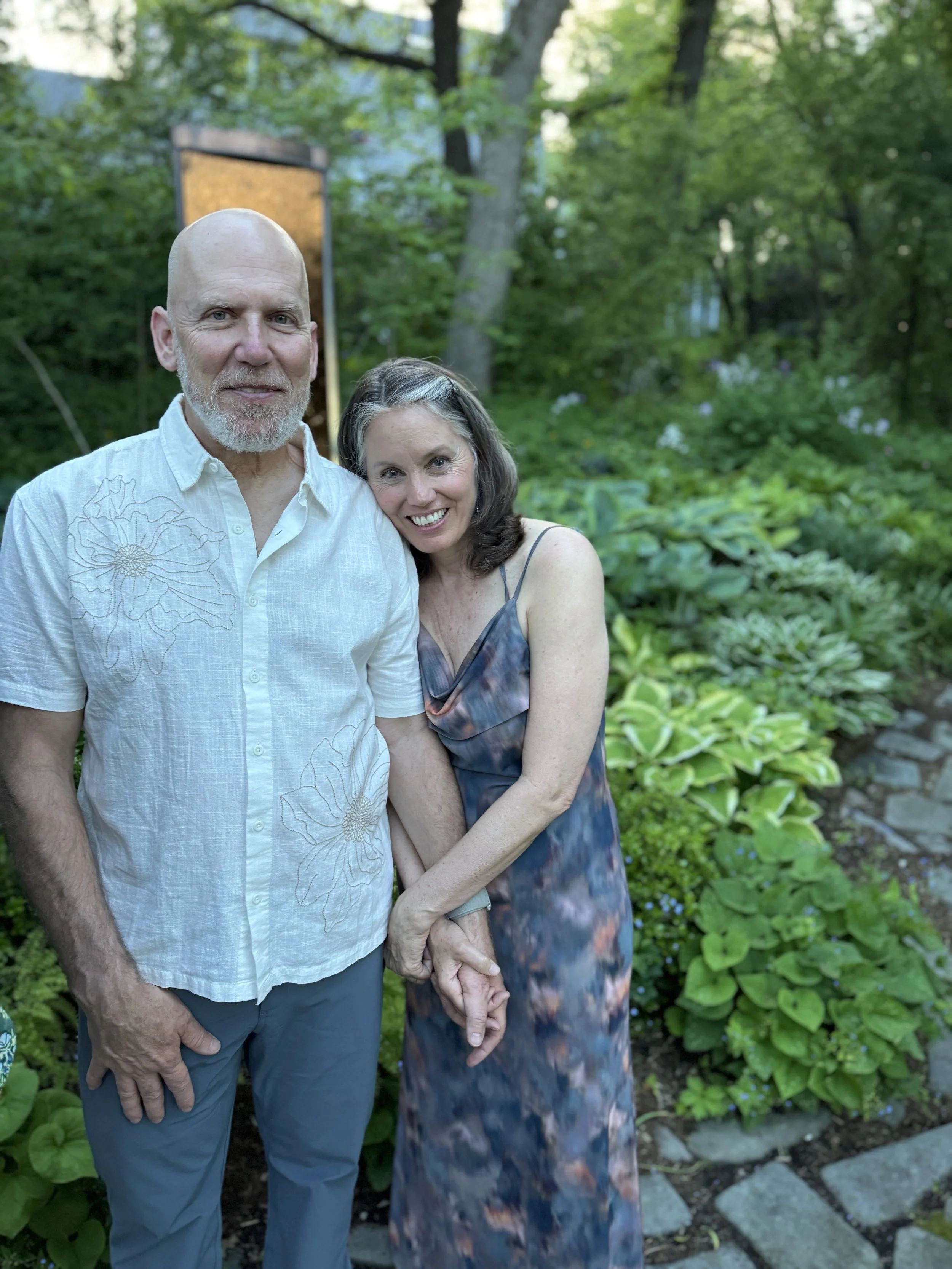
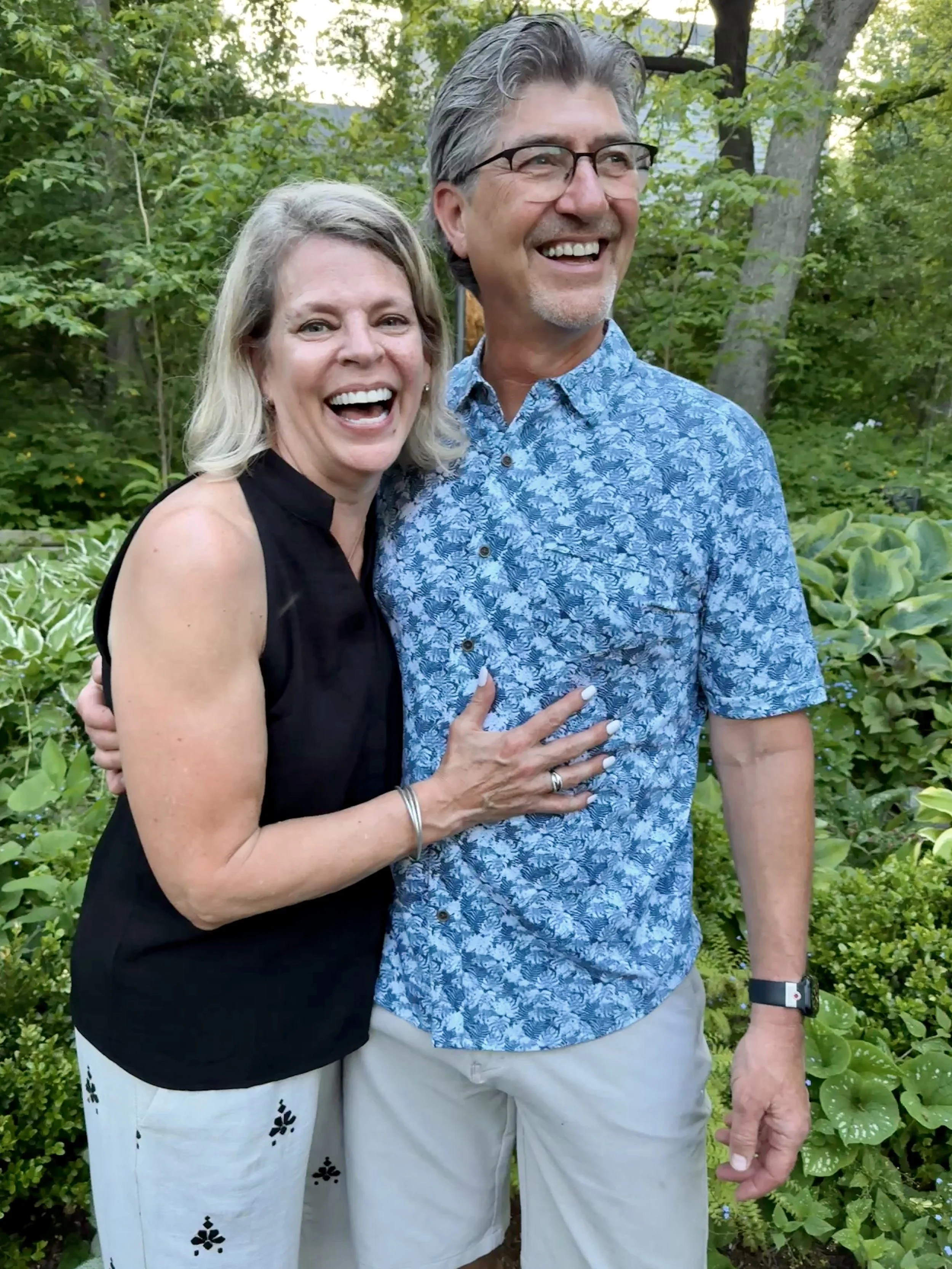
We gathered with some of our favorite people for a going away party at Molly and Dave’s. Such a fantastic gathering. Thanks to all who came to send us on our way in style!
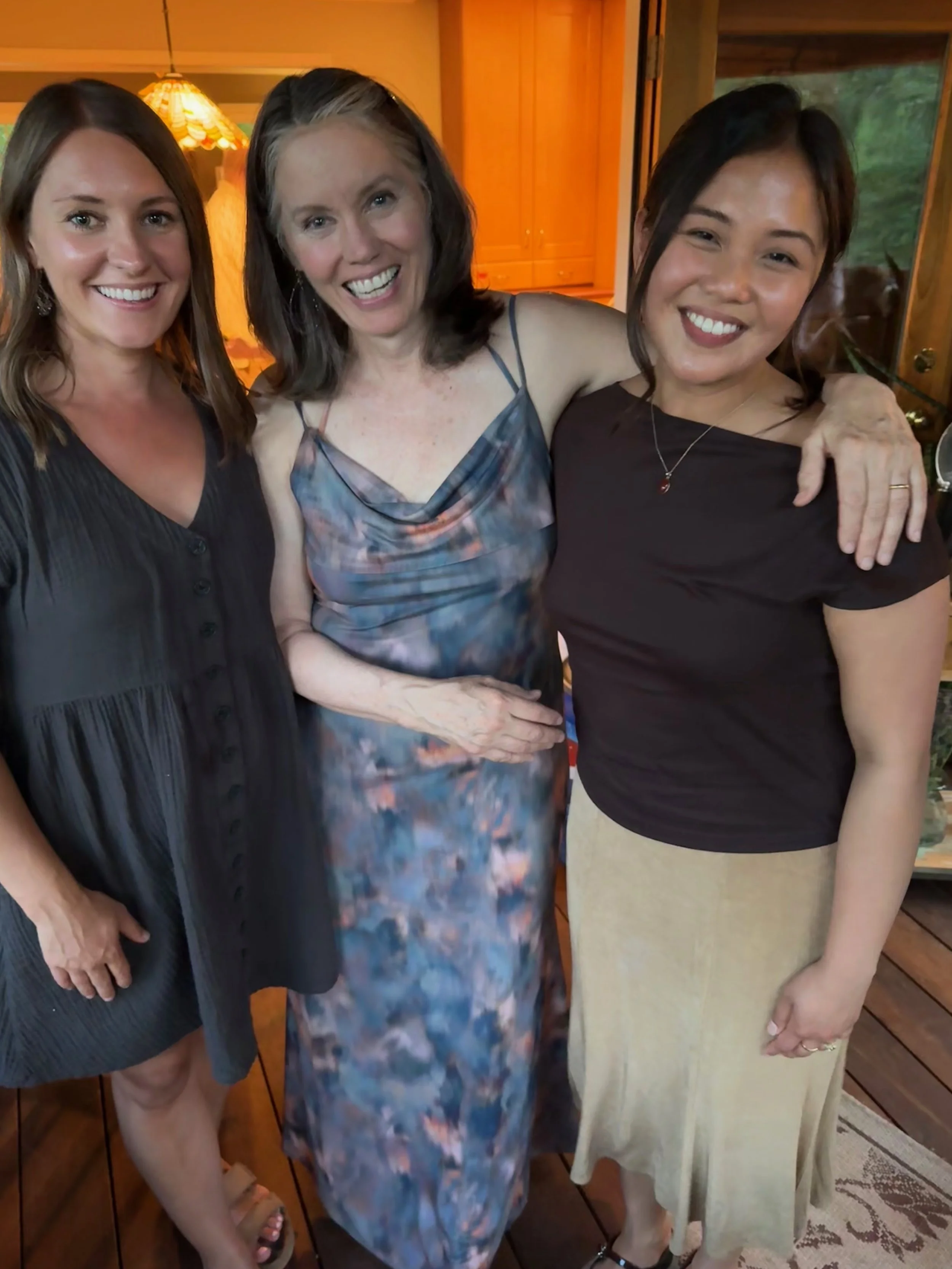
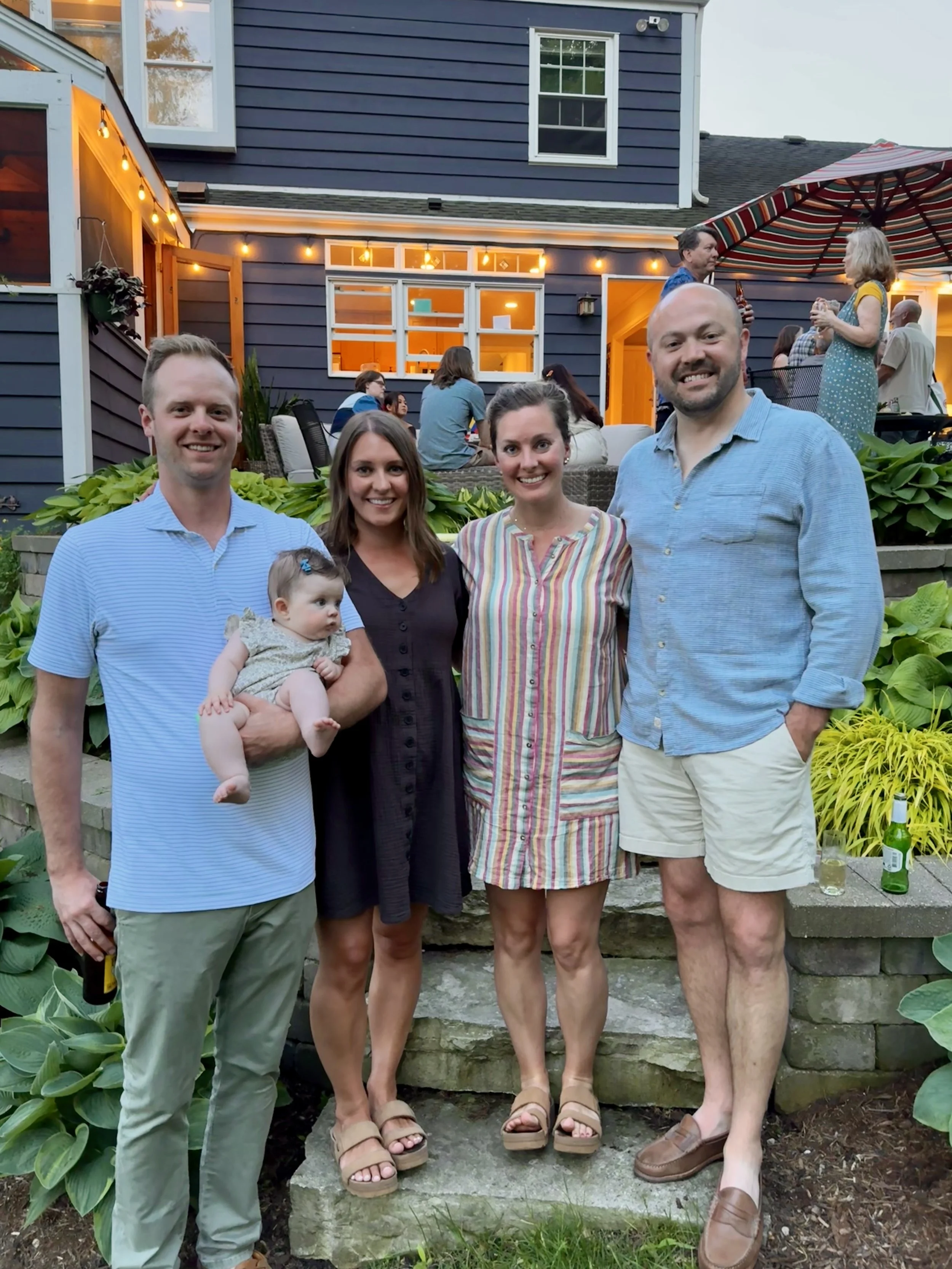
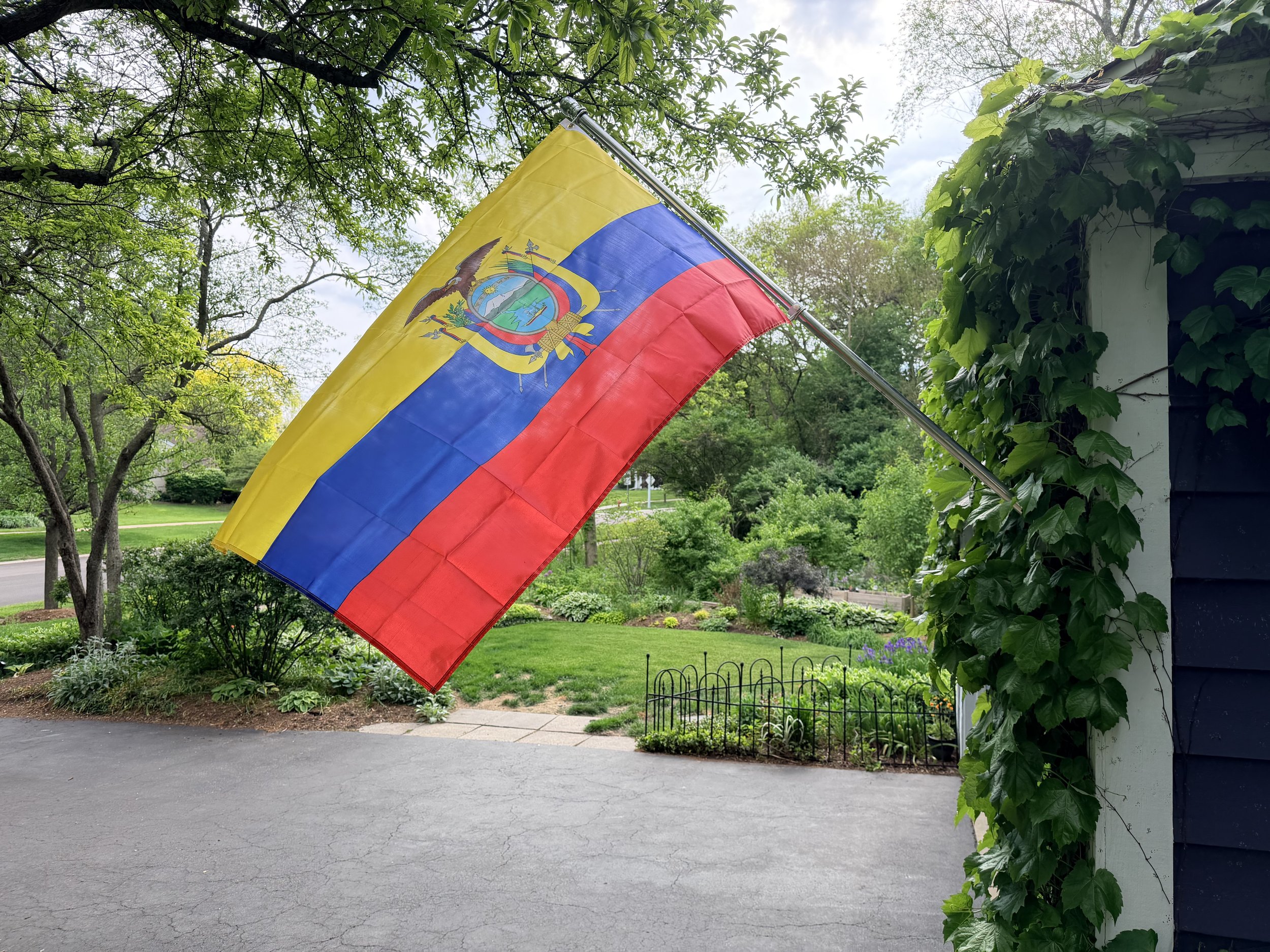
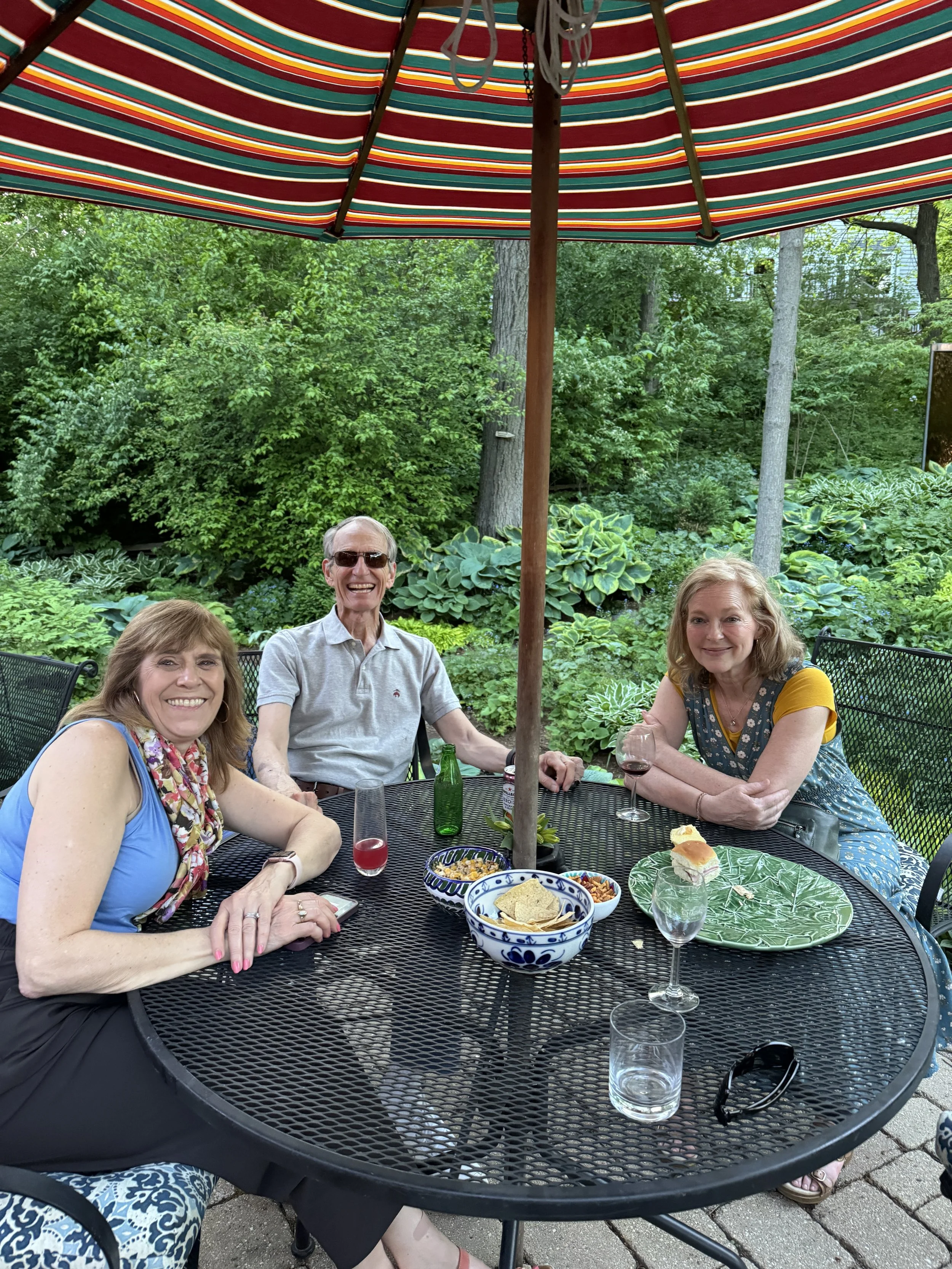
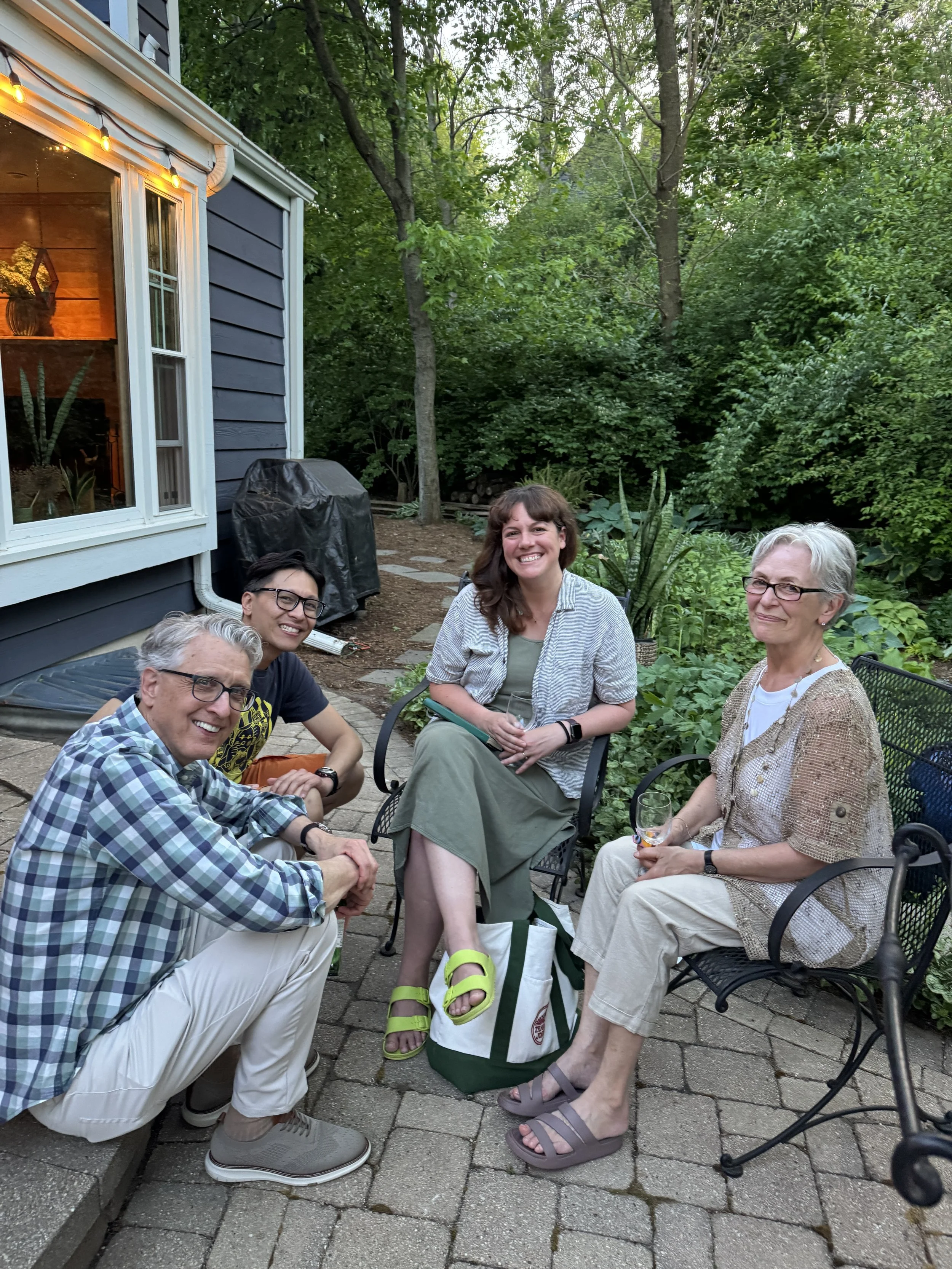
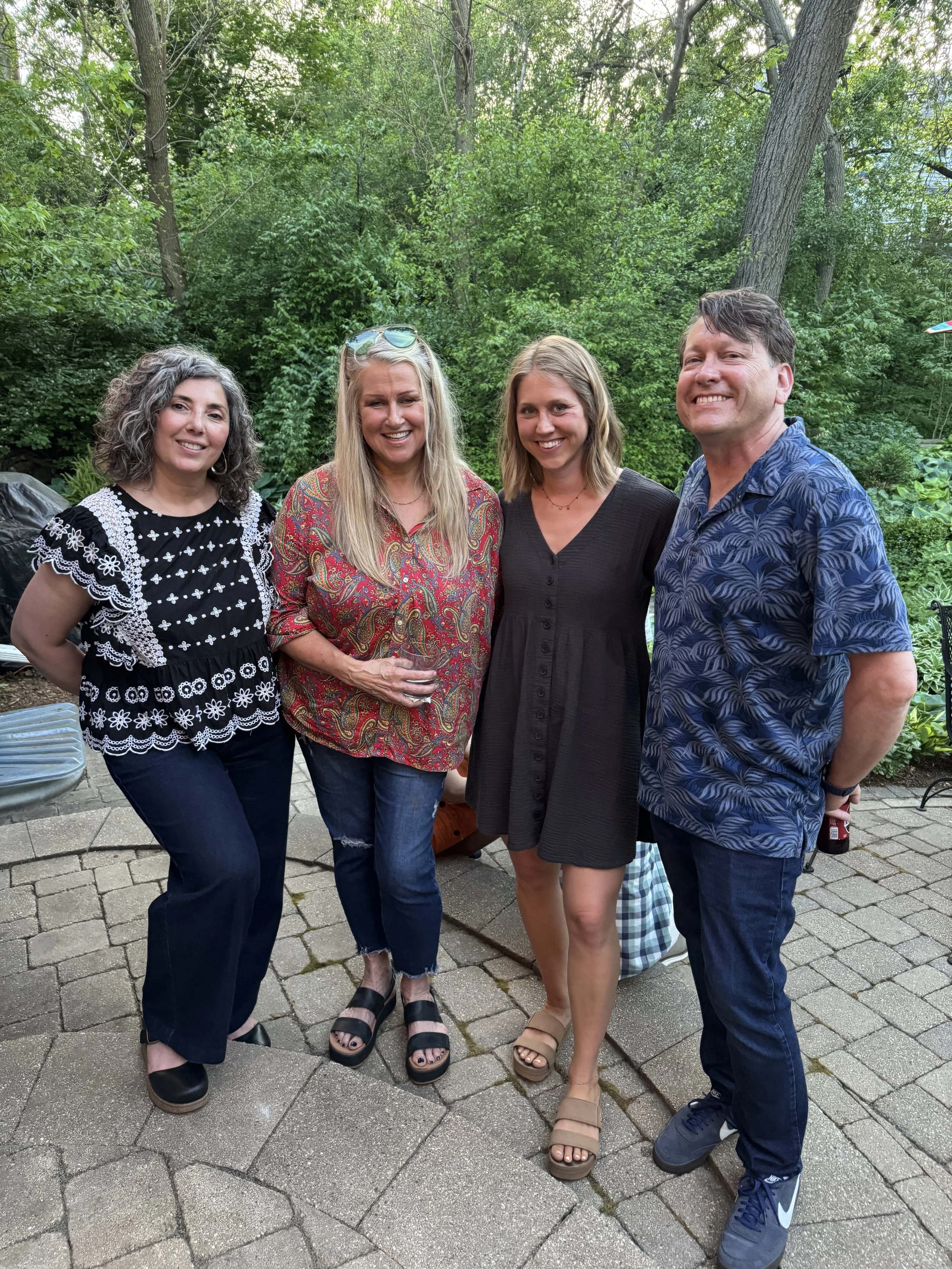
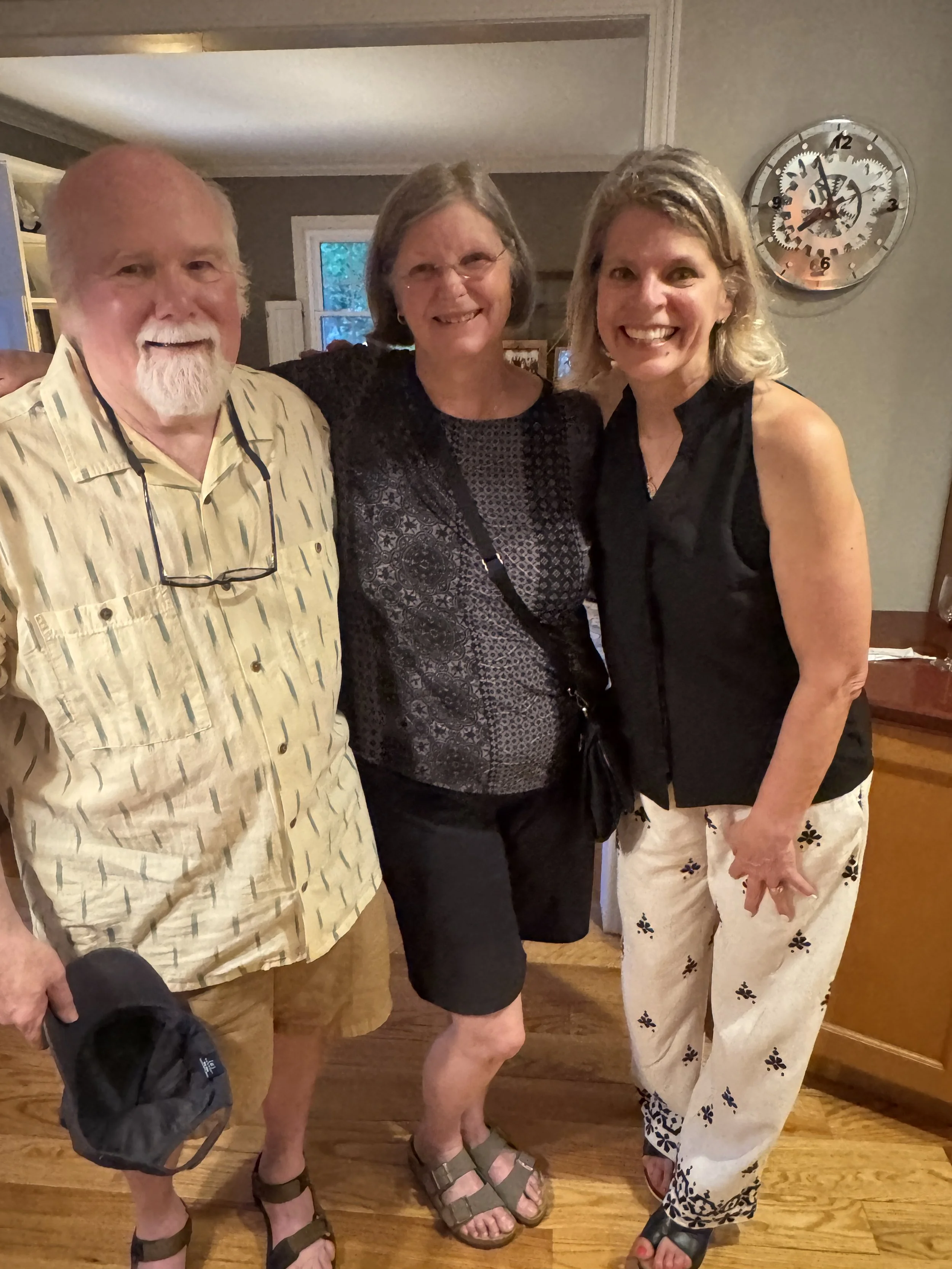
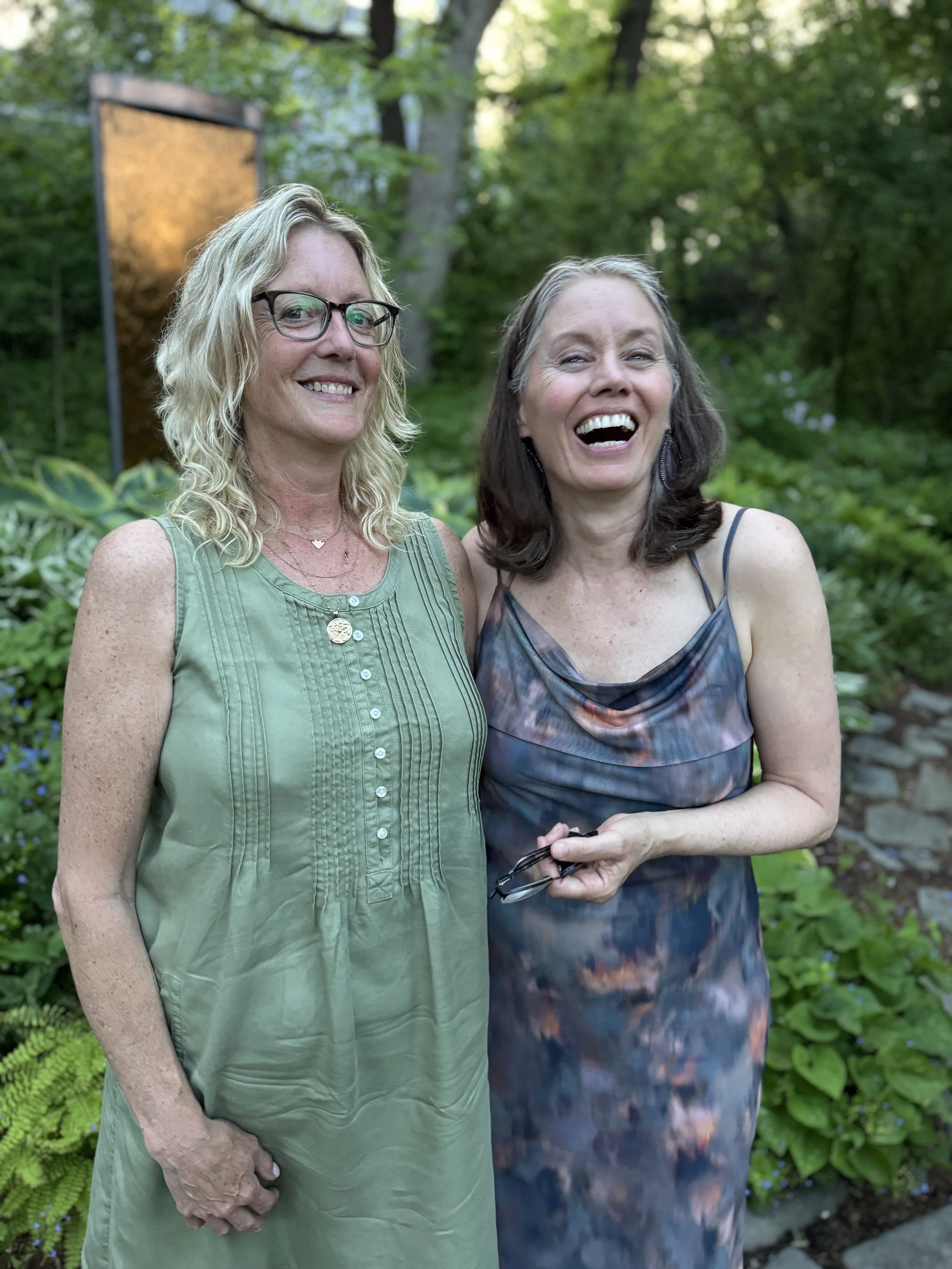
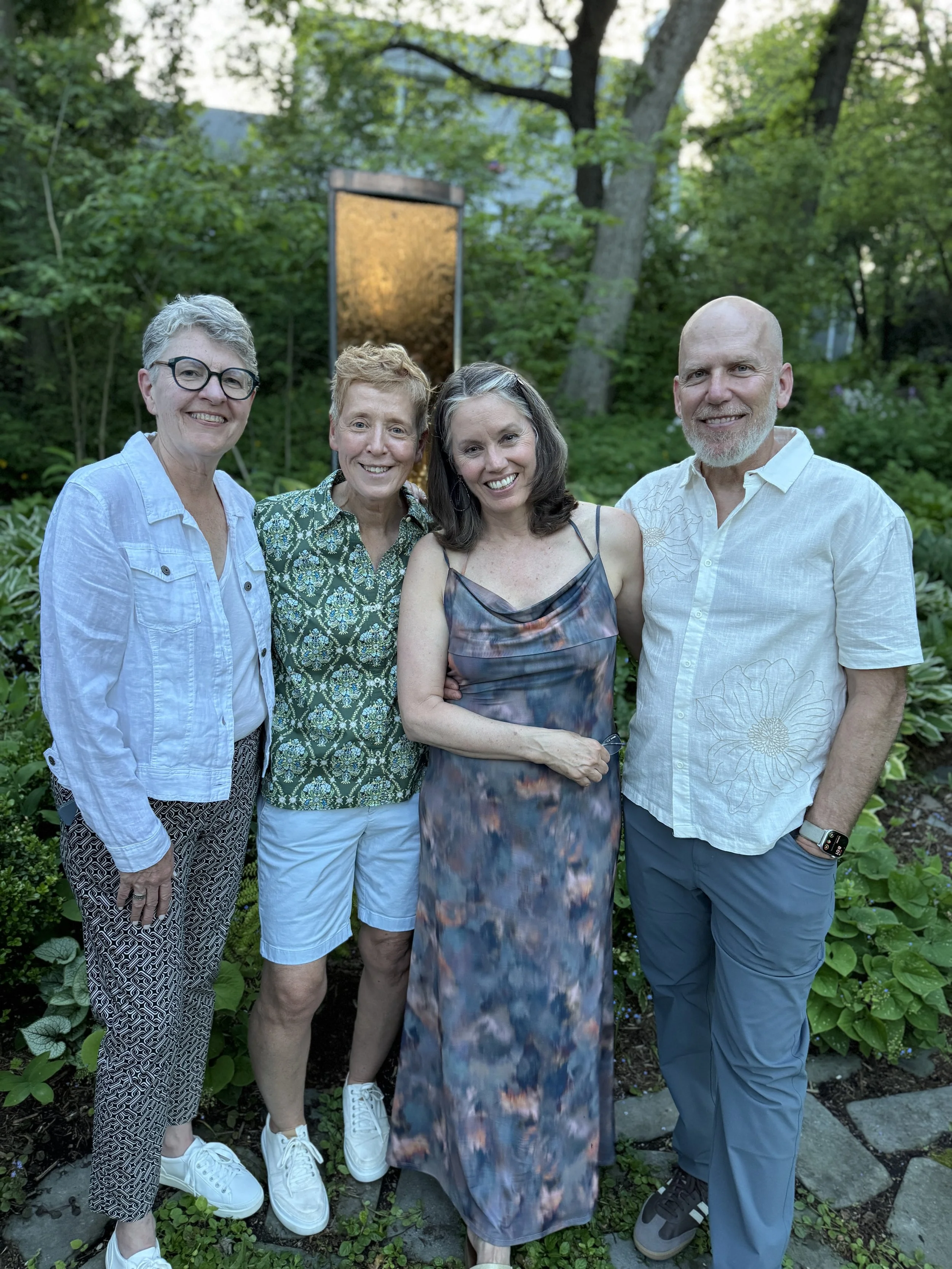
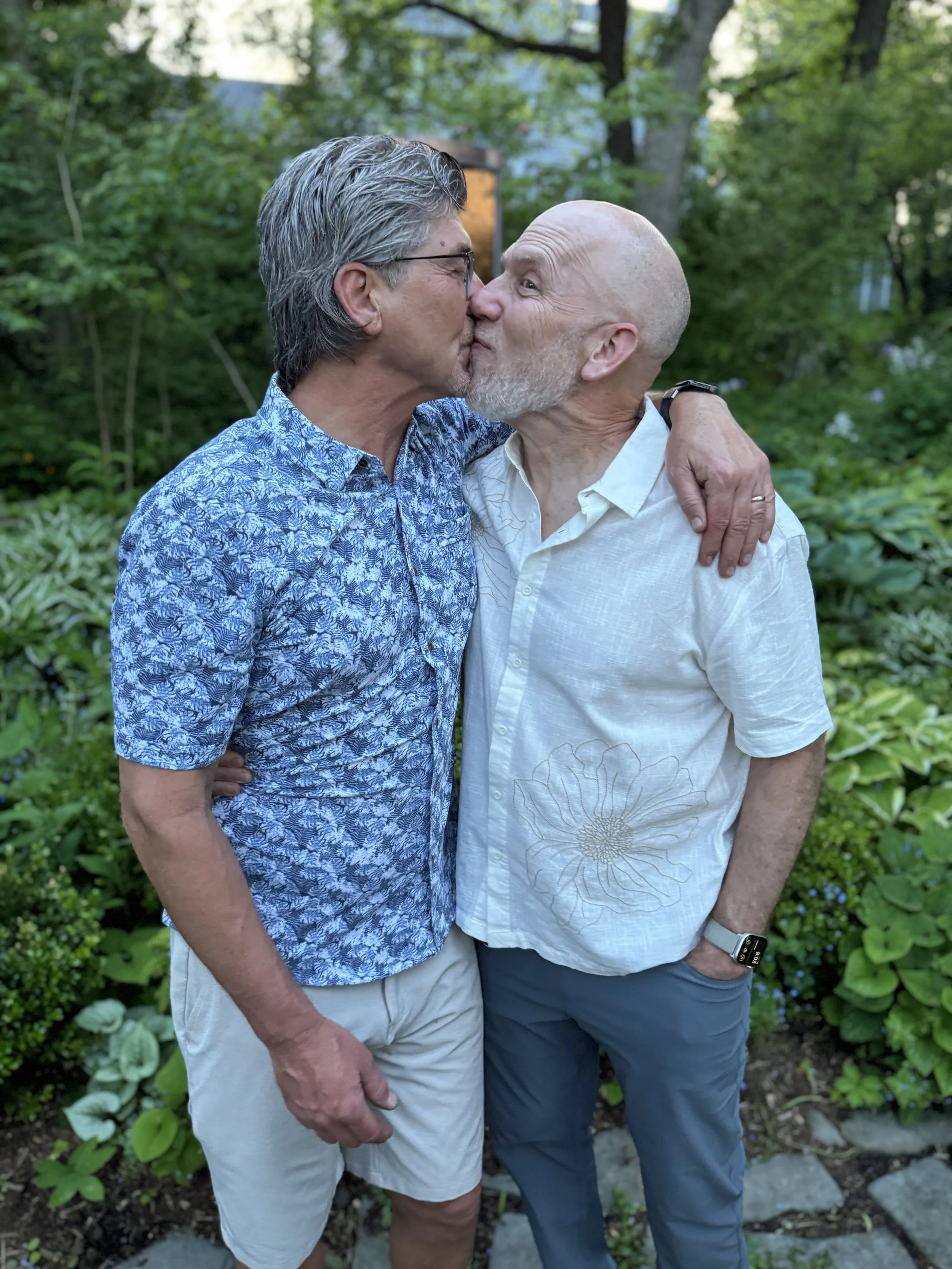
Let’s do this again.
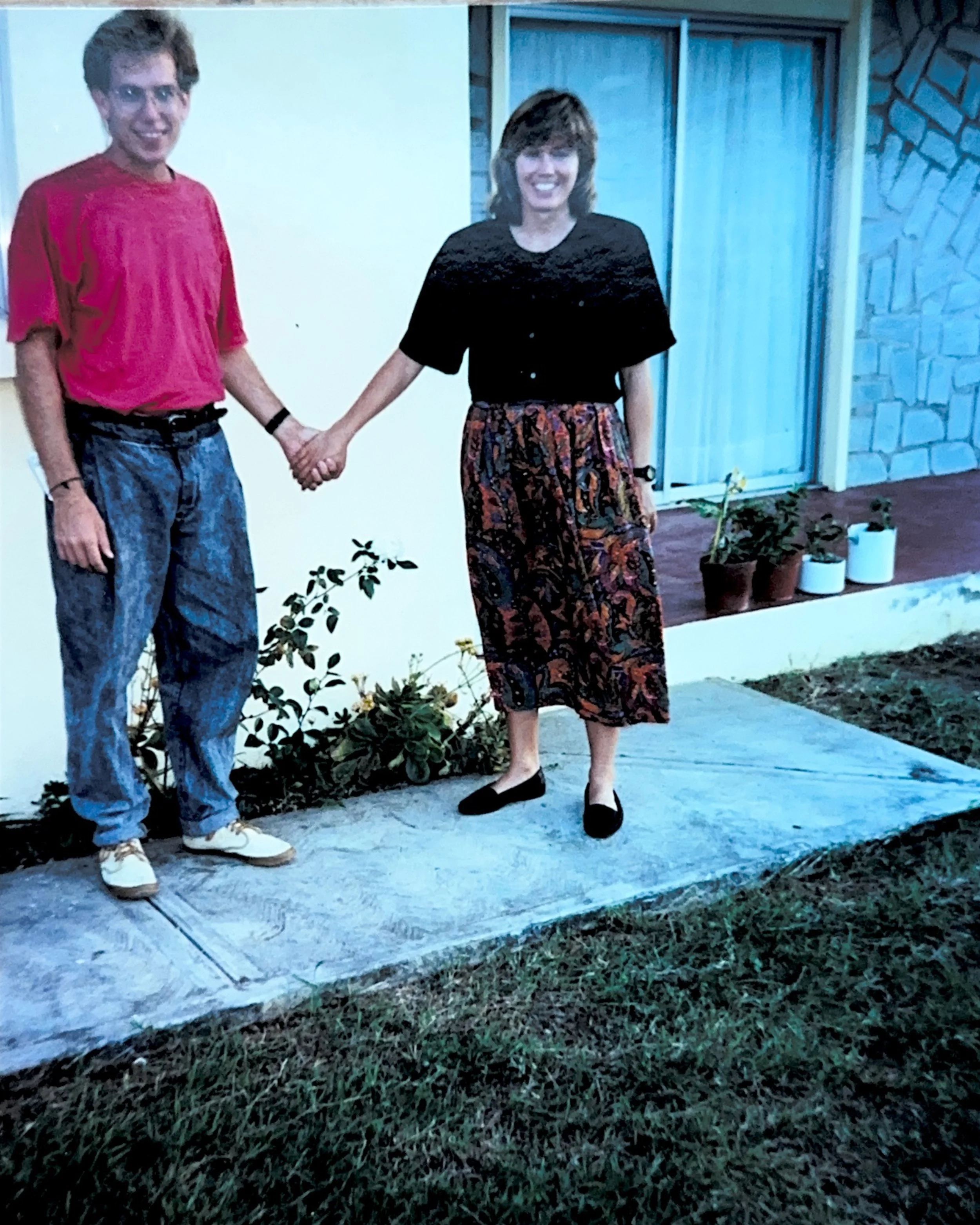
Our first house in Saint Lucia, 1990.
It was 1989. Jenny and I were engaged to be married and had just returned from our time together in Brazil. I had a scheduled interview with Ford Tractor in Lancaster, PA. Our plan was to get married and then either (A) move to Pennsylvania for the job with Ford or (B) join the Peace Corps.
Ford saw the wisdom of not engaging with me, so in July 1990 we found ourselves on a plane headed for a two-year commitment on the island of Saint Lucia. Jenny worked as a tutor and counselor at a centre for teenage girls, and I worked in the government’s Department of Youth and Sports as a physical education teacher. It was a time of adventure, challenge, learning, and growth.
And we loved it.
Upon our return to the States we knew we would be focusing on returning to school, finding jobs, and starting a family — all good things — but we also talked now and then about our future life. Would we (could we?) do the Peace Corps again?
Well, four kids and 36 years later, the answer is yes! We leave for Ecuador, a small country on the western coast of South America, on May 31 for another two years of challenge, fun, learning, loving, helping, and growing.
Stay tuned…